
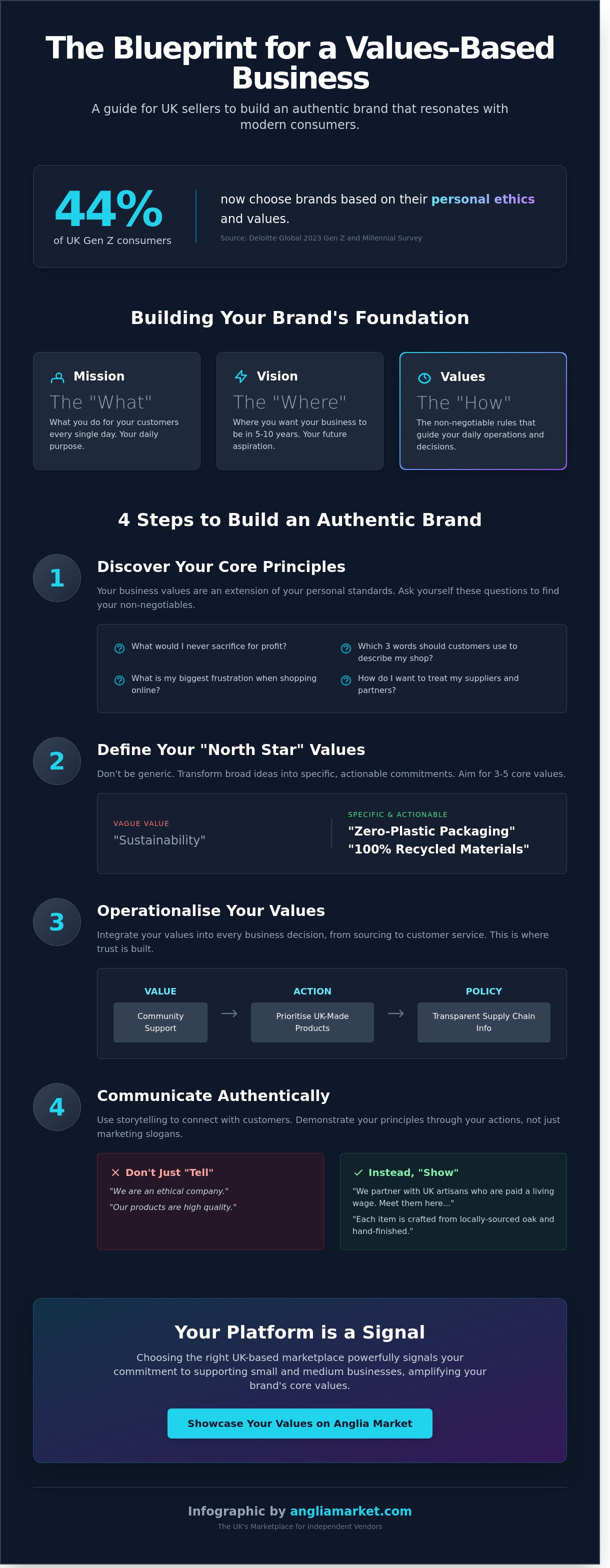
Did you know that 44% of UK Gen Z consumers now choose brands based on their personal ethics, according to Deloitte's 2023 Global Gen Z and Millennial Survey? It's a significant shift in the British market. You likely feel the pressure of standing out in a crowded digital space. It's easy to feel like a faceless seller when you're stuck choosing between the cheapest suppliers and the ethical ones. You might even worry that creating a business that reflects your values is a luxury meant only for large corporations with massive budgets.
We understand that struggle. Most independent sellers want to do the right thing while still making a profit. This guide shows you how to transform your personal principles into a resilient business strategy that earns customer loyalty. You'll learn a clear framework for identifying your core values and practical steps to apply them to your product selection. Let's look at how to build an authentic brand that actually works for your bottom line.
Key Takeaways
- Learn to distinguish authentic operational values from mere marketing slogans to build lasting trust with British consumers.
- Follow a step-by-step audit for creating a business that reflects your values by identifying your non-negotiable beliefs.
- Discover how to align your supply chain and product selection-from home essentials to pet care-with your ethical standards.
- Use effective storytelling and "Show, Don’t Tell" techniques to demonstrate your principles on your "About Us" page and product descriptions.
- See how choosing the right UK-based marketplace serves as a powerful signal of your commitment to supporting small and medium businesses.
What Does It Mean to Create a Values-Based Business?
Creating a business that reflects your values is about building an organisation where core principles guide every commercial decision. It isn't just a slogan on a website or a poster in an office. It's a commitment to a specific way of working. In a values-based model, your beliefs influence everything from your supply chain choices to your refund policy. You aren't just selling a product; you're upholding a specific standard of conduct.
Many companies use "marketing fluff" to sound appealing, but authentic operational values are different. They drive long-term trust because they stay consistent even when things get difficult. If you value sustainability, you don't just talk about it; you audit your packaging and actively reduce waste. This transparency is central to Conscious Business Principles, which prioritise the impact on people and the planet alongside profit. When your operations match your marketing, you build a reputation that survives market shifts.
Modern UK consumers are increasingly moving away from faceless global giants. They want to know who they're buying from and what that person stands for. This shift creates a "Loyalty Loop" for smaller brands. When a customer identifies with your principles, they're more likely to make repeat purchases. They stop being just a one-time buyer and become a brand advocate. This organic word-of-mouth is often more valuable than a paid advertising campaign.
The Difference Between Mission, Vision, and Values
Understanding these terms helps you build a solid foundation for growth. Your mission is the "what" you do daily for your customers. Your vision is the "where" you want the business to be in five or ten years. Values are the "how" of your daily operations. They're the rules of the road that keep you on track. Core values are the non-negotiable DNA of your brand.
Why Values Matter for UK Small Businesses in 2026
The UK retail landscape is seeing a massive shift toward ethical consumerism. By 2026, shoppers will expect even more transparency from the brands they support. Small and medium enterprises (SMEs) often struggle to compete with big retailers on price alone. However, you can compete on character. Values give you a unique selling point that a giant corporation can't easily replicate.
Platforms like Anglia Market empower independent vendors to showcase their unique identity. It's about showing the person behind the product. Creating a business that reflects your values allows you to build a community, not just a customer list. This connection is your biggest competitive advantage. It helps you find customers who care about quality and ethics rather than just finding the lowest price point.
Identifying and Defining Your Core Business Principles
Creating a business that reflects your values isn't just about feeling good. It's a commercial strategy. When your principles are clear, decisions become easier. You stop guessing and start leading. A value-driven approach separates your brand from generic competitors and builds a loyal customer base that shares your worldview. Start by looking inward to find the non-negotiables that define your work ethic.
The Discovery Process: From Personal to Professional
Your business is an extension of your own standards. Use these 10 prompt questions to identify what you truly care about:
- What business practice makes me feel uncomfortable?
- What would I never sacrifice for a £500 profit?
- Which three words should every customer use to describe my shop?
- What is my biggest frustration when I shop online in the UK?
- What do I want my business legacy to be in five years?
- Why did I choose this specific product niche over others?
- What am I unwilling to sell, regardless of the potential demand?
- What does "fairness" look like during a transaction?
- How do I want to treat my suppliers and partners?
- What makes me proud of my work at the end of the day?
Translate these personal traits into professional policies. If you value honesty, implement transparent pricing with no hidden delivery fees. If you value community, prioritise sourcing from UK-made creators. Look at your existing customer testimonials to see what people already value about you. They might highlight your "exceptional service" or "fast delivery" before you even label it a core principle. Use this feedback to ground your values in reality.
Selecting Your "North Star" Values
Don't list 20 different ideas. It confuses your audience and dilutes your brand message. Narrow your list to 3-5 actionable values that guide every operation. A generic value like "sustainability" is common, so make it distinct. Use specific phrases like "Zero-Plastic Packaging" or "100% Recycled Materials" to be memorable. This specificity is key to understanding how to make your values mean something in a crowded retail environment.
Apply the "Stress Test" to every principle you choose. Ask if you'd keep a value even if it cost you a short-term sale. For instance, if a supplier offers a 15% discount but uses unethical labour, a truly value-driven business walks away. This consistency builds long-term trust. Whether you focus on craft quality or being a "gift-rescue HQ," your value statement must be easy for customers to understand in seconds. If you're ready to reach more buyers with your unique brand, you can sell online with a platform that supports independent UK vendors.
Operationalising Your Values in the UK Marketplace
Turning abstract principles into daily operations is where creating a business that reflects your values becomes a reality. In the UK, 66% of consumers now prefer buying from brands that align with their personal beliefs according to a 2023 Statista report. This shift means your supply chain choices are a direct reflection of your ethics. Whether you're stocking Home and Garden essentials or Pet Supplies, your inventory tells a story about what you stand for.
Operationalising values includes your logistics. Using FSC-certified cardboard or carbon-neutral delivery partners isn't just a trend; it's a commitment. UK shoppers expect transparency. If your value is sustainability, your packaging shouldn't be filled with non-recyclable plastic. Clear communication about these choices builds the trust necessary to thrive in a competitive marketplace.
Values-Driven Sourcing and Inventory
Vetting suppliers requires a strict checklist. You should audit for fair wages, safe working conditions, and environmental impact. Start by requesting certifications like ISO 14001 or B Corp status. Balancing quality with affordability is a common challenge. You don't have to choose between a high price tag and poor ethics. By partnering with independent UK vendors, you can often cut transport costs and support the local economy simultaneously.
Consider Kitchen and Dining products as a case study. A value-led business might ditch cheap plastic utensils for bamboo or recycled steel alternatives. While the initial cost per unit might be 10% higher, the long-term brand loyalty and reduced return rates for poor quality items often offset the expense. It's about long-term value over short-term margin.
Customer Experience as a Value Expression
The way you handle a complaint is the ultimate test of your integrity. Under the UK Consumer Rights Act 2015, customers have clear rights, but your values should go further. A value-aligned returns policy might offer free returns for faulty goods while encouraging exchanges to reduce carbon footprints. This transparency builds a reliable reputation.
Your Loyalty Program is another tool for creating a business that reflects your values. Use it to reward positive actions. You could offer points for customers who choose eco-friendly shipping options or those who review products based on their durability. This turns a simple transaction into a shared mission between you and your customer base.
Communicating Your Values Without Bragging
Authenticity is the foundation of creating a business that reflects your values. You don't need to shout your principles from the rooftops; in fact, doing so often triggers skepticism. Modern UK consumers are savvy. A 2023 report by Deloitte found that 40% of shoppers chose brands based on their ethical practices, but they prefer evidence over empty slogans. The "Show, Don’t Tell" rule is your best tool here. Instead of claiming you support local craftspeople, share a short story about the specific artisan in Suffolk who makes your ceramics. This moves the conversation from marketing fluff to tangible impact.
Integrate these principles directly into your functional copy. Your "About Us" page should focus on the "why" behind your business, while product descriptions should highlight the "what" through a value-based lens. If you value durability, explain the specific joinery techniques used in a piece of furniture that ensure it lasts for decades. Avoid "value-washing," which is the practice of claiming ethics you don't actually follow. The Competition and Markets Authority (CMA) tightened its Green Claims Code in 2021 to penalise businesses making misleading environmental statements. Being honest about your progress is better than being perfect but dishonest.
Social media platforms like Instagram and Pinterest are ideal for providing a behind-the-scenes look at your principles. Use these spaces to show your packing process or your team meetings. It's about transparency. Showing a stack of recyclable cardboard boxes ready for dispatch is more effective than a graphic saying "We are eco-friendly." It's practical, visual, and builds trust through repetition.
Visual Branding and Messaging
Visual cues signal your values faster than text. A colour palette of earthy tones and minimalist photography often suggests sustainability and calm. If your brand values accessibility, ensure your website uses high-contrast fonts and clear layouts. When writing product titles, include value-driven features like "Hand-Poured Soy Wax Candle" or "Sustainably Sourced Oak Table." You can also utilise Promotions to highlight specific value-driven collections, such as a "Plastic-Free July" sale, which directs customers toward your most ethical choices without sounding boastful.
Building Community Through Shared Beliefs
Community grows when customers feel they belong to something bigger than a transaction. Respond to feedback on social media in a way that reinforces your brand personality. If a customer praises your plastic-free packaging, thank them and mention it's a core part of your mission. Encourage user-generated content by asking customers to share photos of how they use your products in their daily lives. In 2024, 79% of people say user-generated content highly impacts their purchasing decisions. This creates a feedback loop where your customers become the ones communicating your values for you.
Ready to put your principles into practice? Start selling with us and reach a community that shares your standards.
Choosing Partners and Platforms That Share Your Vision
Where you list your products matters as much as the products themselves. If you're creating a business that reflects your values, your sales channel is a public endorsement of that platform's ethics. A 2023 survey by Deloitte found that 55% of UK consumers prefer brands that demonstrate social and environmental responsibility. Choosing a marketplace that prioritizes fair treatment of vendors and quality products sends a silent, powerful signal to these shoppers. It shows you value integrity over quick, cheap wins.
Don't just look at traffic numbers when evaluating a marketplace. Look at how they treat their sellers. Does the platform promote "race to the bottom" pricing that hurts your margins? Or do they highlight quality? Fair play means transparent fees and support for independent UK businesses. When you partner with a platform that values your success, you protect your brand's reputation for the long term.
Use this final checklist to see if you're ready to Sell Online with integrity:
- Is the platform's fee structure transparent and sustainable for my business margins?
- Does the marketplace promote independent UK brands or prioritize mass-produced imports?
- Are there tools available to showcase my unique brand story and core principles?
- Am I prepared to handle customer queries with the same transparency I promise in my mission statement?
Why Anglia Market Supports Values-Driven Sellers
Anglia Market acts as a dedicated facilitator for independent UK businesses. We don't push for the lowest possible price at the expense of quality. Instead, we provide a space where "Quality Products" take center stage. This approach attracts a value-conscious audience that looks for more than just a bargain. You can add your profile today to start reaching customers who appreciate your commitment to excellence and local commerce.
Scaling Your Values as You Grow
Growth brings new challenges. When you hire your first employee or expand your product range, your core principles must guide every decision. Consistency is your biggest asset. Even during a high-traffic Sale, your commitment to quality and service shouldn't waver. Creating a business that reflects your values is a marathon, not a sprint. It starts with a personal idea and evolves into a trusted UK brand that customers rely on for years to come.
Take Action on Your Vision Today
Success in the UK market isn't just about turnover. It's about how you do business every single day. Start by defining your core principles with absolute clarity. Then, make sure those principles show up in every delivery and customer interaction you handle. Creating a business that reflects your values helps you build a brand that stands out from the competition. It's about being authentic without being boastful. When you choose partners and platforms that share your vision, you protect your reputation and grow much faster.
Ready to reach more customers across the country? Join a community that values your independence and your hard work. Anglia Market is a fast-growing UK marketplace dedicated to supporting small and medium businesses. We're already trusted by thousands of independent vendors across the United Kingdom. Our platform provides a secure shopping environment that prioritises vendor and buyer trust at every stage of the transaction. Don't wait to scale your impact. Start selling your quality products with Anglia Market today. It's time to grow your brand on a platform that puts quality and local sellers first. We're excited to see your business thrive.
Frequently Asked Questions
How do I identify my business values if I am just starting out?
Start by listing the non-negotiable principles you follow in your daily life. For 78% of small business owners surveyed by the Federation of Small Businesses, personal ethics form the direct foundation of their brand. Look at your previous work experiences to identify what you liked or disliked about those cultures. Choose three to five core pillars that will guide your decisions and help in creating a business that reflects your values from your first day of trading.
Can a business be values-driven and still be highly profitable?
Yes, values-driven businesses often outperform their competitors by building deeper customer loyalty. A 2023 study by Deloitte found that purpose-led companies grow three times faster than their peers. When you stick to your principles, you attract a dedicated audience that's willing to pay for quality and ethical standards. This focus reduces your long-term marketing costs because your brand reputation generates organic word-of-mouth referrals.
What are some examples of core values for an e-commerce store?
Common values for online retailers include radical transparency, sustainable sourcing, and exceptional customer support. For instance, a UK-based furniture seller might prioritise British craftsmanship or plastic-free packaging. Another example is price integrity, where you commit to fair pricing without hidden delivery fees at checkout. These specific values help distinguish your shop from generic retailers and build trust with shoppers looking for reliable, high-quality products.
How do I communicate my values to customers without sounding preachy?
Show your values through your actions and product descriptions instead of writing long manifestos. Use clear, factual labels like "Sourced from UK Farmers" or "100% Recyclable" on your product pages. Share behind-the-scenes content that demonstrates your warehouse processes or packing methods. Customers prefer seeing how you operate over reading a lecture; keeping your messaging practical ensures your values feel authentic and helpful to the buyer.
What should I do if a supplier violates my business values?
Address the violation immediately by reviewing your contract and discussing the specific issue with the supplier. If the breach is severe, such as a 2022 report showing 15% of supply chain issues involve ethical lapses, you may need to terminate the partnership. Always maintain a backup list of vetted UK vendors who align with your standards. Protecting your brand integrity is more important than the temporary inconvenience of switching to a new supplier.
How often should I review or update my business values?
Review your core values during your annual business planning session or every 12 months. While your fundamental principles should remain stable, the way you apply them might change as your company grows. For example, a business that started in 2021 might update its environmental goals to meet new 2025 UK carbon reduction targets. Regular reviews ensure your operations stay aligned with your original mission while remaining relevant to current market conditions.
Is it possible to change my business values after I have already launched?
It's possible to evolve your values, but you must communicate the reasons for the change clearly to your customers. Businesses often pivot; for example, 22% of UK startups refine their mission within the first three years of operation. If you shift your focus, explain how the new values better serve your audience or the environment. Transparency prevents your brand from appearing inconsistent or insincere during the transition period.
How does selling on a marketplace like Anglia Market help my values-driven brand?
Selling on Anglia Market connects your brand with a community that specifically values supporting small UK businesses and independent vendors. The platform's focus on quality and reliability provides a trustworthy environment for creating a business that reflects your values. By using a marketplace that handles the technical infrastructure, you can spend more time sourcing ethical products and engaging with shoppers who appreciate your unique brand story.

Here to help — ask anything
For questions about this disclaimer or the site, contact us via the website’s Contact page.


