
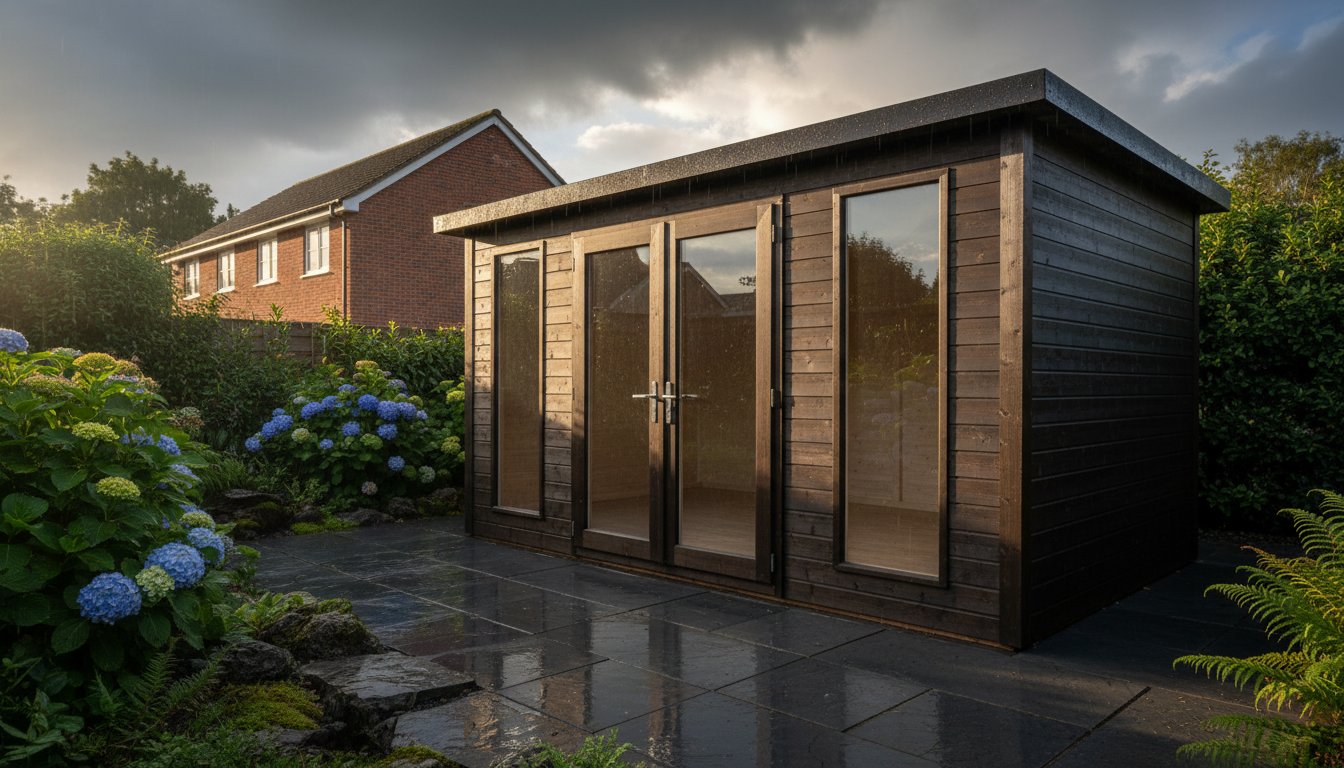
In January 2024, Storm Henk caused structural damage to an estimated 15% of residential garden buildings across the UK. If you've ever seen a cheap import rot within 36 months, you know that a low price often hides a total lack of quality. Knowing how to choose a durable garden shed is the only way to ensure your investment survives the next decade of relentless British rain. You need a secure, dry space for your equipment that actually adds value to your property.
We understand the frustration of warped doors and leaking roofs that plague standard outdoor buildings. This guide promises to help you master the technical specifications required for a truly long-lasting structure. You'll learn why 12mm cladding and pressure-treated timber are non-negotiable for anyone seeking minimal maintenance. We're breaking down the essential construction details so you can shop with confidence and find a shed that stays bone-dry through every winter storm.
Key Takeaways
- Avoid the "false economy" of cheap structures by learning how to identify quality builds that resist rot and warping for 15+ years.
- Compare the 20-year performance of wood, metal, and plastic to see which materials truly stand up to the unpredictable British weather.
- Master the technical differences between cladding styles to understand How to Choose a Durable Garden Shed that remains watertight for decades.
- Discover why a proper foundation and the "airflow gap" are essential for preventing floor rot and ensuring structural longevity.
- Learn the benefits of sourcing from independent UK vendors to secure better craftsmanship and support local small businesses.
Understanding Shed Durability: Why Quality Matters for Your Garden
Understanding How to Choose a Durable Garden Shed starts with defining what durability actually means in the British climate. A truly robust building resists rot, structural warping, and water ingress for 15 years or longer. It's about more than just looking good on delivery day. You need a structure that stands up to 2026 weather patterns, where high wind speeds and increased moisture levels are the new normal for UK homeowners. For those exploring different construction methods, Wikipedia provides a comprehensive overview of shed types to help you identify which materials suit your specific garden layout.
To better understand this concept, watch this helpful video on selecting the right foundation for your structure:
The Real Cost of a "Bargain" Shed
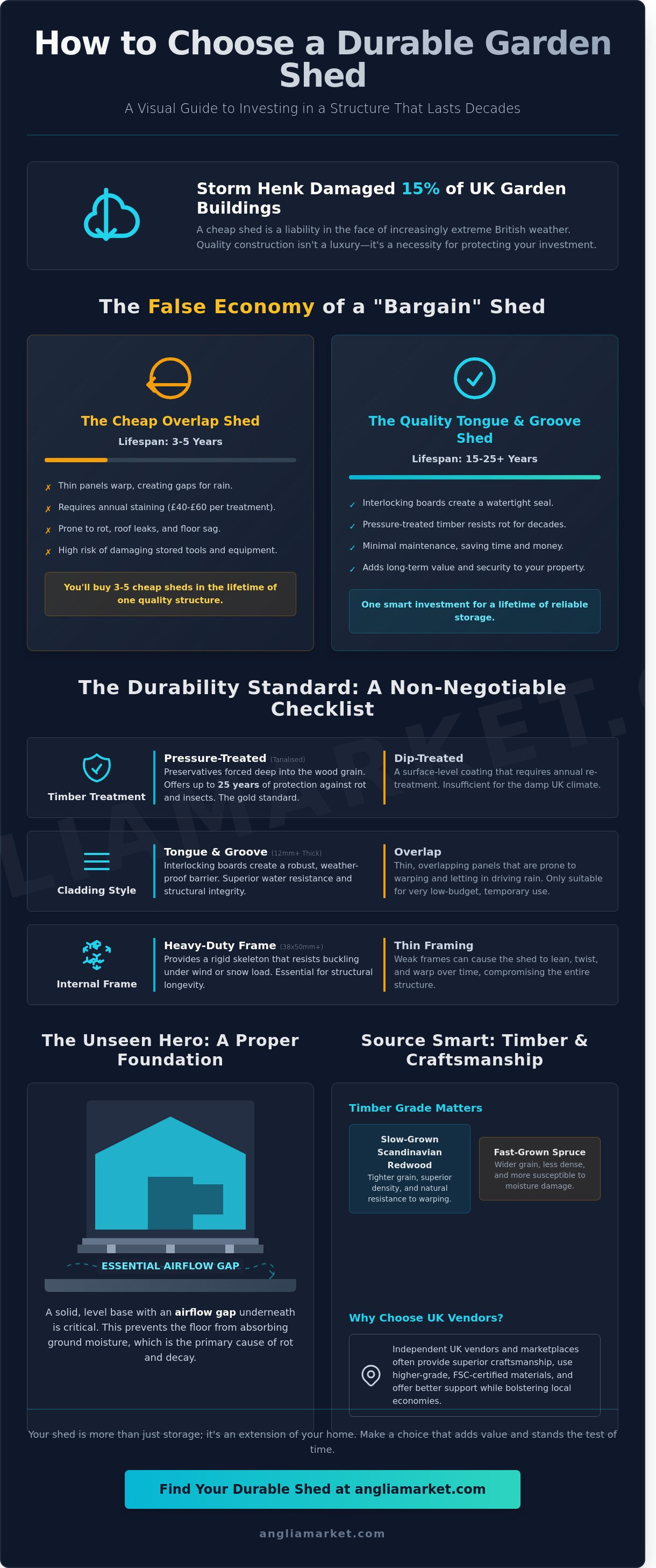
Buying a cheap overlap shed often feels like a win for your wallet. It isn't. These budget options typically require full replacement every 5 years because the thin timber panels warp and create gaps for driving rain. This "false economy" means you'll pay for three sheds in the time one quality building would still be standing. Maintenance costs for low-grade timber add up quickly, often requiring annual staining that costs £40 to £60 per treatment. If your roof felt fails or the floor sags, you risk damaging expensive electronics, power tools, and lawnmowers stored inside. Untreated wood acts like a sponge for fungi, while pressure-treated structures carry protective chemicals deep into the grain for lasting protection against the elements.
Defining the 2026 Durability Standard
A modern "heavy-duty" shed must meet specific structural benchmarks to handle 2026 environmental demands. Learning How to Choose a Durable Garden Shed means looking past the surface and checking the technical specs of the frame. Look for a minimum frame thickness of 38mm x 50mm to ensure the building doesn't lean or buckle under heavy snow loads. Ventilation is another critical factor that many buyers overlook. Proper airflow through integrated vents or breathable membranes prevents internal damp and timber decay from the inside out. Consider these key features for a long-lasting build:
- Pressure-Treated Timber: Essential for resisting rot without yearly DIY staining.
- Tongue and Groove Cladding: Offers superior water resistance compared to overlap styles.
- Toughened Glass: Resists impact and stays clear over a 15-year lifespan.
- Galvanised Hardware: Prevents rust on hinges and locks in salty or wet coastal air.
While "dip-treated" options were once the industry standard, they're no longer sufficient for long-term peace of mind. Pressure treatment is the only reliable way to ensure your investment survives a decade of harsh winters and humid summers. Always prioritize a thick internal frame and interlocking wall boards to keep your garden equipment safe and dry year-round.
Comparing Shed Materials: Which One Survives the British Weather Best?
Understanding how to choose a durable garden shed starts with a 20-year performance outlook. While wood is often seen as traditional, it remains the most durable option when sourced correctly. Metal and resin have evolved significantly, offering maintenance-free lifespans that rival timber. Each material reacts differently to the 1,400mm of average annual rainfall seen in parts of the UK, so your choice depends on your local climate and maintenance preferences.
Wooden Sheds: Timber Grades and Treatments
Timber quality dictates whether a shed lasts five years or thirty. Slow-grown Scandinavian redwood grows in colder temperatures, resulting in tighter grain rings and superior structural integrity compared to fast-grown spruce. This density is vital for resisting the warping and twisting caused by seasonal humidity changes. For maximum durability, always look for "Tanalised" timber. This pressure-treatment process involves vacuum-pressing preservatives deep into the wood fibres, making it resistant to fungal decay and wood-boring insects for up to 25 years. FSC-certified timber is the benchmark for ethical and structural quality.
Metal and Plastic: The Maintenance-Free Alternatives
Galvanised steel is the primary choice for homeowners prioritising maximum security and fire resistance. Modern metal sheds feature hot-dipped zinc coatings and multi-layered paint systems that protect the steel from rust, even in damp environments. These structures are often 100% recyclable and won't combustible, making them safer for storing petrol-powered tools or expensive bikes. You don't need to paint or stain them, which saves significant time and money over the shed's lifetime.
For those in coastal regions, double-walled resin panels are often superior. They don't rust, rot, or require annual staining against salt-heavy air. Premium resin is engineered with UV-inhibitors to prevent the plastic from cracking or fading under intense summer sun. These sheds are incredibly easy to clean with a simple garden hose and a soft brush.
Metal sheds have one specific weakness: condensation. You must install them on a dedicated base with a damp-proof membrane. This prevents ground moisture from rising and turning into internal droplets that could damage your tools. Before starting your project, consult the official UK government guidance regarding outbuilding height and boundary distances. Learning how to choose a durable garden shed involves matching these material traits to your specific garden conditions. Explore our latest home and garden deals to find a structure built for the British climate.
Cladding and Construction: The Secret to a Long-Lasting Structure
Understanding How to Choose a Durable Garden Shed starts with the skeleton of the building. While the type of wood matters, the assembly method determines if your shed lasts 2 years or 20 years. Poorly constructed sheds succumb to water ingress, which leads to rot and structural failure. Professional builders focus on rebated joints. These are precision-cut grooves that ensure boards lock together tightly, leaving no gaps for the British rain to penetrate. This "put together" quality is what separates a budget box from a lifetime investment.
Tongue and Groove vs. Shiplap: A Durability Deep Dive
Tongue and Groove (T&G) is the gold standard for durability. Each board has a protruding "tongue" that fits into a matching "groove" on the next board. This creates a flat, interlocking wall that resists warping and blocks draughts. Most high-end T&G panels are 12mm thick, though premium 19mm options offer superior insulation. Shiplap cladding is a variation of T&G that includes a "scalloped" or curved edge. This profile is specifically designed to channel water away from the joints more efficiently. The Which? guide to buying a garden shed suggests that while both are excellent, shiplap provides an extra layer of protection in exposed, windy gardens.
- Overlap Cladding: These boards simply overlap each other. They are cheaper but prone to "cupping" as the wood dries out. Use these only for basic tool storage.
- Rebated Joints: Always check that the corners are rebated. This prevents the panels from pulling apart under the weight of a heavy snow load.
Framing and Internal Bracing
The internal frame acts as the spine of your shed. Cheap sheds use thin 25mm framing, which can buckle. Look for a minimum of 34mm x 34mm planed framing. For larger workshops, 44mm framing is the 2026 industry standard for stability. Corner bracing is a key sign of quality. These are diagonal supports that prevent the building from leaning or "racking" over time. Don't forget to check our home and garden section for sheds that feature these heavy-duty specifications.
Avoid sheds that use OSB (Oriented Strand Board) or chipboard for the floor and roof. These materials are made of glued wood chips and can swell by up to 15% if they get damp. Stick to solid timber floorboards and roof purlins. Purlins are the horizontal beams supporting the roof. They should be thick enough to prevent the roof from sagging under the weight of felt and rainwater. Finally, ensure the door uses at least three heavy-duty T-hinges. Two hinges often lead to the door dropping within the first 12 months, making secure locking difficult.
Foundations and Roof Designs: Ensuring Structural Longevity
A durable shed is only as good as the ground it sits on. You can't expect a structure to last 20 years if it's sinking into soft soil. When you're researching How to Choose a Durable Garden Shed, the foundation is your first priority. A solid base prevents the frame from twisting and ensures doors stay aligned. It also creates a vital airflow gap. You need at least 50mm of clearance between the ground and the floor joists to stop rising damp from rotting the timber from the bottom up. Without this ventilation, moisture traps against the wood and causes fungal decay within 24 months.
Building a Solid Foundation
Your choice of base depends on the shed size and your DIY skills. Concrete pads are the gold standard for heavy garden workshops, but they require significant prep work. Paving slabs offer a simpler alternative for standard storage units. For many UK homeowners in 2026, plastic shed base kits are the smartest investment. These interlocking grids are often made from 100% recycled high-density polyethylene and can support up to 60 tonnes per square metre. They're easy to level and provide excellent drainage. Always use a spirit level at least 1200mm long. If the base is off by even 5mm, the entire frame will experience structural stress.
Advanced Roofing for 2026
The roof is your shed's primary defense against the UK's average 133 days of annual rainfall. Traditional mineral felt is cheap but often fails within 5 years. Modern buyers are switching to EPDM rubber roofing. This synthetic material is incredibly durable and offers a 30-year maintenance-free lifespan. It doesn't crack or rot under UV exposure. Learning How to Choose a Durable Garden Shed involves comparing roof styles to ensure effective water management. For heavy-duty workshops, box profile metal sheets are the preferred choice. These 0.5mm galvanized steel panels provide superior impact resistance compared to timber shingles.
- Apex Roofs: The dual-pitch design is best for high-volume water runoff and provides more internal headroom.
- Pent Roofs: A single slope works well for sheds placed against walls or under overhanging trees.
A 100mm roof overhang protects the side cladding from rain. This simple design feature keeps water away from the joints and prevents premature timber decay. If you want a building that lasts, don't cut corners on the cover. High-quality roofing ensures your tools and equipment stay dry regardless of the weather.
Ready to upgrade your outdoor space? Explore our quality garden structures and accessories to find the perfect fit for your home.
Sourcing Your Shed: Why Buy from UK Marketplace Vendors?
Finding the right supplier is just as important as the materials you select. When you research how to choose a durable garden shed, the source of the timber and the expertise of the builder are critical factors. Supporting small and medium-sized UK businesses often leads to better craftsmanship. These independent sellers focus on quality over volume; they ensure each joint and panel meets high standards before it leaves the workshop.
Supporting Small UK Businesses
Independent UK manufacturers typically offer better timber grades than large-scale retailers. Many use slow-grown Scandinavian redwood, which is significantly denser than the fast-grown spruce used in budget models. You'll find a wide variety of these robust, unique designs on the Anglia Market platform. Look for specific quality markers in product descriptions, such as 12mm or 15mm tongue and groove cladding. British-made sheds often feature 20% thicker framing than imported alternatives, according to 2024 manufacturing data. This added thickness prevents warping during damp UK winters.
Value and Security When Shopping Online
Buying a large garden building online is a major decision. It's easy to find competitive prices without cutting corners by browsing the Anglia Market sale section. Secure transactions and specialized delivery services ensure your shed arrives in perfect condition. You can also get more from your purchase by signing up for a loyalty program to earn points on your order. Consider these benefits when making your final choice:
- Verified Reviews: Always check customer testimonials to see how the shed performs after a year of use.
- Expert Support: Independent vendors often provide direct advice on base preparation and maintenance.
- Project Planning: Think about how your new shed fits into your total home and garden layout.
Learning how to choose a durable garden shed means looking beyond the price tag. By focusing on British craftsmanship and using a trusted marketplace, you ensure your new building remains a functional part of your garden well into 2030. Quality materials and secure shopping provide the peace of mind every homeowner needs.
Invest in a Garden Structure Built for the Future
A high-quality garden building is a 10 year commitment that requires smart planning. You now know that How to Choose a Durable Garden Shed involves prioritizing materials like pressure-treated timber or galvanized steel to survive the UK's average 133 days of rainfall each year. Focusing on tongue and groove cladding ensures your structure remains watertight, while a solid level foundation prevents the structural warping often seen in cheaper alternatives. By choosing the right specifications, you're protecting your tools and equipment for the long haul.
Anglia Market makes finding these premium structures simple by connecting you directly with trusted local vendors. Explore durable garden sheds from independent UK sellers at Anglia Market to browse a comprehensive range of home and garden supplies. As a dedicated supporter of small and medium-sized UK businesses, we provide verified customer reviews so you can shop with total confidence. It's time to stop worrying about the weather and start enjoying a garden that's organized and secure. You've got the knowledge; now it's time to pick the perfect model for your home.
Frequently Asked Questions
What is the most durable type of garden shed for the UK climate?
Heavy-duty pressure-treated timber is the most durable choice for the UK's 133 annual rainy days. These structures resist rot and fungal decay much better than untreated wood. You should look for 12mm thick shiplap or tongue and groove cladding to ensure the building stands up to high winds and moisture. This combination provides a robust shield against the damp British climate for decades.
How long should a pressure-treated wooden shed last?
A pressure-treated wooden shed typically lasts between 15 and 25 years with minimal maintenance. Most quality UK manufacturers offer a 15 year anti-rot guarantee on these products as standard. The process forces chemical preservatives deep into the wood grain, which protects the core of the timber from damp conditions. This makes it a reliable long term storage solution for your garden tools and equipment.
Do I need planning permission for a durable garden shed in 2026?
You don't need planning permission for most sheds in 2026 if they meet Class E permitted development rules. The building must be single story with a maximum eaves height of 2.5 meters. It also cannot occupy more than 50% of the total area of land around the original house. Always check with your local council if you live in a conservation area or a national park.
Is a metal shed more durable than a wooden one?
Metal sheds made from hot-dipped galvanized steel are more durable against fire and rodents than wooden alternatives. However, heavy-duty timber provides better thermal insulation and structural stability during 60mph gales. When learning how to choose a durable garden shed, consider that metal requires zero treatment but wood is easier to repair if it sustains any physical damage over the years.
How often do I need to treat a durable wooden shed?
You should treat dip-treated wooden sheds every 12 months to maintain their water resistance. Pressure-treated buildings only need a fresh coat of UV-protective oil every 3 to 5 years to prevent the timber from turning grey. Regular maintenance ensures the wood doesn't crack or warp during hot summers. This simple schedule keeps the structure looking new and prevents water from seeping into the joints.
What is the best base for a heavy-duty garden shed?
A 100mm thick reinforced concrete slab is the best base for a heavy-duty garden shed. This solid foundation prevents the building from sinking or warping over time. Ensure the base is level within a 5mm tolerance across the entire surface to keep the door frames and roof aligned correctly. A solid base also keeps the floor joists away from standing water and damp soil.
Can I make a cheap shed more durable?
You can improve a cheap shed's durability by reinforcing the internal structure with 45mm x 45mm timber framing. Replacing standard felt with a single piece of EPDM rubber will stop leaks for up to 50 years. Knowing how to choose a durable garden shed often involves looking at these upgradeable components before you buy. Adding high-quality locks and stainless steel hinges also improves the building's overall security.
What roofing material lasts the longest on a garden building?
EPDM rubber membranes last the longest, with a life expectancy of 50 years. Traditional mineral felt usually tears or degrades within 5 to 7 years due to frost and sun exposure. Switching to EPDM or Onduline corrugated sheets provides a much more reliable barrier against the UK's heavy rainfall. These materials don't crack or rot, making them the most cost-effective choice for a long-lasting garden building.

Here to help — ask anything
For questions about this disclaimer or the site, contact us via the website’s Contact page.


