
Nearly 59 million people in the UK are shopping online in 2026, yet many independent sellers still feel like they're shouting into a void. It's a common struggle for small businesses. You've built a great storefront, but you feel invisible amongst the retail giants. Marketing your Anglia Market shop effectively is the difference between a quiet page and a thriving business. You shouldn't have to spend every waking hour managing social media or guessing how to rank in search results.
We understand the pressure of managing multiple channels whilst trying to grow your brand. This guide will show you how to transform your storefront into a high-traffic sales engine using practical internal optimisation and external marketing tactics. You'll discover how to master the platform's search results and build a loyal UK customer base. We'll preview the latest 2026 trends, from AI-driven discovery to smart inventory management. You'll learn how to secure steady organic traffic and boost your conversion rates without the technical headache. It's time to make the platform work for you.
Key Takeaways
- Learn why shifting from passive listing to active brand building is essential for visibility in the 2026 digital marketplace.
- Discover how to win the internal search battle by optimising your listings with precise British terminology.
- Master the multi-channel approach to funnel high-quality traffic from social media platforms directly to your storefront.
- Explore how the loyalty programme can help in marketing your Anglia Market shop to create a steady stream of repeat buyers.
- Gain the insights needed to scale your independent brand using customer feedback and data-driven inventory decisions.
The Visibility Challenge: Why Active Marketing Matters for UK SMEs
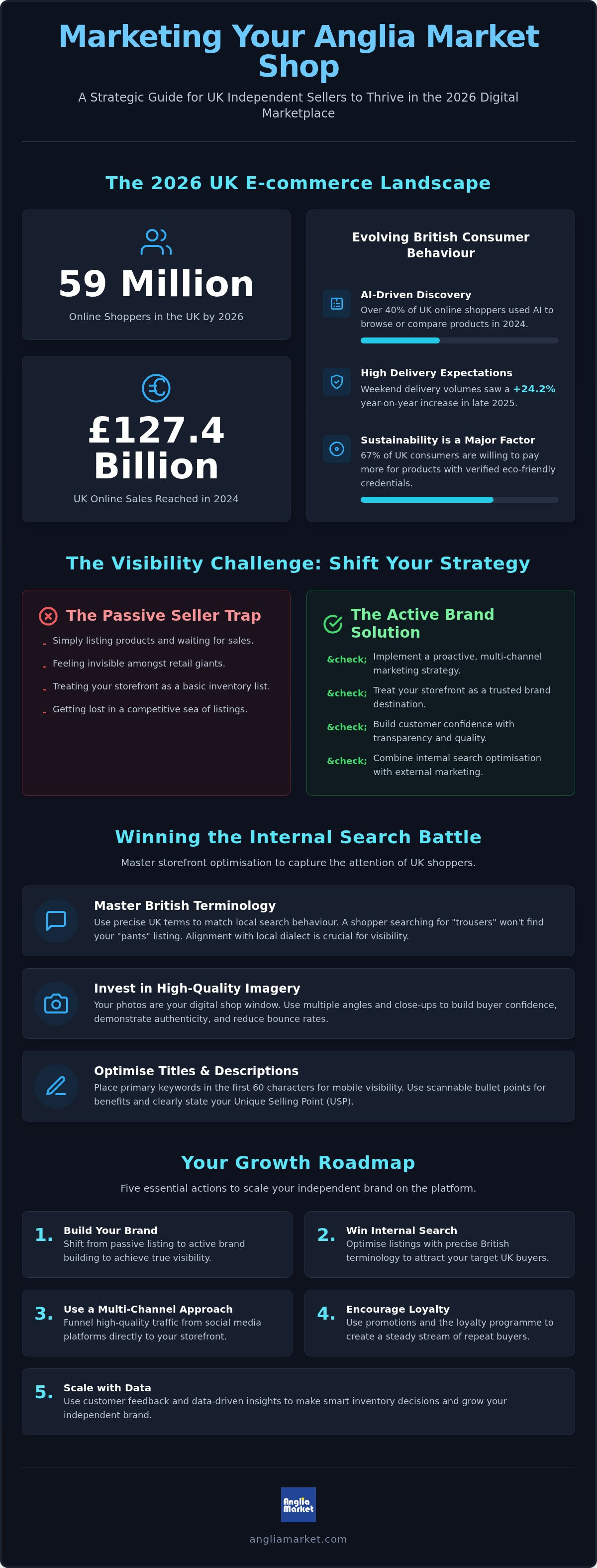
By 2026, the British high street has firmly moved into digital marketplace hubs. Online sales in the UK reached £127.4 billion in 2024, and with nearly 59 million e-commerce users active as of 2025, the potential for growth is enormous. However, this volume brings competition. Many small businesses fall into the "passive seller" trap, believing that simply listing a product is enough to generate sales. It isn't. Marketing your Anglia Market shop requires a proactive strategy to ensure you don't get lost in a sea of listings. You need to treat your storefront as a brand destination rather than a basic inventory list.
Many SMEs struggle because they lack the visibility of larger retail giants. To compete, you must understand what drives the modern British consumer. Trust and transparency are now the primary currencies of trade. Success depends on implementing robust digital marketing strategies that combine internal search optimisation with a strong social presence. When you sell online, you're competing for attention in a fast-paced environment where shoppers value efficiency and reliability above all else.
The 2026 UK E-commerce Landscape
British shopping behaviour is evolving rapidly. Artificial intelligence is no longer a novelty; it's central to the journey. In 2024, over 40% of UK online shoppers used AI to help them browse or compare products. Consumers also have high delivery expectations. Weekend delivery volumes saw a 24.2% year-on-year increase in late 2025, proving that shoppers want their items immediately. Additionally, sustainability is a major factor for independent vendors. Research from 2025 shows that 67% of UK consumers are willing to pay more for products with verified eco-friendly credentials. You must highlight these values to win over a discerning audience.
Setting Your Marketing Objectives
Success starts with clear goals. You can't manage what you don't measure. Focus on key performance indicators like storefront visits, conversion rates, and repeat purchase frequency. Identifying these metrics helps you see exactly where marketing your Anglia Market shop is working and where it needs adjustment. Identifying your target audience's favourite categories, from home and garden to electronics, allows you to tailor your promotions effectively. Balancing short-term sales boosts with long-term brand awareness is vital. Don't just chase the next transaction; aim to build a customer base that recognises and trusts your specific brand name. Allocate a few hours each week to review your customer insights and refine your approach based on real feedback.
Optimising Your Storefront: Winning the Internal Search Battle
The internal search bar is the primary gateway to your products. Marketing your Anglia Market shop effectively starts with understanding how the algorithm prioritises listings. It doesn't just look for keyword matches; it looks for relevance and quality. This means your data must be clean and targeted. Using British terminology is non-negotiable for UK-based success. A shopper searching for "trousers" won't find your "pants" listing, just as "garden furniture" carries more weight than "patio sets" in domestic searches. This alignment with local behaviour is a core part of UK government guidance on attracting customers.
Buyer confidence is won or lost in seconds. High-quality imagery acts as your digital shop window. Since customers can't touch the product, they rely on your photos to judge quality and authenticity. Multiple angles and close-ups of materials help reduce bounce rates. When a shopper sees exactly what they're getting, they're far more likely to complete the transaction. Clear, well-lit photos aren't just a luxury; they're a fundamental requirement for building a trustworthy brand presence amongst a crowded marketplace.
Mastering Product Titles and Descriptions
Structure your titles for maximum impact. Place your primary keywords within the first 60 characters to ensure they remain visible on all devices, especially mobile screens. Use bullet points to break up text. This makes it easier for buyers to scan for benefits, materials, and UK delivery specifics. Every listing should include a single, clear sentence that defines your unique selling point. For example, "Hand-crafted in Norfolk using 100% recycled oak" tells a story and provides value instantly. This approach satisfies both human readers and search crawlers, ensuring your products are indexed correctly whilst remaining persuasive.
Strategic Categorisation and Tagging
Selecting the right department is the difference between being found and being forgotten. Whether you're listing in Home & Garden or Electronics, accuracy is vital. The platform's "Recommended for You" feature relies heavily on precise tagging. If your tags are broad or incorrect, you'll miss out on these automated cross-selling opportunities. Never resort to "keyword stuffing" by adding irrelevant terms. This behaviour can lead to a poor user experience and may even harm your search ranking. Instead, focus on specific descriptors that truly reflect the product's features. If you're looking to refine your presence, you can learn more about our vendor tools to help manage your catalogue efficiently.
External Traffic: Connecting Social Media to Your Shop
Social commerce generated nearly £6.5 billion in UK retail sales in 2025. This figure is climbing steadily as we progress through 2026. Whilst internal optimisation captures active searchers, social media reaches shoppers before they even start their search. Marketing your Anglia Market shop via a multi-channel approach is essential for independent SMEs. It prevents your business from being over-reliant on a single traffic source. Building a community on Facebook and Instagram creates a direct connection with your audience. These platforms allow you to showcase the human side of your brand, which is a key differentiator for smaller vendors.
For those in lifestyle sectors like furniture or fashion, Pinterest offers immense long-term value. It acts as a visual discovery engine rather than a standard social feed. A single high-quality pin can drive referral traffic for months, long after a standard post has faded from a timeline. Ensure every piece of content leads naturally to your digital storefront. This journey from discovery to checkout must be frictionless for the customer.
Building a Content Calendar for Your Brand
Consistency drives results. Plan a weekly calendar that balances product utility with brand stories. Video content is a necessity in 2026. Static images alone are no longer enough to capture attention in a crowded feed. Focus on these content pillars:
- Utility: Show your products solving a specific problem or fulfilling a need.
- Transparency: Share your UK-based quality control or packaging and fulfilment process.
- Social Proof: Post customer testimonials and unboxing videos.
User-generated content acts as powerful social proof. It shows potential buyers that your business is reliable, active, and appreciated by fellow UK shoppers. Short-form clips demonstrate product quality in real-world settings and help build a trustworthy brand identity.
Paid vs Organic Social Strategy
Organic growth is a marathon. Paid strategy is a sprint. Use boosted posts to target specific UK demographics during key shopping periods like seasonal sales or bank holidays. This is a highly efficient way of marketing your Anglia Market shop to new audiences who share your target profile. Micro-influencer partnerships are also effective for building niche authority. These creators have loyal followers who trust their recommendations.
In 2026, the rise of agentic commerce means smart assistants often browse on behalf of consumers. Having your products mentioned by trusted influencers helps these AI agents recognise your brand as a quality choice. This increases the likelihood of being selected during an automated purchase journey. Always monitor your referral data. Identifying which platforms deliver the highest conversion rates allows you to allocate your marketing budget where the profit is highest. Focus your resources on the channels that drive actual sales rather than just likes.
Driving Repeat Business: Promotions and the Loyalty Programme
British shoppers in 2026 are highly selective. With one in three online purchases in the UK being returned, customer retention is the most efficient way to maintain profitability. Marketing your Anglia Market shop shouldn't stop at the checkout. You need to create "sticky" customers who return to your storefront out of habit and trust. The psychology of the British bargain hunter is grounded in value. They look for quality but expect a reward for their loyalty. Highlighting your presence on the Promotions page is a proven method to attract these value-conscious buyers whilst clearing seasonal inventory.
Loyalty is more than just a discount. It's about providing a consistent, high-quality experience that justifies a repeat visit. In a market where 35% of top fashion retailers now charge for returns, offering a reliable and rewarding purchase journey sets you apart. Commercial success in 2026 relies on your ability to turn a one-off browser into a long-term brand advocate. By using the platform's built-in tools, you can automate much of this relationship-building process.
Setting Up Your First Promotion
The vendor dashboard is designed for speed. You can easily create time-limited sale offers that build a sense of urgency. When setting up your first campaign, consider your inventory goals. Fixed-price reductions work well for clear-out events, whilst multi-buy deals are excellent for increasing your average order value. Once your promotion is live, use your storefront banners to announce it. Don't let your offers sit in silence. Share the details across your social channels to funnel traffic back to your shop. Clear communication about the duration of the sale helps drive immediate action from hesitant browsers.
Maximising the Loyalty Programme
Retention is cheaper than acquisition. The Anglia Market Loyalty Programme provides a structured way to incentivise repeat purchases. Buyers earn reward points that make choosing your shop over a competitor a logical financial decision. You can also build a "Brand Following" within the marketplace. This allows you to send direct updates about new arrivals or exclusive discounts to your most engaged customers. Analysing your sales data helps you identify high-value shoppers. Offering these individuals personalised rewards or early access to sales builds a deeper connection. It turns a one-off buyer into a brand advocate. Start rewarding your customers by engaging with our seller tools today.
The Growth Roadmap: Scaling Your Independent Brand
Scaling a business is a deliberate process. Moving from a hobbyist seller to an established UK retail partner requires a shift in mindset. You're no longer just selling items; you're building an enterprise. Marketing your Anglia Market shop at this level involves using every scrap of data available to you. Customer insights and direct feedback are your most valuable tools for refining your product catalogue. If shoppers consistently ask about specific features or materials, use that information to guide your next sourcing round. Maintaining excellence in British customer service is vital as your order volume grows. High standards must remain consistent, whether you're shipping ten parcels or a thousand.
Anglia Market is designed to be the ideal long-term partner for UK SMEs because the platform grows with you. We provide the infrastructure so you can focus on the commerce and brand building.
Managing Growth and Inventory
Plan your sourcing strategy carefully. You must maintain the quality your customers expect whilst increasing your stock levels. Peak shopping periods like Black Friday and the January sales require months of preparation. Ensure your supply chain can handle the surge without compromising on lead times. Dependable fulfilment is the foundation of a professional brand reputation amongst UK shoppers. If you can't deliver on time, you won't build the loyalty needed for long-term scaling. Use your dashboard to monitor stock levels closely and set alerts to prevent "out of stock" messages on your best-performing items.
The Future of Your Marketplace Shop
Don't be afraid to explore new categories. Expanding your reach within the UK market often means testing adjacent product lines. If you've mastered home accessories, consider moving into kitchenware or garden decor. Continuing your education is a key part of marketing your Anglia Market shop for the future. Use the Anglia Market support centre to stay updated on the latest platform tools and technical guides. This resource is essential for understanding new API updates or changes to shipping regulations.
The 2026 landscape will continue to evolve. Stay adaptable to new consumer trends, such as the rise of agentic commerce and AI-driven shopping assistants. These technologies will change how buyers discover your brand, but the fundamentals of quality and trust will remain. By staying proactive and utilising the support available, you can turn your digital storefront into a permanent fixture of the British retail landscape. Success is built on small, consistent improvements to every listing and customer interaction.
Build Your Future in the UK Marketplace
The UK e-commerce landscape in 2026 is competitive, but it's also full of potential for proactive sellers. Success requires a strategic blend of internal search optimisation and active social media engagement. By moving beyond passive listings, you can build a brand destination that resonates with British shoppers. Marketing your Anglia Market shop effectively is the key to securing steady organic traffic and higher conversion rates. It turns your storefront from a basic list into a thriving sales engine.
You don't have to manage this growth alone. Our platform provides UK-based support for independent sellers and access to the integrated loyalty programme to help you retain customers. You can build a professional presence with customisable digital storefronts for every niche. It's time to take the next step in your retail journey. Start growing your UK business today on Anglia Market and reach your full potential in the British marketplace. Your journey toward a scalable, independent retail brand starts right now. We're ready to help you succeed.
Frequently Asked Questions
How can I improve my shop visibility on Anglia Market?
You can improve visibility by using precise British terminology and high-quality imagery in every listing. The platform's search algorithm prioritises relevance, so placing keywords in the first 60 characters of your title is vital. Marketing your Anglia Market shop also involves choosing accurate tags to appear in automated recommendations. This ensures your products reach the right audience without the need for manual searching.
Do I need to pay for external advertising to be successful?
External advertising isn't strictly necessary, but it can accelerate your growth during peak periods. Organic traffic from social media and internal search results provides a sustainable foundation for most UK SMEs. If you have a limited budget, focus on building a community on platforms like Instagram or Pinterest first. Use paid ads only when you have a specific sale or seasonal event to promote.
How does the Anglia Market loyalty programme benefit my shop?
The loyalty programme turns one-time browsers into "sticky" customers by offering reward points for every purchase. This incentivises shoppers to choose your storefront over larger, impersonal competitors. It's a powerful tool for building a brand following within the marketplace. By rewarding repeat buyers, you reduce the cost of customer acquisition and help to stabilise your monthly revenue through consistent repeat business.
Can I link my social media profiles directly to my storefront?
Yes, you should connect your social profiles to your digital storefront to drive referral traffic. This multi-channel approach is essential in 2026 for building trust with UK shoppers. Whether you use Pinterest for lifestyle goods or Facebook for community updates, these links create a seamless path for customers. It allows them to move from discovery to purchase with minimal friction and maximum confidence.
What role do product categories play in my marketing strategy?
Product categories act as the primary map for the marketplace's discovery engines and AI assistants. Placing your items in the correct department, such as Home & Garden or Electronics, ensures you appear in filtered searches. Correct categorisation also powers the "Recommended for You" sections. This places your products directly in front of buyers who have already shown interest in similar niche goods or categories.
How often should I update my product listings and keywords?
You should review your listings and keywords at least once a quarter to account for seasonal shifts. Marketing your Anglia Market shop requires staying current with changing search habits and consumer trends. If a particular term starts trending in the UK, update your titles to capture that traffic immediately. Regular updates also signal to the algorithm that your shop is active, relevant, and well-managed.
Is it better to offer a discount or free delivery for UK customers?
Free delivery is often more persuasive than a percentage discount for the typical British shopper. Research shows that high delivery costs are a leading cause of cart abandonment in the UK. If your margins allow it, offering free shipping can significantly boost your conversion rates. However, for seasonal clear-outs, a direct price reduction on the promotions page remains highly effective for moving older stock quickly.
How do customer reviews impact my ranking in search results?
Customer reviews are a critical ranking signal that directly impacts your position in search results. Positive feedback builds trust and acts as social proof for hesitant buyers. The algorithm favours shops with high satisfaction ratings because they provide a reliable purchase journey. Encourage every customer to leave a review to improve your overall authority and visibility whilst building a trustworthy reputation on the platform.

Here to help — ask anything
For questions about this disclaimer or the site, contact us via the website’s Contact page.


