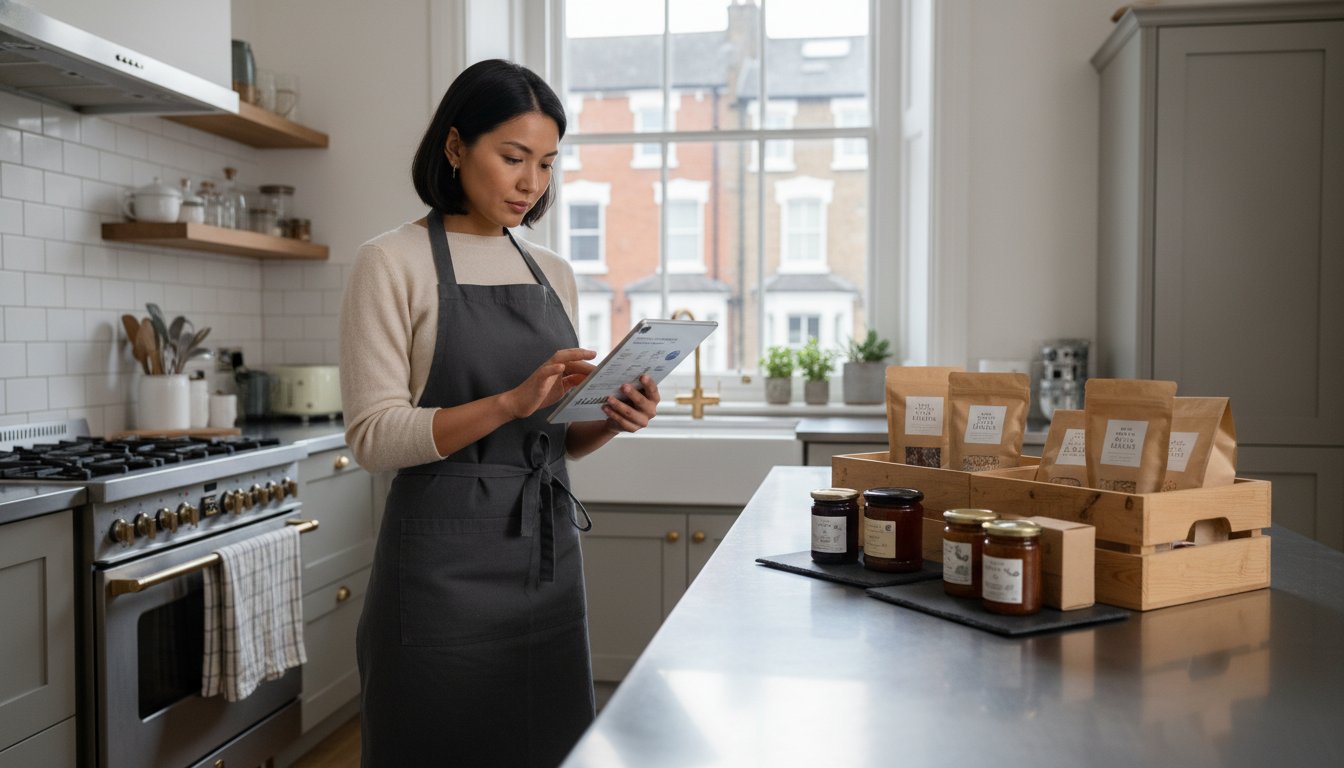
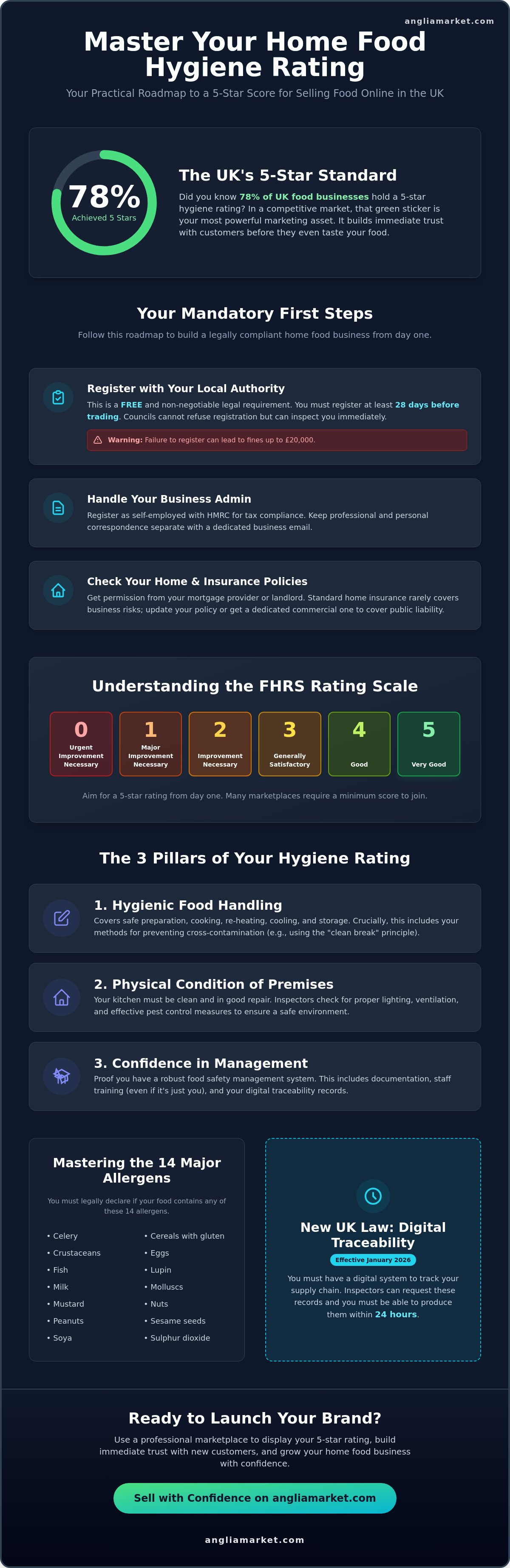
Did you know that 78% of UK food businesses currently hold a 5-star hygiene rating? In a competitive marketplace, that green sticker is your most powerful marketing asset. It builds trust. Shoppers see that rating before they ever taste your food. Fear of failing an inspection due to pets, kids, or complex allergen laws is normal. Many independent sellers feel overwhelmed when first navigating the rules for selling food online from home uk hygiene ratings.
You can master these standards and launch your brand with total confidence. This guide provides a practical roadmap to legal compliance and a 5-star result. We will walk you through free local authority registration, the 14 major allergens, and the mandatory digital record-keeping rules that took effect in January 2026. You'll gain the clarity needed to turn your home kitchen into a professional, compliant business ready to sell to the public through independent marketplaces.
Key Takeaways
- Register your business for free at least 28 days before trading to meet essential UK legal requirements.
- Understand the three key assessment areas to master selling food online from home uk hygiene ratings and earn a 5-star score.
- Apply the "clean break" principle to effectively manage cross-contamination between personal and business kitchen use.
- Comply with 2026 digital traceability standards and allergen labeling laws to ensure consumer safety and avoid fines.
- Use a professional marketplace platform to display your hygiene rating and build immediate trust with new customers.
Starting Your Home Food Business: The Mandatory First Steps
Launching a kitchen table enterprise is an exciting path to financial independence. Success when selling food online from home uk hygiene ratings starts with legal registration. You must register your business with your local authority at least 28 days before you intend to sell any food to the public. This process is entirely free. It is a non-negotiable legal requirement. Missing this deadline isn't just a minor oversight; it can lead to significant fines of up to £20,000 per offence and delay your commercial launch. Local councils cannot refuse your registration, but they can inspect your premises the moment you start trading.
Beyond the council, you need to handle your business administration. Registering as self-employed with HMRC ensures you stay compliant with UK tax laws. You also need to check your home setup. Many mortgage providers and landlords have specific clauses regarding business use. Contact them early. You should also update your home insurance or take out a dedicated commercial policy. Standard domestic insurance rarely covers business-related risks like public liability or product contamination. Taking these steps early protects your personal assets and builds a professional foundation.
Registering with Your Local Authority
Finding your local food safety team is straightforward. Visit your council's website and search for "food business registration." You will need to provide specific details about your operation. This includes the types of food you plan to prepare, the scale of your production, and your contact information. The Food Standards Agency (FSA) provides the framework for these inspections. Once registered, your details are shared with environmental health officers. Be prepared for an unannounced visit. They will check your kitchen's layout, your cleaning routines, and your digital traceability records. Since January 1, 2026, you must be able to produce digital records of your supply chain within 24 hours of a request.
The Legal Status of Home-Based Selling
UK law defines a "food business" by its regularity and organisation. If you bake cakes for a charity once a year, you likely don't qualify. If you sell meals every Friday via a marketplace, you are a business. This status applies regardless of where you sell. Whether you use social media DMs or a professional online marketplace platform, the hygiene rules are identical. Selling through established platforms is often safer for your brand reputation. It provides a structured environment for displaying your mandatory hygiene rating and managing customer expectations. Use a dedicated business email for all correspondence. This keeps your professional life separate from your personal messages and ensures you never miss a critical update from food safety authorities.
Understanding the UK Food Hygiene Rating Scheme (FHRS)
The Food Hygiene Rating Scheme (FHRS) is the definitive "green sticker" system used by the Food Standards Agency (FSA) across England, Wales, and Northern Ireland. For anyone selling food online from home uk hygiene ratings are the ultimate trust signal. A high score proves to your customers that you take safety seriously. While 91% of UK consumers recognize the sticker, the commercial impact is even more significant. Many professional delivery platforms and marketplaces now require a minimum rating of 2 to join. To maximize your sales potential, you should aim for the top score from day one.
Ratings range from 0 (urgent improvement necessary) to 5 (very good). If you receive a low rating, you can appeal the decision or request a re-inspection once you have made the required improvements. However, a poor initial score can damage your brand's reputation before you even get started. Before your first inspection, ensure you are fully prepared by registering your home food business with your local council to trigger the evaluation process.
The Three Pillars of Your Rating
Inspectors don't just look at how clean your floors are. They calculate your score based on three specific areas of assessment:
- Hygienic food handling: This covers preparation, cooking, re-heating, cooling, and how you store food to prevent cross-contamination.
- Physical condition of premises: Your kitchen must be clean and in good repair. This includes proper lighting, ventilation, and effective pest control measures.
- Confidence in management: You must prove you have a food safety management system in place. Since January 2026, this includes mandatory digital traceability records that must be accessible within 24 hours.
What to Expect During the Inspection
Environmental Health Officers (EHOs) usually conduct unannounced inspections. They want to see your kitchen operating in its natural state. When they arrive, they will ask to see your documentation and watch you work. They will check if you have a separate sink for handwashing and if your fridge temperatures are recorded accurately. Common "quick wins" to impress an inspector include having a fully stocked first aid kit, using a calibrated probe thermometer, and ensuring you have liquid soap and paper towels at your handwash station. Mastering these details makes it easier to launch your brand on a professional selling platform where your 5-star rating can be displayed proudly to attract more shoppers.
How to Secure a 5-Star Rating in a Domestic Kitchen
Achieving a top score when selling food online from home uk hygiene ratings requires a mental shift. Your kitchen is no longer just a family space. It is now a production facility. The "clean break" principle is your most effective tool. This means you must stop all personal cooking, laundry, or pet activity before your business hours begin. Clear your counters completely. Sanitise every surface. Only then should you bring out your commercial ingredients and equipment. This clear separation proves to inspectors that you are in total control of your environment.
Temperature control is another critical factor. Domestic fridges can be temperamental and often fluctuate. For a 5-star rating, you shouldn't rely on the built-in dial. Use independent fridge and freezer thermometers. Check and record these temperatures at least once a day. Your fridge must stay below 8°C by law, though 5°C is the industry gold standard for safety. If you need professional-grade storage or prep tools, browse our kitchen and dining section to find compliant equipment for your setup.
Managing Pets and Children
Pets are a major red flag for environmental health officers. You must exclude them from food prep areas during business hours. This is a legal requirement. Store pet food, bowls, and child-related items like high chairs in a separate area to avoid cross-contamination. Create a "business-only" zone in your pantry. Use dedicated cupboards or labelled airtight containers for your business ingredients and packaging. This level of organisation shows the Food Hygiene Rating Scheme (FHRS) inspector that you take your responsibilities seriously.
Cleaning and Sanitisation Standards
Cleaning isn't the same as disinfecting. You need a two-stage process to stay compliant. First, use a detergent to remove grease and visible dirt. Second, apply a disinfectant to kill bacteria. Your cleaning chemicals must meet BS EN 1276 or BS EN 13697 standards. Always check the labels before you buy. Handwashing is equally vital. You need a dedicated basin for washing your hands. If you only have one sink, you must demonstrate a strict system to prevent contamination between handwashing and food prep. Use liquid soap and disposable paper towels. Fabric tea towels are a hygiene risk and can lower your score. Mastering these small details is the fastest way to securing that 5-star sticker.
Managing Allergens, Labelling, and Digital Records
Securing a top score when selling food online from home uk hygiene ratings depends heavily on your paperwork. It isn't just about a clean kitchen. You must prove you know exactly what is in your food. This starts with identifying the 14 mandatory allergens: celery, cereals containing gluten, crustaceans, eggs, fish, lupin, milk, molluscs, mustard, nuts, peanuts, sesame seeds, soya, and sulphur dioxide. Document these in every recipe. Use the Food Standards Agency's "Safer Food, Better Business" (SFBB) pack as your daily diary. It is the industry standard for small vendors. It helps you track cleaning schedules and supplier traceability. Keep every invoice from your ingredient suppliers. If there's a product recall, you must be able to trace every ingredient back to its source instantly.
Natasha’s Law adds another layer of responsibility. This applies to food pre-packed for direct sale (PPDS). If you package your signature brownies or jars of jam before a customer orders them, the label must show a full ingredients list. Highlight the allergens in bold or italics. This transparency protects your customers and your business from legal liability. Magistrates' courts can impose fines of up to £20,000 for safety breaches. Accuracy is your best defence.
Accurate Food Labelling for Online Orders
Every order leaving your kitchen needs professional labelling. At a minimum, include the food name, a full ingredients list with allergens emphasized, and clear "use by" or "best before" dates. Online customers can't see a physical menu, so you must be proactive. Allergen information must be available before the purchase is completed. Most sellers handle this by listing allergens in the product description on their storefront. Be prepared for direct enquiries. Have a master allergen matrix ready to share if a customer asks for specific details via message or email.
Digital Record Keeping in 2026
The days of messy paper logs are over. As of January 1, 2026, all UK food businesses must maintain digital traceability records. You must be able to provide these logs to an inspector within 24 hours of a request. Use digital templates or dedicated apps to record daily fridge temperatures and delivery times. This shift isn't just a hurdle; it's a way to boost your "Confidence in Management" score. Digital logs are harder to lose and easier to audit. Store all temperature and delivery records for at least six months. This data proves you've maintained a consistent cold chain. Ready to turn your compliant kitchen into a profitable brand? You can start selling online today by joining a professional marketplace built for independent food vendors.
Launching Your Brand: Selling Food via Online Marketplaces
Once your kitchen meets the required standards, you need a storefront that reflects your professionalism. Many entrepreneurs begin by taking orders through social media direct messages. This method is often disorganized and lacks the transactional security customers expect. Professional marketplaces provide a structured environment that simplifies selling food online from home uk hygiene ratings. These platforms allow you to display your green sticker prominently. This immediate visual proof of safety builds trust before a customer even reads your menu. It transforms your compliance efforts into a powerful sales tool.
Maintaining the "cold chain" is your next logistical priority. If you sell chilled or frozen goods, your responsibility doesn't end at your front door. You must use insulated packaging and gel packs to keep food at the correct temperature during transit. Digital traceability rules, which became mandatory in January 2026, require you to log these delivery times and methods accurately. Scaling your business often means moving from a home kitchen to a dedicated professional unit. Starting on a marketplace allows you to test your products and build a loyal customer base before committing to the overheads of a commercial lease.
Choosing the Right Platform
The right platform does more than just list your products. It connects you with a supportive vendor community where you can share insights with other independent sellers. When you choose to sell online through a dedicated marketplace, you benefit from built-in tools that help you stay compliant with distance selling laws. Allergen information must be clearly available to the customer before they complete their purchase. Use your storefront to tell your unique "handmade" story. UK buyers increasingly seek out local, authentic brands that offer something different from mass-produced supermarket options.
Professionalising Your Storefront
Visual appeal is vital in the digital food industry. Invest time in high-quality photography for your kitchen and dining products. Use natural light and simple backgrounds to make your food look appetizing and professional. Social proof is another essential element. Encourage happy buyers to leave customer testimonials on your profile. These reviews act as a secondary layer of authority alongside your hygiene rating. Finally, set clear delivery expectations. Perishable goods require fast shipping. Be transparent about your lead times and how you handle returns for food items. This clarity reduces customer friction and ensures your home food business launches with the best possible reputation.
Launch Your Compliant Food Brand Today
Building a successful kitchen-based business requires more than just great recipes. It demands a commitment to safety and transparency. Registering with your local council at least 28 days before trading is your legal foundation. Use the "clean break" principle to keep your business and home life separate. Mastering the legalities of selling food online from home uk hygiene ratings is the first step toward a profitable and sustainable business. By adopting digital traceability and strict allergen controls, you protect your customers and your brand's future from significant fines.
Transitioning from a home cook to a professional vendor is easier with the right platform. We provide a secure transactional platform designed to empower UK-based small businesses. Our transparent vendor commission structure ensures you keep more of your hard-earned profit while reaching a wider audience. Start your journey as an independent food vendor today and turn your culinary passion into a 5-star reality. You have the tools and the roadmap. Now it's time to share your products with the world and build the business you've always envisioned.
Frequently Asked Questions
Do I need a professional kitchen to get a 5-star hygiene rating?
No, you don't need a commercial kitchen to reach the top score. Most domestic kitchens are perfectly capable of achieving 5 stars if they are clean and well-maintained. The inspector focuses on your food handling processes and management systems. Proving a "clean break" between your family cooking and business preparation is the most effective way to secure a high rating in a home environment.
Can I sell food from home if I have a cat or dog?
Yes, you can still trade, but pets must be excluded from the kitchen during all business hours. This is a strict legal requirement to prevent hair or dander from contaminating your products. You should also store pet bowls, bedding, and food in a completely separate room. Showing these boundaries to an inspector proves you take cross-contamination risks seriously.
How much does a food hygiene inspection cost for a home business?
Initial inspections and your mandatory registration are free of charge. You won't pay a fee for the standard visit triggered by your registration. If you receive a lower score than expected, you can request a paid re-rating visit later. These costs vary by local council. Always check your local authority's website for their specific pricing on elective re-inspections.
Is a Level 2 Food Hygiene certificate legally required?
The law doesn't strictly name specific certificates, but it does require you to be trained for the tasks you perform. Most Environmental Health Officers expect home cooks to hold a Level 2 Food Hygiene and Safety for Catering certificate. It provides clear evidence of your competence. Holding this qualification is a standard step for anyone selling food online from home uk hygiene ratings.
How do I display my hygiene rating when selling food online?
You should display your rating prominently on your digital storefront or website. While mandatory in Wales and Northern Ireland, it's a powerful trust signal in England too. Most professional marketplaces provide a dedicated space to upload your rating or link to the official FSA database. This transparency helps shoppers feel confident in their purchase before the food arrives at their door.
What insurance do I need to sell cakes or meals from home?
You need Public Liability and Product Liability insurance at a minimum. Standard domestic home insurance rarely covers business activities or food-related risks. Product liability is especially vital for food vendors. It protects you if a customer claims they became ill after eating your food. Always inform your home insurance provider about your business to ensure your building and contents cover remains valid.
Can I use my domestic fridge to store business ingredients?
Yes, you can use your home fridge if you maintain a strict separation of items. Use separate, clearly labelled shelves or airtight containers to prevent cross-contamination with your family's food. You must also monitor the internal temperature daily with a calibrated thermometer. Since January 2026, these temperature logs must be kept digitally and be available for inspection within 24 hours of a request.
What happens if I fail my first food hygiene inspection?
Failing an inspection means you'll receive a low rating and a report detailing necessary improvements. You won't necessarily be shut down unless there's an immediate risk to public health. The inspector will give you a deadline to fix the issues. You have the right to appeal the rating or request a re-inspection once you've completed the required changes to your kitchen or management systems.

Here to help — ask anything
If you have any questions regarding this disclaimer or any of our policies, please contact Anglia Market through the contact page on our website, by email using the address provided on the site, or by phone at 0333 772 2593