
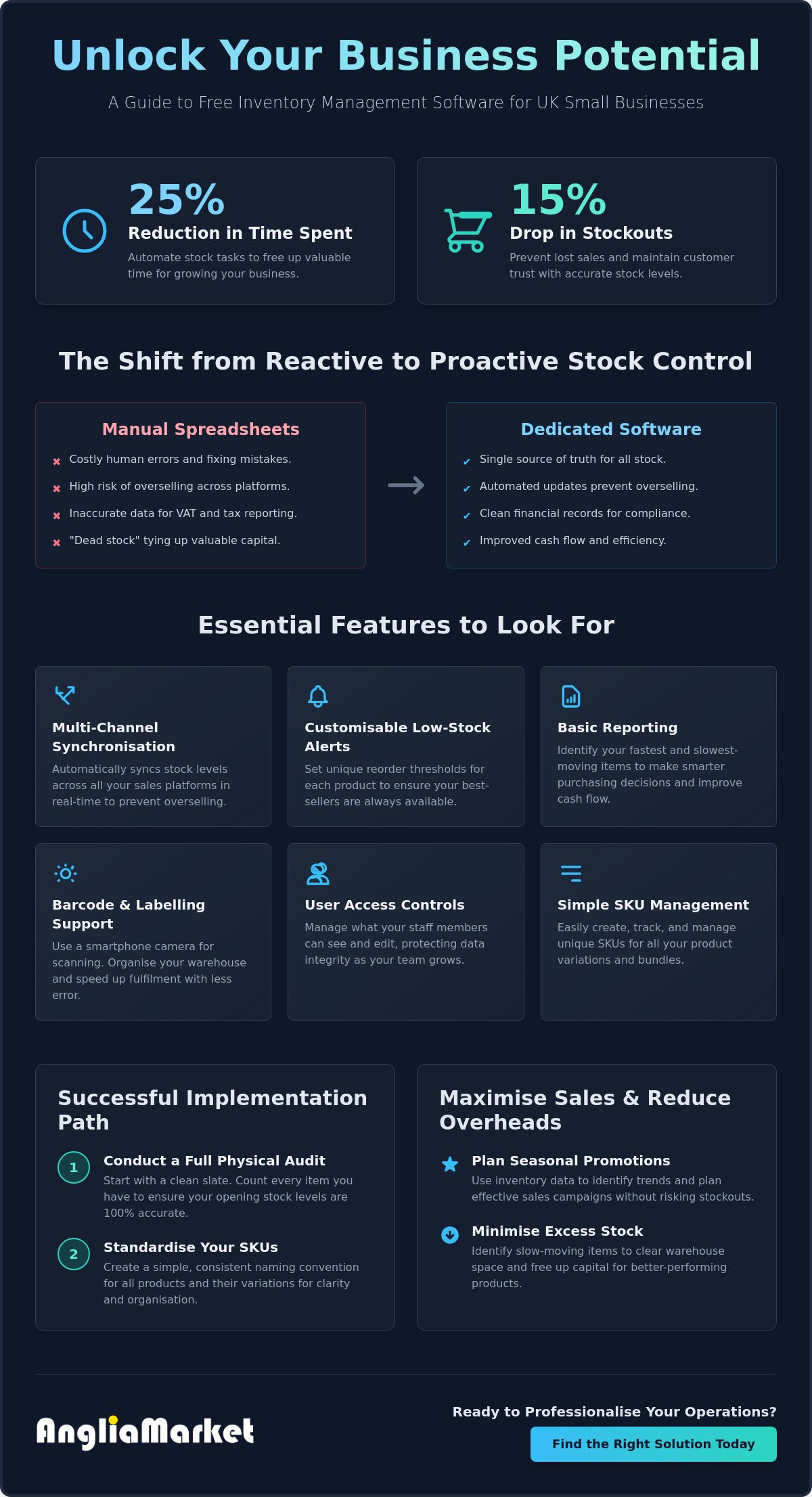
Did you know that businesses adopting dedicated tools report up to a 25% reduction in time spent on stock tasks and a 15% drop in stockouts? Finding the right free inventory management software for small business is the most effective way to professionalise your operations without draining your budget. It is a strategic bridge that moves you away from the chaos of manual updates and toward a more reliable, automated future.
We understand the frustration of losing a sale because of an inventory error or spending your entire Sunday fixing a spreadsheet mistake. You need to track stock across different platforms whilst keeping things simple for your staff. You deserve a system that grows with you, not one that holds you back with constant human errors or overselling risks.
This guide highlights the top-rated free tools for 2026 designed to organise your stock and streamline your UK small business. We will preview the best options, from Square's integrated retail features to StockFlow's multi-location tracking, so you can find a solution that offers automated updates and low-stock alerts today.
Key Takeaways
- Professionalise your supply chain by moving away from manual spreadsheets to prevent costly overselling and order fulfilment errors.
- Identify the best free inventory management software for small business that provides essential real-time tracking and customisable low-stock alerts.
- Compare top-rated tools for 2026, including deep-integration platforms and intuitive solutions designed for simple stock counting.
- Master the implementation process by standardising SKU naming conventions and conducting a thorough physical stock audit for a clean slate.
- Use your new inventory data to plan seasonal promotions effectively and reduce overheads by minimising excess stock in your warehouse.
The Importance of Inventory Management for UK Small Businesses
In the fast-paced UK retail environment of 2026, inventory management is the systematic approach to sourcing, storing, and selling your products. It isn't just about counting boxes; it's the lifecycle of your entire stock. Many independent sellers start with a simple spreadsheet. This manual method quickly crumbles as you expand across multiple sales channels. Using an inventory management software allows you to maintain a single source of truth for every SKU you own.
Accurate stock levels are directly linked to customer trust. In 2026, shoppers expect real-time availability. If they buy an item that turns out to be out of stock, they won't return. Beyond customer satisfaction, automated tracking helps you identify "dead stock". This is inventory that sits in your warehouse without moving, effectively tying up your working capital. By using free inventory management software for small business, you can spot these trends early. You can clear space for high-performing products and keep your cash flow healthy.
Common Inventory Challenges for Independent Sellers
Overselling is a primary trap for those selling on multiple marketplaces. Without a central system, you might sell your last item on one platform whilst it remains listed on another. This leads to cancelled orders and poor seller ratings. Managing stock across a physical shop, a home office, and a warehouse requires absolute precision. Accuracy also impacts your UK VAT and tax reporting. If you can't account for missing or damaged items, your financial records won't align. This could lead to complications during an audit. If you want to sell online successfully, your data must be flawless.
The Shift from Reactive to Proactive Stock Control
Reactive stock control leads to "emergency ordering" when you suddenly run out. This often results in higher shipping costs and missed sales opportunities. Proactive control uses historical data to predict when you need more. This level of efficiency allows small businesses to compete with retail giants. You don't need a massive budget to begin professionalising your supply chain. Choosing a free inventory management software for small business provides the foundational data you need to grow. Inventory control is the heartbeat of e-commerce logistics.
Key Features to Look for in Free Inventory Software
Finding the right free inventory management software for small business means looking beyond a basic digital list. Effective stock control is crucial for businesses of all sizes because it protects your cash flow and prevents stockouts. In 2026, "near real-time" tracking isn't good enough. If your software lags by even ten minutes, you risk selling the same unit twice on different platforms. You need a system that updates instantly as soon as a sale is made.
Low stock alerts are equally vital. You should be able to set custom threshold levels for every SKU. Your best-selling items might need a reorder alert when they hit ten units, whilst a niche product only needs one when it hits two. Basic reporting features help you understand your sell-through rate. This data allows you to identify your slowest-moving items, so you don't waste capital on stock that sits on the shelf. Finally, look for user access controls. If you have staff, you need to manage what they can see and edit to maintain data integrity.
Multi-Channel Synchronisation
Most UK independent sellers operate across various platforms. You need a centralised "source of truth" to manage these channels effectively. Your software must connect to your various storefronts automatically. If you are selling online, accurate counts ensure you never have to send an embarrassing "out of stock" email to a customer. This level of synchronisation is particularly important for UK businesses managing local shipping and VAT tracking across different marketplaces. Small businesses often find that once their stock is organised, they are ready to reach a wider audience through professional marketplaces.
Barcoding and Labelling Capabilities
You don't need to invest in expensive hardware to professionalise your warehouse or storeroom. Many free tools now allow you to use smartphone cameras as barcode scanners. Organising your space with unique SKU labels simplifies the picking and packing process. It makes fulfilment significantly faster and reduces the chance of human error. When every item has a clear label and a digital twin in your system, your end-of-year stocktake becomes a quick scan rather than a week-long ordeal. This efficiency allows you to focus on growth rather than logistics.
Top 5 Free Inventory Management Software Options for 2026
Selecting the right free inventory management software for small business depends on your monthly volume and technical confidence. Zoho Inventory is a standout for those needing deep integration. Its free edition is limited to 50 orders per month, one warehouse, and one user. It's a fantastic mobile-friendly choice for startups, but you'll need to watch those transaction caps as you grow. Effective cash flow management relies on knowing exactly when these limits might force a paid upgrade.
BoxHero offers a different approach, focusing on simple, intuitive stock counting without unnecessary fluff. It's perfect for teams that want a clean interface. If you plan to scale into a massive operation, Odoo Community Edition provides a free, open-source path toward a full ERP system. However, don't forget the hidden costs. Whilst the software is free, self-hosting typically costs between $20 and $80 per month for server maintenance. If you want to sell online with a customisable backend, Odoo is worth the technical effort.
Stockpile by Canvus is a favourite for those who need truly unlimited items and locations on a free tier. It doesn't restrict your SKU count, making it ideal for businesses with vast but slow-moving catalogues. RightControl remains a reliable UK-based choice for desktop inventory management. Finally, the Anglia Market platform acts as a vital partner for these tools. By becoming one of our vendors, you can synchronise your newly organised stock with a high-traffic marketplace designed specifically to support independent UK enterprises.
Comparing Free Tier Limitations
Hidden traps often lurk in free software plans. You must check the SKU limits before importing your data. Some tools, like Sortly, restrict you to just 100 items on their free plan. Transaction caps are another hurdle. If you exceed 50 orders in a busy month on Zoho, your automated updates might pause. Integration restrictions are the final piece of the puzzle. Many free tiers block e-commerce connections, forcing you to manual entry. Always verify which platforms are included for free before committing your time.
Ease of Use and Support
A clean user interface is vital for daily operations. If your staff find the system too complex, they'll stop using it, leading to data errors. Most free tools offer community forums and self-service help centres rather than 24/7 phone support. Assess the learning curve by testing the mobile app first. If you can't scan a barcode and update a count in seconds, the software won't save you time in the long run. Efficiency is the goal, so pick a tool that feels natural to your workflow.
How to Implement Your New Inventory System Successfully
Transitioning from manual tracking to a digital system requires a structured plan. You can't simply upload a messy spreadsheet and expect perfect results. Success starts with a "clean slate" physical count. Even if your current records say you have ten units, you must verify this manually before your first upload. This audit ensures your free inventory management software for small business starts with 100% accuracy. It's the only way to build a reliable foundation for your future operations.
Standardising your SKU (Stock Keeping Unit) naming convention is the next step. Avoid vague names that rely on staff memory. Use a consistent format like "CAT-STYLE-COL-SIZE" for every item. This makes searching, filtering, and barcoding much easier. Once your SKUs are ready, you can move away from Excel. Most software options allow for a CSV import. Take the time to map your columns correctly during this process to avoid data corruption. If your column headers don't match exactly, your data might end up in the wrong fields.
Cleaning Your Data Before Migration
Don't migrate junk data into your new system. Remove duplicate entries and discontinued items that you no longer sell. Consistent descriptions and categorisation are essential for meaningful reports later. You should verify that your electronics or furniture categories are correctly mapped in the new software. This prevents items from getting lost in the wrong digital aisle and ensures your stock valuation remains accurate for tax purposes.
Setting Up Your Workflow
You need a clear process for receiving new stock from suppliers. Every box must be scanned or logged immediately upon arrival. Define how your team handles returns and damaged goods to keep counts accurate. If you want to grow, you should also consider integrating your software with your Anglia Market vendor profile. This ensures your marketplace listings reflect your actual warehouse levels in real time. A seamless connection between your warehouse and your storefront is the best way to sell online without the risk of overselling.
Finally, train your team. Everyone must follow the same stock-in and stock-out procedures. A single forgotten scan can throw off your entire system. Consistency is more important than speed during the first few weeks of implementation. Once the habit is formed, the software will handle the heavy lifting for you.
Maximising Sales Through Better Inventory Control
Inventory data is a powerful tool for planning seasonal promotions. By analysing your sales history, you can identify which products peak during specific months. This insight allows you to prepare your marketing efforts well in advance. Using a free inventory management software for small business helps you spot these patterns without the guesswork. You can then clear out slow-moving items with targeted sales, freeing up shelf space for high-demand goods.
Reducing overheads is another direct benefit of better control. Excess stock is simply cash sitting on a shelf. When you minimise this surplus, you improve your business's liquidity. This extra capital can be reinvested into expanding your reach or testing new categories like kitchen and dining or pet supplies. Accurate shipping also drives customer satisfaction. When orders arrive quickly and correctly, you build a reputation for reliability.
Inventory Strategy for Marketplace Growth
Accurate stock levels are the foundation of high seller ratings. Marketplaces reward vendors who fulfil orders reliably with better visibility in search results. You must plan for high-traffic periods like Black Friday or Christmas months in advance. Your software will show you exactly how much stock you moved last year, allowing for data-driven procurement. This prevents the "out of stock" messages that drive customers to your competitors. By maintaining perfect accuracy, you encourage repeat business and foster long-term loyalty.
Conclusion: The Future of Your Small Business
The transition from manual spreadsheets to automated stock control is a turning point for any independent enterprise. Professionalising your operations today prepares you for the challenges of tomorrow. You move from being reactive to being a proactive, efficient retailer. The long-term benefits include higher profit margins, lower stress levels, and a scalable business model that can handle growth without breaking.
Ready to take the next step? You can start selling on Anglia Market today to grow your reach across the UK. Join our community of independent vendors and leverage our platform to turn your organised inventory into consistent sales.
Take Control of Your Stock and Scale Your Business
Professionalising your stock control is no longer a luxury reserved for retail giants. By implementing the right free inventory management software for small business, you eliminate the risk of overselling and free up valuable working capital. Success comes down to starting with a clean physical audit and choosing a tool that matches your monthly order volume. Whether you need deep integrations or a simple mobile scanner; these tools provide the foundation for a more efficient, data-driven operation.
We are passionate about local business growth and supporting UK independent enterprises. Our simple e-commerce platform is designed to make selling easy for both buyers and sellers. Once your inventory is organised, you are ready to reach a wider audience and grow your brand. Join Anglia Market as a vendor today and reach more customers across the UK.
Your business deserves a system that works as hard as you do. Start your digital transition today and watch your efficiency soar.
Frequently Asked Questions
Is free inventory software secure for my business data?
Reputable cloud-based providers use industry-standard encryption and regular backups to protect your information. Whilst no system is entirely without risk, commercial platforms prioritise data security to maintain their reputation. You should always choose a well-known provider and use strong, unique passwords for every staff member who has access to the system.
Can I use a free inventory app on my iPhone or Android device?
Most modern providers offer dedicated mobile apps for both iOS and Android. These apps allow you to update stock levels whilst on the warehouse floor or at a trade show. Using a free inventory management software for small business with a mobile component often turns your smartphone camera into a barcode scanner, saving you the cost of buying extra hardware.
How do I move my inventory from Excel to a new software system?
You can move your data by using the CSV import feature found in almost all inventory tools. This involves saving your Excel spreadsheet as a .csv file and matching your column headers to the software's fields. It is a straightforward process, but you must ensure your data is clean and your SKU names are standardised before you begin the upload.
What is the difference between inventory management and warehouse management?
Inventory management focuses on tracking stock levels, sales, and reorder points to ensure you have enough products to meet demand. Warehouse management is more complex, covering the physical movement of goods, shelf locations, and the picking and packing process. Small businesses usually find that a standard inventory tool provides all the control they need for daily operations.
Does free inventory software support barcode scanning?
Many free tools, including StockFlow and BoxHero, offer built-in barcode scanning through their mobile applications. This feature allows you to scan items during the receiving or shipping process to update your digital counts instantly. It is a highly effective way to reduce human error and speed up your fulfilment times without investing in expensive laser scanners.
Will free inventory software integrate with my existing online shop?
Integration capabilities vary significantly between different free plans. Square for Retail provides a fully integrated e-commerce website builder for free, whilst other tools like Zoho Inventory may limit integrations on their basic tier. Always check the specific limitations of a free inventory management software for small business to ensure it can communicate with your chosen sales channels.
What happens if I outgrow the free tier of my inventory software?
You will typically need to upgrade to a paid subscription once you exceed your monthly order or SKU limits. A 2023 Capterra survey found that 48% of small businesses that adopt free software tools upgrade to a paid plan within six months. This transition is usually seamless, as your data is already in the system and ready for higher volume.
Can I manage multiple warehouse locations with a free tool?
Most free plans limit you to a single warehouse location to encourage paid upgrades. However, StockFlow is a notable exception that provides multi-location tracking on its permanently free plan. If you store stock in both a home office and a separate unit, you should specifically look for a tool that supports multiple sites without a SKU cap.

Here to help — ask anything
If you have any questions regarding this disclaimer or any of our policies, please contact Anglia Market through the contact page on our website, by email using the address provided on the site, or by phone at 0333 772 2593