
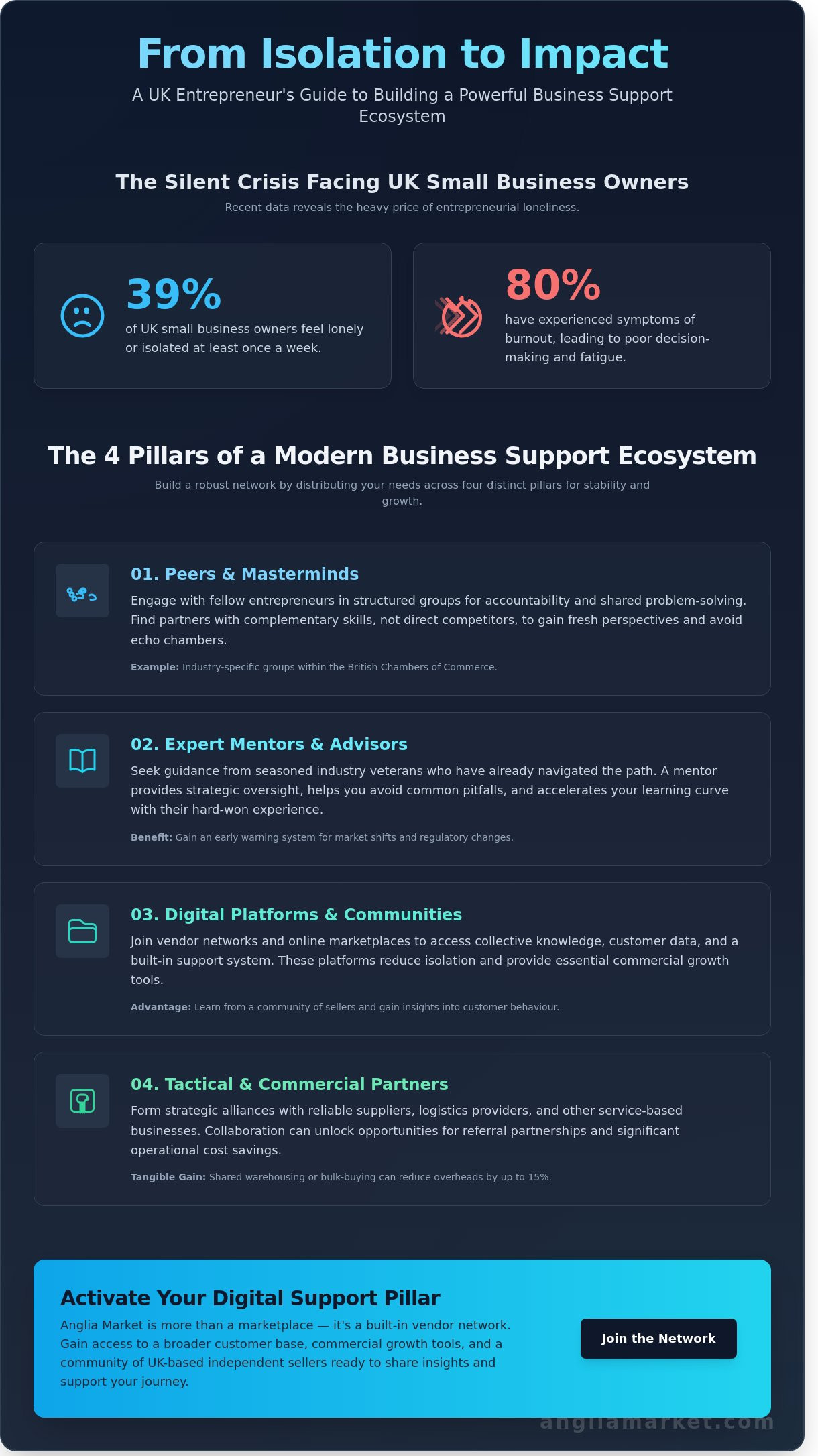
Did you know that 39% of UK small business owners report feeling lonely or isolated at least once a week? This 2023 data from Aldermore reveals a quiet crisis where entrepreneurs lack a reliable sounding board for difficult decisions. You likely recognise the frustration of attending admin-heavy networking events that yield zero results while your stress levels climb. Building a support network for small business owners is no longer a luxury; it is a commercial necessity to ensure your venture thrives rather than just survives.
We agree that your time is your most valuable asset, and you shouldn't waste it on connections that don't pay off. This guide promises to help you organise a strategic ecosystem of peers, mentors, and digital platforms designed to accelerate your growth. You will learn how to transition from feeling overwhelmed to having a reliable circle of trusted advisors and practical partnerships that lead directly to sales. We will break down exactly how to find these mentors and use digital tools to build a community that supports your bottom line.
Key Takeaways
- Identify the hidden risks of business isolation and learn how to organise a blend of emotional and tactical resources for long-term success.
- Master the four pillars of a modern business ecosystem to ensure you have the right mix of peer support and expert mentorship.
- Optimise your time by choosing the right "rooms," focusing on building a support network for small business owners that offers the best return on investment.
- Follow a practical 30-day plan to audit your current professional connections and start reaching out to high-value aspirational contacts.
- Discover how UK-based independent vendors can leverage the Anglia Market platform to access a broader customer base and commercial growth tools.
Why Building a Support Network for Small Business Owners is Essential
Building a support network for small business owners involves more than just casual chat. It's a strategic blend of emotional support, tactical advice, and commercial resources. Successful entrepreneurs don't operate in a vacuum. They use business networking to bridge gaps in their own expertise and gain access to collective wisdom. This ecosystem keeps you grounded while providing the tools needed to scale effectively. It's about finding people who understand the unique pressures of the UK market.
To better understand how these groups drive success, watch this helpful video:
Isolation carries a heavy price tag. According to a 2023 report by the Federation of Small Businesses (FSB), 80% of UK small business owners have experienced symptoms of burnout. Going it alone leads to poor decision-making and mental fatigue. You hit a growth ceiling quickly because you're limited by your own perspective. By building a support network for small business owners, you gain an early warning system. It helps you spot 2024 regulatory changes or sudden market shifts before they impact your bottom line.
The Psychological Impact of Entrepreneurial Loneliness
Feeling isolated is common in the UK small business community. Recent data indicates that 24% of SME owners feel lonely on a regular basis. Sharing experiences with peers reduces this mental load. It builds resilience. When you talk to others facing similar hurdles, you realise you're not alone. This is your best defence against imposter syndrome. You see that even successful leaders have doubts. Shared stories provide a roadmap through difficult periods.
Commercial Benefits of a Strategic Circle
The Four Pillars of a Modern Business Support Ecosystem
Building a support network for small business owners requires more than just a list of contacts. It involves creating a reliable ecosystem that balances emotional support with technical expertise. Relying on a single source of advice often leads to bottlenecks. Instead, successful UK entrepreneurs distribute their needs across four distinct pillars. These provide the stability required to scale without burning out.
Finding the Right Peers and Masterminds
Peer support isn't just about casual "coffee chats" that lack direction. While informal venting helps, structured peer boards provide accountability. These groups often follow a mastermind format where members present a specific challenge and receive feedback from others in the same boat. To avoid conflicts of interest, look for peers who complement your skills. A shop owner might partner with a local logistics provider to share insights on supply chain efficiency.
The British Chambers of Commerce, which represents over 70,000 businesses across 53 accredited chambers, is an excellent starting point for local networking. These associations offer access to industry-specific groups where you can find partners who understand your specific market regulations. It's about finding people who speak your language but don't compete for your exact customers.
In specific sectors, specialized online directories also play a crucial role in network building. For instance, Guide2Care provides a comprehensive list of care providers across the UK, allowing businesses in that field to identify potential partners and increase their local presence.
The Role of Digital Marketplaces as Support Pillars
Modern retail relies on data and shared infrastructure. Digital platforms do more than host products; they provide a built-in community of sellers. When you join a vendor network, you gain access to a collective pool of knowledge regarding customer behaviour and emerging trends. This reduces the isolation often felt by independent sellers.
Marketplaces offer specific advantages for those building a support network for small business owners:
- Data Insights: Use platform analytics to see what's selling in your category without expensive market research.
- Shared Best Practices: Learn from the successes and failures of other vendors regarding packaging, shipping, and listing optimisation.
- Operational Infrastructure: Leverage existing payment gateways and security protocols to de-risk your daily transactions.
Securing Professional and Mentorship Guidance
Distinguishing between a coach and a mentor is vital for your growth strategy. A business coach is action-oriented; they help you hit specific KPIs and improve performance. A mentor is wisdom-oriented; they offer long-term perspective based on their own career path. In 2021, the UK government launched the "Help to Grow: Management" programme, which is 90% funded and includes 10 hours of one-to-one mentorship.
Approaching a mentor doesn't have to be awkward. Be specific about what you want to learn. Don't ask to "pick their brain." Instead, ask for a 20-minute call to discuss a specific problem, such as VAT compliance or hiring your first employee. This shows respect for their time and sets a clear agenda. For those ready to expand their reach through a supportive platform, you can sell online with a partner that values small business growth. Professional services like accountants, solicitors, and specialist providers like Local Authority Search Network Ltd (Mynlis) complete this pillar by ensuring your operations remain legal and tax-efficient, providing the ultimate safety net for your enterprise; additionally, you can learn more about Cornerstone Business Solutions to see how expert IT services can further strengthen your business foundations.
Online vs. In-Person Networking: Choosing the Right "Rooms"
Building a support network for small business owners involves a strategic choice between physical presence and digital convenience. In-person events often require a higher financial investment; travel, tickets, and time away from the desk can cost upwards of £150 per day. However, the trust built over a face-to-face coffee—often facilitated by community-oriented venues like The White Bird—is often deeper than a dozen LinkedIn interactions. Digital communities offer 24/7 access and zero travel costs, making them ideal for quick problem-solving. Success depends on evaluating the ROI of each "room" you enter. If a group doesn't provide a fresh perspective or a lead within three months, it's time to move on.
Networking fatigue is a real risk for busy entrepreneurs. To stay productive, limit yourself to two high-quality events per month rather than attending every local mixer. Watch for red flags in any group you join. If the meeting is a "pitch-fest" where 90% of the time is spent on aggressive sales tactics rather than peer support, it won't help you grow. Look for rooms where the ratio of listening to talking is balanced. A hybrid approach is the most efficient way to manage your time. Use digital tools to maintain the momentum of relationships you initially sparked in person.
Making the Most of Local UK Events
Success at local events starts before you leave the office. Research the guest list on platforms like Eventbrite or LinkedIn to identify three key people you want to meet. This focus prevents you from wandering aimlessly. When you do connect, focus on giving before getting. A 2023 study by the Federation of Small Businesses (FSB) highlighted that peer-to-peer support is a top priority for 45% of UK firms. Turn a five-minute chat into a partnership by sending a follow-up message within 24 hours. Mention a specific point from your conversation to show you were listening.
Leveraging Digital Platforms for Global Reach
Digital networking allows you to scale your support system beyond your postcode. Start by optimising your seller profile to clearly state what you offer and what you're looking for in a partner. This clarity attracts the right entrepreneurs to your circle. Engaging in sector-specific forums is also vital. Whether you are connecting with other furniture specialists or electronics sellers, these niche groups provide technical advice that general groups lack. Use your social media presence to humanise your brand. Sharing the "behind-the-scenes" reality of your business attracts like-minded owners who value transparency over corporate polish.
For those aiming to connect with international partners or expand their business reach globally, mastering professional communication is a significant asset. Resources from English Explorer can help entrepreneurs refine their language skills to better navigate the complexities of international networking.
A 30-Day Plan to Organise Your Support Network from Scratch
Success in the UK market depends on who you know as much as what you sell. Building a support network for small business owners requires a structured approach rather than random LinkedIn requests. You don't need a massive budget to start. You just need 30 days and a clear schedule to turn strangers into a reliable professional circle. Small steps lead to big wins when you're consistent.
- Week 1: Run a full audit of your current contacts to find where you're lacking expert advice.
- Week 2: Reach out to three peers you admire for a quick, 15-minute virtual introduction.
- Week 3: Join a formal community or marketplace platform to increase your visibility and peer access.
- Week 4: Set a recurring calendar invite to maintain these new relationships and keep the momentum going.
Conducting a Connection Audit
Start by grouping your contacts into three specific buckets. Supporters are the people who offer emotional backing during tough months. Mentors provide high-level strategy and have usually been where you are now. Partners are those you can trade services or leads with to grow your customer base. Look for the gaps. If your marketing knowledge is weak, you need a mentor in that space. A 2023 report from the Federation of Small Businesses found that 33% of small firms struggle because they lack access to external advice. Don't be part of that statistic. Set a goal to find two new contacts in your weakest business area by day seven. Focus on quality over quantity; three solid mentors are better than fifty random names in a phone book.
The "Low-Admin" Follow-up Habit
Networking fails when it's not consistent. You don't need expensive software to stay on track. Use a simple spreadsheet to log your last interaction date and a "value-first" note. This note should be something helpful you can send them, such as a relevant news article or a potential lead. Schedule 20 minutes every Friday morning for this task. It's about being helpful, not just asking for favours. When you provide value first, you're more likely to get a reply. Direct outreach works best when it's personal and concise. Keep your emails under 100 words to respect their time. By day 30, this habit should be as natural as checking your daily sales figures.
How Anglia Market Supports Your Small Business Journey
Success in the UK retail sector requires more than just a digital storefront. It demands a reliable partner that prioritises your growth. Anglia Market goes beyond simple transactions to facilitate long-term success for independent vendors. By building a support network for small business owners, we provide the infrastructure needed to compete with larger corporations. Our online marketplace connects you with a nationwide audience, removing the geographical barriers that often limit local shops.
Engagement doesn't end at the point of sale. Our loyalty program is designed to encourage repeat business, helping you establish a stable revenue stream. If you encounter hurdles, our dedicated help centre provides professional guidance to resolve issues quickly. We understand that time is your most valuable asset; we ensure you don't waste it on technical troubleshooting or complex administrative tasks.
Simplifying the E-commerce Path
We handle the technical heavy lifting so you can focus on your craft. You don't need to be a web developer to reach thousands of customers. Our platform provides intuitive promotional tools and regular sales events to boost your visibility during peak shopping periods. Whether you specialise in home and garden essentials or niche pet supplies, you'll join a diverse community of sellers. This collective presence increases the overall footfall to the site, benefitting every individual vendor through shared traffic and brand awareness.
Start Your Partnership Today
Onboarding is straightforward. We've designed the process to let you sell online with minimal friction. Our commission structures are transparent; they're built to support SME profitability rather than drain it. As of 2023, the UK is home to approximately 5.5 million small businesses, and many face the same digital challenges. Join the thousands of UK sellers who have already found their digital home with us. We provide the tools, the audience, and the support; you provide the passion and the products. It's a partnership built for the modern British economy. Building a support network for small business owners is at the heart of what we do, ensuring that your growth is sustainable and supported every step of the way.
Take Action to Grow Your Business Network
Success in the UK's competitive retail landscape requires more than just a great product. You've seen how a balanced ecosystem of online groups and local meetups provides the emotional and strategic resilience needed to thrive. By implementing a structured 30-day plan, you'll move from isolation to a position of strength. Building a support network for small business owners is a vital commercial move, especially when you consider that Office for National Statistics data shows roughly 20% of new UK businesses fail within their first year. Don't leave your growth to chance when you can lean on a community of peers.
Anglia Market is here to facilitate your next chapter. We're already trusted by thousands of independent UK vendors who benefit from our practical, sales-focused platform. You'll have access to a dedicated support centre designed for seller success, ensuring you never have to navigate the marketplace alone. We don't believe in barriers to entry; that's why there are no upfront listing fees. We only succeed when you do. Join a marketplace that's as invested in your future as you are.
Start selling with Anglia Market and join our community of UK small businesses today!
It's time to stop working in a vacuum and start building the connections that will sustain your business for years to come.
Frequently Asked Questions
How do I find a business mentor in the UK for free?
You can find a free business mentor through the government-backed Help to Grow: Management Course, which offers 10 hours of one-to-one mentoring to eligible leaders. The Prince’s Trust provides free mentoring for entrepreneurs aged 18 to 30 who are starting a new venture. Local Growth Hubs across England also connect owners with volunteer mentors. These programmes are vital for building a support network for small business owners by pairing them with experts who understand the UK commercial environment.
What is the best networking group for small business owners?
The Federation of Small Businesses (FSB) is a leading choice for UK owners, representing over 160,000 members with local events and legal support. BNI is another popular option if you require a structured, weekly referral system to drive sales. For those seeking regional connections, the British Chambers of Commerce provides access to 53 accredited chambers across the country. Each group offers different benefits, so your choice should depend on whether you want advocacy, referrals, or local visibility.
How can I network if I am an introvert?
Start with one-to-one coffee chats or online forums instead of attending large, loud conferences. Focus on active listening to build deep connections without the pressure of performing for a crowd. Many introverts find success in niche LinkedIn groups where they can contribute thoughtful written advice. Setting a goal to speak to only two or three people at a physical event makes the process manageable. This targeted approach is a great way of building a support network for small business owners who find large crowds draining.
Is it worth paying for a professional business coach?
Paying for a coach is often worth the investment if you need a 20% increase in productivity or specific accountability for your goals. A 2023 report by the International Coaching Federation found that 86% of companies saw a return on their investment when hiring a professional. Unlike a mentor, a paid coach provides structured frameworks and objective feedback to help you scale. It's a practical commercial decision that depends on your current turnover and the complexity of your 12 month growth plan.
How do digital marketplaces help with networking?
Digital marketplaces like Anglia Market connect you with a community of independent UK vendors and local suppliers. These platforms let you see what other sellers are doing and find potential partners for cross-promotions or bulk buying. By joining a marketplace, you gain access to seller forums and internal support systems that facilitate collaboration. This helps small businesses reach more customers while sharing insights on digital marketing trends and logistics challenges.
What should I ask in a first meeting with a potential peer partner?
Ask about their current business challenges and what specific goals they aim to achieve in the next 6 months. You should also ask, "How can I help you right now?" to establish a reciprocal relationship from the start. Inquire about their preferred communication style and how frequently they want to check in. Knowing if they prefer Slack, WhatsApp, or monthly Zoom calls ensures your partnership starts with clear expectations and mutual respect.
How do I balance networking with running my daily operations?
Schedule networking into your calendar as a fixed task, limiting it to 90 minutes or 2 hours per week. Use automated tools for LinkedIn outreach to save time during your busiest periods. Additionally, streamlining team operations with Humae allows you to focus on high-impact activities, such as attending one monthly local meet-up rather than several low-value coffee mornings. This disciplined approach ensures you grow your connections without neglecting the 40 hours you spend on core business tasks and customer service.
Can I build a support network entirely online?
Yes, you can build a robust support network entirely online using platforms like LinkedIn, Reddit, and industry-specific forums. Virtual mastermind groups allow you to connect with peers across the UK without leaving your office. Many entrepreneurs use video calls for virtual co-working sessions to stay motivated and reduce isolation. While face-to-face meetings are useful, digital connections provide 24 hour access to advice and support from a wider pool of global expertise.

Here to help — ask anything
If you have any questions regarding this disclaimer or any of our policies, please contact Anglia Market through the contact page on our website, by email using the address provided on the site, or by phone at 0333 772 2593