
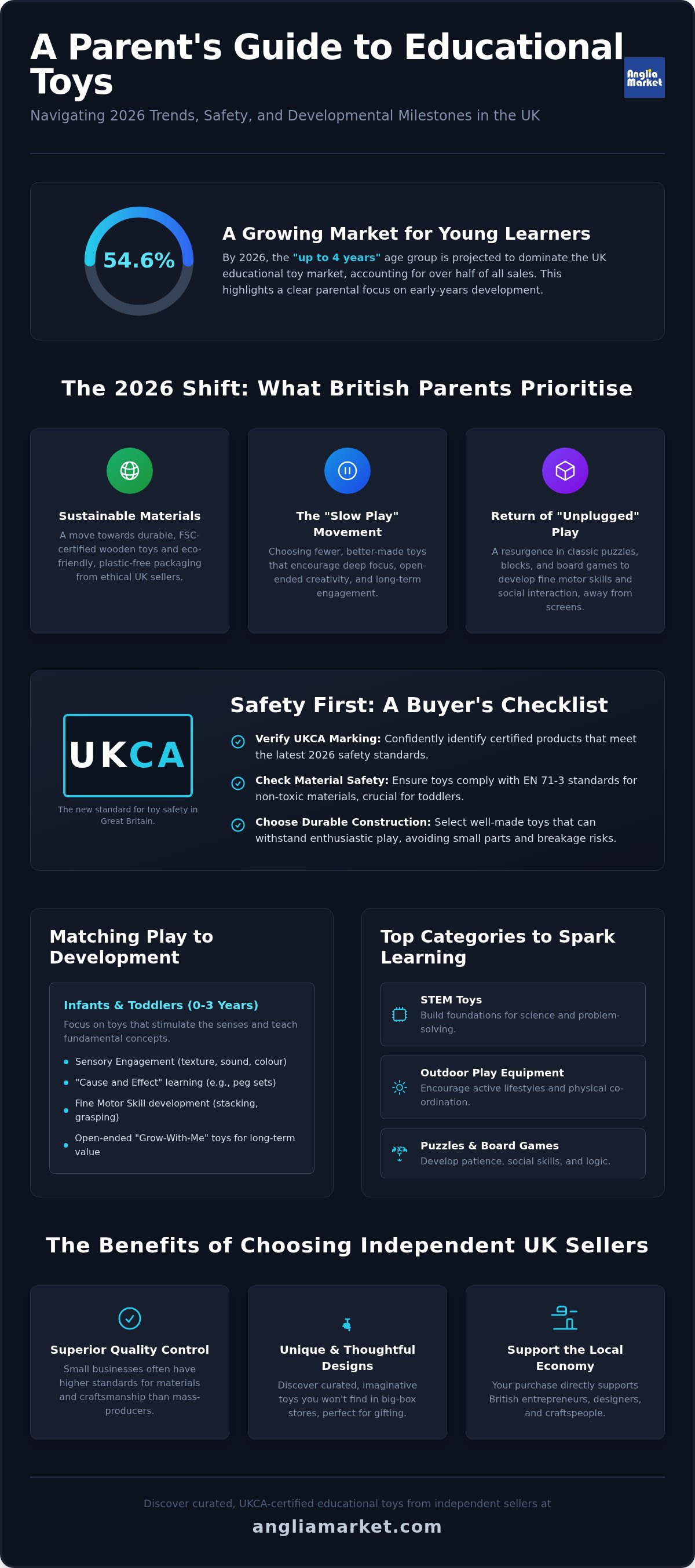
54.55% of the educational toy market is projected to be dominated by the "up to 4 years" age group in 2026. Most parents agree that finding the right balance between fun and learning is difficult; it's easy to feel overwhelmed by aisles of mass-produced plastic and the confusion surrounding post-Brexit safety markings. You want high-quality educational toys for toddlers UK that are built to last, yet finding unique items that meet the latest UKCA standards often feels like a chore.
This guide simplifies your search. You'll discover how to select safe, age-appropriate, and engaging toys whilst supporting independent UK businesses that offer something different from the big chains. We'll walk you through the updated 2026 safety regulations, including the new EN 71-3 standards for material safety. By the end of this article, you'll have a clear understanding of developmental milestones and the confidence to choose durable, unique gifts that aren't found on the high street.
Key Takeaways
- Understand the 2026 shift towards sustainable, FSC-certified wooden toys that prioritise high-quality play over mass-produced alternatives.
- Learn how to match developmental stages with the best educational toys for toddlers UK to ensure long-term engagement and value.
- Navigate the latest 2026 UKCA marking requirements to confidently identify safe, certified products and avoid unsafe counterfeits.
- Discover curated toy categories like STEM and outdoor play equipment designed to spark imagination and encourage active lifestyles.
- Realise the benefits of sourcing from independent UK sellers for better quality control and unique designs that support local businesses.
The Evolving World of Children’s Toys: Trends and Values in 2026
High-quality play in the 2026 British market is no longer defined by the loudest noises or the brightest flashing lights. Instead, parents are looking for durability, safety, and clear developmental benefits. The focus has shifted towards items that offer long-term value rather than disposable entertainment. Finding the right educational toys for toddlers UK families can trust means looking for products that challenge a child’s thinking whilst standing up to years of enthusiastic use. It’s about choosing tools that support growth at every stage.
The "slow play" movement is now a central part of how we shop. This philosophy encourages parents to buy fewer, better-made toys that promote deep focus and open-ended creativity. By reducing the number of items in a playroom, children often engage more intensely with what they have. If you want to understand the background of these learning tools, you can research what are educational toys to see how they have evolved from simple blocks to sophisticated developmental aids. This knowledge helps you make informed choices that benefit your child's cognitive progress.
To better understand how modern learning toys work in practice, watch this helpful video:
Sustainability and Eco-Friendly Materials
Sustainable materials are a top priority for British households in 2026. Wooden toys remain a firm favourite amongst parents because they are tactile, sturdy, and naturally free from many synthetic chemicals. FSC-certified wood is now the standard for ethical sourcing, ensuring that your purchases don't harm the environment. Modern toy production has also seen a rise in biodegradable materials and recycled components. Independent UK sellers are leading this green revolution. They often prioritise plastic-free packaging and carbon-neutral shipping, which you can find by browsing the toys and games category on our platform. These small businesses offer unique, eco-conscious alternatives to mass-produced plastic.
The Return of Traditional Play in a Digital Age
Digital fatigue has led to a major resurgence in traditional, "unplugged" play. While tablets have their uses, they can't replicate the physical feedback of tactile toys. Classic puzzles and board games are back in fashion because they require patience and social interaction. These items are essential for developing fine motor skills and hand-eye co-ordination in young children. Physical toys encourage toddlers to grasp, stack, and manipulate objects, which builds the foundation for writing and other complex tasks later in life. Choosing physical engagement over screen time helps maintain a healthy balance in a tech-heavy world. It’s a practical way to ensure your child develops essential real-world skills through simple, effective play.
Age-Appropriate Toys: Matching Play to Development
Selecting the right toys is a matter of timing. A toy that's too advanced causes frustration; one that's too simple leads to boredom. To choose effectively, we categorise play into four main stages: sensory, exploratory, constructive, and social. Understanding these milestones helps you find educational toys for toddlers UK parents can rely on for genuine progress. It's about matching the tool to the child's current ability whilst providing enough challenge to encourage the next step in their growth.
Look for "grow-with-me" toys to get the best long-term value. A set of high-quality wooden blocks is a perfect example. Initially, an infant explores the texture and weight. Later, the toddler uses them for stacking, and eventually, the preschooler builds complex structures. Avoid over-stimulating toys that rely on constant lights and loud electronic noises. These often lead to passive entertainment rather than active learning. Experts highlight the importance of play in child development, noting that simple, open-ended toys are far better for sparking imagination and problem-solving skills.
Infants and Toddlers (0-3 Years)
Focus on sensory engagement for this age group. Choose items with varied textures, soft colours, and gentle sounds. Toddlers specifically benefit from "cause and effect" toys. Simple wooden hammers and peg sets help them understand that their actions have a direct result. Safety is the absolute priority here. You must check for non-toxic finishes and ensure there are no small parts that could be choking hazards. When browsing educational toys for toddlers UK, always look for the UKCA marking to ensure the product meets the latest 2026 safety standards. You can find a curated selection of safe, durable options from independent sellers in our toys and games section.
Preschoolers and Early School Years (4-7 Years)
As children grow, they move into constructive and social play. This is the ideal time to introduce building blocks, magnetic tiles, and simple craft kits. These activities build fine motor skills and spatial awareness. Role-play toys, such as play kitchens or doctor's kits, are also vital. They help children develop social empathy and language skills by acting out real-world scenarios. You can also start introducing early STEM concepts. Logic puzzles and basic counting games provide a fun way to prepare children for a tech-centred future without relying on screens. Independent play thrives when children have the right tools to explore their own ideas without constant adult intervention.
Prioritising Safety and Quality in British Toy Selection
Safety is the most critical factor when buying educational toys for toddlers UK. It’s not just about durability; it's about legal compliance. In 2026, the UK government updated several safety standards to ensure products are free from harmful chemicals. Specifically, the standard for the migration of certain elements was updated to EN 71-3:2019+A2:2024 in February 2026. This means toys must pass even stricter tests for heavy metals and toxins before they reach your home. You should always verify that a product meets these current requirements.
Spotting unsafe toys on global platforms requires a sharp eye. Counterfeit items often lack clear manufacturer details or use vague material descriptions. Reputable UK marketplaces provide a layer of accountability that giant global sites often miss. By choosing a platform that vets its sellers, you reduce the risk of buying items with loose magnets or poorly secured battery compartments. These are significant hazards that require careful attention to age-grading labels. A toy that seems like a bargain might cost much more in terms of safety risks.
Understanding Safety Symbols and Standards
The UKCA (UK Conformity Assessed) mark is now the primary safety symbol for Great Britain. Whilst the CE mark remains accepted until the end of 2027, the UKCA symbol confirms the toy meets specific British regulations. You should also look for the Lion Mark. This symbol, created by the British Toy & Hobby Association, indicates a higher level of commitment to safety and ethical manufacturing. Always check for specific warnings. If a toy has small components or long cords, it isn't suitable for children under 36 months, regardless of how educational it claims to be.
Checking Vendor Credibility
Don't rely on price alone. Use customer reviews to gauge how a toy performs in real-world conditions. A durable toy shouldn't splinter or break after a few weeks of play. Reliable sellers provide transparent material lists, especially for wooden or silicone products. This transparency is why Anglia Market’s vendor profiles are so useful. You can see exactly who you are buying from and read about their commitment to quality. Supporting independent UK businesses means you get better quality control and a direct line of communication if you have safety concerns. It’s a practical way to ensure your child’s play area is both fun and secure.
Top Toy Categories to Spark Imagination and Learning
Motor skills toys are the leading product category in 2026, projected to account for 27.42% of the market. This data reflects a significant shift towards educational toys for toddlers UK parents use to bridge the gap between physical movement and cognitive development. You don't need a playroom overflowing with gadgets. Instead, focus on a few well-chosen items from specific categories that spark curiosity whilst keeping children active and engaged.
STEM Kits and Logic Games
Science, technology, engineering, and mathematics (STEM) toys are essential for preparing children for a tech-centred future. By 2026, simple coding toys and basic robotics have become standard tools for early learning. These kits provide hands-on experimentation that builds logic and problem-solving skills from a young age. The best STEM toys don't feel like "homework." They use play to teach complex concepts like cause and effect or spatial reasoning. Look for magnetic tiles or basic circuit boards that challenge children to think several steps ahead. These items remain genuinely fun whilst providing a solid educational foundation.
Outdoor Play and Exploration
Active play is a practical way to combat sedentary lifestyles and encourage physical health. Garden toys that foster a love for nature, such as bug-hunting kits or mud kitchens, are increasingly popular amongst British families. Physical challenges like climbing, balancing, and coordination are vital for developing gross motor skills and confidence. You can find a range of durable, weather-resistant equipment in the home and garden section of our marketplace. Choosing high-quality outdoor toys ensures they withstand the unpredictable British weather and provide years of active use for growing children.
Creative arts and crafts help toddlers develop self-expression and patience. Simple painting sets or clay modelling kits encourage children to focus on a single task for longer periods. Many independent UK sellers on our platform offer unique, non-mass-produced craft kits that use sustainable materials. It's also important to include inclusive and diverse toys in your collection. A toy box that reflects the modern world helps children understand and respect differences early on. Whether it's dolls with different skin tones or storybooks featuring diverse families, these items are essential for building social empathy.
Ready to find the perfect gift for your child? You can browse our full range of children's toys to discover high-quality, safe, and engaging options from independent UK businesses.
Supporting Local: Why Buy Children’s Toys from Independent UK Sellers?
Choosing independent UK sellers is a practical investment in the local economy. When you buy educational toys for toddlers UK from smaller vendors, your money stays within the country and supports over 500 independent businesses on our platform. These artisans and small-scale manufacturers often maintain much higher quality control than global giants. They aren't racing to produce millions of identical units; they're focused on creating durable, safe products that meet the latest 2026 UKCA standards. This focus on detail ensures you receive a product built for years of play rather than something destined for a landfill.
Anglia Market acts as a bridge, connecting your family with local creators who understand the British market. Buying locally also offers significant environmental benefits. Shorter supply chains mean fewer miles travelled and a smaller carbon footprint for every delivery. It’s a straightforward way to shop more ethically whilst enjoying the convenience of a single UK-based marketplace. You get the variety of a large shop with the accountability and care of a local boutique.
The Unique Charm of Non-Mass-Produced Toys
Independent creators often produce "heirloom quality" items. These aren't disposable pieces of plastic; they're well-crafted tools designed to be passed down through generations. Smaller vendors provide a personal touch that mass-market retailers can't match. They care about your experience and the safety of the children using their products. You can find unique designs that stand out from the generic options found in every major retail chain. Start discovering hidden gems in the Toys and Games section to find something truly special for your child's development.
Maximising Value with Loyalty and Promotions
Supporting local businesses doesn't have to mean paying a premium. We've designed our platform to make high-quality, safe educational toys for toddlers UK accessible for every budget. You can easily save on your purchases by joining the Anglia Market Loyalty Program, which rewards repeat buyers with points on every order. If you're looking for the best possible value, check the Sale page for seasonal deals. These promotions allow you to buy top-tier, certified toys at competitive prices. It’s a smart way to build a high-quality toy collection whilst supporting the small businesses that keep the UK economy thriving. You get the best of both worlds: exceptional value and the satisfaction of shopping small.
Invest in Your Child's Future with Quality Play
Selecting the right educational toys for toddlers UK is a practical way to support your child's growth whilst ensuring their safety. By following the latest 2026 UKCA standards and focusing on developmental milestones, you can build a toy collection that offers long-term value. Choosing independent sellers over mass-produced alternatives provides access to unique, durable designs that you won't find on the high street. These items are built to last and can often be passed down through generations.
Our marketplace makes it easy to find these high-quality items. We support over 500+ independent UK vendors, giving you a curated selection of ethical and engaging toys. Every transaction is handled through our verified secure checkout for your peace of mind. You can also earn points with every purchase via our loyalty scheme to save on future gifts for your family. It's a smart way to ensure you get the best value whilst supporting the small businesses that keep our local economy thriving.
Browse our curated collection of children’s toys from independent UK sellers and start building a better playroom today. Investing in quality play is one of the best ways to prepare your child for a bright, creative future.
Frequently Asked Questions
What are the most popular children’s toys for 2026?
Motor skills toys and STEM kits are the top choices for parents this year. Data shows that motor skills products now lead the market as families prioritise physical development and coordination. Sustainable wooden items from independent makers are also trending as an ethical alternative to mass-produced plastic. These toys focus on open-ended play rather than passive electronic entertainment.
How do I know if a toy is safe for my child in the UK?
You should always look for the UKCA mark or the Lion Mark on the packaging. These symbols confirm the product meets strict British safety regulations, including the updated EN 71-3 standards for chemical migration. Always check the age-grading labels to ensure there are no small parts that could pose a choking hazard for younger children.
Are wooden toys better than plastic toys for development?
Wooden toys are often superior for encouraging open-ended play and deep focus. They provide natural tactile feedback and don't rely on over-stimulating lights or sounds that can lead to passive engagement. Whilst plastic toys are safe if they meet UK standards, high-quality wooden items are more durable and often become heirloom pieces passed down through families.
Where can I find unique children’s toys that aren’t in big-box stores?
Independent online marketplaces are the best place to find non-mass-produced items. These platforms connect you directly with local artisans and small businesses that specialise in unique designs. Shopping this way ensures you find educational toys for toddlers UK that are distinctive, well-crafted, and not available on every high street shelf.
What age is appropriate for STEM toys?
STEM concepts can be introduced to toddlers as young as two years old through simple logic puzzles and cause-and-effect toys. These items build the foundation for scientific thinking without needing complex technology. By the age of four, children can progress to basic coding kits and robotics designed to make technical learning feel like a fun game.
How can I support small UK businesses when buying toys online?
The most effective way is to use platforms that specifically host independent UK vendors. By choosing these sellers, you ensure your money stays within the local economy and supports over 500 small businesses. This approach often gives you access to better quality control and more transparent material lists than global retail giants provide.
What should I look for in a toy for a child with sensory needs?
Focus on toys with varied textures, weighted elements, and calming visual patterns. You should avoid items with unpredictable loud noises or aggressive flashing lights which can be overwhelming. Natural materials like silicone or FSC-certified wood are excellent choices for sensory seekers because they offer consistent, soothing tactile feedback during play.
How do I check if a toy meets UKCA standards?
The UKCA symbol must be clearly visible on the toy itself or its permanent packaging. This marking is Great Britain’s equivalent to the CE mark and confirms the manufacturer has met all legal safety requirements. Reputable UK sellers will always be able to provide a declaration of conformity if you have specific concerns about a product's safety credentials.

Here to help — ask anything
For questions about this disclaimer or the site, contact us via the website’s Contact page.


