
Did you know that increasing your customer retention by just 5% can boost your profits by more than 25%, according to research from Bain & Company? For many UK small business owners, the reality is often the opposite; you're likely spending five times more to attract a new shopper than to keep an existing one. We understand that creating a customer loyalty program often feels like a technical headache or a risk to your profit margins. It's frustrating to watch your hard-earned traffic result in one-off sales while larger retailers dominate the market with their massive budgets.
You don't need a corporate-sized team to build a system that works. This guide shows you how to build a high-retention loyalty programme that drives repeat sales and scales your small business on modern marketplaces. We'll explore how to set up a simple, automated retention system that increases your customer lifetime value without giving away too much margin. From choosing the right rewards to using 2026 marketplace trends, you'll gain a competitive edge over the big brands while keeping your operations lean and profitable.
Key Takeaways
- Discover why focusing on customer retention offers a 5x higher ROI than acquisition for UK small businesses in 2026.
- Identify the ideal loyalty model for your brand by matching your framework to your specific product niche and purchase cycle.
- Follow a practical 5-step roadmap for creating a customer loyalty program that sets measurable goals and utilizes the right technology stack.
- Learn how to scale your retention strategy by leveraging Anglia Market’s existing traffic and integrated marketplace tools to build your private loyalty list.
The Strategic Importance of Creating a Customer Loyalty Program in 2026
Creating a customer loyalty program is a structured marketing strategy designed to reward repeat buying behavior. In the 2026 UK retail market, this isn't just an optional extra. It's a commercial necessity. While many businesses focus on finding new shoppers, the ROI on retention is five times higher than acquisition. Most UK SMEs now find that their existing customer base generates the majority of their annual revenue.
The traditional sales funnel is dead. It has been replaced by the "Loyalty Loop." Instead of a linear journey that ends at the checkout, the loop focuses on post-purchase engagement to bring customers back. By 2026, the shift is toward digital-first, personalized rewards. Customers don't want generic offers; they want rewards tailored to their specific shopping habits and preferences.
To better understand this concept, watch this helpful video:
Why SMEs Must Focus on Retention Over Acquisition
Digital advertising costs for UK sellers have climbed steadily since the 2024 phase-out of third-party cookies. This "cookie-less" environment makes it harder and more expensive to target new buyers. Retention provides a shield against these rising costs. Beyond the numbers, there's a psychological benefit. In a crowded marketplace, a loyalty scheme gives shoppers a sense of belonging and community. For 2026, Lifetime Value (LTV) is the total net profit you expect from a customer over their entire relationship with your brand. It's the most critical metric for long-term survival.
The Economic Impact: How Loyalty Drives Profitability
Data from Bain & Company shows that a 5% increase in customer retention can boost profits by 25% to 95%. This happens because loyal customers are less price-sensitive and buy more frequently. They also trigger the "advocacy effect," acting as unpaid brand ambassadors who refer others to your shop. This organic word-of-mouth is more trusted than any paid advert.
Smart use of customer loyalty program models also provides invaluable data for inventory planning. When you understand what your members like, you can manage stock more efficiently. This is particularly useful for high-value categories like furniture or fast-moving electronics. Knowing your customers' habits means you'll have the right products ready when they want them, reducing waste and improving cash flow.
- Repeat Sales: Loyal members spend 67% more than new customers on average.
- Reduced Costs: Keeping a customer is significantly cheaper than finding a new one.
- Better Data: Loyalty programs provide direct insights into UK consumer trends.
Designing Your Framework: The Four Most Effective Loyalty Models
Successful loyalty architecture rests on four primary pillars. Your choice depends entirely on your sales cycle. A high-street cafe needs a different setup than a specialist furniture store. When creating a customer loyalty program, you must match the model to your transaction frequency. If customers buy from you weekly, they need fast rewards. If they buy once a year, they need long-term value. UK retailers are increasingly adopting hybrid models. These blend different styles to maintain interest throughout the year. Industry experts often highlight the strategic importance of loyalty programs as a core business driver rather than a simple marketing add-on. Modern shoppers demand instant gratification. They want a small win immediately upon joining to feel the partnership is worthwhile.
Points-Based Systems: The "Earn and Burn" Classic
This is the most straightforward approach. You set a clear exchange rate, such as 1 point for every £1 spent. It works exceptionally well for high-frequency categories like pet supplies where repeat purchases are guaranteed. The simplicity makes it easy for customers to track their progress. However, avoid letting points sit idle. Set a clear expiry date, perhaps 12 months from the date of the last purchase. This creates a healthy sense of urgency and prevents massive liabilities on your balance sheet. It keeps your brand top-of-mind for the next shop.
Tiered Loyalty: Gamifying the Customer Experience
Tiers add a competitive element to shopping. You can define levels like Bronze, Silver, and Gold based on annual spend. For example, customers might reach Silver after spending £500 in a calendar year. Instead of just offering discounts, use exclusive perks. Early access to a seasonal sale or free next-day shipping provides high perceived value at a lower cost to you. Tiers create a "sunk cost" effect. Once a customer reaches Gold status, they are 70% less likely to switch to a competitor because they don't want to lose their hard-earned benefits.
Value-Based and Paid (VIP) Models
Value-based models connect with a customer’s ethics. You might donate 1% of every sale to a UK-based charity. This builds deep trust without cutting into margins through discounts. Alternatively, paid models follow the "Amazon Prime" logic. Customers pay an annual fee, perhaps £20, to unlock premium benefits. This works best in niches like high-end home and garden where shipping costs are usually high. The fee guarantees the customer will return to "get their money's worth." When creating a customer loyalty program for a niche market, consider if your audience prefers exclusive access over small savings. You can explore our current promotions to see how different reward structures look in practice.
Matching Your Loyalty Scheme to Your Product Niche
When creating a customer loyalty program, success depends on your specific sector. A £1,200 velvet sofa requires a different strategy than a £15 lipstick. The primary factor is your purchase cycle. In a 2024 retail study, furniture shoppers only returned every 5 to 7 years on average. Beauty consumers, however, often replenish products every 45 to 60 days. You can't use the same points-per-pound system for both.
Distinguish between transactional and emotional loyalty. Transactional loyalty is about the deal; it's points and pence. Emotional loyalty is about the connection. According to 2025 consumer surveys, 68% of shoppers prefer brands that offer exclusive access or personalized advice over simple discounts. SMEs with tighter margins should focus on these emotional perks to stay profitable.
Use a margin-based framework for rewards. If your net profit margin is 15%, a 10% discount is too aggressive. Aim for rewards that cost you 2% to 5% of the total transaction value. This keeps your scheme sustainable for the long term while still providing value to the shopper.
High-Ticket Items: Furniture and Electronics
Focus on the post-purchase phase. High-ticket buyers won't return for months or years. Offer "refer-a-friend" bonuses worth £50 or free maintenance kits to keep them engaged. Use loyalty data to drive cross-selling. If a customer buys a sofa, send a 10% voucher for a coffee table within 30 days. Provide "expert-only" content, like video guides on caring for electronics, to maintain the relationship without needing a new sale.
Repeat Essentials: Beauty, Pets, and Kitchenware
These niches rely on frequency. Creating a customer loyalty program here should involve "subscription-lite" models that offer small discounts for regular orders. For kitchen and dining sellers, recipe-based loyalty works well. Give points when customers share photos of their meals using your products. Use "surprise and delight" gifts, like a free sample in the box, to encourage unboxing shares on social media. This boosts your brand visibility without a heavy ad spend.
- Furniture: Focus on referrals and high-value maintenance perks.
- Beauty: Use replenishment reminders and tiered points for frequent buys.
- Electronics: Prioritize extended warranties and technical support as loyalty rewards.
- Pet Supplies: Implement birthday rewards for pets to build an emotional bond.
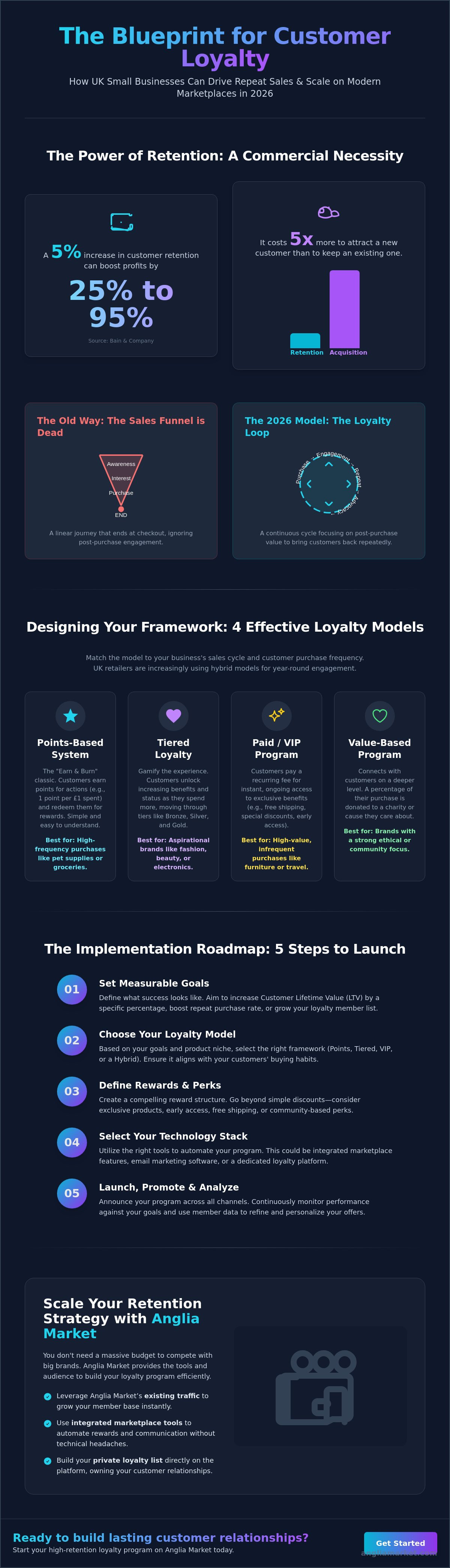
The Implementation Roadmap: Creating Your Program in 5 Steps
Building a successful scheme requires a structured approach. You can't just offer random discounts and expect results. When creating a customer loyalty program, your first move is defining success. Aim for a specific target, such as increasing your repeat purchase rate by 15% within the first six months of 2026. This measurable goal helps you track if the investment is actually paying off.
The technical side of creating a customer loyalty program involves choosing between integrated marketplace tools and standalone software. Integrated tools are faster to set up and sync directly with your existing inventory. Standalone apps often provide deeper customisation for tiered rewards. Pick the one that fits your current workflow without adding hours of admin every week.
- Step 1: Set clear goals. Don't just aim for "more sales." Target a 10% rise in average order value (AOV) or a 20% increase in customer lifetime value.
- Step 2: Choose your tech. Look for software that handles UK VAT automatically and integrates with your email marketing platform.
- Step 3: Define terminology. Decide if you'll use Stars, Credits, or simple Pounds. Brand-specific names like "Market Coins" create a unique identity for your shop.
- Step 4: Multi-channel launch. Don't hide the program. Feature it on your homepage, in order confirmation emails, and on social media.
- Step 5: Monitor and prune. Review your data every 90 days. If a specific reward, like a £5 voucher, hasn't been claimed by at least 10% of members, replace it with something more popular.
UK Data Compliance: GDPR and Your Loyalty Scheme
You must have a legal basis for processing member data under UK GDPR. Most UK SMEs use "consent" or "contractual necessity." Ensure your sign-up form has a clear, un-ticked "opt-in" box for marketing communications. You can't bundle loyalty membership with mandatory newsletter sign-ups without clear disclosure. Your business must maintain a transparent, easily accessible Privacy Policy that explains exactly how member shopping habits are tracked and stored.
Marketing Your Launch: Getting the First 100 Members
Start with the customers you already have. Use email marketing to "grandfather in" your existing buyers by giving them 50 bonus points immediately. This rewards their past support and gets them using the system on day one. Create a "Launch Week" bonus where every purchase earns double points to drive urgency. You should also use promotions on your main site banners to ensure every visitor knows they can earn rewards while they shop.
Scaling Your Retention Strategy with Anglia Market
Developing a custom tech stack for creating a customer loyalty program often costs UK SMEs upwards of £5,000 in initial setup fees. Marketplace platforms eliminate this financial barrier. By using Anglia Market, you avoid the technical headaches of API integrations and database management. You gain access to a pre-built infrastructure designed for high-speed transactions and secure data handling. It's a plug-and-play solution for businesses that want to focus on products rather than code.
Leveraging existing traffic is the fastest way to grow your reach. Anglia Market attracts thousands of monthly visitors looking for quality UK-based products. You don't have to spend your entire marketing budget on expensive lead generation. Instead, you can focus on converting these visitors into repeat buyers. This built-in audience provides a steady stream of potential members for your private loyalty list from day one. It's a more efficient way to scale than building an isolated website from scratch.
Being part of a trusted ecosystem is vital for UK-based sellers. Consumers are 40% more likely to buy from a marketplace they already trust. Anglia Market provides that layer of security. Shoppers feel confident knowing their transactions are protected. This trust transfers directly to your brand, making it much easier to encourage that crucial second purchase.
Benefits for Marketplace Vendors
When you sell online through a dedicated marketplace, your brand gains instant credibility. It's about building a reputation that survives long after the first sale. You can use integrated tools to monitor buyer habits and preferences. This data shows you exactly what your customers want. You'll see which promotions work and which don't. Connecting with other vendors in the community allows you to swap insights on logistics and customer service. This peer-to-peer learning is vital for staying competitive in the 2026 retail market.
Next Steps: Joining the Anglia Market Community
The Anglia Market Loyalty Program offers buyers a unified experience across multiple shops. This ecosystem encourages shoppers to return to the platform frequently. You can participate in platform-wide sales events to gain massive visibility. These events often see a significant spike in traffic compared to regular trading days. It's an efficient way to boost your brand's reach without the high costs of independent advertising.
Don't wait for the perfect moment to launch. The most successful UK retailers start small and iterate based on real feedback. Creating a customer loyalty program is a marathon; it's not a sprint. Take the first step by setting up your presence on a platform that supports your growth. Start selling and building your customer base with Anglia Market today to secure your business's future.
Future-Proof Your UK Small Business for 2026
Creating a customer loyalty program isn't just about giving away discounts; it's about building a sustainable growth engine for your UK SME. By 2026, the cost of acquiring new customers is expected to continue rising, making retention your most profitable strategy. Focus on the five-step implementation roadmap and choose a rewards model that fits your specific product niche. Whether you sell home goods or vehicle parts, your framework must offer genuine value to keep shoppers coming back.
Small businesses that prioritize customer lifetime value often see significant returns. A study by Bain & Company found that increasing retention by just 5% can boost profits by 25% to 95%. Anglia Market provides the simple, secure marketplace platform you need to reach a broad, loyal customer base across dozens of categories. We're dedicated to supporting independent vendors by providing the infrastructure to thrive in a competitive digital landscape. You'll gain access to a platform designed for efficiency and commercial success.
Join Anglia Market today and start building your loyal customer base
It's time to turn one-time buyers into lifelong fans of your brand and watch your business grow.
Frequently Asked Questions
Is a customer loyalty program worth it for a very small business?
Yes, it's a vital investment for small firms because it costs 5 to 25 times more to acquire a new customer than to retain an existing one. For a UK micro-business, even a 5% increase in retention can boost profits by 25% to 95% according to research from Bain & Company. Creating a customer loyalty program helps you build a stable revenue base without a massive advertising budget.
What is the most popular type of loyalty program in the UK?
Points-based systems are the most popular format in the UK market. A 2023 YouGov report found that 77% of UK consumers are members of at least one loyalty scheme, with supermarkets leading the way. These programs allow shoppers to accumulate credit through spend, which they later redeem for discounts or free items. This familiarity makes it a reliable choice for small businesses.
How do I calculate the ROI of my loyalty scheme?
You calculate ROI by subtracting the total program costs from the total profit generated by loyalty members, then dividing by the program costs. You must track the Repeat Purchase Rate and Customer Lifetime Value. If your repeat purchase rate increases from 20% to 30% after launch, you can attribute that specific revenue growth directly to the success of your new scheme.
Can I run a loyalty program if I only sell on a marketplace?
You can run a program, but you must work within the marketplace's specific API or terms of service. Platforms like Shopify or Etsy often have integrated apps that track customer purchases automatically. If you sell on multiple UK platforms, use a third-party tool to centralise data so customers earn rewards regardless of where they buy. This ensures a consistent experience for your fans.
How many points should a customer earn per pound spent?
The standard UK retail benchmark is 1 point for every £1 spent. Most successful schemes offer a redemption value between 1% and 5%. For example, if a customer spends £100, they might earn £1 in rewards for their next visit. This keeps the math simple for the shopper and ensures your profit margins remain protected while still offering a clear incentive to return.
What are the biggest mistakes to avoid when creating a loyalty program?
The biggest mistake is making the redemption process too complicated or setting reward thresholds too high. If a customer needs to spend £500 before seeing any benefit, 70% of participants will likely abandon the scheme. Avoid point expiration traps that frustrate users. Creating a customer loyalty program requires transparency and immediate value to maintain long-term trust with your audience.
Should I use a digital app or physical cards for my loyalty scheme?
Digital apps are the preferred choice for 68% of UK shoppers under the age of 45. They reduce printing costs and provide better data for your marketing efforts. However, if your demographic is older, a hybrid approach works best. Physical cards ensure you don't exclude the 13% of UK adults who may not use a smartphone for their daily shopping needs.
How do I keep my loyalty program GDPR compliant?
You must obtain explicit opt-in consent at the point of registration and provide a clear privacy policy. Under UK GDPR, customers have the right to be forgotten, so your system must allow for easy data deletion. Ensure you only collect necessary data, like email addresses and purchase history, and store it on secure, encrypted servers. Transparency about data usage is mandatory for compliance.

Here to help — ask anything
If you have any questions regarding this disclaimer or any of our policies, please contact Anglia Market through the contact page on our website, by email using the address provided on the site, or by phone at 0333 772 2593