
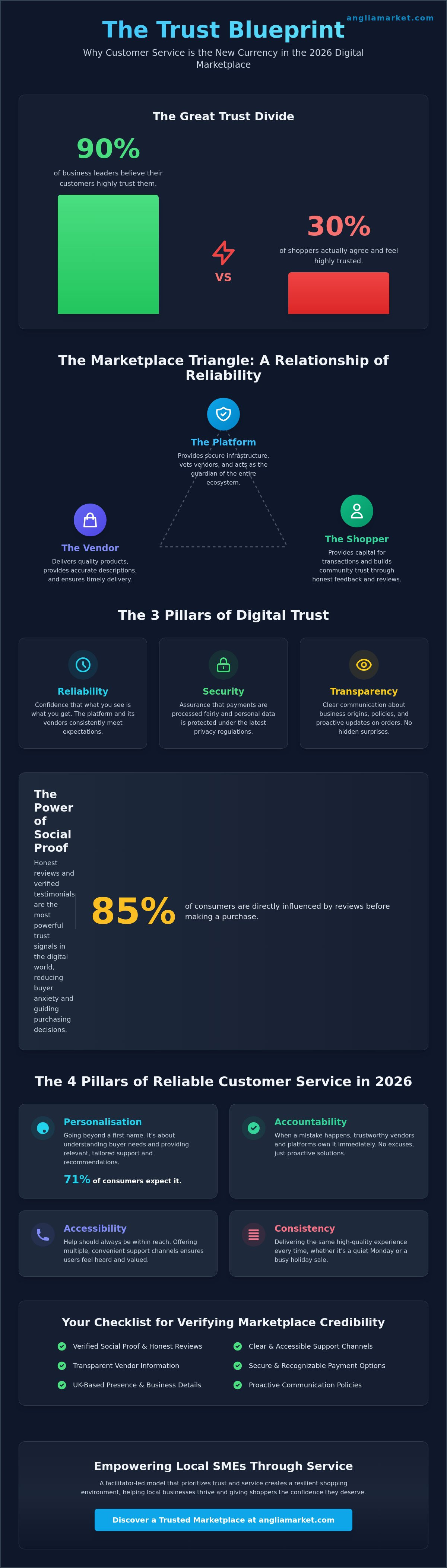
Did you know that 90% of business leaders believe their customers highly trust them, but only 30% of shoppers actually agree? This massive gap is the biggest hurdle in the digital marketplace today. For UK buyers and sellers, the connection between trust and customer service is no longer just a "nice to have" feature. It's the primary filter for every transaction. You've likely felt the frustration of dealing with faceless corporations or worrying about a scam from an unknown vendor. It's natural to feel hesitant when there's no clear human support or a simple way to handle returns.
We agree that shopping online should feel secure and straightforward. In this article, you'll discover why exceptional service and transparency are the non-negotiable pillars of successful online trading. We'll show you how to find platforms that empower local SMEs while keeping your data safe under the latest 2026 privacy regulations. We'll also preview how clear communication channels and honest reviews, which influence 85% of consumers, create a marketplace that actually works for everyone involved. It's about more than just a sale; it's about building a reliable community for commerce.
Key Takeaways
- Understand the "Marketplace Triangle" and how the relationship between platform, vendor, and shopper defines reliability.
- Discover why trust and customer service in 2026 rely on immediate accountability and personalized buyer support.
- Identify the distinct responsibilities of platforms and vendors to ensure secure payments and high-quality product delivery.
- Use our practical checklist to verify marketplace credibility through verified social proof and UK-based support structures.
- Learn how a facilitator-led model empowers local SMEs and creates a more resilient shopping environment for everyone.
What is Customer Trust in the Context of a Digital Marketplace?
Trust isn't just a feeling. In a digital environment, it's a measurable business asset built on three specific pillars: reliability, security, and transparency. When we discuss Trust and customer service, we're describing the invisible thread that holds every transaction together. Without it, the gears of commerce simply stop turning. For a shopper, trust means knowing that what they see on the screen is exactly what will arrive at their door. For a seller, it's the confidence that the platform will protect their interests and process payments fairly.
To understand how this functions, we look at the "Marketplace Triangle." This is the three-way relationship between the platform, the vendor, and the shopper. Gaining a clear perspective on what an online marketplace is helps clarify these roles. The platform provides the secure infrastructure and vetting. The vendor delivers the quality product and accurate descriptions. The shopper provides the capital and honest feedback. If any side of this triangle fails to meet expectations, the whole structure collapses. The platform acts as the guardian of this relationship, ensuring everyone plays by the rules.
In 2026, consumer expectations have undergone a major shift. Shoppers no longer prioritize massive corporate names over everything else. They want authenticity. They want to know the story behind the business. Trust acts as the lubricant for digital commerce; it reduces the friction of uncertainty and makes the path from "add to basket" to "checkout" much smoother. When a buyer trusts the system, they're more likely to explore new categories and support independent sellers.
The Psychology of Trust in Online Shopping
Visual cues start the trust process long before a purchase is made. High-quality images and clear social proof, like verified testimonials, influence that first critical click. Consistent branding across the site reduces buyer anxiety. It tells the shopper that the experience will be professional and predictable. Being transparent about business origins, such as highlighting a UK-based presence, builds immediate rapport. It makes the "faceless" internet feel a bit more like a local high street, which is essential for reducing buyer's remorse.
Service as a Tangible Proof of Trust
Service isn't just about fixing a broken item. It's about proactive communication. If a delivery is delayed, telling the customer before they have to ask is an act of trust-building. High responsiveness lowers the perceived risk of a purchase. When a platform or vendor responds quickly, it proves they're present and accountable. Strong Trust and customer service standards ensure that every interaction reinforces the buyer's decision. Ultimately, trust is the predictability of a positive outcome.
The Core Pillars of Reliable Customer Service in 2026
Reliability in a digital marketplace is built on visible actions. While the previous section defined trust as a foundational concept, customer service is the practical application of that trust. In 2026, Trust and customer service are defined by four non-negotiable pillars: personalisation, accountability, accessibility, and consistency. These aren't just buzzwords; they're the standards that determine whether a shopper returns or leaves for a competitor. Trust is earned in the small details of every interaction.
Personalisation now goes far beyond simply using a customer's first name in an email. Research shows that 71% of consumers expect personalised interactions, and 76% get frustrated when this isn't met. This means understanding specific buyer needs and providing relevant recommendations. Accountability is equally vital. When a mistake happens, such as a delayed delivery, the most trustworthy vendors own the error immediately. They don't deflect blame to third-party couriers. When shopping, Verifying Marketplace Credibility involves checking how a platform handles these inevitable hiccups. A marketplace that stands behind its transactions creates a safe environment for everyone.
Accessibility and consistency ensure that help is always within reach. A shopper should have the same high-quality experience on a quiet Monday morning as they do during a busy Friday night sale. Providing multiple channels of support, from social media to dedicated helpdesks, ensures that users can communicate in the way they find most convenient. This omnichannel approach is essential for maintaining a seamless flow between browsing and buying.
Human-Centric Support vs. Automated Efficiency
The rise of "agentic AI" in 2026 allows for 24/7 instant support, but technology shouldn't replace human empathy. AI is excellent for triage and answering basic logistics questions quickly. However, complex issues require a human touch to resolve frustration and build a real connection. Centralising these interactions through a dedicated Freshdesk support portal ensures no message is lost. Small businesses can often outperform retail giants by offering these "un-scalable" personal touches that make a shopper feel valued rather than like a ticket number.
Proactive Communication Strategies
The best service happens before a customer even thinks to complain. Proactive communication means updating a buyer on their order status before they feel the need to ask. Using newsletters and loyalty updates keeps the brand present in a helpful, non-intrusive way. Clarity is also a form of service. Using clear terms for every latest promotion prevents confusion and ensures the buyer knows exactly what they're getting. Transparent pricing and straightforward terms are the simplest ways to maintain Trust and customer service excellence throughout the year.
Marketplace Accountability: Platform vs. Vendor Responsibilities
Accountability in a digital market is a shared burden. While we've discussed how Trust and customer service function as a foundation, it's vital to know who holds the responsibility for specific parts of your shopping journey. Think of the platform as the infrastructure provider. Its job is to vet sellers, secure every payment, and keep the technical side running smoothly. On the other hand, the vendor is responsible for the tangible experience. They ensure product quality, write accurate descriptions, and handle timely dispatch.
When a platform partners with local SMEs, they create a unified "trust shield." This partnership is powerful because both parties have a vested interest in the shopper’s success. The platform protects the shopper's interests by managing the "middleman" perception; it isn't just a passive directory. It's an active facilitator that steps in to ensure fairness. This dual-layer of protection is what makes modern online trading viable for UK buyers. Clear boundaries help everyone understand their role in the transaction:
-
The Platform: Handles payment security, technical stability, and initial seller vetting.
-
The Vendor: Manages inventory accuracy, product quality, and shipping speed.
-
The Shared Goal: Providing a seamless experience that encourages repeat business.
Vetting and Verification Processes
Knowing your seller is the first step in digital security. A platform's vetting process is a filter that keeps the marketplace healthy. By providing transparent vendor information and detailed seller profiles, the platform removes the "unknown" factor that causes buyer anxiety. This rigorous onboarding process isn't just a hurdle for sellers. It's a badge of legitimacy. It benefits the end consumer by ensuring they're dealing with verified businesses, not faceless entities. When a platform takes this step seriously, it reduces the risk of scams and low-quality interactions from the very beginning.
Dispute Resolution and Protection
Even with the best systems, things occasionally go wrong. This is where the platform's "Safety Net" function becomes critical. Trust is often built during the resolution of a problem rather than during a perfect transaction. Fair, fast, and transparent mediation processes allow both buyers and sellers to feel secure. There's a significant psychological comfort in knowing a "higher authority" exists to appeal to if a dispute arises. Effective Trust and customer service means having a clear path to a resolution that doesn't leave the shopper feeling stranded or unheard.
A Practical Checklist for Verifying Marketplace Credibility
Verifying a platform shouldn't be a guessing game. While the previous sections explored the theory of Trust and customer service, you need actionable steps before clicking "buy." Start by looking for authentic social proof. Genuine feedback from real people is the most reliable indicator of a platform’s health. You can browse verified testimonials to see how other UK shoppers have experienced the service. A platform that hides its feedback is usually one to avoid.
A clear, UK-based physical presence or support structure is another non-negotiable. If things go wrong, knowing there is a local team to contact provides immense peace of mind. You should also examine the platform's entry requirements for vendors. Legitimate marketplaces have high standards for those who want to sell online. If the onboarding process is too easy, the risk of encountering low-quality vendors increases. Finally, check for active engagement on social channels like Facebook and Instagram. A brand that regularly interacts with its community is more likely to be accountable.
Evaluating Seller Reputation
Reading reviews requires a bit of strategy. Look for specific details about product quality and dispatch times rather than generic "five-star" ratings. Genuine feedback often mentions specific interactions with the seller. Pay attention to "Repeat Seller" status. Vendors with a long-term presence on a platform have a track record to protect. Be wary of red flags, such as product descriptions that seem copied or pricing that feels too good to be true. In the digital world, if it looks like a scam, it probably is.
Securing Your Transaction
Safety starts at the checkout. Always identify secure payment gateways and look for data protection badges. These are technical signals that the platform takes your privacy seriously. Clear return policies and "No Quibble" guarantees are essential for a stress-free experience. If a site makes it difficult to find their refund terms, take your business elsewhere. The cheapest price often carries the highest trust risk. Prioritising Trust and customer service over a few pounds in savings often prevents a much more expensive headache later. Ready to shop with confidence? Explore our latest promotions from verified UK vendors today.
The Anglia Market Commitment: Empowering SMEs Through Service
Our mission centers on the success of independent British businesses. We understand that Trust and customer service aren't just metrics for a spreadsheet; they're the lifeblood of a healthy community. Anglia Market operates with a clear facilitator philosophy. We believe that a marketplace is only as strong as the relationships it hosts. We only succeed when our vendors and buyers thrive together. This means providing a platform where quality meets reliability without the complexity often found in global retail giants.
Engagement should be rewarded over the long term. Our Loyalty Program is designed to do exactly that. It recognizes the value of consistent engagement and encourages buyers to keep supporting the vendors they trust. This isn't just about a one-off sale. It's about building a sustainable ecosystem where repeat business is driven by positive experiences. We're committed to keeping our support human, accessible, and straightforward. You won't find yourself trapped in endless automated loops when you need help.
Supporting the Backbone of the UK Economy
Shopping small through a trusted central marketplace offers a powerful ethical benefit. It keeps capital within regional communities and supports independent entrepreneurs who are the real backbone of the UK economy. We provide the professional tools and direct support needed to help vendors sell online with confidence. This regional focus ensures that the products you buy have a story and a person behind them. It turns a standard transaction into a form of community support.
-
Human Support: Real people handling real queries through our dedicated helpdesk.
-
SME Focus: Infrastructure built specifically for the needs of small and medium enterprises.
-
Ethical Choice: A platform that prioritizes local growth over corporate consolidation.
Future-Proofing Trust in 2026
As we move through 2026, our roadmap remains focused on maintaining high service standards during periods of growth. We don't believe in sacrificing quality for scale. We use constant feedback loops to evolve our platform features based on the actual needs of our users. This ensures our Trust and customer service standards remain at the cutting edge of the industry. Trust is the only currency that never devalues. By staying true to our core values of transparency and accessibility, we ensure that Anglia Market remains a reliable destination for buyers and sellers alike for years to come.
Build a More Resilient Marketplace for Your Business
The digital landscape of 2026 demands more than just competitive pricing; it requires a foundation of reliability. By understanding the distinct roles of platforms and vendors, you can navigate online trading with complete confidence. Authentic social proof and proactive communication are the markers of a truly dependable partner. Prioritizing Trust and customer service ensures every purchase supports a transparent economy where independent enterprises thrive alongside satisfied shoppers.
We've built a platform that removes the "faceless corporate" barrier. Our verified seller vetting process and dedicated UK-based support via Freshdesk ensure your experience stays human and straightforward. With over 10,000 products from independent UK vendors, you can find the value you want with the security you deserve. Experience the difference of a trust-first marketplace at Anglia Market. It's time to trade on a platform that puts your security and local commerce first.
Frequently Asked Questions
How can I tell if an online marketplace is safe to use?
Look for secure payment gateways and a visible vetting process for vendors. A safe platform provides transparent data privacy policies and clear contact information. Check for active social proof and verified buyer feedback. These signals indicate that the platform prioritizes transactional security and protects your personal information during every purchase.
What should I do if a seller on a marketplace doesn't respond to me?
Contact the platform's central support team if a vendor fails to reply within 48 hours. Most reliable marketplaces offer a helpdesk or dispute resolution portal to mediate these issues. This "safety net" ensures you aren't left stranded. The platform acts as a facilitator to bridge the communication gap and find a quick resolution.
Why is customer service more important in a marketplace than a single-brand shop?
Marketplaces involve a complex three-way relationship where trust and customer service act as the primary bridge between the platform, various vendors, and the buyer. In a single-brand shop, you deal with one entity. In a marketplace, the platform must guarantee the behavior of many different sellers. High service standards ensure consistency across thousands of diverse product categories.
Does the platform or the seller handle my return and refund?
The seller usually handles the physical return of the goods. The platform manages the financial refund process and provides the technical infrastructure for your request. Always check the specific return policy on the individual product page before buying. A trustworthy marketplace provides clear oversight to ensure the vendor fulfills their obligations to you without delay.
How do reviews and testimonials impact the trustworthiness of a vendor?
Reviews provide authentic social proof that validates a vendor's claims about quality and delivery speed. Since 85% of consumers are influenced by positive feedback, these testimonials are essential for building credibility. Look for detailed comments rather than just star ratings. Verified feedback helps you separate legitimate independent sellers from low-quality or faceless entities.
What are the signs of a trustworthy UK-based marketplace?
Look for a physical UK address and a dedicated UK support team. Trustworthy platforms are transparent about their mission to support regional independent commerce. They also strictly adhere to UK consumer protection laws. This includes following the latest 2024 digital market rules regarding subscription transparency and straightforward cancellation processes for all users.
Can I trust small businesses as much as large retailers on a marketplace?
Yes, because a high-quality marketplace vets its vendors to ensure they meet professional standards for trust and customer service. Small businesses often provide more personalized support and unique items that large retailers cannot offer. The platform's security infrastructure protects your transaction regardless of the vendor's size or brand history.
How does a loyalty program improve the customer service experience?
Loyalty programs reward long-term engagement by providing consistent value and better communication for frequent shoppers. They turn a single purchase into a lasting relationship. By participating, you often gain access to exclusive promotions and a more streamlined support experience. It proves the platform values your continued presence and is committed to your satisfaction over time.

Here to help — ask anything
If you have any questions regarding this disclaimer or any of our policies, please contact Anglia Market through the contact page on our website, by email using the address provided on the site, or by phone at 0333 772 2593