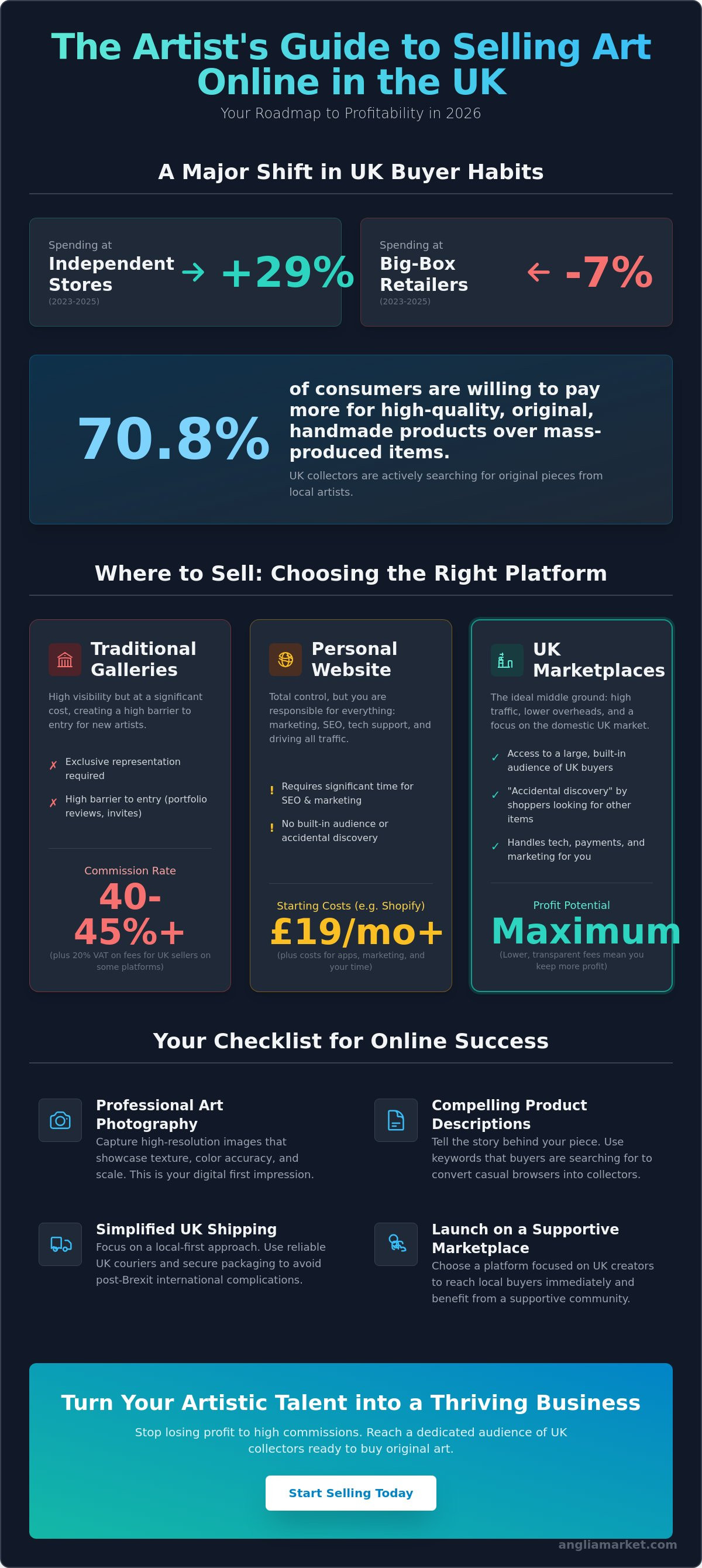
Spending at independent stores in the UK rose by 29% between 2023 and 2025. During that same period, big-box retailers saw a 7% loss. British collectors are moving away from mass-produced items and searching for original, handmade pieces. If you want to learn how to sell art online uk, the opportunity is massive. You don't have to lose 40% of your profit to high gallery commissions. You don't need to be a tech expert to build a professional presence and reach your audience.
We understand the pressure of managing shipping and finding the right buyers. You want to focus on creating, not logistics. This guide promises to show you the most profitable platforms and strategies for 2026. We'll explore low-cost ways to list your work and how to handle UK shipping without the stress. You'll also learn exactly how to price your art for the local market to stay competitive. Let's turn your artistic talent into a thriving, independent online business.
Key Takeaways
- Understand why 2026 is the best year to transition from traditional galleries to high-traffic online marketplaces.
- Master the essentials of how to sell art online uk by comparing commission structures and finding the most cost-effective platform for your work.
- Learn to capture professional art photography and write compelling product descriptions that convert casual browsers into collectors.
- Simplify your shipping process with a local-first approach to UK couriers and secure packaging techniques.
- Get a step-by-step walkthrough for launching your own vendor profile on a supportive UK marketplace to reach local buyers immediately.
The UK Online Art Market in 2026: Why Now is the Best Time to Sell
The UK independent artist economy is entering its most profitable era. In 2026, being an "independent artist" means running a lean, agile business directly from your studio. You are no longer at the mercy of gallery gatekeepers or exclusive contracts. The global art market is shifting away from intimidating, high-end spaces toward transparent, online platforms. This change is driven by a massive shift in consumer demand. Research shows that 70.8% of consumers are now willing to pay more for high-quality, original, handmade products compared to mass-produced alternatives.
UK buyers have changed their habits significantly. Post-Brexit shipping complications, including unexpected customs fees and long delivery delays, have made international art purchases less attractive. Today's collectors are actively seeking local vendors to avoid these headaches. They want fast shipping, transparent pricing, and the satisfaction of supporting a UK-based creator. If you know how to sell art online uk, you can tap into this massive demand for domestic reliability and local craftsmanship.
The role of art in our homes has also evolved. As people invest more in their home and garden spaces, they seek unique items that reflect their personality. Original art is no longer a luxury for the elite; it's a standard part of a home renovation or a garden room upgrade for everyday households.
This shift toward quality and originality is championed by curated spaces like Aleph Contemporary, which demonstrate how contemporary art can be both accessible and profoundly impactful in a modern domestic setting.
Digital Art Sales vs. Traditional Galleries
Traditional galleries often demand commissions of 40% or more and require exclusive representation. This creates a high barrier to entry for emerging talent. In 2026, digital platforms have democratised the process. You can learn how to sell art online uk and start reaching buyers today without an invite or a high-end portfolio review. Social media has also empowered "direct-to-collector" sales, where your audience can watch your creative process and buy a piece the moment it's finished. This direct connection builds trust and eliminates the need for a middleman.
The Rise of the 'Multi-Category' Art Buyer
Modern shoppers are efficient and prefer one-stop-shop environments. They often find their next favourite artist while browsing for furniture or high-quality home accessories. Appearing in search results alongside related lifestyle goods increases your visibility to buyers who are already in a "purchasing" mindset. It positions your work as a solution for someone looking to improve their living environment.
The 2026 lifestyle collector is a practical buyer who seeks original art as the defining element that completes a room's aesthetic and adds immediate value to their home.
Choosing the Right Platform: Galleries vs. Marketplaces vs. Personal Sites
Deciding where to host your work is the most critical business choice you'll make. It determines your profit margins and how much time you spend on tech support instead of painting. For many, a personal website seems like the ideal path to independence. However, Shopify's Basic plan in 2026 starts at £19 per month with annual billing. That's before you pay for additional apps or spend months learning SEO to attract your first visitor. Standalone sites require you to be the marketer, the coder, and the artist simultaneously. Most independent creators find this balance difficult to maintain.
Traditional online galleries offer visibility but at a high price. If you're figuring out how to sell art online uk, you must account for the 40% commission taken by platforms like Saatchi Art. This makes it almost impossible to price prints or smaller originals competitively. You also need to stay compliant with anti-money laundering regulations if your sales reach specific thresholds. A local marketplace provides a middle ground. It offers the high traffic of a large site with the lower overheads and domestic focus of an independent shop.
The Hidden Costs of Traditional Art Sites
Many artists get caught out by subscription fees and recurring listing costs. Some specialized platforms, for instance, charge a monthly fee for their standard plans and take a 45% commission on every sale. UK-based sellers also face an extra 20% VAT on these commissions and fees. These percentages add up quickly and can drain your studio budget. Choosing a platform for selling online that offers transparent, lower fees allows you to keep more of your hard-earned money for growth.
Marketplace Discovery: The Power of Search
Marketplaces excel at accidental discovery. A customer might visit a site looking for a new sofa and leave with a piece of art. This cross-pollination is a powerful tool for growth. Your work appears in search results alongside related lifestyle products, reaching buyers who weren't specifically looking for fine art but have the intent to buy home decor. Being a big fish in a local UK marketplace is often more profitable than being lost among millions of global listings. You can start setting up a vendor profile today to see how local traffic can boost your sales without the massive commission cuts of global galleries.
Preparing Your Art for Online Success: A 2026 Checklist
Success in the digital marketplace requires more than just a great product. You need a presentation that bridges the gap between a screen and a physical space. When learning how to sell art online uk, your first task is creating a visual experience that replaces the "touch and feel" of a gallery. Start with a clear pricing strategy. For the 2026/27 tax year, the UK mandatory VAT registration threshold is £90,000. If your turnover is below this, you don't need to charge VAT, which helps keep your prices competitive for local collectors. If an original work resells through an art market professional for £1,000 or more, you are entitled to Artist's Resale Right (ARR) royalties, which directly supports your long-term career.
Visual Presentation in the Digital Age
Lighting is everything for art photography. Use natural, indirect light to show true colours without glare. Texture matters because 70.8% of consumers want high-quality, handmade details they can almost feel through the screen. High-resolution, zoomable images are essential for showing these intricacies. Don't just show the canvas; show it in a real environment. Using home and garden settings for "in-situ" mockups helps buyers visualise the piece in their own living room or conservatory. Short video clips of your brushwork or glazing process build immense trust and justify your price point by showing the labour involved.
Optimising Your Listings for UK Search
SEO is your silent salesperson on any marketplace. Use specific, descriptive titles like "original UK landscape painting" or "handmade ceramic sculpture" rather than vague artistic names. Your description should mix emotional storytelling with hard technical specs like medium, weight, and finish. Including dimensions in both centimetres and inches is vital because it ensures absolute clarity for local UK buyers while remaining accessible to international collectors who still rely on imperial measurements. Your Artist Profile is your brand's home. Use it to share your inspiration and professional background, as 2026 buyers prioritise the person behind the product.
Balance your inventory to capture different buyer segments. Original pieces are high-value and unique, but limited edition prints provide a steady, accessible income stream. By offering both, you cater to serious collectors and those just beginning their art-buying journey. This hybrid approach is the most effective way to maintain consistent cash flow while building your reputation as a professional artist in the UK market.
Logistics and Marketing: Getting Your Art to the Buyer
Getting your work noticed is only half the battle. Delivering it safely is what builds your reputation. In 2026, UK collectors prioritise local vendors because it simplifies the entire transaction. Shipping domestically reduces the risk of damage and eliminates customs delays. If you are learning how to sell art online uk, focusing on the domestic market first is a smart strategic move. It allows you to master your fulfillment process before scaling globally. Use internal marketplace promotions to gain immediate visibility within the UK buyer community.
Marketing and logistics work together to create a professional brand. When a buyer knows their purchase will arrive quickly and in perfect condition, they are more likely to commit to a high-value piece. Success in 2026 is about being a reliable facilitator. You provide the talent, and the platform provides the infrastructure to reach people who are already looking to buy. This local-first approach is why many independent artists are moving away from global giants and returning to UK-focused marketplaces.
UK Shipping and Fulfillment Simplified
Safe transit starts with high-quality materials. Wrap original canvases in acid-free glassine paper to protect the surface. Use double-walled cardboard boxes or bespoke wooden crates for high-value items. For prints, heavy-duty postal tubes prevent creasing. Choosing the right courier is about balancing reliability and insurance coverage. Always verify that your chosen service covers "fine art," as many standard UK delivery services exclude it from their basic compensation. Clear, simple return policies are also essential. They reassure online buyers that their investment is protected if the piece doesn't fit their space as expected.
Marketing Your Storefront Without a Huge Budget
Social media is your most powerful free marketing tool. Use Instagram and Pinterest to share "Work in Progress" clips. Buyers love seeing the human effort behind the finished product. This transparency builds value and justifies your pricing. Email marketing remains a top driver for repeat sales. Offering loyalty programs encourages collectors to return for future releases. You can also collaborate with other UK vendors on your platform. Cross-promoting with a furniture seller or a home decor shop puts your art in front of a pre-qualified audience. Success comes from being active where your customers already shop. Ready to reach more local buyers? Start selling online with a UK marketplace that supports independent artists.
How to Start Selling Art on Anglia Market Today
Launching your digital storefront is the final step in your professional journey. You have analyzed the market and prepared your inventory. Now, you need a reliable platform to host your work. Starting a how to sell art online uk business is most effective when you use a system designed for independent growth. The registration process is straightforward. Visit the site and create your vendor profile to begin. This profile serves as your primary business hub, allowing you to manage every aspect of your sales from a single dashboard.
Categorisation is a vital part of your strategy. You must decide how to position your work to attract the right buyers. Fine art listings are perfect for high-value original canvases. However, if your work is designed to complement specific room styles, categorising it under home decor can increase visibility. This approach targets the "multi-category buyer" mentioned earlier. Use the platform’s built-in tools to track customer enquiries and manage orders efficiently. Being part of a community of independent UK businesses provides a support network that helps you navigate the challenges of scaling a small enterprise.
Setting Up Your Professional Storefront
Your "About the Artist" section should be concise and professional. Focus on your techniques, inspirations, and your UK studio location. Buyers in 2026 value the story behind the piece. When uploading your first 5 listings, choose your most visually striking work to create a strong first impression. High-quality imagery is essential here. You should also look for opportunities to participate in site-wide sales. Joining these promotional events is an excellent way to attract your first few collectors and build the initial momentum every new shop needs.
Scaling Your Art Business as an SME
Growth requires data. Use your vendor dashboard to see which styles or subjects generate the most interest. If your abstract pieces are outperforming your landscapes, you can adjust your production accordingly. Many successful artists also diversify their range. You might expand from selling original works to offering art-themed stationery or home goods. This allows you to reach buyers at different price points. The long-term benefits of staying with a trusted UK marketplace include consistent traffic and a professional reputation. By focusing on the local market and utilizing professional tools, you can turn your artistic talent into a sustainable, thriving business. This is the most practical way to master how to sell art online uk in 2026.
Launch Your Independent Art Business in 2026
Success in the UK art market now depends on your ability to reach local collectors directly. You've learned that choosing the right platform is just as important as the art itself. By focusing on domestic shipping and professional visual presentation, you eliminate the barriers that often stop sales. Lowering your overhead costs by avoiding high gallery commissions ensures your business remains sustainable and profitable over the long term. Practical logistics and clear pricing are the foundations of a professional brand.
Understanding how to sell art online uk is the first step toward professional independence. You now have the checklist needed to optimize your listings and manage your logistics with confidence. Moving your work to a platform that prioritizes independent UK SMEs gives you an immediate advantage. You'll benefit from established traffic in home and lifestyle categories while keeping more of your earnings. It's time to stop waiting for a gallery invite and start building your own brand.
Start selling your art to UK collectors on Anglia Market today! We provide the tools and the audience you need to turn your studio work into a thriving online enterprise. Your journey to becoming a successful independent seller starts with a single listing. We look forward to seeing your creativity reach new homes across the country.
Frequently Asked Questions
Do I need a business license to sell art online in the UK?
You don't need a specific "art license" to sell your work, but you must register as a sole trader with HMRC if your annual gross income exceeds the £1,000 trading allowance. This registration ensures you're legally compliant for tax and National Insurance purposes. It's a straightforward process that marks the official start of your professional journey. Keep detailed records of all sales and studio expenses to make your annual tax return easier to manage.
How much commission do art marketplaces usually take in 2026?
Dedicated art platforms like Saatchi Art take a 40% commission, while other established sites charge between 40% and 45% depending on the monthly subscription plan. In addition to these cuts, UK sellers often pay 20% VAT on the platform's fees. High-end galleries typically demand similar or higher percentages. Using a general marketplace often provides a more cost-effective alternative with lower transaction fees, allowing you to retain more profit from every sale.
What is the best way to ship large paintings within the UK?
The safest method for shipping large work is using a tracked, insured courier service and bespoke wooden crates or double-walled cardboard. Wrap the canvas in acid-free glassine paper first to protect the paint surface from moisture and sticking. For high-value originals, specialist art couriers provide the most security because they handle items manually. This avoids the rough treatment often found in automated sorting hubs used by standard parcel delivery companies.
Can I sell both original art and digital prints on the same platform?
Yes, most platforms allow you to list original pieces alongside limited edition prints to reach buyers with different budgets. Correct categorisation is essential so customers can filter by their preferred medium. When you're researching how to sell art online uk, offering multiple price points is a proven strategy for growth. Prints provide a consistent income stream while you spend time creating larger, more expensive original works for your portfolio.
How do I price my art to ensure I make a profit after fees?
Calculate your base price by adding your material costs to your hourly labour rate, then factor in the platform's commission and any listing fees. You must also include the cost of protective packaging and shipping insurance in your final figure. Don't forget that marketplaces charge VAT on their own fees, which can eat into your margins if not accounted for. Pricing consistently across different sites prevents you from undercutting your own brand and confusing collectors.
Is it better to have my own website or use a marketplace like Anglia Market?
Using a marketplace is usually better for independent artists because it provides instant traffic and discovery from shoppers already looking for home decor. Managing how to sell art online uk through your own website requires a huge investment in SEO and paid advertising to find customers. A marketplace handles the technical infrastructure and security. This allows you to focus on your creative work while the platform brings a steady flow of local UK buyers to your storefront.
How do I handle VAT for my online art sales?
You only need to register for VAT if your taxable turnover hits the £90,000 threshold for the 2026/27 tax year. If you stay below this amount, you don't need to add VAT to your sales price. However, you'll still pay 20% VAT on the commissions and services provided by your chosen selling platform. Treat this as a standard business expense when calculating your margins. If you expect to grow quickly, monitor your rolling 12-month turnover carefully.
What should I do if my artwork is damaged during shipping?
You should refund the customer immediately or offer a replacement, then start a claim with your courier service. Professionalism in these moments builds long-term trust with your collectors. Always take clear photos of the artwork and the finished packaging before it leaves your studio. These images are vital evidence for your insurance claim. Ensure your courier specifically covers "fine art," as some standard services exclude fragile or high-value creative works from their protection policies.
Here to help — ask anything
For questions about this disclaimer or the site, contact us via the website’s Contact page.


