
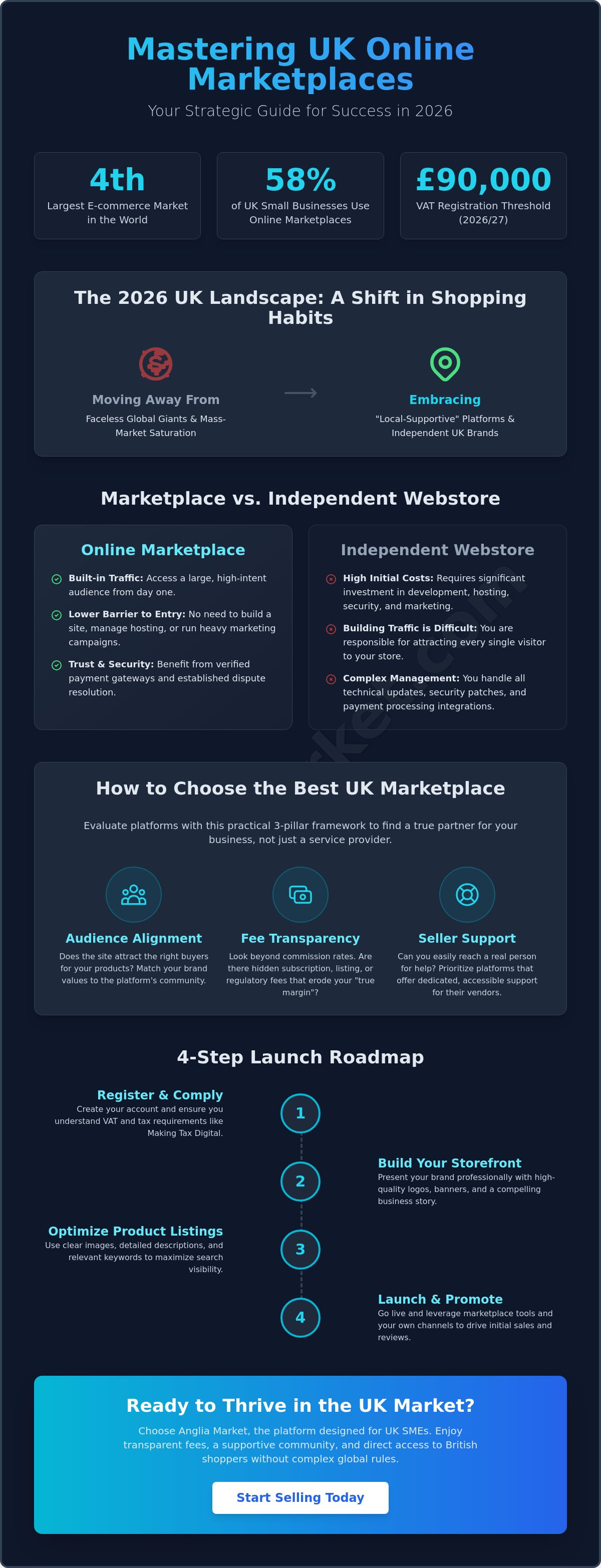
Did you know that 58% of UK small businesses now use digital storefronts to reach the world's fourth-largest e-commerce market? It's a massive opportunity. However, learning how to sell on online marketplaces uk in 2026 requires more than just a good product. You have to manage a £90,000 VAT threshold, rising regulatory fees, and intense global competition. It's a complex environment where small details impact your bottom line.
We know it's tough to stay profitable when high commissions and confusing tax rules keep changing. You need a clear path forward. This guide promises to help you master the steps to launch, scale, and thrive on UK marketplaces with a proven 2026 seller strategy. We'll provide a practical roadmap for your launch, explain the latest UK legalities, and help you find a platform that prioritizes local SME growth over mass-market saturation. From understanding fee structures to standing out amongst global competitors, you'll find everything you need to succeed right here.
Key Takeaways
- Adapt to the 2026 shift in UK shopping habits by focusing on local-supportive marketplaces that value independent enterprises.
- Evaluate platforms using a practical framework based on fee transparency, audience reach, and dedicated seller support.
- Master how to sell on online marketplaces uk by staying compliant with current VAT thresholds and Making Tax Digital standards.
- Follow a step-by-step launch roadmap to optimize your product listings and brand presentation for better search visibility.
- Scale your business on a platform like Anglia Market that offers a diverse range of categories from home goods to toys without complex global fees.
The UK Online Marketplace Landscape in 2026
The 2026 retail climate in Britain is defined by a hybrid model. A UK online marketplace is a digital ecosystem. It facilitates transactions between independent vendors and a high-intent audience. We've seen a major shift from "global-first" to "local-supportive" shopping habits. British consumers are moving away from faceless global entities. They prefer platforms that highlight domestic quality. Learning how to sell on online marketplaces uk allows you to tap into this regional loyalty. It simplifies your logistics. It helps you avoid the complexities of post-Brexit international trade by focusing on domestic demand.
The UK is currently the world's fourth-largest e-commerce market. This makes the region a prime target for growth. High per-capita UK e-commerce spending means there is plenty of room for new sellers. Statistics show that 58% of UK SMEs now sell through online marketplaces. For these businesses, 2026 is the ideal time to pivot. With the VAT registration threshold at £90,000 for the 2026/27 tax year, staying compliant is a top priority for growing brands. You gain instant access to a massive audience. You also bypass the heavy infrastructure costs of managing a standalone site. It's a dual-benefit. You get the traffic of a major retailer with the flexibility of a small business.
Why British Shoppers Prefer Marketplaces
Convenience is the primary driver. Shoppers love the one-stop-shop experience. They can browse furniture, electronics, and toys and games in a single transaction. Trust and security are also vital. Marketplace platforms provide verified payment gateways and clear dispute resolution. This creates a safe environment for high-value purchases. There is also a clear trend toward supporting independent British vendors. Buyers want unique products that come with a local story. They aren't just looking for mass-produced items from overseas anymore.
Marketplace vs. Independent Webstore
Building an independent webstore is expensive. You have to pay for hosting, security, and aggressive digital marketing just to get your first visitor. In contrast, a platform like Anglia Market provides built-in traffic. It's a lower barrier to entry for small businesses. You can launch your storefront and start reaching customers immediately. Marketplaces provide the digital high street that small businesses can no longer afford to build alone. By mastering how to sell on online marketplaces uk, you position your brand where the shoppers already are. It's a practical, value-driven choice for any growing business.
Choosing the Best UK Marketplace for Your Business
Selecting a platform is the most critical decision you'll make. Many sellers default to the largest international sites without looking at the fine print. In 2026, the best choice depends on your specific product category and your growth goals. You need a platform that acts as a partner, not just a service provider. A thorough UK eCommerce market overview shows that while volume is high on major global sites, so is the saturation. Smaller, UK-centric platforms often provide a "vendor-first" philosophy that helps independent brands stand out.
Use this three-pillar framework to evaluate any platform:
- Audience Alignment: Does the site attract buyers looking for home and garden products or high-end electronics?
- Fee Transparency: Are there hidden regulatory or digital services fees?
- Seller Support: Can you reach a real person when a technical issue arises?
Major international sites offer massive traffic but come with complex rules. Regional platforms focus on British SME identity. This distinction is vital for long-term sustainability. If you want to know how to sell on online marketplaces uk effectively, start by matching your brand values to the platform's community. You might find that being a "big fish" on a rising UK platform is more profitable than fighting for scraps on a global site.
Evaluating Commission Structures and Fees
Don't just look at the headline commission rate. You must calculate your "true margin" after all deductions. For example, the largest international marketplaces often charge monthly subscription fees around £25, plus additional digital services fees on top of standard referral rates. Global platforms frequently add per-order fees that vary based on the total sale price. Some sites even require listing fees that expire every few months. These small costs add up quickly. Look for transparent models like Anglia Market’s vendor support, which prioritizes straightforward commission structures for independent businesses.
Niche vs. General Marketplaces
General marketplaces are great for broad categories like kitchen and dining. However, niche platforms can be better for sporting goods or pet supplies. Specialist platforms attract a more educated buyer. They often have higher conversion rates because the traffic is already filtered. Assess a platform's existing search volume for your specific keywords before signing up. If you're ready to reach a dedicated British audience, you can start selling on a UK-focused platform today to secure your storefront.
Legal and Tax Compliance for UK Sellers
Compliance is the foundation of a sustainable business. Many entrepreneurs asking how to sell on online marketplaces uk worry that the legal requirements are too complex for a solo operation. While the paperwork might seem daunting at first, the automation provided by modern digital platforms simplifies the heavy lifting. You don't need a legal team to stay compliant. You just need to understand the current HMRC thresholds and your responsibilities toward your customers.
The 2026/27 tax year has set the VAT registration threshold at £90,000. If your taxable turnover exceeds this amount in any 12-month period, registration is mandatory. Businesses that fall below this can still choose to register voluntarily to reclaim VAT on business purchases. Once registered, you must follow the "Making Tax Digital" (MTD) rules. This means using MTD-compatible software to keep digital records and submit VAT returns. Following these UK government tax rules for online sellers ensures your business remains professional and avoids costly penalties.
VAT Obligations for Marketplace Sales
Pricing strategy is different when you're VAT registered. In the UK, marketplace prices are typically VAT-inclusive. This means the price the customer sees is the final price they pay. If you're registered, you'll need to account for the 20% standard rate within your listing price. For the 2026/27 tax year, UK sellers must register for VAT once their taxable turnover exceeds the £90,000 threshold within any rolling 12-month period. Many marketplaces now provide automated reporting tools. These tools help you track your sales volume against the threshold so you aren't caught off guard.
Consumer Rights and Distance Selling Regulations
Selling online means you must follow the UK’s Consumer Contracts Regulations. The most important rule is the 14-day right-to-cancel. Customers have 14 days after receiving their goods to change their minds for any reason. As a seller, you're responsible for providing clear information about returns and faulty goods. If an item is defective, the buyer has a right to a repair, replacement, or refund. To make this easier, you can find policy templates in the Anglia Market support centre. Having these policies ready builds trust with your audience. It shows you're a reliable vendor who respects British consumer standards. This transparency is a key part of learning how to sell on online marketplaces uk while maintaining a high seller rating.
Step-by-Step Guide to Launching Your Storefront
Launching a digital storefront requires a systematic approach. You can't just upload a few photos and wait for sales to arrive. Success depends on a four-phase strategy that balances brand presentation with technical optimization. If you want to master how to sell on online marketplaces uk, you must treat your digital shelf space with the same care as a physical boutique. A well-prepared launch ensures you don't waste your initial traffic on a half-finished profile.
Phase 1 begins with brand preparation. Your logo and storefront banner should reflect a professional British business. High-resolution product photography is mandatory. In a marketplace environment, your images are your only chance to make a first impression. Phase 2 moves into search optimization. You'll need to research what terms your customers use. Phase 3 focuses on your operational backend. Establish a clear inventory management system and choose reliable UK couriers for your fulfillment. Finally, Phase 4 is your official launch. This is where you gather initial feedback to refine your listings.
Optimising Product Listings for Search
Marketplace algorithms prioritize relevance. When writing titles for furniture or kitchenware, place the most important keywords at the beginning. Instead of "Blue Chair," use "Ergonomic Blue Velvet Dining Chair; Solid Oak Legs." This tells the search engine exactly what you're selling. High-resolution images are equally important. They convert browsers into buyers by showing texture and detail. You can learn more about how to sell online effectively by focusing on these content-driven details. Every description should answer a customer's question before they ask it.
Managing Customer Service and Feedback
The first 10 reviews are the most critical. Most marketplace algorithms use these initial ratings to determine your future visibility. Don't be pushy, but do encourage your first customers to share their experiences. A simple follow-up note thanking them for their purchase can go a long way. You want to aim for the level of quality seen in Anglia Market testimonials, where buyers highlight speed and reliability. Respond to every review, especially if there's a problem. It shows prospective buyers that you're a trustworthy vendor who stands by their products.
Ready to put these steps into practice? Register as a vendor on Anglia Market and start building your 2026 success story today.
Why Anglia Market is the Strategic Choice for UK SMEs
Choosing the right partner is the final step in your journey toward e-commerce success. Anglia Market is a dedicated platform built specifically for small and medium businesses. It bridges the gap between massive global sites and independent webstores. While global giants focus on volume, this platform prioritizes the growth of British vendors. It understands the unique challenges of the domestic retail market. Mastering how to sell on online marketplaces uk becomes much simpler when the platform provides the necessary tools for local growth.
The marketplace offers a vast range of categories. You can list everything from home and garden essentials to toys and games. This breadth ensures that your products reach a diverse audience without being buried in an oversaturated global catalog. The "support local" mission is a core part of the brand identity. This mission attracts a loyal UK audience that specifically seeks out independent British brands. The profile addition process is designed for speed and efficiency. You can set up your storefront and start reaching customers without technical delays.
Vendor-Centric Features and Benefits
Vendors gain access to powerful growth features. The loyalty program benefits help you turn one-time buyers into repeat customers. This is a critical advantage in 2026. Retention is often more cost-effective than acquisition. You also have access to various promotion and sale tools. These allow you to run time-sensitive offers and highlight new inventory. These tools are straightforward and commercial. They are designed to facilitate transactions and boost your visibility during peak shopping periods.
Getting Started Today
The sign-up process is simple. It follows a practical, modular flow that gets your business live quickly. You don't need to manage complex global logistics. You can focus on what you do best: providing quality products to British shoppers. Browse the current sale section to see how other successful vendors position their products. It's a great way to understand the competitive landscape. If you're ready to learn how to sell on online marketplaces uk with a partner that supports your independence, the path is clear. Join a community of thriving UK sellers. Register as a vendor on Anglia Market and launch your 2026 strategy now.
Launch Your 2026 UK Seller Strategy
Success in the current retail climate comes down to strategic precision. You've learned the importance of navigating the £90,000 VAT threshold and the value of a local-first platform approach. By following our step-by-step launch guide, you can build a storefront that converts high-intent traffic into loyal customers. It's about being where the shoppers are while maintaining your independent identity and protecting your profit margins.
Mastering how to sell on online marketplaces uk effectively means moving away from complex global fee structures that eat into your bottom line. You need a platform that offers dedicated support for UK SMEs and a transparent commission structure. Whether you specialize in Furniture, Electronics, or Home and Garden, the opportunity for growth is significant. The British market is actively looking for independent vendors who prioritize quality and local service. It's time to put your products in front of the right audience.
Start Selling Your Products on Anglia Market Today and take control of your commercial future. We're here to help you thrive on the digital high street. Your 2026 success story starts with a single listing.
Frequently Asked Questions
Do I need a registered business to sell on UK marketplaces?
You can start as a sole trader or a limited company. Most platforms require business details for verification and tax reporting to HMRC. It is essential to register your business activity even if you are operating on a small scale. This ensures you can open business bank accounts and manage your commercial taxes correctly from the start.
How much does it cost to start selling on an online marketplace?
Costs vary significantly depending on the platform's fee structure. Major global platforms often require monthly subscription fees of approximately £25 excluding VAT. Other sites use per-item listing fees or commission-only models. You should also account for the costs of product inventory, packaging, and high-quality photography to make your storefront competitive.
What are the best-selling product categories in the UK for 2026?
Home products, pet supplies, and sustainable goods are high-growth areas this year. Electronic accessories and kitchenware also continue to perform well. Diversifying into these high-demand areas is a great way to learn how to sell on online marketplaces uk while maximizing your initial sales volume and conversion rates.
How do I handle shipping and returns for marketplace orders?
You are responsible for organizing fulfillment and managing customer returns. UK law provides buyers with a 14-day right-to-cancel for most online purchases. Use reliable domestic couriers with tracking services to minimize delivery disputes. Clear return instructions on your storefront help build trust and maintain a high seller rating over time.
Can I sell on multiple marketplaces at the same time?
You can list your products on multiple platforms simultaneously to reach a wider audience. Many successful vendors use multi-channel management software to sync their inventory levels. This prevents you from selling items that are out of stock. It also ensures a consistent brand presence across different digital high streets.
What is the VAT threshold for online sellers in the UK?
The VAT registration threshold for the 2026/27 tax year is £90,000. You must register with HMRC if your taxable turnover exceeds this amount within a rolling 12-month period. If your turnover is lower, you can still choose to register voluntarily. This allows you to reclaim VAT on your business-related purchases and expenses.
How do I protect my brand from counterfeiters on marketplaces?
Register your trademark with the Intellectual Property Office to secure your brand identity. Most marketplaces provide brand registry tools that allow you to report and remove unauthorized listings. Using unique packaging and including brand-specific inserts can also help customers distinguish your genuine products from low-quality imitations.
Is Anglia Market suitable for international sellers or just UK-based ones?
Anglia Market is a dedicated platform designed to support UK-based independent businesses and SMEs. It focuses on domestic commerce to help local vendors reach British shoppers efficiently. This regional focus allows you to avoid the logistical hurdles of international customs. It is the ideal choice for businesses prioritizing how to sell on online marketplaces uk within the domestic retail sector.

Here to help — ask anything
For questions about this disclaimer or the site, contact us via the website’s Contact page.


