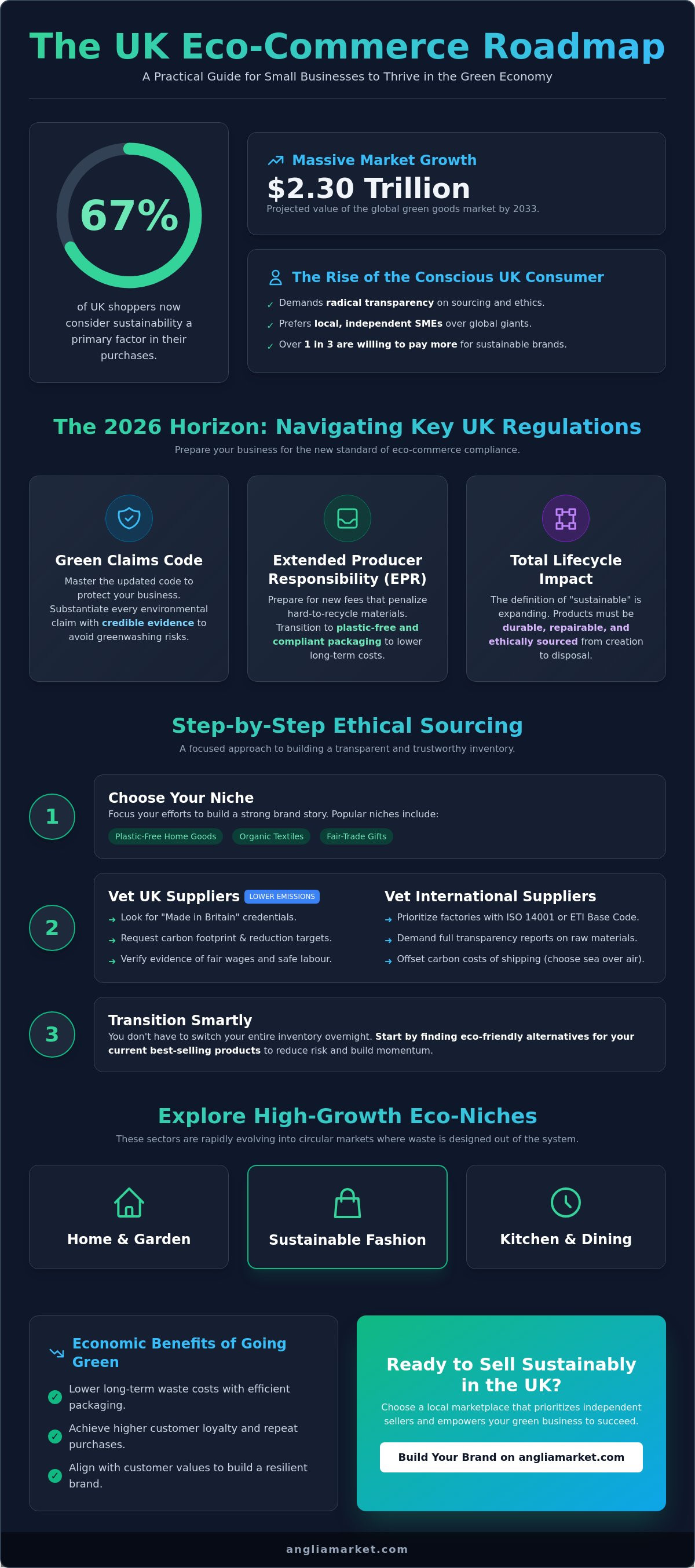
Over 67% of UK shoppers now consider sustainability a primary factor when making a purchase. While the green goods market is projected to reach $2.30 trillion by 2033, many small businesses feel stuck. You might worry about the high cost of eco-certifications or feel confused by the 2026 packaging regulations. It's a common hurdle. Learning how to sell sustainable products online uk shouldn't feel like a legal minefield. You need a clear way to transition your inventory without the constant stress of greenwashing accusations.
This guide provides a practical roadmap to master UK eco-commerce. You'll learn how to navigate the January 2026 Green Claims Code update and handle the new Extended Producer Responsibility fees. We'll also show you how to find reliable ethical suppliers and choose a marketplace platform that empowers local, independent sellers. We're covering everything from sourcing to compliance to help you build a transparent and successful brand. Let's get your business ready for the green revolution.
Key Takeaways
- Identify profitable eco-niches and learn how to vet international and UK suppliers for authentic ethical manufacturing standards.
- Transition to plastic-free packaging while staying compliant with the 2026 Extended Producer Responsibility (EPR) requirements and recyclability assessments.
- Protect your business from legal risks by mastering the Green Claims Code and substantiating every environmental claim with credible evidence.
- Discover how to sell sustainable products online uk by choosing a local marketplace that prioritizes independent vendors over global giants.
Understanding the UK Sustainable Market in 2026
Selling in the UK has changed. By 2026, sustainable products are defined by their total lifecycle impact rather than just a recyclable label. This shift means goods must be durable, repairable, and ethically sourced to meet modern consumer standards. The UK market for green goods is massive, projected to reach $2.30 trillion by 2033. For SMEs, this isn't a niche opportunity anymore. It's the new retail baseline. If you want to know how to sell sustainable products online uk, you must first understand that eco-friendly features are now a primary expectation rather than a premium add-on.
UK climate targets are also hitting home for small businesses. Net Zero goals are trickling down into supply chain requirements. This means your operations, from energy use to delivery methods, are under the microscope. High-growth categories are leading this charge. We're seeing huge demand in home and garden, sustainable fashion, and kitchen and dining. These sectors aren't just growing. They're evolving into circular markets where waste is designed out of the system entirely.
The Rise of the Conscious UK Consumer
Radical transparency is the 2026 standard. Modern buyers don't just look at the price tag; they check the origins of raw materials and the ethics of the factory. This is where small businesses win. UK buyers increasingly prefer local independent SMEs over global conglomerates because they value the accountability and community connection smaller brands provide. Adopting sustainable business practices helps you build this trust. You should also embrace the Circular Economy. This is a production and consumption model focused on sharing, reusing, and recycling existing materials to extend product life cycles as long as possible. It's a key strategy for any UK reseller looking to stay relevant.
Economic Benefits of Going Green
Switching to a green model isn't just about ethics. It's about the bottom line. Efficient packaging and streamlined logistics lower your long-term waste costs. This is critical as the 2026 Extended Producer Responsibility (EPR) fees penalize materials that are difficult to recycle. You'll also see higher customer loyalty. Over a third of UK consumers are willing to pay more for brands committed to environmental practices. Ethical brands enjoy better repeat purchase rates because they align with customer values. To boost visibility, you can use specialized marketplace promotions that target eco-conscious shoppers. Learning how to sell sustainable products online uk effectively means highlighting these savings and values at every touchpoint.
Step-by-Step: Sourcing and Verifying Ethical Inventory
Sourcing ethical inventory requires a focused approach. You can't stock everything at once. Start by picking a specific niche like plastic-free home goods, organic textiles, or fair-trade gifts. This makes it easier to vet your partners and build a consistent brand story. Learning how to sell sustainable products online uk starts with choosing the right niche. Your priority should be supply chain transparency. Ask potential partners for detailed reports on where their raw materials come from. You need to know that your products are made under fair labour conditions and with minimal environmental impact.
Transitioning your inventory doesn't have to happen overnight. Identify your current best-sellers and look for eco-friendly alternatives for those specific items first. This reduces risk while you learn the ropes of sustainable sourcing. You can look for guidance from organizations like the UK Council for Sustainable Business to stay updated on industry standards. Requesting transparency reports from every partner ensures you aren't unintentionally supporting harmful practices.
Vetting international suppliers requires extra diligence. Look for factories with ISO 14001 certification or those that adhere to the Ethical Trading Initiative (ETI) Base Code. If you source globally, consider the carbon cost of shipping. Offsetting these emissions or choosing sea freight over air can improve your sustainability profile. Being transparent about these choices helps you build a trustworthy brand. How to sell sustainable products online uk successfully depends on your ability to prove your claims with facts rather than just marketing buzzwords.
Finding Reliable UK Suppliers
Using UK trade directories is a fast way to find local ethical manufacturers. Focus on suppliers with "Made in Britain" credentials. This is a powerful sustainability marker for UK buyers because it implies lower transport emissions. Always ask direct questions about their operations:
- What is their current carbon footprint and reduction target?
- Do they provide evidence of fair wages and safe labour conditions?
- What percentage of their production waste is recycled?
A reliable supplier will be happy to share their energy-saving initiatives or waste management policies.
Navigating Certifications Without High Costs
Certifications like B Corp, FSC, and Soil Association add trust but can be expensive. Distinguish between third-party audits and self-declared claims. If you can't afford major logos yet, focus on material transparency. Provide clear, honest descriptions of product components. For tech sellers, refurbished electronics are a high-impact entry point. It extends product life and appeals to eco-aware shoppers. Join our independent vendor community to start listing your sustainable goods today.
Sustainable Operations: Packaging and UK Logistics
Your product is only half the story. The physical journey from your warehouse to a customer's doorstep determines your true environmental impact. By 2026, the UK's Extended Producer Responsibility (EPR) for packaging has fundamentally changed the financial landscape for SMEs. This system uses a Red, Amber, Green (RAG) rating to modulate fees based on the Recyclability Assessment Methodology. If your packaging is difficult to recycle, you'll pay more. Transitioning to plastic-free or compostable primary and secondary packaging isn't just an ethical choice; it's a cost-saving necessity. Mastering how to sell sustainable products online uk requires a deep dive into these operational shifts to protect your margins.
Effective reverse logistics is another critical piece of the puzzle. Optimising your returns process reduces the carbon footprint of the entire supply chain. You should encourage accurate sizing and detailed product descriptions to prevent returns before they happen. When a return is necessary, try to consolidate shipments to avoid multiple small-vehicle trips. This approach lowers emissions and keeps your logistics as lean as possible.
Eco-Friendly Packaging Solutions
Choosing between biodegradable and recyclable mailers depends on your product type. Biodegradable options work well for lightweight, non-perishable goods, while recyclable cardboard is often better for protecting heavier items. Sourcing these materials from UK-based providers further reduces transit emissions before the goods even reach you. Using minimal packaging doesn't just help the planet; it can significantly lower your sell-online costs by reducing parcel weight and volume. Remember that any environmental claims on your packaging must comply with the Green Claims Code. You must be able to prove that your 'compostable' bags actually break down in standard home composting conditions.
Green Shipping and Fulfilment in the UK
Last-mile delivery is often the most carbon-intensive part of the journey. To combat this, select delivery partners that utilise electric vehicle (EV) fleets for UK-wide fulfilment. Implementing 'click and collect' points is another smart move. It reduces delivery failures and prevents couriers from making multiple trips to the same address. You should also communicate delivery timelines that prioritise consolidated shipping over instant delivery. Many UK shoppers are now willing to wait an extra day if it means their order travels in a more carbon-efficient way. This transparency builds trust and reinforces your brand's commitment to genuine sustainability. Learning how to sell sustainable products online uk means being honest about the time it takes to ship responsibly.
Marketing Your Brand and the Green Claims Code
Marketing sustainable goods in 2026 is as much about legal compliance as it is about creative storytelling. The Competition and Markets Authority (CMA) has significantly increased enforcement of the Green Claims Code. This means every environmental claim you make must be substantiated with credible evidence. You can't simply use vague terms like "eco-friendly" or "natural" to attract shoppers. Learning how to sell sustainable products online uk effectively requires total honesty about your product's lifecycle. If you make a claim, be ready to prove it.
Your brand story should live in your product descriptions and customer testimonials. Authentic feedback from real buyers builds the trust that corporate slogans can't reach. Use your descriptions to explain the specific positive impact of a purchase. For example, instead of saying a product is "green," explain how its biodegradable materials reduce landfill waste. This practical approach helps you stay compliant while connecting with the 67% of UK shoppers who prioritize sustainability.
Staying Compliant with the CMA
The Green Claims Code relies on six core principles. Your claims must be truthful, accurate, clear, and unambiguous. You must also ensure they don't hide important information and consider the full lifecycle of the product. If you label an item as "carbon neutral," you need specific data or certifications to back that up. In 2026, you're also liable for any misleading claims made by your suppliers. Penalties for greenwashing are severe, including heavy fines and damage to your reputation. Stick to the facts and avoid exaggeration.
Authentic Storytelling for SMEs
Move your focus from selling a product to selling a positive impact. High-quality imagery is your best tool for showcasing natural textures and sustainable materials. Visual platforms like Instagram and Pinterest are ideal for demonstrating your ethical operations. Post "behind the scenes" content showing your plastic-free packing process or your latest shipment from a local manufacturer. This transparency proves you're doing the work you claim to do. It builds a community of loyal customers who value your integrity. Ready to grow your reach? Register as a vendor and start connecting with our community of independent sellers today.
Choosing the Best UK Marketplace for Sustainable Sellers
Choosing where to list your goods is a critical business decision. Global giants focus on massive volume and the lowest price. This often hurts small brands with higher production costs due to ethical sourcing. Local marketplaces like Anglia Market offer a better alternative for UK SMEs. They provide a platform where buyers actively look for quality and ethics over the cheapest deal. If you're figuring out how to sell sustainable products online uk, start by looking for a community that shares your values. These platforms understand the specific challenges of the UK market, from shipping logistics to local consumer laws.
The barrier to entry is often lower on regional platforms. You don't need to compete with thousands of international mass-producers. Instead, you can focus on your niche and build a reputation for transparency. A dedicated UK platform allows you to reach customers who specifically want to support independent, local businesses. This alignment makes your marketing more effective and your customer base more loyal. How to sell sustainable products online uk successfully depends on finding an audience that values your mission as much as your product.
The Anglia Market Advantage for Ethical Brands
Supporting independent UK businesses is our core mission. We provide a space where your brand doesn't get lost in a sea of mass-produced items. You get access to a dedicated vendors community that prioritizes local commerce. One major benefit is our loyalty program. It helps you retain customers who are already committed to supporting smaller, ethical brands. We also offer direct support for sell-online logistics and storefront management. This helps you manage your shop efficiently without needing a massive technical team. It’s a practical way to scale your business while keeping your operations focused on the UK market.
Getting Started: Your 2026 Launch Plan
Setting up your store is straightforward. First, register as a vendor and create an impactful eco-profile. This is your chance to showcase your commitment to the environment. Use the storytelling techniques we covered to highlight your materials and ethical practices. Next, optimize your listings. Use sustainability-related keywords that UK shoppers actually use. Focus on terms like "plastic-free," "locally made," or "recycled materials." This improves your search visibility and attracts the right audience. Don't wait for the perfect moment. The demand for green goods is growing every day. Start small, test your best products, and grow your inventory as you build trust. Ready to start? Become an Anglia Market vendor today and join the future of UK retail.
Build Your Future in UK Eco-Commerce
Success in the green market requires more than just good intentions. You've seen how staying compliant with the Green Claims Code protects your brand from legal risks. You also know that optimizing your packaging and logistics isn't just about the planet; it's a smart way to lower your operational costs. Mastering how to sell sustainable products online uk is about combining these practical steps with a transparent, honest brand story. UK consumers are looking for authenticity, and small businesses are perfectly positioned to provide it.
Choosing a platform that understands your mission is the final piece of the puzzle. At Anglia Market, we've been supporting UK independent SMEs since our inception. We offer dedicated categories for Home, Garden, and Ethical Goods, ensuring your products reach the right audience. Our simple, transparent commission structure means you can focus on growth without hidden fees. Start your sustainable selling journey on Anglia Market today and connect with a community that values your independence. The demand for ethical goods is only getting stronger. It's time to take your place in the future of British retail.
Frequently Asked Questions
Is it more expensive to sell sustainable products in the UK?
Sourcing costs are often higher, but you save money in other areas. The 2026 Extended Producer Responsibility (EPR) fees penalize materials that are difficult to recycle; so using sustainable packaging helps you avoid these extra costs. Additionally, over a third of UK consumers are willing to pay more for ethical brands. This premium pricing helps offset higher initial unit costs while building long-term customer loyalty.
What is the Green Claims Code and does it apply to my small business?
The Green Claims Code is the UK's official guidance for businesses making environmental claims. It definitely applies to your small business. The Competition and Markets Authority (CMA) enforces these rules to prevent greenwashing. You must ensure every claim you make is accurate, clear, and substantiated with credible evidence. Failing to comply can lead to legal action and significant fines under 2026 enforcement rules.
How do I find UK-based suppliers for eco-friendly products?
Use trade directories like Made in Britain or the UK Fashion and Textile Association to find local manufacturers. These platforms help you source goods with lower transport emissions. When vetting, ask for their carbon footprint data and labour practice reports. Learning how to sell sustainable products online uk effectively starts with choosing partners who are transparent about their own manufacturing impact and ethical standards.
Do I need a special certification to call my products "sustainable"?
You don't need a specific license to use the word "sustainable," but you must be able to back it up. The Green Claims Code requires all environmental statements to be truthful and substantiated with facts. While certifications like B Corp or FSC add significant trust, they aren't legally mandatory. You can prove your claims through material transparency and detailed supply chain documentation instead.
Which UK marketplace is best for selling ethical and handmade goods?
Anglia Market is the best choice for independent UK sellers focused on ethics. Unlike global giants, we focus on empowering local SMEs and regional commerce. Our platform features dedicated categories for ethical goods and a loyalty program that rewards conscious shoppers. This community-focused approach makes it easier to find buyers who specifically value sustainability and local craftsmanship over the lowest possible price.
What sustainable packaging is best for shipping electronics or furniture?
Recycled cardboard and FSC-certified materials are best for protecting heavy or fragile items. For electronics, consider mushroom packaging or honeycomb paper wrap as plastic-free alternatives to polystyrene. These materials provide high impact resistance while remaining fully recyclable. Using these options helps you avoid the highest 2026 EPR packaging fees while keeping your goods safe during transit across the UK.
How can I prove my supply chain is ethical to my customers?
Publish transparency reports and material traceability data directly on your store profile. Share photos or videos of your manufacturing process and name your suppliers where possible. Customers in 2026 demand evidence-based verification rather than vague promises. Showing the "behind the scenes" of your ethical operations builds the trust necessary for long-term success and helps you stand out from less transparent competitors.
Can I sell refurbished items as sustainable products in the UK?
Yes, selling refurbished items is a key part of the circular economy and is widely considered sustainable. It's a highly effective way to learn how to sell sustainable products online uk without the need to manufacture new goods. Refurbished electronics and furniture are high-growth categories because they extend product lifespans and significantly reduce waste. Just ensure you're clear about the item's condition and the refurbishing process.

Here to help — ask anything
For questions about this disclaimer or the site, contact us via the website’s Contact page.


