
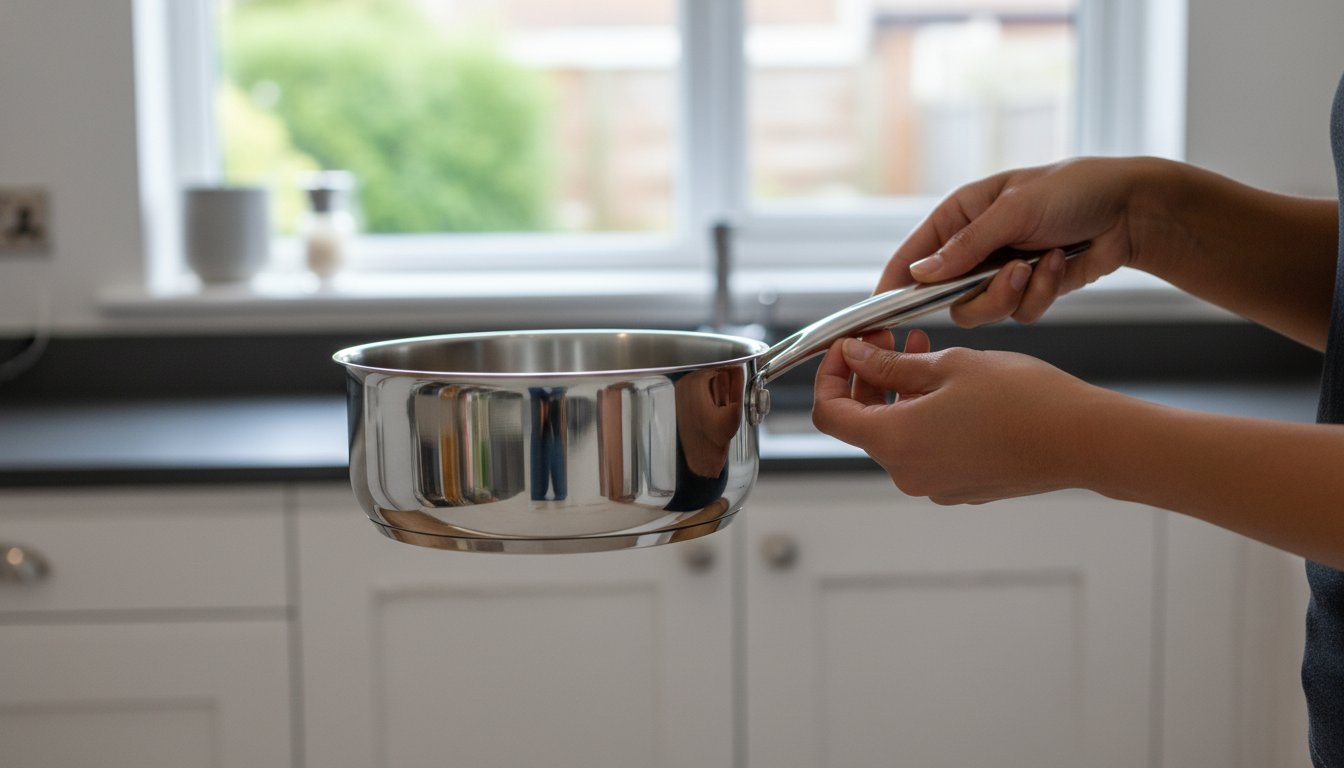
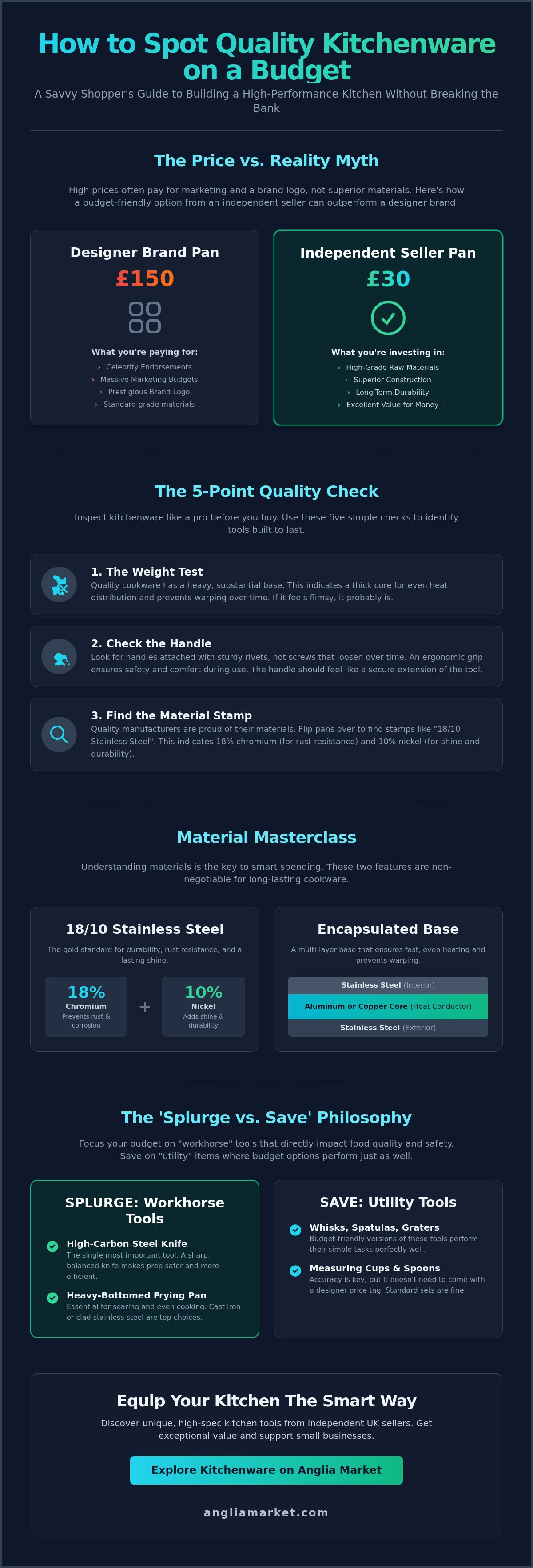
That £150 designer saucepan set isn't actually cooking your dinner any better than a £30 heavy-duty alternative from an independent UK seller. High prices often pay for marketing rather than metal. Learning How to Spot Quality Kitchenware on a Budget is about looking past the glossy celebrity endorsements and focusing on the weight of the base and the rivets in the handle. You've likely felt the frustration of a bargain pan warping after its tenth Sunday roast. It's a common trap to buy complete sets where 40% of the tools never actually leave the kitchen cupboard.
We agree that your kitchen should be filled with reliable tools that last years, not weeks. This guide promises to turn you into a savvy shopper who knows exactly which technical specs matter and which are just marketing jargon. We'll show you how to identify professional-grade materials like 18/10 stainless steel and why shopping with independent vendors often gets you better value. Get ready to build a high-performing kitchen that respects your bank balance and delivers great results every single mealtime.
Key Takeaways
- Learn why a high price tag often pays for a logo rather than performance and how to focus on material longevity instead.
- Discover How to Spot Quality Kitchenware on a Budget by using the "weight test" and handle inspection to identify tools built for heavy use.
- Master the material masterclass to understand why the 18/10 stainless steel ratio and cast iron are the smartest investments for your kitchen.
- Uncover the "commercial kitchen" secret to sourcing industrial-grade equipment at a fraction of the cost of high-street alternatives.
- Support independent UK sellers on Anglia Market to find unique, high-spec kitchen tools that offer exceptional value for your money.
Understanding Kitchenware Quality: Why Price Isn't Always the Best Indicator
Quality kitchenware isn't a luxury reserved for professional chefs. It simply refers to tools that offer even heat distribution, ergonomic handles for safety, and materials built to last for years. Knowing how to spot quality kitchenware on a budget starts with looking past the price tag. High prices often reflect massive marketing budgets rather than superior manufacturing. A £100 pan might perform identically to a £40 version if the base materials are the same.
To better understand this concept, watch this helpful video:
Many shoppers fall into the 'Marketing vs. Material' trap. Big brands often charge a premium for a famous logo while using the same grade of steel as independent vendors. For a comprehensive overview of different cookware materials, you can see how copper, aluminium, and steel interact with heat differently regardless of the brand name stamped on the bottom. Focus on the construction, such as whether a pan is "fully clad" or just has a bonded base.
Think about 'Cost per Use' (CPUs) to justify your spending. A £50 cast iron skillet that lasts 30 years costs a fraction of a penny per use. In contrast, a £15 cheap non-stick pan that loses its coating in six months is actually the more expensive choice over time. Don't be swayed by massive 20-piece sets. These are often filled with flimsy spatulas and tiny milk pans you'll rarely use. It's more effective to browse the kitchen and dining category for individual pieces that suit your specific cooking style.
The 'Splurge vs. Save' Philosophy
Focus your budget on 'Workhorse' tools. You need a high-carbon steel knife and at least one heavy-bottomed frying pan. These items directly affect food quality and safety. For 'Utility' tools like whisks, graters, or measuring cups, budget options are perfectly adequate. Build your kitchen toolkit incrementally. Buy one high-quality item every few months rather than settling for a low-quality full set today. You can often find these essential workhorses in the sale section if you're patient.
Marketing Jargon to Ignore
Labels like 'Professional Grade' or 'Chef Series' have no legal definition in the UK. They're usually just branding. 'As Seen on TV' miracle coatings frequently fail within six months of daily use. Distinguish between genuine certifications, like NSF ratings for safety, and made-up marketing terms. Look for technical specifications like 18/10 stainless steel, which indicates a specific ratio of chromium and nickel that prevents rusting and maintains shine. This is the real secret of how to spot quality kitchenware on a budget.
The Material Masterclass: What to Look for in Metal, Wood, and Glass
Stainless Steel Grades Explained
Glass and Ceramics
Wood, Cast Iron, and Coatings
- Cast Iron and Carbon Steel: These materials are virtually indestructible. A £25 cast iron skillet can last 50 years if seasoned correctly. They offer superior heat retention compared to thin aluminium pans.
- Non-Stick: Only buy PFOA-free pans to avoid harmful chemicals. Look for ceramic-reinforced coatings. These are significantly harder and more scratch-resistant than basic PTFE layers.
- Wooden Tools: Avoid bamboo if you value your knives. Bamboo is 15% harder than maple and contains silica, which blunts blades quickly. Stick to acacia or maple for a knife-friendly, durable surface.
The 5-Point Quality Check: How to Inspect Kitchenware Like a Pro
Finding durable tools requires more than a quick glance at the price tag. To master How to Spot Quality Kitchenware on a Budget, you need to use your hands. Retailers often mask poor materials with shiny finishes, but a physical inspection reveals the truth. Use these five tests to ensure your next purchase lasts for years rather than months.
- The Weight Test: Pick up the pan or pot. A heavy base, ideally 3mm to 5mm thick, indicates better heat retention. Lightweight pans often warp when exposed to high heat, leading to uneven cooking and "spinning" on flat glass hobs.
- The Handle Inspection: Look for rivets. These are the small metal studs that go through the pan wall. They provide a permanent, mechanical bond. Welded handles might look sleek, but they are prone to snapping off if the weld is poor or becomes brittle over time.
- The Balance Check: A quality pan should sit flat on the hob even when empty. If the handle is too heavy, the pan will tip backwards. For knives, the balance point should be right where the blade meets the handle.
- The Seamlessness Factor: Run your finger along joints and rims. Gaps between the handle and the body are breeding grounds for bacteria. Seamless designs are easier to clean and much more hygienic for daily use.
- Surface Uniformity: Inspect the finish for tiny pits, burrs, or bubbles. In non-stick pans, these flaws lead to early peeling. In cast iron or stainless steel, they suggest inferior casting processes.
When choosing materials, weight and construction matter as much as the brand name. You can find detailed breakdowns of these properties in Good Housekeeping's guide to cookware materials, which highlights how different metals react to heat. For those looking for high-spec items without the high-street price, explore the options in our kitchen and dining category.
Testing Knives Without Cutting Anything
You don't need a tomato to test a knife's quality. Look for the "tang," which is the part of the blade that extends into the handle. Full-tang construction is the primary indicator of a knife's structural integrity. Also, check the bolster, the thick metal junction between the blade and handle. A solid bolster protects your fingers and provides the necessary weight for a controlled, rhythmic chop.
Cookware Stress Points
Check the lid fit before you buy. A lid that rattles or leaves large gaps allows steam to escape, increasing energy use by roughly 10 to 20 percent. Evaluate the "pour rim" as well. A flared rim allows you to pour liquids without them trickling down the side of the pan. Finally, compare the thickness of the walls to the base. A quality pan usually has a base that is significantly thicker than the sides to prevent scorching while keeping the overall weight manageable.
Learning How to Spot Quality Kitchenware on a Budget is about identifying these engineering details. By focusing on rivets, tangs, and base thickness, you can secure professional-grade tools at a fraction of the cost.
Strategic Shopping: Where to Find High-End Specs at Low-End Prices
High-street retailers often apply a 35% markup to their stock to cover the costs of physical storefronts and large-scale staffing. Independent marketplace vendors operate with significantly lower overheads. This price gap allows savvy shoppers to find premium materials, like tri-ply stainless steel or high-carbon German steel, at prices usually reserved for entry-level "value" ranges. Mastering how to spot quality kitchenware on a budget requires a shift in where you look. Instead of paying for a brand's marketing budget, you're paying for the raw material and construction.
The smartest buyers often look for the "Commercial Kitchen" secret. Professional chefs rarely use the designer pans found in department stores. They use industrial-grade tools designed for 18-hour workdays. These items might lack colourful enamel coatings, but they're built without common fail points like plastic handles or glued joints. Knowing how to spot quality kitchenware on a budget means looking for industrial certifications or heavy-duty rivets. These tools are designed to be hammered in a restaurant; they'll last a lifetime in a home kitchen.
Decoding Marketplace Reviews
Don't trust the initial "out of the box" excitement. A 2023 e-commerce study suggested that up to 4% of reviews across various platforms could be incentivised or based on short-term impressions. Look for the "Verified Purchase" badge and prioritise reviews that include photos after six months of use. You can browse Anglia Market Testimonials to see how buyers rate their long-term experiences. Watch out for red flags like "coating started peeling" or "handle felt loose after a month." These indicate poor manufacturing, regardless of how low the price is.
Maximising Savings with Loyalty and Promotions
Timing your purchase is just as important as choosing the right product. Retailers typically run major clearance events in January and July to make room for new stock. You can track these opportunities through Anglia Market Promotions to snag high-end specs at clearance prices. If you're building a kitchen from scratch, bundling is your best friend. Buying a full set of pans or a knife block from a single vendor often triggers free delivery, saving you the standard £4.95 to £6.95 shipping fee.
Joining a Loyalty Program is another effective way to reduce costs over time. Many programs offer points for every pound spent, which effectively acts as a permanent discount on future upgrades. It's a practical way to replace cheaper, worn-out items with professional-grade alternatives without a massive upfront investment.
Ready to upgrade your culinary toolkit without overspending? Explore the latest kitchen and dining deals at Anglia Market.
Equipping Your Kitchen via Anglia Market: Supporting Small UK Vendors
Shopping for home essentials doesn't have to mean buying mass-produced plastic from global giants. When you use Anglia Market, you're tapping into a network of independent UK sellers. These vendors often offer higher-grade materials because their reputation depends on every single sale. You get unique items that aren't found in every supermarket aisle. Direct communication is a major advantage here. If you're wondering How to Spot Quality Kitchenware on a Budget, look for sellers who provide clear, technical details about their manufacturing process.
Browse the Kitchen and Dining category to find hidden gems. Supporting UK SMEs helps the local economy; small businesses made up 99.9% of the UK business population in 2023. Your purchase has a real impact on local communities. Always check the 'About Us' page on a vendor's profile for quality assurance. Transparency is a key indicator of a reliable seller. If a vendor is open about their history and material standards, they're more likely to provide products that last for years rather than months.
Finding Specialised Tools
Searching for niche items like carbon steel woks or artisan wooden boards is easier when you go direct. These tools often offer better performance than generic alternatives. You can contact Vendors directly to ask about specific material specs. Ask if the wood is seasoned or what the thickness of the steel is. You should also check Home and Garden supplies. Many items designed for outdoor use, such as cast iron pots or heavy-duty storage, are built to withstand high stress and cross over perfectly into kitchen utility.
The Final Checklist for Your Cart
Before you pay, run through a quick quality check. Look for heavy base constructions, riveted handles, and heat-resistant materials. This is the core of How to Spot Quality Kitchenware on a Budget. It's also smart to check the Sale section for end-of-line items. You can often find premium products at significantly reduced prices just because a new range is arriving. Explore the marketplace today to find better value and upgrade your cooking experience without overspending.
Start Cooking with Professional-Grade Tools Today
Building a high-performance kitchen doesn't have to cost a fortune. By prioritizing heavy-gauge materials and checking for sturdy construction like riveted handles, you can bypass expensive brand markups. Learning how to spot quality kitchenware on a budget empowers you to find tools that withstand daily use for years. Focus on the 5-point quality check to ensure every pound you spend is a smart investment in your culinary future.
You can find these high-spec items while supporting local businesses. Anglia Market is already trusted by over 5,000 UK shoppers who value transparency and quality. When you shop with us, you're directly helping independent British SMEs grow. Our platform provides a secure shopping environment backed by verified vendor reviews, so you know exactly what's arriving at your door. It's the most practical way to equip your home with gear that performs as well as it looks.
Shop high-quality, affordable kitchenware from independent UK sellers on Anglia Market
Take the guesswork out of your next upgrade and enjoy the lasting satisfaction of a well-equipped kitchen.
Frequently Asked Questions
Is expensive kitchenware actually better than budget options?
Not always. High prices often pay for branding or aesthetics rather than actual performance. A £20 cast iron skillet can last 50 years, whereas a £150 designer non-stick pan might lose its coating in 2 years. Focus on material and construction instead of the logo. This is a core part of learning how to spot quality kitchenware on a budget effectively.
What are the most important kitchen tools to invest in first?
Focus on a high-quality chef's knife, a large cast iron skillet, and a heavy-bottomed saucepan. These three items handle 85% of cooking tasks. According to consumer reports, these essentials are the foundation of a functional kitchen. Investing in these first prevents you from wasting money on 10-piece sets you'll never fully use.
How can I tell if a non-stick pan is safe and high quality?
Look for "PFOA-free" and "PFOS-free" labels to ensure the pan meets UK safety standards. A high-quality non-stick pan feels heavy and has a thick base to prevent warping. Check for hard-anodised aluminium. This material is 30% harder than standard aluminium, making it much more durable for daily cooking and less likely to flake over time.
What is the best material for a budget-friendly frying pan?
Cast iron is the best material for shoppers on a budget because it's virtually indestructible. It costs significantly less than high-end multi-clad stainless steel but performs better for searing. Understanding how to spot quality kitchenware on a budget involves choosing materials like this that improve with age. A seasoned pan becomes naturally non-stick and lasts for generations.
How do I maintain cheap kitchenware to make it last longer?
Don't put knives or non-stick pans in the dishwasher. The high heat and harsh detergents ruin edges and coatings. Use wooden or silicone utensils to prevent surface scratches. Regular seasoning of carbon steel or cast iron keeps them rust-free for decades. These simple habits can extend the life of a £15 pan by 5 years or more.
Can I find professional-grade kitchen tools on an online marketplace?
You can definitely find professional tools on UK marketplaces by looking for independent catering suppliers. These vendors often sell "commercial grade" items that are built for 10 hours of daily use. These products lack fancy packaging but offer 2 times the durability of standard high-street brands. It's a smart way to get chef-level quality without the premium price tag.
What should I look for in a budget knife set?
Look for "full tang" construction where the metal blade runs through the entire handle. This design provides better balance and ensures the knife won't snap during heavy tasks. High-carbon stainless steel is the best budget choice. It stays sharp longer and resists rust better than the cheap 400-series steel found in many basic supermarket sets.
How do I know if a seller on a marketplace is trustworthy?
Check the seller's feedback score and read at least 10 recent reviews from the last 6 months. Reliable UK marketplaces verify their independent vendors to ensure secure shopping. Look for sellers with a 95% or higher positive rating. A trustworthy seller will also provide clear delivery times and a straightforward 30-day return policy for your peace of mind.

Here to help — ask anything
For questions about this disclaimer or the site, contact us via the website’s Contact page.


