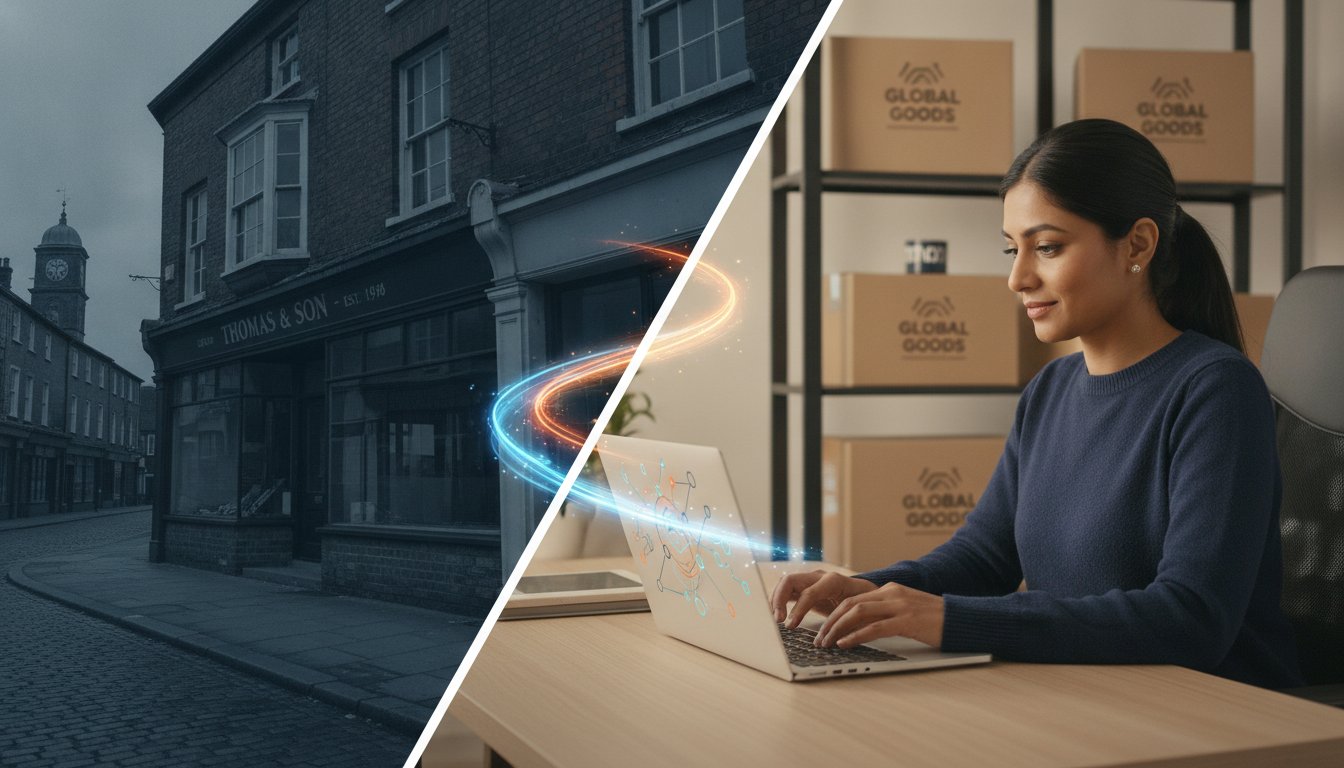
What if your most expensive monthly bill was actually the biggest thing holding your business back? For many independent retailers in 2026, the high cost of physical premises is no longer a badge of honor; it is a bottleneck. You have likely spent years building a local reputation, and the fear of losing those loyal faces is real. It is also normal to feel overwhelmed by the technical side of digital storefronts. Moving from a physical shop to online only is a major shift, but it's a strategic move that replaces high rent with massive reach.
We understand that your business is your livelihood. You want a simpler way to manage sales without the constant pressure of utility bills and business rates. You deserve a platform that empowers your growth rather than draining your margins. In this guide, you will learn how to transition your brand to a digital-only model while keeping your local identity intact. We will cover everything from navigating 2026 consumer protection laws to reaching the 21.5% of global shoppers who now buy exclusively online. It is time to trade your four walls for a storefront that never sleeps.
Key Takeaways
- Cut operational costs by trading physical rent and business rates for a digital-first strategy. This shift allows you to focus your resources on reaching customers far beyond your local high street.
- Learn why moving from a physical shop to online only is a strategic growth move in 2026. We show you how to maintain brand loyalty while expanding to a national audience.
- Avoid technical debt by choosing the right digital foundation. Compare the costs of maintaining a bespoke website against the instant visibility of an online marketplace.
- Follow a practical roadmap to digitise your inventory. Learn the essentials of product photography and descriptions that convert browsers into buyers.
- Discover how to use existing marketplace ecosystems to scale faster. Get your storefront live quickly with tools designed for independent UK sellers.
Why 2026 is the Pivotal Year for Moving from a Physical Shop to Online Only
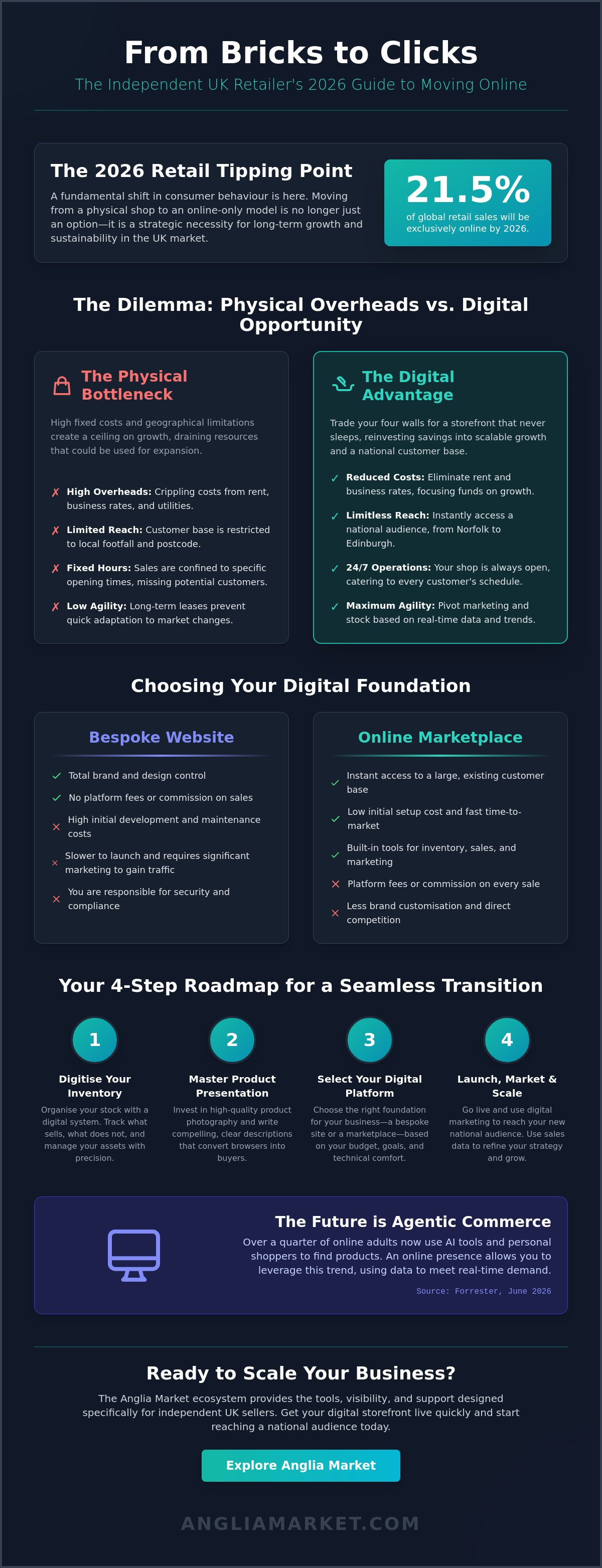
The retail landscape has reached a definitive tipping point. In 2026, global online sales are expected to account for approximately 21.5% of total retail sales, according to data from the Novatize Blog. This isn't just a minor trend; it's a fundamental shift in how consumers interact with brands. For many UK business owners, moving from a physical shop to online only has become the most viable path to long-term sustainability. The old "local shop" stigma is fading. Modern digital brands now build stronger, more interactive communities through social platforms and direct engagement than a physical storefront ever could.
Transitioning to a digital-first model involves more than just launching a website. It is a logistical evolution that requires understanding e-commerce as a complete ecosystem. You are trading the "Rent vs. Reach" dilemma for a model where every pound spent on marketing can be tracked and optimized. While a physical shop limits you to the people walking past your window, an online presence puts your inventory in front of a national audience instantly. It's about replacing high, fixed property costs with scalable, performance-based investments.
The Economic Reality of Modern Retail
Operating a brick-and-mortar store in the UK has become increasingly difficult. Rising business rates and unpredictable utility costs create a high financial ceiling that many small enterprises struggle to reach. Even for businesses in other regions, managing these expenses is a priority, with many turning to comparison experts like GoSwitch to find more sustainable energy rates. Physical footfall is naturally capped by geography and opening hours. In contrast, a digital storefront offers infinite reach and operates with significantly lower overheads. This model provides better resilience against local economic downturns; if your town's high street is quiet, your national customer base remains active. By choosing to sell online, you remove the barriers of physical maintenance and refocus those funds on product quality and customer acquisition.
Evolving from Merchant to E-commerce Entrepreneur
Success in 2026 requires a mindset shift. You are no longer just a merchant; you are an e-commerce entrepreneur managing a virtual inventory. The traditional 9-to-5 schedule is gone. Your shop is now open 24/7, catering to customers whenever they choose to browse. This new era is also defined by "agentic commerce," where AI personal shoppers help consumers find products. Research from Forrester in June 2026 shows that over a quarter of online adults use AI tools to search for products. By moving from a physical shop to online only, you can leverage this data to understand exactly what your customers want, tailoring your stock to meet real-time demand rather than guessing based on shelf space.
The Commercial Benefits of Shifting to a Digital-First Model
Profitability in 2026 is about efficiency. When you are moving from a physical shop to online only, you aren't just changing your address. You are fundamentally restructuring your profit and loss statement. The most immediate impact is the total removal of "physical friction." In a traditional shop, you pay for staff to wait for customers, electricity to keep the lights on, and business rates that don't fluctuate with your sales volume. A digital model eliminates these fixed drains. Every pound you save on heating a drafty showroom or paying premium high-street rent is a pound that can be reinvested into your stock or your marketing budget.
The reach of a digital storefront is effectively limitless. A physical shop is anchored to its postcode. If the local footfall drops, your sales drop. By shifting online, you gain instant access to a national audience. You could be based in a small village in Norfolk and sell daily to customers in London, Manchester, or Edinburgh. This transition also allows for streamlined inventory management. Digital tracking tools provide a real-time view of what is moving and what is gathering dust. You can manage your physical goods with precision, reducing the capital tied up in slow-moving items and ensuring you never miss a sale on a trending product.
Reducing Fixed Costs and Increasing Agility
Agility is the greatest asset for a small business. Without a long-term lease holding you back, you can redirect your rent budget into high-performing promotions that drive immediate traffic. You'll also find that insurance premiums often decrease. Public liability for a shop floor is far more expensive than product liability for goods kept in a secure, non-public warehouse. This flexibility means you can manage your operations from anywhere in the UK, scaling your storage space up or down as your seasonal demand changes. If you are ready to see how this works in practice, many independent sellers find that joining an established online marketplace platform is the fastest way to offload these physical burdens.
Data-Driven Growth Opportunities
Data replaces guesswork in a digital-first model. You can use customer purchase history to create personalised offers that keep people coming back. Instead of hoping a passerby likes your window display, you can identify trending categories like home and garden or pet supplies with total precision. Testing new products becomes low-risk. You don't need to commit physical shelf space to a new line; you simply list it and monitor the clicks. To make this work, you need a holistic plan to jump into eCommerce that focuses on these data-driven pivots. This approach ensures your growth is based on what your customers actually want, not just what you think might sell.
Bespoke Website vs. Online Marketplace: Choosing Your Digital Foundation
Building a bespoke website is often the first instinct for business owners. It feels like owning your own digital "land." However, this path comes with significant technical debt and hidden costs. A standalone site requires constant maintenance, security updates, and a dedicated marketing budget just to get your first visitor. If you are moving from a physical shop to online only, you need a foundation that generates revenue immediately, not a project that drains your remaining capital. A marketplace offers a "plug and play" solution that bypasses the months of development time required for a custom build.
The difference in user experience is stark. Professional marketplace interfaces are designed by experts to maximize sales. DIY templates often look amateurish and lack the transactional features customers expect in 2026. When you use a marketplace, you inherit a level of trust that takes years to build on a private domain. This is one of the core benefits of online stores that sit within established ecosystems. You don't have to worry about server uptime or database security; the platform manages the technical heavy lifting so you can focus on your inventory.
The Marketplace Advantage for UK SMEs
For small and medium enterprises, the initial investment is the biggest hurdle. Custom software development is expensive and unpredictable. Marketplaces provide instant access to a large customer base without the need for a massive SEO budget. Everything you need is pre-integrated. This includes secure payment gateways, mobile-responsive design, and built-in search tools. You pay for the service as you grow, rather than facing a huge upfront bill before you've made a single sale.
Addressing the Tech-Savvy Objection
Many owners worry they aren't "techy" enough to manage an online store. Marketplaces solve this by simplifying the listing process into a few easy steps. You don't need to learn HTML or troubleshoot server errors. This "set and forget" infrastructure is ideal for vendors who want to prioritize product quality over website maintenance. By moving from a physical shop to online only via a marketplace, you ensure your business remains agile. You can update prices, add new lines, and manage orders from a single, intuitive dashboard without ever calling a developer.
A Step-by-Step Roadmap for a Seamless Business Transition
Closing your shop is a big step. It shouldn't be a chaotic one. A structured roadmap makes the difference between a messy exit and a professional pivot. Moving from a physical shop to online only requires a clean break from your high-street premises. This process starts with a thorough audit of your current stock. Identify which items are your digital-top-sellers and which are too bulky or fragile for cost-effective shipping. This audit is your foundation for a profitable digital inventory.
The final phase of your physical presence is the clearance sale. This isn't just about emptying the floor. It is a strategic move to liquidate assets that are too costly to ship or store. Once the floor is empty, focus on the lease handover. Meet all dilapidation requirements to avoid unnecessary legal fees or deposit disputes. A clean exit allows you to put all your energy into your digital growth without lingering physical liabilities. You are trading a postcode for a presence.
Digitising Your Inventory
Organise your products into clear, searchable categories such as furniture or electronics to ensure customers can find what they need instantly. High-quality imagery is essential. Online buyers cannot touch your products; your photos must do the talking. Use multiple angles and natural lighting to build trust. You must also implement a live inventory system. Managing stock levels across digital channels prevents the frustration of overselling. It keeps your reputation intact and your operations manageable.
Retaining Your Local Customer Base
Your local fans are your biggest assets. Use social media to announce your move. Offer exclusive online-only discounts to encourage them to follow your new journey. Implementing a loyalty program is a proven way to reward repeat digital buyers. It ensures that the customers who visited you on the high street continue to support you in the digital world. Provide clear, simple instructions on your social profiles. Tell them exactly where to find their favourite items on your new platform. If you're ready to start listing your inventory, you can join our marketplace today and reach customers nationwide.
Setting up a robust shipping and returns workflow is the final piece of the puzzle. Choose reliable couriers that offer tracking as standard. A clear returns policy builds confidence and reduces customer service enquiries. By the time you hand over your keys, your digital storefront should be a well-oiled machine, ready to handle orders from across the UK.
Scaling Your Small Business with the Anglia Market Ecosystem
Scaling a business shouldn't require a degree in computer science. The final stage of moving from a physical shop to online only is choosing a partner that understands the UK independent retail sector. Anglia Market provides a ready-made infrastructure that eliminates the complexity of digital growth. You don't need to spend thousands on speculative advertising to get your first click. Instead, you leverage an existing stream of shoppers who are already looking for quality goods from reliable sellers. This community-focused approach ensures your brand isn't just another faceless listing; it's part of a thriving regional marketplace.
By joining an established ecosystem, you bypass the "ghost town" phase of a new website. Standalone stores often struggle for months to gain traction. A marketplace offers immediate visibility. This allows you to focus on what you do best: sourcing and selling great products. You trade the stress of server maintenance for the excitement of seeing your first national orders come through the dashboard. It's a faster, safer way to grow your brand without the financial risks of bespoke development.
Why Join the Anglia Market Community?
We specialise in supporting small and medium-sized UK businesses. Our platform hosts a diverse range of categories, from kitchen and dining essentials to toys and games for all ages. This variety attracts a broad demographic, giving your products exposure to customers you might never have reached on the high street. Vendors transitioning from physical retail receive dedicated support to ensure their digital storefront reflects the quality of their original shop. It is about empowering independent enterprises to compete on a national level.
Ready to Sell Online?
Getting started is simple. You can sell online with minimal setup time and no technical hurdles. The process begins by adding your profile and listing your first products using our intuitive vendor tools. Our low-commission model is designed for long-term sustainability. It ensures that more of your hard-earned profit stays in your business. Moving from a physical shop to online only is a strategic pivot that future-proofs your livelihood. Take the first step today and transform your local business into a successful national brand.
Future-Proof Your Retail Business Today
The high street is changing, and your business must change with it. Transitioning to a digital-first model allows you to eliminate expensive overheads while reaching a national audience that never sleeps. You have learned how to audit your stock, retain your local customers, and choose a foundation that prioritises growth over technical debt. Moving from a physical shop to online only is the most effective way to protect your margins and scale your brand in 2026.
You don't have to manage this shift alone. With UK-based support for independent vendors and a low-friction storefront setup, we make the process straightforward and efficient. You gain instant access to an established marketplace with thousands of active buyers ready to discover your products. It is time to trade your physical keys for a digital storefront that works as hard as you do.
Start your digital transition today and sell online with Anglia Market. Your new chapter as a successful online vendor starts now. We are ready to help you grow.
Frequently Asked Questions
Is it cheaper to run an online store than a physical shop?
Yes, running an online store is significantly cheaper because you eliminate fixed costs like business rates, high-street rent, and expensive utility bills. You trade these for variable costs such as transaction fees and digital marketing spend. This shift often results in much higher profit margins as you only pay for the sales you generate rather than the space you occupy.
How do I tell my customers I am moving to online-only?
Use every available channel starting at least four weeks before your physical doors close. Post regular updates on social media and place clear signage in your shop window. Offer a digital-only discount code to transition your footfall into online traffic. This ensures your loyal regulars know exactly where to find you on the web.
Do I need a warehouse if I close my shop?
You don't necessarily need a large warehouse immediately. Many small businesses start by using a secure garage, a spare room, or a local self-storage unit. This keeps overheads low while moving from a physical shop to online only. You can scale your storage space as your national order volume increases and your business grows.
What is the best platform for a small business moving online?
An established marketplace is often the best choice for UK independent sellers. It removes the technical burden of building a site from scratch and managing server security. Platforms like Anglia Market provide built-in trust and an existing customer base. This allows you to start selling immediately without a massive upfront investment in SEO or web development.
How do I handle returns for an online-only business?
Handling returns requires a clear, written policy that is easy for customers to find on your profile. Provide a specific return address and use tracked shipping services to prevent disputes. In 2026, UK regulations require transparency in digital transactions. A simple, honest return process builds long-term trust and encourages repeat business from new customers.
Can I still be a "local" business if I only sell online?
You can absolutely maintain your local identity through your branding and community engagement. Continue to highlight your roots in your "About Us" section and engage with local social media groups. Some vendors even offer local pickup points or hand-delivery within a specific postcode to keep that personal touch while reaching a wider audience.
What equipment do I need to start selling online?
You only need a few essentials to get started. A smartphone with a good camera is perfect for high-quality product photography. You will also need a laptop or tablet for order management and a thermal label printer for shipping labels. Stock up on basic packaging materials to ensure your physical goods arrive safely at their destination.
How long does it take to transition a physical shop to an online marketplace?
Most businesses complete the transition in four to eight weeks. This timeframe allows for a final clearance sale, stock auditing, and listing your inventory on a digital platform. moving from a physical shop to online only is a phased process. It ensures you don't lose momentum while handing over your keys and launching your new digital storefront.

Here to help — ask anything
For questions about this disclaimer or the site, contact us via the website’s Contact page.


