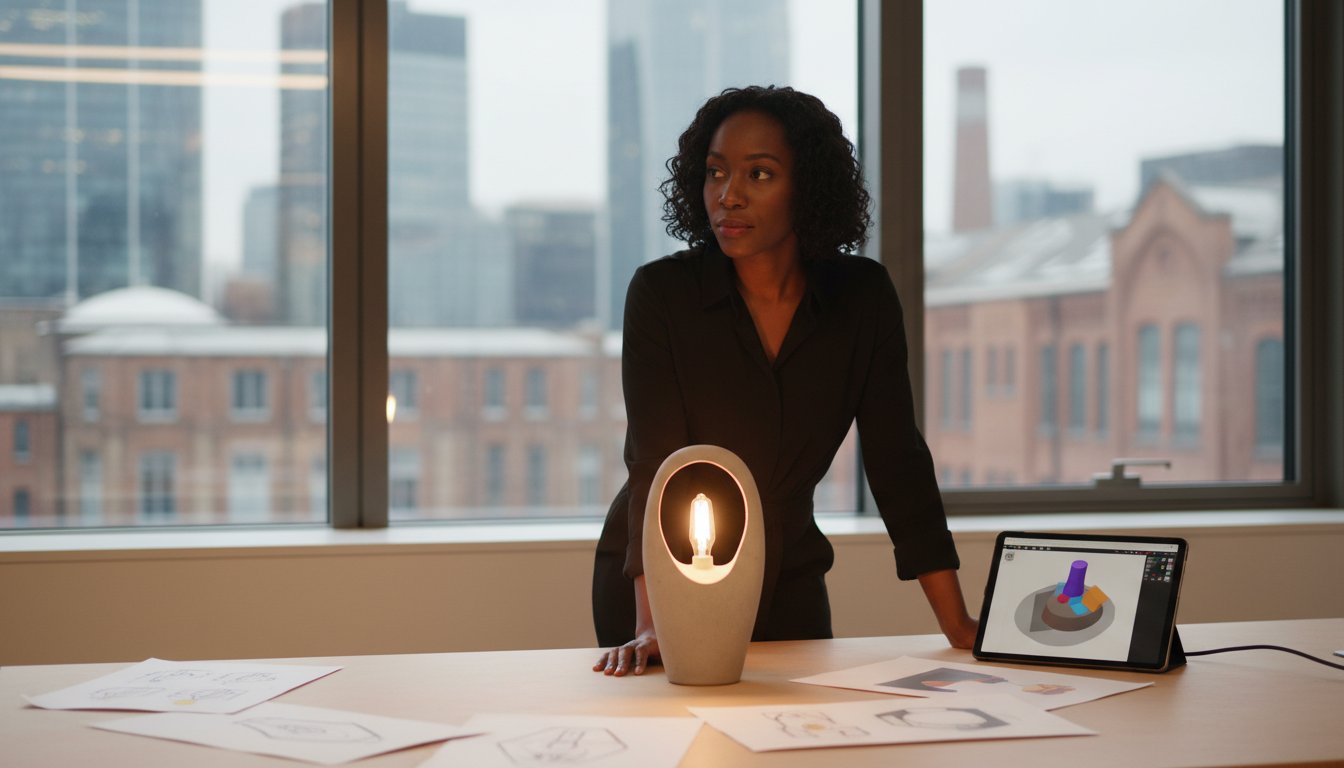
Last Tuesday, a boutique homeware designer in Manchester logged onto a global marketplace only to find their signature £35 lamp being sold by a mass-manufacturer for just £9. It’s a gut-wrenching moment that makes many independent creators feel helpless. If you are currently protecting my product designs from being copied uk regulations often feel like a complex puzzle. You’ve invested your time and savings into your brand. Seeing a copycat profit from your hard work is more than just a financial blow; it’s personal.
We know the legal jargon around IP and design rights feels like a maze, especially when you’re working with a limited budget. You don’t need a £500-an-hour solicitor to start securing your business today. This guide gives you the exact steps to distinguish between different types of protection and stop others from stealing your ideas. You’ll get a clear checklist for your new designs, an explanation of the difference between inspiration and theft, and a practical plan to enforce your rights on any marketplace.
Key Takeaways
- Understand how UK law defines your products through shape and configuration to build a solid first line of defence for your creativity.
- Learn the difference between automatic unregistered rights and the "gold standard" of registered protection to choose the best commercial strategy for your business.
- Master the essential steps for protecting my product designs from being copied uk, including how to conduct a prior art search and maintain a robust design audit trail.
- Gain insights into the "informed user" test and learn practical methods to prevent manufacturers from selling your unique designs to others.
- Discover how to enforce your rights effectively using cease and desist letters and marketplace takedown tools to stop copycats in their tracks.
Understanding UK Design Rights: The First Line of Defence for Your Products
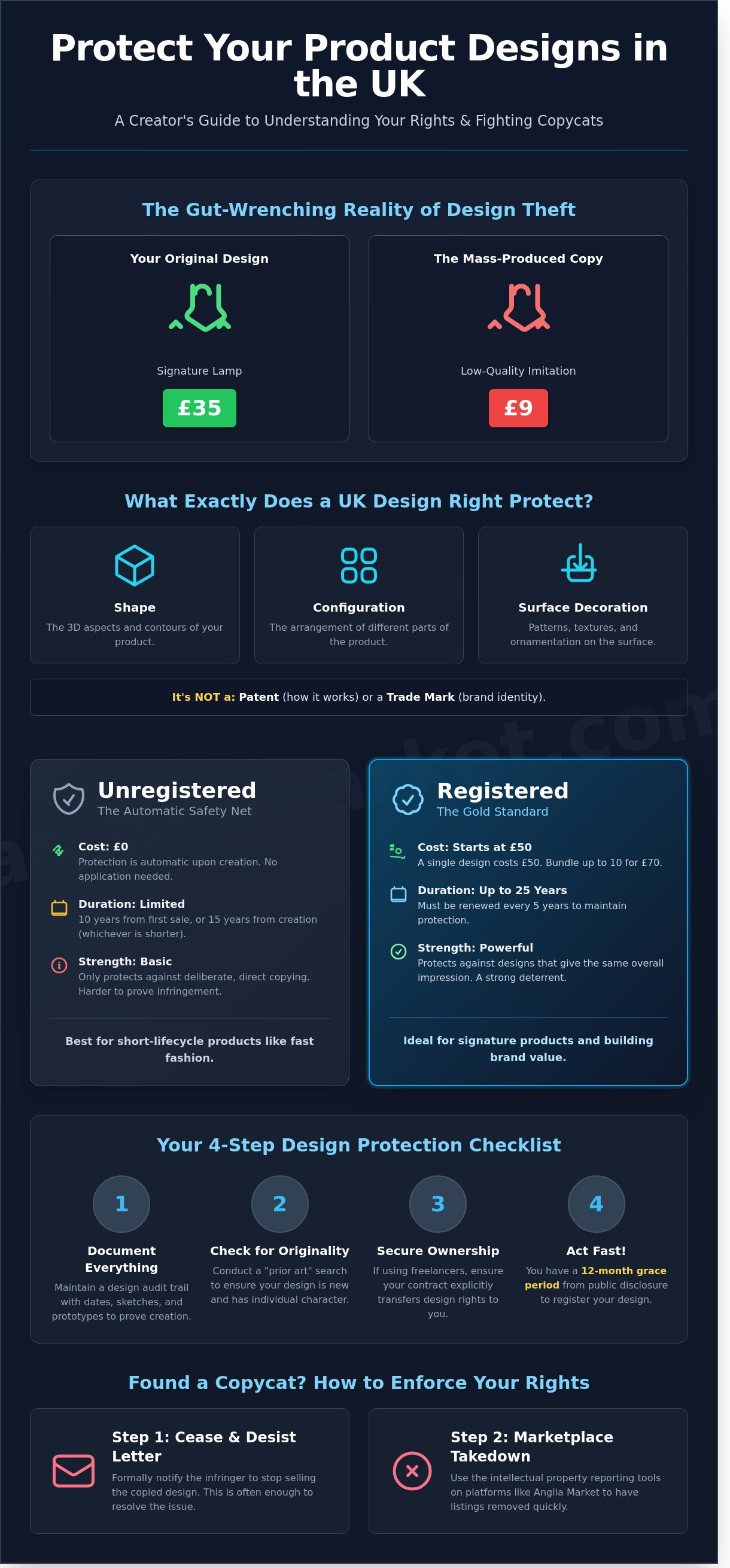
Protecting your hard work starts with knowing what the law actually covers. In the UK, a "design" refers to the appearance of the whole or part of a product. This includes its shape, configuration, and any surface decoration. It's different from a patent, which protects how a product works, and distinct from a trade mark, which identifies your brand identity. If you're researching protecting my product designs from being copied uk, you must focus on the aesthetic elements that make your item unique. Securing these UK design rights prevents brand dilution and stops competitors from triggering race-to-the-bottom price wars with cheap imitations.
Ownership is the next hurdle. Usually, the creator owns the right. If an employee creates a design during their normal course of work, the business owns it automatically. However, commissioned work is different. If you hire a freelancer, they own the rights unless you have a written contract that transfers ownership to you. This is a common trap for small businesses that don't check their paperwork before launching a new line.
To better understand how to keep your concepts safe, watch this helpful video:
What Qualifies for Protection in the UK?
Your design must have "individual character." This means the overall impression it gives to an informed user must differ from any design already available to the public. You also need to pass the "newness" test. The UK provides a 12-month grace period from the date you first disclose your design to the public. If you don't register within those 12 months, you lose the chance for formal protection. Some items are excluded, such as "must-fit" parts. If a component's shape is purely functional so it can connect to another product, it won't qualify for design rights.
The Role of Intellectual Property in SME Growth
Registered designs are tangible assets that increase your business valuation. When you're looking for investment or planning to sell your company, a robust IP portfolio is a major green flag for buyers. Using a "Registered Design" number on your packaging acts as a powerful deterrent. It often stops copycats before they even start production. For independent vendors on platforms like Anglia Market, integrating these rights into your retail strategy is vital. It ensures you remain the sole provider of your unique style, allowing you to maintain healthy margins and build a loyal customer base without protecting my product designs from being copied uk becoming a constant source of stress.
Registered vs Unregistered Designs: Which is Right for Your Business?
UK creators have two main paths for safeguarding their work. The first is automatic. The second requires a formal application. If you're currently weighing up the best way of protecting my product designs from being copied uk, you need to understand the gap between these two levels of cover. Most small businesses start with the basic safety net, but high-volume sellers often find that the "gold standard" of registration is a better commercial investment.
Unregistered Design Rights (UDR) provide a baseline level of unregistered design protection the moment you create your work. It costs nothing. It's automatic. However, it's short-lived. It lasts for either 10 years after the product is first sold or 15 years after it was first designed, whichever comes first. For a fast-moving fashion item, this might be enough. For a signature piece of furniture intended to sell for decades, it's usually insufficient.
Registration offers a much stronger shield. A single online application with the UKIPO costs £50. If you're launching a collection, you can bundle up to 10 designs for £70. This small upfront cost buys you 25 years of protection, provided you renew the registration every five years. It transforms your design into a tangible business asset that you can sell or licence to others.
The Limits of Automatic (Unregistered) Protection
UDR is narrow. It only protects the 3D shape and configuration of your product. It won't protect 2D surface patterns, specific colours, or textures. Since 1st January 2021, UK designers also face new geographic hurdles. UK UDR no longer covers the EU, meaning you'd need to rely on separate Supplementary Unregistered Design rights for 2D protection within Britain. The biggest drawback is the burden of proof. If a competitor copies you, you must prove they actually saw your original work. Without that proof, your legal case often fails.
The Power of Registration
Registration grants you a "monopoly right." This is a massive advantage. You don't have to prove a copycat saw your design; you only have to prove their product looks too similar to yours. It covers the entire "look and feel," including ornamentation, lines, and even the "contours" of the item. If you're serious about protecting my product designs from being copied uk, having a registration number is a powerful deterrent. Displaying this number on your product listings builds immediate buyer trust. It signals that you're a legitimate UK vendor selling original, quality goods rather than cheap imitations.
A Step-by-Step Guide to Securing Your Intellectual Property in the UK
Before you invest in manufacturing, you must ensure your design is actually new. A "Prior Art" search is your first line of defence. Check the UKIPO database and global design registries to see if your "unique" idea is already on sale. Skipping this step is a common mistake that leads to roughly 15% of application refusals. Once you're sure of your originality, the focus shifts to creating a robust "Design Audit Trail." This means documenting every iteration of your product, from the very first napkin sketch to the final CAD file.
Phase 1: The Documentation Audit
UK courts require clear evidence of the "date of creation" during infringement claims. Use digital timestamping services to lock your files with a verified date. While "poor man’s copyright" (posting a copy to yourself) is a popular myth, it carries very little weight in a modern legal setting compared to a blockchain-verified timestamp. Organise your files into a chronological folder. Include dated signatures on every physical mood board and prototype photo. If a competitor copies you, these records prove you were the first to bring the design to life.
Phase 2: The UKIPO Application Process
The 2026 digital filing process is faster than ever, but precision is key. You must register your design using clear, high-resolution images against a neutral, white background. Any shadows or props in the photo can lead to a rejection because they obscure the actual product features. You'll also need to select the correct Locarno Classification. This is a global system used to categorise goods; for instance, Class 06 covers furniture while Class 12 covers vehicles. Categorising your product incorrectly can make your protection useless in a legal battle.
Managing confidentiality is just as important as the filing itself. Always use a Non-Disclosure Agreement (NDA) when talking to manufacturers or wholesalers. This is a critical part of protecting my product designs from being copied uk. Finally, remember that your registration isn't a "set and forget" task. You must renew your rights every five years to keep the protection active. In the UK, you can renew a design up to four times; this gives you a maximum of 25 years of exclusive commercial rights.
Avoiding the Inspiration Trap: How to Prove Your Design is Original
UK courts use the "Informed User" test to decide if a product is a copy. This user isn't a professional designer or a casual shopper. They're someone with a high level of knowledge about the specific product sector. When protecting my product designs from being copied uk, I must ensure my design creates a "different overall impression" on this user compared to existing products. If the lines, contours, or shapes are too similar, the Intellectual Property Enterprise Court (IPEC) may rule against you. Distinguishing between a 2025 design trend and actual theft is vital. A trend is a general style; theft is the specific replication of your product's unique geometry.
For example, in a highly specialized field like model railways, the "informed user" can spot minute differences in kit designs. Creators in these areas rely heavily on design rights to protect their intricate work from imitation. If you're curious about such niche product designs, you can discover Narrow Minded Railworks and see how originality is key to their brand.
To ensure your work stands apart, drawing inspiration from original sources is key. For creators looking to immerse themselves in unique visual concepts, you can explore Abstract Art to see how artists push boundaries with form and colour.
Managing Your Supply Chain
Manufacturing leaks are a major risk for UK startups. Research from the 2023 IP Crime and Infringement Report suggests that unauthorized "overstock" production accounts for a significant portion of design leaks. To prevent your factory from selling your stock out the back door, include a Non-use, Non-disclosure, and Non-circumvention (NNN) clause in your contract. Standard NDAs often aren't enough in international markets. Set up a quality control schedule that includes unannounced visits to the production floor. This ensures the factory only produces the 500 or 1,000 units you actually ordered.
The 12-Month Grace Period Explained
The UK Intellectual Property Office (IPO) provides a 12-month grace period for designers. This allows you to show your work at a trade show, such as the 2025 Autumn Fair, before officially registering the design. While this helps you "test the market," it's a dangerous strategy. If a competitor sees your design on TikTok today and registers a similar version tomorrow, you'll face an expensive legal battle to prove your prior rights. Sellers looking toward 2026 should file their applications before their first public post. Waiting until you have sales data often means you've already left the door open for copycats.
Ready to scale your business with a platform that values original work? Start selling with Anglia Market and reach thousands of customers across the UK.
Enforcing Your Rights: What to Do if You Find a Copycat
Discovering a replica of your work is frustrating; however, acting quickly protects your commercial interests. Your first move is usually a "Cease and Desist" letter. This formal notice identifies your design, states your ownership rights, and demands the copycat stops selling the item immediately. You should include specific registration numbers or proof of first sale dates. A professional letter often resolves 80% of disputes without further legal action because it shows you're serious about protecting my product designs from being copied uk.
Taking Action on Online Marketplaces
Anglia Market and other UK platforms take IP rights seriously to maintain a trustworthy shopping environment. If you spot an infringement, use the official reporting tools rather than public social media posts. Shaming a seller online often backfires or leads to defamation claims. Instead, follow this practical process:
- Gather Evidence: Take high-resolution screenshots of the listing, including the seller's name and the date.
- Make a Test Purchase: Buying the copycat product provides physical proof of the quality and design similarities.
- File a Report: Submit your evidence through the Anglia Market seller support portal or the specific IP infringement form.
The Legal Escalation Ladder
If a seller refuses to budge, you don't always need a full High Court trial. The Small Claims Track of the Intellectual Property Enterprise Court (IPEC) handles claims worth up to £10,000. This is a streamlined, cost-effective route for small businesses. When calculating damages, you can usually claim for your lost profits or an "account of profits" from the infringer. In many cases, the court may also award a "reasonable royalty" fee that the copycat would have paid to use your design legally.
Involve a patent attorney or IP solicitor if the infringer is a large retailer or if the case involves complex technical patents. They'll ensure your "Letter of Claim" meets the strict Civil Procedure Rules. For smaller disputes, consider Alternative Dispute Resolution (ADR). The Intellectual Property Office (IPO) offers a mediation service that settles many cases for a fraction of the cost of a court hearing.
- Check your design registration status on the UK IPO website.
- Create a "Brand Protection" folder with all original sketches and dated invoices.
- Set up automated alerts for your product names and key design descriptions.
- Review your contracts to ensure you own the IP for any freelance work.
- Verify that your contact details are updated on all marketplace seller profiles.
Taking these steps is the final stage in protecting my product designs from being copied uk. Staying proactive ensures your brand remains a leader in the competitive retail market.
Turn Your Creative Assets Into Business Growth
Taking control of your intellectual property isn't just a legal precaution; it's a vital business strategy. Registering a single design with the UK Intellectual Property Office (UKIPO) starts at just £50. This small investment provides up to 25 years of protection and makes legal enforcement much simpler. If you choose to rely on unregistered rights, keep in mind they typically last for 10 years after the design was first sold. Maintaining a clear paper trail of sketches and dated prototypes is the most effective way of protecting my product designs from being copied uk. These records serve as your primary evidence if you ever need to defend your work in the Intellectual Property Enterprise Court.
Once your designs are secure, you'll want a platform that respects your hard work. Anglia Market currently supports hundreds of small and medium UK businesses by offering practical tools for independent vendors and a secure environment for every transaction. We're dedicated to helping local creators thrive without the stress of platform instability. Start selling your unique designs on Anglia Market today. Your innovation is the heart of your business; let's give it the professional home it deserves.
Frequently Asked Questions
Is my product design automatically protected in the UK?
Yes, your product receives automatic protection through Unregistered Design Rights the moment you create it. This covers the shape and configuration of 3D objects for 15 years after creation or 10 years after the first sale. It's a useful safety net for small businesses. However, it doesn't cover 2D patterns or surface decoration, and you'll need to keep dated records of your sketches to prove you're the original creator.
How much does it cost to register a design with the UKIPO in 2026?
Registering a single design with the UKIPO in 2026 costs £50 when you apply online. If you're protecting multiple designs at once, the price drops to £20 for each additional design in the same application. This makes protecting my product designs from being copied uk wide very affordable for independent vendors. You must pay these fees upfront. The registration lasts for 25 years if you renew it every 5 years.
Can I protect a design if I have already started selling the product?
You have a 12 month grace period to register your design after you first make it public. This allows you to test the market before committing to registration costs. If you wait longer than 12 months, your design loses its novelty status. This means any registration after the 365 day mark is likely invalid. Don't delay your application if the product is selling well.
What is the difference between a design right and a patent?
Design rights protect how a product looks, while patents protect how a product works. A design registration covers the visual appearance, including shape, colours, and textures. Patents are for technical inventions and are much more expensive. A UK patent application can cost over £4,000 including legal fees. Most retail products only need design registration to stop lookalike copies.
How do I stop someone from copying my product on social media?
You should use the platform's official Intellectual Property (IP) reporting tool to flag the infringing post immediately. Platforms like Instagram and TikTok have dedicated forms where you can submit your UKIPO registration number. They usually remove infringing content within 24 to 48 hours of a valid report. If the seller is on a marketplace, report them to the site's Verified Rights Owner programme to get the listing taken down.
Can a competitor change one small detail and get away with copying me?
No, a competitor cannot simply change one minor detail to bypass your protection. The legal test in the UK is whether the new design produces a different overall impression on an informed user. If 90% of the design is identical, a court will likely find them guilty of infringement. Small tweaks to a handle or a slight colour change rarely count as a new design.
Does a UK design registration protect me in the USA or Europe?
A UK design registration only provides legal protection within the United Kingdom. To protect your work in the USA, you must file a Design Patent with the USPTO. For the European Union, you need a Registered Community Design (RCD) through the EUIPO. Since January 2021, UK rights no longer cover the 27 EU member states. International applications can be managed through the Hague System to save time.
What should I do if I receive a letter accusing me of design infringement?
You must stay calm and verify the claimant's registration details on the UKIPO website before responding. Check if their registration is actually active and if your product truly mimics their protected features. Don't ignore the letter, as this can lead to an injunction. Contact a specialist IP solicitor or use the Intellectual Property Enterprise Court (IPEC) small claims track for disputes under £10,000.

Here to help — ask anything
If you have any questions regarding this disclaimer or any of our policies, please contact Anglia Market through the contact page on our website, by email using the address provided on the site, or by phone at 0333 772 2593