
Did you know that 71% of UK SMEs no longer use social media to track viral trends? Many business owners are stepping away from the "content creator" trap to focus on what actually works for their bottom line. Selling online without using social media is a practical strategy for those who want higher quality traffic with actual buying intent. You don't need to share your personal life or edit endless videos to find commercial success in 2026.
We understand the frustration of algorithm fatigue and the pressure to be "always on" for very little financial return. It's time to reclaim your schedule and focus on systems that provide predictable results. This guide will show you how to build a profitable business using marketplaces, SEO, and email marketing. You'll learn how to create a sales system that works in the background whilst you focus on your products. Discover how to gain a better work-life balance and build a more resilient, independent enterprise by focusing on the channels that truly drive growth.
Key Takeaways
- Identify the difference between "push" and "pull" marketing to attract customers who are ready to purchase right now.
- Use established marketplaces to bypass the need for a social media following and benefit from built-in buyer trust.
- Implement a long-tail SEO strategy to create a sustainable stream of traffic that doesn't disappear when an algorithm changes.
- Discover how selling online without using social media allows you to focus on email marketing and direct customer relationships.
- Learn how to reallocate your time towards product development and other high-growth tasks to improve your overall profitability.
The Reality of Selling Online Without Using Social Media
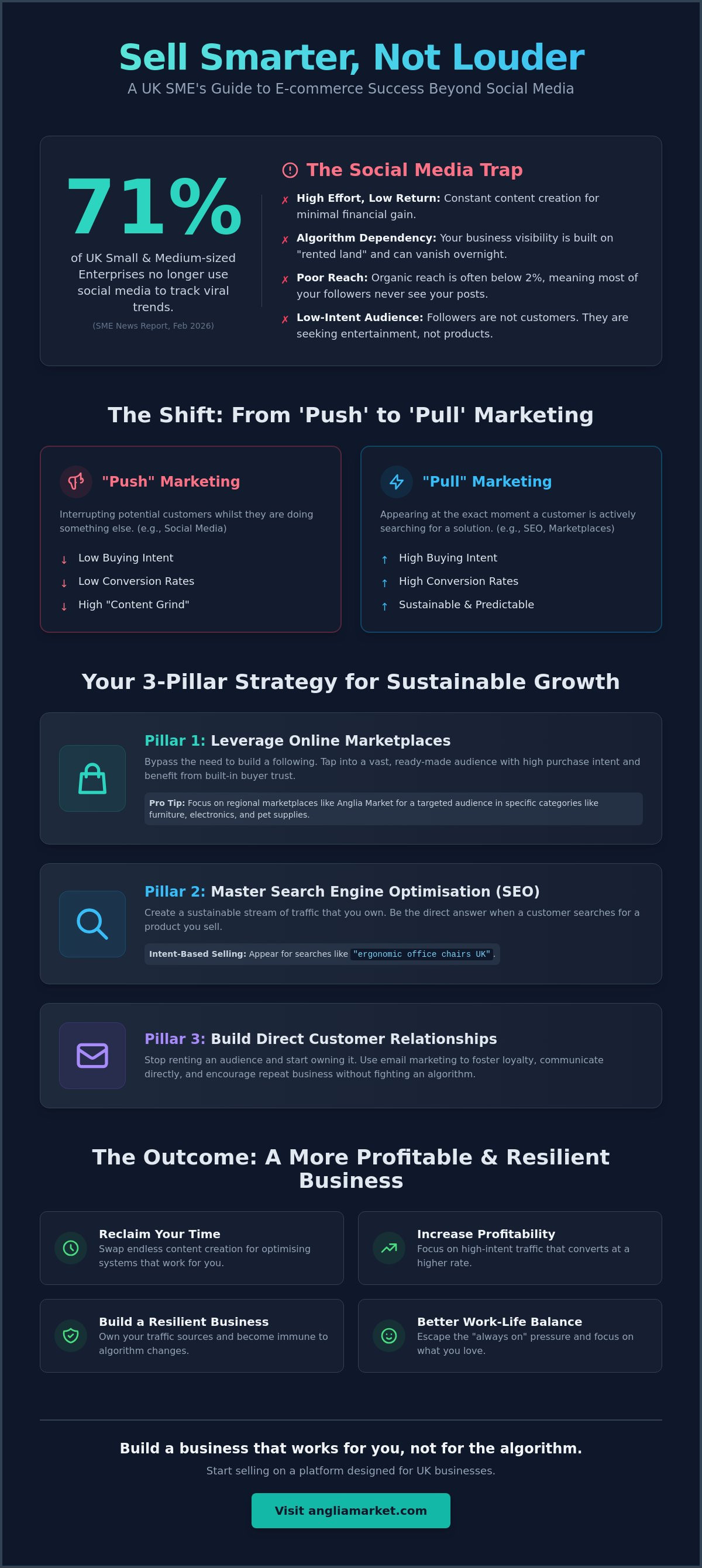
Many UK business owners feel like they're on a treadmill. They spend hours filming videos and writing captions for E-commerce sales that never quite materialise. This is the "Social Media Trap." It's a high-effort system that attracts low-intent traffic. People on social platforms are there to be entertained. They aren't usually there to shop. In contrast, search-driven platforms attract people who are actively looking for a product. Selling online without using social media is about shifting from "Push" to "Pull" marketing.
Think of social media as "Push" marketing. You're pushing your product into someone's feed whilst they're trying to look at holiday photos. It's an interruption. Marketplaces and SEO are "Pull" marketing. The customer has a problem and pulls the solution from a search bar. By 2026, social media fatigue has hit both sides of the screen. Sellers are tired of the grind; consumers are tired of the ads. A February 2026 report from SME News showed that 71% of UK SMEs no longer use social media to track viral trends. They've realised that chasing "likes" doesn't always pay the bills.
Relying on social platforms means building your business on "rented land." You don't own the platform. You don't own the audience. If an algorithm changes, your visibility can vanish overnight. It's a high-risk strategy that lacks long-term security. To build a stable business, you need to own your traffic sources.
The Problem with Algorithm Dependency
The maths of social media often doesn't add up. You might have thousands of followers, but organic reach is often below 2%. This means most of your audience never sees your updates. There's also a massive hidden cost. When you calculate the time spent on content, the cost of equipment, and the mental energy required, the "free" marketing isn't free at all. Followers are not customers. High social engagement rarely translates into consistent sales because the buying intent isn't there. It's a cycle of constant creation for diminishing returns.
The Alternative: Search-Based Commerce
Focusing on being "findable" is more efficient than trying to be "noticeable." When you list products on an online marketplace platform, you're appearing in front of people with a credit card in their hand. This is the core of search-based commerce. Conversion rates are higher because the user has already decided to buy. Intent-Based Selling is the practice of appearing exactly when a customer is looking to buy. It's about being the answer to a specific search query like "ergonomic office chairs UK" rather than a random post in a busy feed.
Leveraging Online Marketplaces to Find Your Audience
Marketplaces remove the biggest hurdle for small businesses: finding customers. When you're selling online without using social media, you don't need to spend months building a following from scratch. Established platforms already have millions of active users visiting with high purchase intent. These shoppers aren't looking for memes; they're looking for specific products. By listing your goods where people already shop, you tap into a ready-made stream of traffic that doesn't require constant content creation.
Built-in trust is another major advantage for UK SMEs. Customers often hesitate to buy from an unknown standalone website. They worry about payment security and delivery reliability. Professional platforms solve this by offering buyer protection and secure payment gateways. A professional storefront on a trusted platform acts as a digital badge of credibility. It replaces the need for the "social proof" typically sought through Instagram likes or TikTok comments. Shoppers feel safer knowing the platform facilitates the transaction.
Choosing the Right Platform for Your Goods
Selecting the right channel is a critical part of your e-commerce strategy. While global retail giants offer massive reach, they are often crowded and expensive for smaller vendors. Regional marketplaces are becoming a secret weapon for UK small businesses. For example, Anglia Market provides a focused audience specifically looking for items like furniture, electronics, and pet supplies. These platforms often provide better support for independent enterprises and help you stand out in a less saturated environment. Transactional safety is prioritised, ensuring both you and your customers are protected during every sale.
Optimising Your Storefront for Internal Search
Your marketplace storefront is your professional profile. Instead of worrying about viral trends, focus on internal search optimisation. Treat every listing like a mini-website. Clear, descriptive titles and detailed product specifications are essential. Use high-quality, clean imagery. You don't need "lifestyle" shots that look like social media posts; you need clear photos that show exactly what the customer is buying. This clarity builds confidence and reduces returns. It's a functional approach to sales that rewards accuracy over aesthetics.
Managing a storefront is about precision, not personality. Focus on keywords that shoppers actually type into search bars. If you are ready to reach a dedicated UK audience, you can become a vendor and start building a shop that converts through search rather than social noise. This approach ensures your business remains visible to buyers 24/7 without the need for daily status updates or external promotion. It's a more sustainable way to grow.
Search Engine Optimisation (SEO) for Physical Products
SEO is the most sustainable alternative to the daily grind of social media posting. Whilst a social media post has a shelf life of a few hours, a well-optimised product page can generate sales for years. Selling online without using social media allows you to focus your energy on building permanent search equity. Instead of chasing a viral moment, you're building a digital asset that works whilst you sleep. This shift requires moving away from broad terms and focusing on specific, high-intent phrases that shoppers actually use when they are ready to checkout.
The power of search lies in long-tail keywords. A broad term like "chairs" is incredibly competitive and often attracts browsers, not buyers. However, a specific phrase like "ergonomic office chairs UK" signals that the user is ready to purchase. By targeting these specific niches, you bypass the noise of larger competitors. Blogging also plays a vital role here. By writing guides that answer common customer questions, you establish your shop as an authority. This builds trust with search engines and ensures your site remains findable for shoppers seeking expertise rather than just a transaction.
Keyword Research for SME Inventory
Identifying the right search terms is the foundation of your visibility. You need to find the specific words your customers use when they're ready to buy. This applies across all categories, from kitchen and dining essentials to the latest toys and games. Focus on "low-hanging fruit" keywords. These are specific phrases with lower competition but high conversion potential. According to Google research, 15% of all daily searches have never been seen before, proving that niche, long-tail intent remains a massive opportunity for small vendors. Tools like search consoles and keyword planners help you uncover these unique opportunities that larger brands often ignore.
On-Page SEO Basics for Product Pages
Structure your product descriptions to rank on Google without any social signals. Every page must have a clear H1 tag that includes your primary product name.
Building Customer Loyalty and Email Relationships
Ownership is everything. Whilst social platforms can restrict your reach or delete your account without warning, an email list is an asset you control completely. Selling online without using social media becomes much easier when you have a direct line to your customers' inboxes. You aren't competing with viral dances or trending memes. You're simply providing value to people who have already shown interest in your products. This direct communication is the key to transitioning a one-off buyer into a lifelong brand advocate.
Focus on value-driven newsletters rather than promotional spam. If you sell gardening tools, send a monthly planting guide. If you sell kitchenware, share a seasonal recipe. This builds a relationship based on helpfulness. It makes your brand the first thing they think of when they need to make a purchase. Implementing a structured loyalty programme also reduces the need for constant new customer acquisition. It's often significantly cheaper to keep an existing customer than to find a new one through paid advertising.
Creating an Irresistible Lead Magnet
Capture emails legally by offering something of genuine worth. For sellers of physical goods, your "lead magnet" should solve a post-purchase problem or provide exclusive access. Consider these ideas for your shop:
- Furniture care and maintenance guides
- Video tutorials for complex assembly
- Exclusive discount codes for second purchases
- Early access to new product launches
Always ensure you follow UK GDPR rules by using clear, unticked opt-in checkboxes. Don't forget physical touchpoints. Include a "thank you" note or a packaging insert with a QR code in every order. This encourages marketplace buyers to join your direct community for future perks and rewards.
Automating Your Retention Strategy
Set up a "Welcome Sequence" to introduce your brand story. This series of automated emails explains your values and supports the independent enterprise feel that UK shoppers love. A robust loyalty program keeps customers coming back without you needing to "post" on social media every day. You can segment your list to ensure every message is relevant. Send specific updates about pet supplies to dog owners, or the latest electronics deals to tech enthusiasts. This level of personalisation drives much higher conversion rates than a generic social media broadcast.
Ready to build a more resilient business? Explore our loyalty rewards to see how you can incentivise repeat purchases and grow your brand today.
A Sustainable Multi-Channel Strategy for 2026
Moving away from social platforms requires a structured approach. Selling online without using social media isn't about disappearing; it's about relocating your efforts to where they generate the highest return. If you've spent years chasing likes, the thought of stopping can be daunting. However, by 2026, the data shows that high-intent search and direct email relationships are far more profitable than viral reels. Reclaiming your time allows you to focus on product quality and logistical efficiency. This shift improves your profit margins whilst reducing the mental load of constant content creation.
The 90-Day Social Media Detox Plan
You don't have to quit everything today. A phased withdrawal ensures your revenue remains stable whilst you build new traffic sources. Follow this simple timeline:
- Month 1: Optimise every existing marketplace listing. Focus on the SEO foundations we discussed in earlier sections to ensure you're findable through search.
- Month 2: Launch your email capture system. Introduce loyalty incentives to encourage your current customers to shop with you directly.
- Month 3: Reduce your social posting frequency. Monitor your traffic sources closely. If your sales hold steady or increase, you've successfully broken the dependency.
Scaling Through Professionalism
A clean, functional shop is your most powerful tool. Consumers in 2026 prioritise reliability and speed over entertainment. They want to find a product, trust the seller, and complete the transaction without friction. You can scale your volume by leveraging internal marketplace tools. Use targeted promotions and seasonal sales to move stock and attract new buyers during peak periods. This professional consistency builds a stronger brand than a temporary trend ever could. Reclaim your time and focus on the craft of selling. Your business will be more resilient for it.
Take Control of Your Digital Future
Building a resilient business means moving away from the noise of social feeds and focusing on high-intent search. You've seen how marketplaces and SEO provide a more predictable sales system by connecting you with buyers who are ready to purchase. By prioritising email relationships and loyalty rewards, you create a stable foundation that isn't at the mercy of an algorithm. Selling online without using social media is a commercial choice that rewards professionalism and efficiency over viral content creation.
It's time to reclaim your schedule and focus on the craft of selling. You can build a sustainable multi-channel strategy by choosing a platform that understands the needs of independent vendors. Start selling on a professional UK marketplace today. Our platform offers a secure transactional environment and dedicated support for UK-based SMEs across categories like furniture, electronics, and pet supplies. Focus on what you do best and let the search traffic find you. You've got this.
Frequently Asked Questions
Can I really get enough traffic without social media in 2026?
Yes, you can generate significant traffic by focusing on platforms where users have high buying intent. Marketplaces and search engines attract people who are actively looking for specific items. Whilst social media relies on interrupting people, search-based commerce pulls customers in. This leads to higher conversion rates and more stable sales figures over time.
How much does it cost to sell on a marketplace versus running social ads?
Marketplace costs are generally performance-based, meaning you only pay when you make a sale. Social media advertising requires an upfront budget with no guaranteed return. For many UK SMEs, the predictable fee structure of a marketplace is easier to manage than the fluctuating costs of paid social campaigns. It's a more cost-effective way to reach a ready-to-buy audience.
Is SEO too difficult for a small business owner to learn?
Basic SEO for physical products is quite simple and focuses on clarity. You don't need technical expertise to write accurate titles and helpful descriptions. By using the words your customers actually type into search bars, you can improve your visibility significantly. It's a practical skill that pays off through long-term organic traffic.
Do I need a large email list to see results?
A small, engaged list of previous customers is far more valuable than a massive list of disinterested leads. Even a few dozen loyal buyers can drive consistent revenue if you provide them with genuine value and exclusive offers. Focus on the quality of your relationships rather than the total number of subscribers.
What if my competitors are all on social media and I am not?
This allows you to differentiate your brand through professional reliability. Whilst others are distracted by viral trends, you can focus on perfecting your product range and fulfilment speed. Many consumers in 2026 prefer the straightforward experience of a clean marketplace storefront over the noise of social commerce.
How do I handle customer service without a social media presence?
Professional customer service is best handled through private, organised channels like email or marketplace messaging systems. These tools allow you to keep a clear record of all interactions and resolve issues efficiently. Selling online without using social media means you don't have to manage public complaints in a comment section, which protects your brand reputation.
Which marketplace is best for UK-based small businesses?
Regional marketplaces are often the best choice for independent UK vendors. Platforms like Anglia Market specialise in supporting local SMEs and provide a secure environment for categories like furniture and electronics. These platforms help you reach a targeted audience without the intense competition found on massive global sites.
Can I still use social media for personal use whilst keeping my business off it?
You can certainly keep your personal and professional lives separate. Reclaiming your time from business content creation allows you to enjoy social media as a consumer again. It's a healthy way to maintain a better work-life balance whilst ensuring your business grows through more sustainable, search-driven channels.

Here to help — ask anything
For questions about this disclaimer or the site, contact us via the website’s Contact page.


