
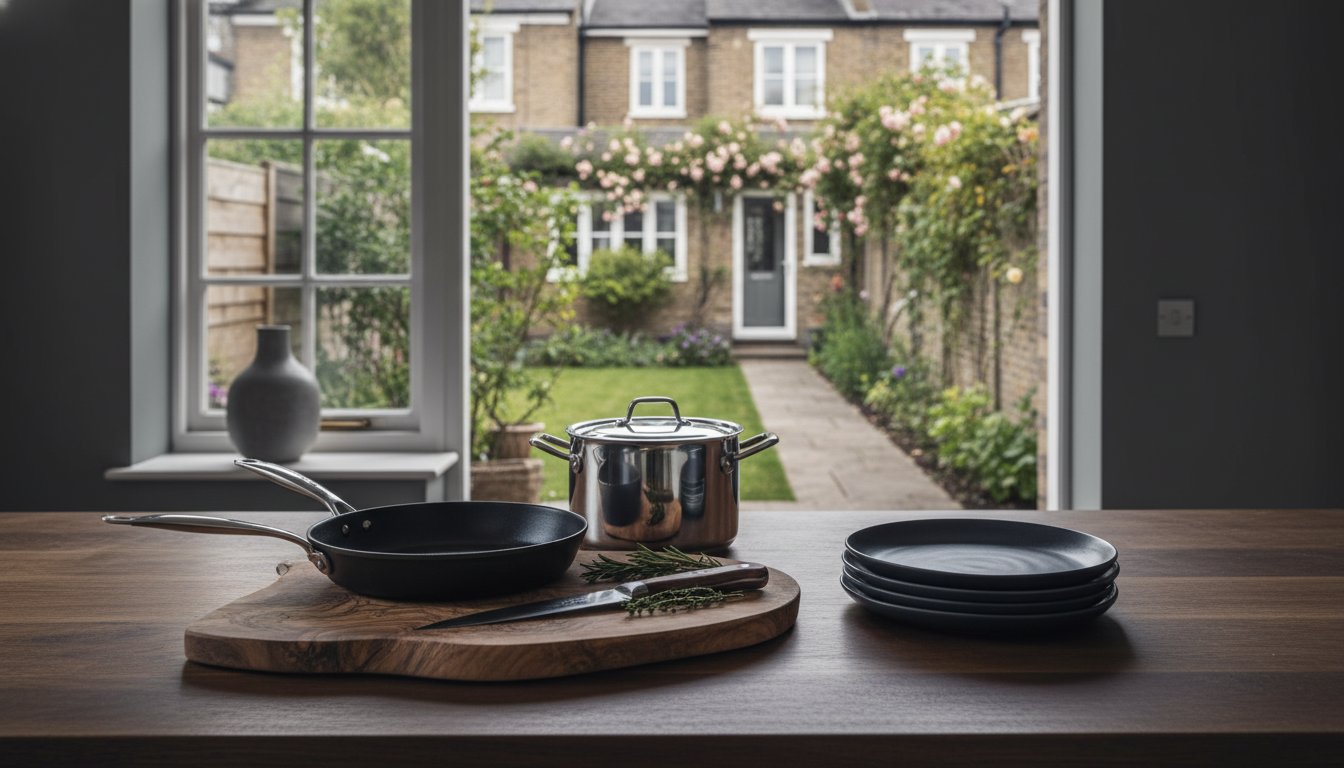
Did you know that 51% of UK consumers are now experimenting with new cooking trends in their own homes? As we spend more time in the heart of the house, the quality of your kitchenware becomes the difference between a frustrating chore and a professional culinary experience. It's common to feel overwhelmed by the flood of cheap, low-quality imports found on major retail sites. You're likely looking for tools that are safe, durable, and sized correctly for UK storage spaces, but finding reliable independent sellers isn't always easy.
We understand that you want a kitchen that performs as well as it looks without compromising on safety or ethics. This guide will help you choose high-quality items that balance longevity with modern style. You'll discover the essential tools every home needs, learn whether cast iron or stainless steel suits your specific cooking habits, and find out how to support independent UK businesses. We've curated this list to ensure your next investment is practical, beautiful, and built to last.
Key Takeaways
- Identify the essential prep tools and cookware needed to build a professional-grade kitchen in 2026.
- Understand the benefits of investing in long-lasting materials like carbon steel and seasoned cast iron for better cooking results.
- Master space-saving techniques for smaller UK homes using nesting designs and vertical storage solutions.
- Discover how sourcing your kitchenware from independent UK SMEs ensures unique craftsmanship and supports the local economy.
- Learn to balance style and function by choosing between current maximalist and minimalist dinnerware trends.
Essential Kitchenware: Equipping Your UK Kitchen in 2026
Building a functional kitchen starts with understanding exactly what goes into your cupboards. Professional Essential Kitchenware is the intersection of three distinct groups: prep tools, cookware, and serving essentials. In 2026, the trend has shifted away from disposable, low-cost items. British households are adopting a "buy once, buy well" philosophy. This means choosing items that offer long-term value rather than short-term convenience. You can find a wide range of these durable options in our kitchen and dining category.
Modern kitchens now prioritise four core categories. Cookware includes your pots and pans. Bakeware covers everything from roasting tins to cake moulds. Tableware focuses on plates and cutlery. Finally, utensils include the hand tools you use every day. As safety regulations tighten in 2026, there's a significant move toward sustainable materials. Many cooks now insist on PFOA-free non-stick coatings and plastic-free storage to ensure a healthier home environment. It's a practical shift that benefits both the user and the planet.
The Core Checklist for the Modern Home Cook
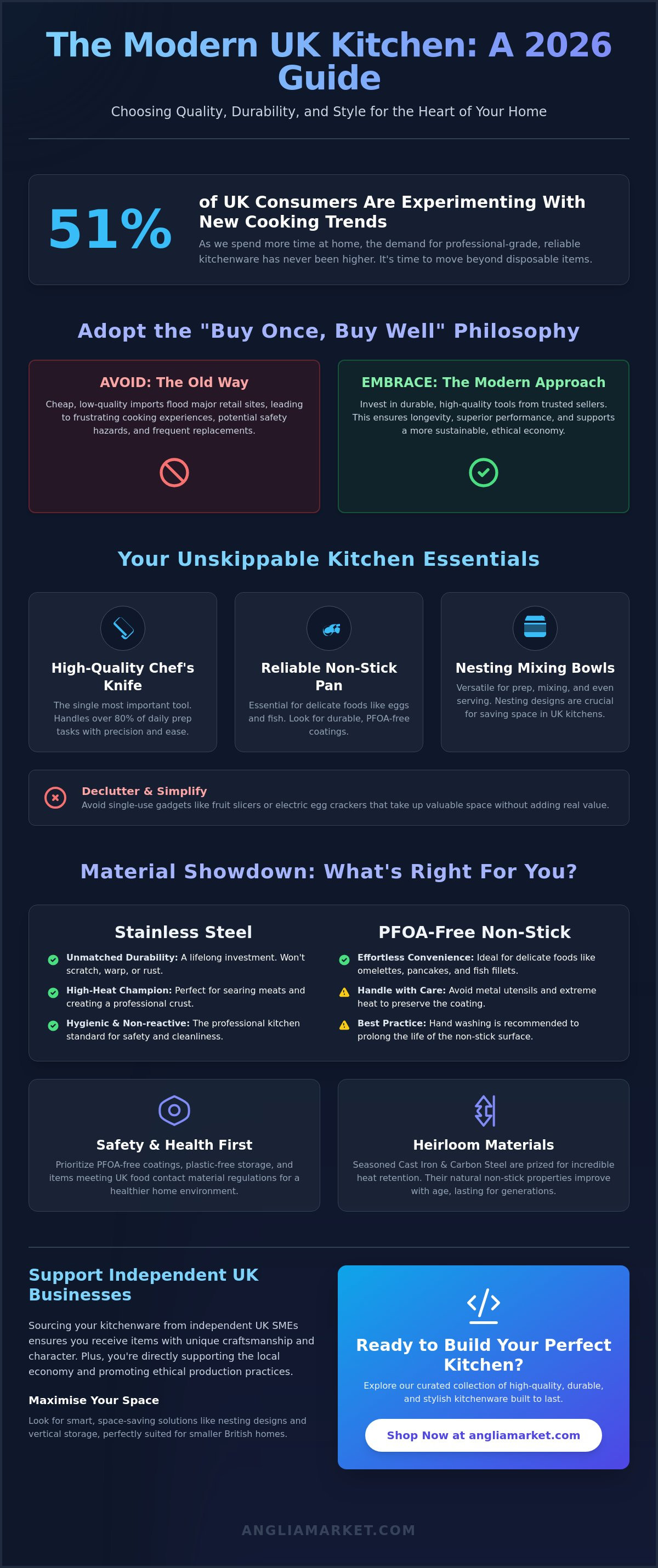
Every kitchen needs a solid foundation. Start with the "unskippable" items. A high-quality chef’s knife, a reliable non-stick frying pan, and a set of nesting bowls are non-negotiable. These tools handle 80% of your daily tasks. Avoid cluttering your space with single-use gadgets like specialised fruit slicers or electric egg crackers. These often take up valuable drawer space without adding much value. If you're cooking for one or two, a single medium saucepan is usually enough. Larger families should look for multi-piece sets that offer better value for money and consistent performance across all your cooking.
Why Quality Materials Matter More Than Ever
The materials you choose directly impact your health and your food. Low-quality coatings can degrade over time, potentially releasing unwanted chemicals into your meals. High-quality materials like cast iron or heavy-gauge aluminium offer superior heat conductivity. This means your food cooks evenly, reducing hot spots that lead to burnt edges. Food-grade stainless steel is the industry standard for durability and hygiene in professional kitchens. Investing in these materials ensures your tools won't warp or rust after just a few months of use. It's a smart choice for anyone looking for reliable performance in a busy home.
Cookware and Bakeware: Investing in Culinary Longevity
Pots, pans, and roasting tins act as the daily workhorses of your home. While lightweight sets might seem appealing for the price, many UK cooks are returning to traditional materials like seasoned cast iron and carbon steel. These metals are prized for their incredible heat retention and natural non-stick properties that improve with age. Unlike disposable pans that often end up in landfills, these items can last for generations. It is vital to check for induction-compatible bases before you buy. Many modern UK homes now feature induction hobs that require magnetic materials to work. You can quickly test your current pans with a fridge magnet; if it sticks to the bottom, you're ready to cook.
Selecting bakeware requires a focus on weight and material gauge. Thin tins often warp under high heat, leading to uneven browning and hot spots that ruin delicate sponges. Heavy-gauge carbon steel provides the structural integrity needed for consistent results. When choosing any coated product, verify it meets UK food contact material regulations. This ensures the surface is stable and won't leach chemicals into your meals during high-heat roasting. Investing in professional-grade kitchenware means you spend less time replacing worn-out gear and more time perfecting your recipes. With household goods prices rising by 0.5% as of April 2026, choosing durable goods is a smart financial hedge against inflation.
Stainless Steel vs. Non-Stick: Finding Your Balance
Stainless steel is the gold standard for durability. It won't scratch, handles extreme temperatures, and is essential for searing meat to create a professional crust. It's a lifelong investment that doesn't degrade. Non-stick pans offer convenience for delicate tasks like omelettes or fish. To keep these coatings intact, avoid metal whisks and keep the heat at a medium level. Hand washing is the best way to prevent the harsh chemicals in dishwasher tablets from stripping the non-stick surface over time. Both have a place in a well-rounded kitchen, but they serve very different purposes.
The Rise of Artisanal Stoneware and Ceramic
Ceramic bakeware is preferred for its slow, even heat distribution. It stays warm long after leaving the oven, which is perfect for family-style serving. The oven-to-table design trend is huge right now, with earthy tones like taupe and sage green leading the way in modern British homes. Quality stoneware must have high thermal shock resistance to handle temperature swings without cracking. You can find these stylish and practical pieces in our latest kitchenware sale, where we feature independent vendors who prioritise both form and function. These artisanal pieces offer a unique look that mass-produced alternatives simply can't match.
Dinnerware and Glassware: Elevating the Daily Dining Experience
The transition from the stove to the dining table is where your culinary efforts finally meet your guests. While previous sections focused on the heat of the hob, your choice of dinnerware defines the atmosphere of every meal. Modern kitchenware trends in 2026 see a fascinating split between "maximalist" designs, featuring bold patterns and vibrant textures, and the enduring minimalist Scandinavian aesthetic. Many UK households are moving toward earthy, warm tones like sand and sage green to create a calming dining environment. This shift reflects a broader desire for home spaces that feel both professional and personal.
Durability remains a top priority for daily use. While porcelain is a classic and affordable choice, bone china is actually the stronger material. It's more chip-resistant despite its delicate, translucent appearance. This makes it an ideal investment for families who want one set that handles both Tuesday night dinners and Sunday roasts. For more inspiration on building a complete set, you can consult BBC Good Food's essential kitchen items to see how experts rank professional table settings. Choosing the right material ensures your plates won't look tired or scratched after just a few months of use.
Choosing Sets That Transition from Casual to Formal
Selecting a neutral palette is the smartest way to ensure your dinnerware never goes out of style. White or cream bases allow you to change the look of your table with seasonal accessories like linens or candles. We highly recommend buying "open stock" pieces whenever possible. This means you can purchase individual plates or bowls rather than being forced into a full 16-piece set. It makes replacing a single broken piece simple and cost-effective. You can find a curated selection of versatile sets from independent UK vendors at Anglia Market Kitchen & Dining.
Glassware Trends: Sustainability and Clarity
Glassware is seeing a massive surge in recycled materials. Recycled glass is no longer just for rustic styles; it's now a premium, eco-friendly choice with high clarity and unique character. For those seeking the ultimate shine, lead-free crystal offers superior brilliance compared to standard soda-lime glass without the health concerns of older leaded versions. To keep your glassware looking new, use a rinse aid in your dishwasher to prevent cloudy mineral buildup. High-quality kitchenware deserves careful maintenance to retain its professional finish over years of use.
Kitchen Storage and Organisation: Maximising British Spaces
Small kitchens are a British reality. You don't need to sacrifice your culinary ambitions just because cupboard space is limited. The most common objection to buying professional kitchenware is a lack of room. You can solve this by choosing nesting designs. These items stack neatly inside one another to save valuable shelf inches. Vertical storage is another win. Use tiered racks for pans and lids to reclaim your worktops. Multi-functional tools are also vital. A single high-quality food processor can replace several manual gadgets; this keeps your drawers clutter-free and functional.
Airtight seals are non-negotiable for the modern pantry. They don't just keep ingredients fresh; they actively reduce food waste. This is a practical way to manage household costs as inflation fluctuates. With the UK Plastic Packaging Tax now at £228.82 per tonne as of April 2026, many households are moving toward long-lasting glass or recycled storage alternatives. These materials are safer for long-term food contact and offer a cleaner look for your shelves. To get started on your own decluttering project, you can explore our home and garden storage collection for space-saving ideas.
Innovative Food Storage Solutions for Modern Pantries
Choosing between glass and BPA-free plastic depends on your lifestyle. Glass is heavy and durable. It doesn't stain or hold odours. BPA-free plastic is lightweight and perfect for high shelves where weight is a concern. Modular stacking systems are the best choice for small UK pantries. They use every centimetre of height. You can also use aesthetic items like bread bins and biscuit jars as focal points. These keep daily essentials within reach while looking professional on your counter.
Must-Have Utensils and Gadgets for 2026
High-utility tools are the backbone of a fast-paced kitchen. You need silicone spatulas, microplane graters, and accurate digital scales. These take up very little room but offer massive performance gains. Ergonomic handles are a non-negotiable feature. They prevent hand fatigue during long prep sessions. 2026 has seen the rise of "hero" gadgets like cordless hand blenders and smart thermometers. These tools offer professional precision without the clutter of tangled cables. Investing in these smart kitchenware pieces makes your daily cooking more efficient and enjoyable.
Why Source Your Kitchenware from Independent UK Vendors?
Choosing independent sellers means you get more than just a tool. You find unique, non-generic kitchenware that mass-market retailers often ignore. Sourcing from UK SMEs supports local craftsmanship and keeps money within the British economy. It's a choice that rewards quality over quantity. Smaller sellers often provide a higher level of customer care because their reputation depends on every single sale. They know their products inside out. They can offer practical advice that generic chatbots simply can't match. This personal touch builds a level of trust you won't find at global giants.
Buying from independent businesses also helps you discover items with a story. Whether it's a hand-forged knife or a piece of artisanal stoneware, these products add character to your home. You aren't just buying another plastic gadget; you're investing in a piece of equipment built with care. If you're looking for high-quality items at competitive prices, check the Anglia Market Sale section. It's a great way to find professional tools while sticking to a budget. Supporting small businesses shouldn't mean paying a premium for every item.
The Unique Value of the Anglia Market Platform
Our marketplace acts as a helpful facilitator for both buyers and sellers. We vet every vendor to ensure quality and reliability. This gives you peace of mind when exploring our vast range of products. You can find everything from kitchen electronics to handmade furniture in one place. We make it easy to support independent enterprises without the hassle of searching multiple sites. Our platform is built on transactional safety and fulfillment reliability. Don't forget to join our loyalty program. It's a simple way to save on future purchases while you continue to back small businesses.
Getting Started: Building Your Dream Kitchen Today
Building a professional kitchen doesn't have to happen overnight. We recommend a phased approach. Start with the unskippable essentials we've discussed in this guide. Get your chef's knife and your induction-ready pans first. Expand your collection as your cooking skills grow. Before you buy, always check the vendor's reputation on our platform. Look for positive user feedback and clear product descriptions. This ensures a smooth and trustworthy transaction every time. High-quality tools are an investment in your well-being and your home. Ready to upgrade? Explore the full Kitchenware collection at Anglia Market today.
Build Your Professional UK Kitchen Today
Investing in high-quality Kitchenware is a practical commitment to better culinary results and long-term durability. We've explored how choosing materials like seasoned cast iron and food-grade stainless steel ensures your tools handle daily use for years without failing. Smart nesting designs and vertical storage solutions are essential for reclaiming valuable space in modern British homes. These deliberate choices help you avoid the cycle of replacing cheap, low-quality imports every few months.
Our marketplace acts as a reliable facilitator by connecting you directly with verified UK-based SMEs. This gives you access to a diverse range of styles, from modern minimalist sets to unique artisanal pieces that add character to your dining table. Every transaction is secure, providing a trustworthy way to support local craftsmanship while equipping your home with professional-grade gear. Start your journey toward a more efficient and stylish cooking space today. Upgrade your kitchen with quality essentials from Anglia Market and enjoy the lasting benefits of tools built with care. Your dream kitchen is well within reach.
Frequently Asked Questions
What is the most essential kitchenware for a new home?
Start with a high-quality foundation set consisting of a chef's knife, a paring knife, a 20cm non-stick frying pan, and a medium-sized saucepan. A versatile roasting tin is also vital for traditional British meals. These five items handle the vast majority of daily cooking tasks. You can expand your collection later with more specialised tools as your culinary skills and recipes become more complex.
Is stainless steel or non-stick better for beginners?
Non-stick is generally the better choice for those just starting out. It's much more forgiving for delicate foods like eggs and requires less oil, making it easier to clean. Stainless steel is incredibly durable but has a steeper learning curve. It requires precise heat control to prevent food from sticking, which can be frustrating for someone still mastering basic cooking temperatures and techniques.
How do I choose the right size pots and pans for my hob?
Measure your hob rings before you buy any new equipment. The base of your pan should ideally match the diameter of the heating zone within one or two centimetres. If a pan is too small, you waste energy. If it's too large, the edges won't heat evenly, leading to cold spots. This is especially critical for induction hobs, which may not activate if the pan base is too small for the sensor.
What are the benefits of buying kitchenware from independent UK sellers?
You gain access to unique, non-generic Kitchenware that offers better material transparency than mass-market imports. Independent UK sellers often specialise in specific materials like hand-forged steel or sustainable wood. They provide a more personal level of customer service. Supporting these SMEs directly helps the local economy and ensures that traditional craftsmanship continues to thrive across the country.
How can I tell if my kitchenware is induction-compatible?
Look for the universal induction symbol on the base of the pan, which looks like a horizontal zig-zag coil. You can also perform a quick manual test with any standard fridge magnet. If the magnet pulls strongly toward the bottom of the pan, it contains the magnetic material needed to work on an induction hob. A weak pull or no attraction means the pan won't heat up on your induction surface.
What is the best way to store kitchenware in a small kitchen?
Use wall-mounted magnetic strips for your knives and hanging rails for your most frequently used utensils. This clears up drawer space and keeps your worktops tidy. For cupboards, use tiered organisers to store pans and lids vertically. This prevents you from having to dig through heavy stacks. These simple adjustments make even the most compact UK kitchens feel much more professional and organised.
Are ceramic-coated pans safer than traditional non-stick?
Ceramic coatings are a popular choice because they are naturally free from PTFE and PFOA chemicals. They can handle much higher temperatures than traditional non-stick surfaces without releasing fumes. This makes them a very stable and safe option for high-heat searing. While they are safe, they do require careful hand-washing to maintain the integrity of the coating over several years of use.
How do I maintain my kitchen knives to keep them sharp?
Use a honing steel once a week to realign the blade's edge and keep it straight. Never put your professional knives in the dishwasher. The high heat and harsh chemicals will dull the steel and can cause the handles to crack or warp. Always hand-wash them with mild soap and dry them immediately. Store them in a block or on a magnetic strip to prevent the blades from chipping.

Here to help — ask anything
For questions about this disclaimer or the site, contact us via the website’s Contact page.


