
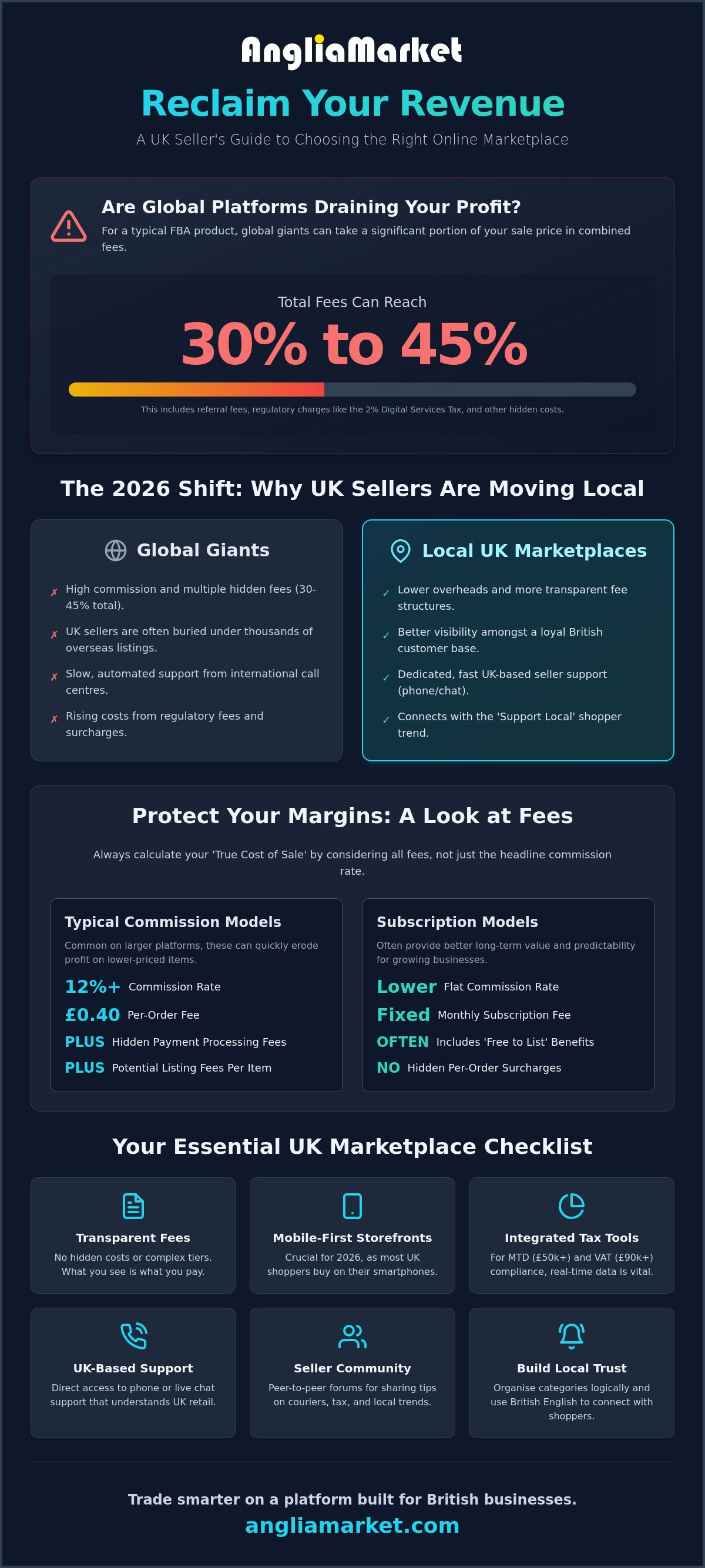
Did you know that for a typical standard-size FBA product, global platforms can take between 30% and 45% of your sale price when all fees are combined? It's a frustrating reality. You want to reach more customers, but watching your margins disappear into a complex web of referral fees and digital services taxes is disheartening. Finding the right online marketplace for small businesses uk shouldn't mean sacrificing your profit for the sake of visibility.
We're here to help you reclaim your revenue. You'll discover how to select and succeed on the right UK-based marketplace to grow your small business whilst protecting your margins. This guide previews the latest 2026 fee structures, explores the impact of new product safety regulations, and shows you how to build a professional storefront that connects directly with a loyal British customer base. It's time to trade smarter. Keep more of what you earn.
Key Takeaways
- Distinguish between product-based platforms and business-for-sale directories to ensure you choose the right environment for selling your inventory.
- Navigate the 2026 shift towards regional platforms to find an online marketplace for small businesses uk that offers better visibility and lower overheads.
- Compare commission and subscription fee models to select a platform that supports your growth whilst protecting your essential profit margins.
- Optimise your digital storefront by organising categories logically and using British English to build trust with local shoppers.
- Access dedicated UK-based seller support to resolve technical hitches quickly and keep your independent business running smoothly.
What defines a top online marketplace for small businesses in the UK?
Understanding what is an online marketplace? involves looking past simple business directories. Many entrepreneurs confuse a product-based platform with a business-for-sale site. A true online marketplace for small businesses uk is a transactional hub. It allows you to list physical goods, process payments securely, and manage customer relations in one place. By 2026, the definition has shifted. It's no longer just about traffic volume. It's about finding a space where independent British vendors are the priority, not an afterthought.
The 2026 retail climate favours niche and regional platforms. British shoppers have developed a digital-first "Support Local" habit. They actively seek out UK-verified SMEs to ensure faster delivery and better accountability. Choosing to sell online through a localised platform helps you tap into this sentiment. It provides the storefront customisation you need to tell your brand story whilst ensuring payment security that meets the latest UK standards.
The difference between global giants and local marketplaces
Massive traffic doesn't guarantee sales. On international platforms, small sellers often find themselves buried under thousands of listings from overseas corporations. The costs are also rising. Many global sites have recently increased regulatory operating fees and applied surcharges like the 2% Digital Services Tax. When you factor in referral fees and logistics, these giants can take 30% to 45% of your sale price. Local marketplaces offer a different rhythm. They foster a genuine community amongst UK vendors, prioritising regional relevance over raw global numbers.
Key features every UK seller should look for
Transparency is essential. Look for fee structures that don't hide costs behind complex tiers. Your marketplace must offer mobile-first storefronts; most UK shopping in 2026 happens on smartphones. Integrated inventory tools are also critical for compliance. With the VAT registration threshold at £90,000 for the 2026/2027 period, and Making Tax Digital (MTD) rules applying to those earning over £50,000 since April 6, 2026, your platform must provide accurate, real-time sales data. Simple. Effective. Secure.
Evaluating fees and support: How to protect your margins
Protecting your profit is the most critical task for any SME. While many platforms claim to be the best online marketplace for small businesses uk, the real winner is the one that leaves the most money in your bank account. You need to look beyond the headline commission rate. Successful sellers calculate their "True Cost of Sale" by factoring in listing fees, payment processing, and mandatory regulatory surcharges. It's about finding a platform that offers marketing boosts and visibility without tacking on extra "advertising" costs that eat your remaining profit.
Understanding commission and transaction fees
Commission models vary wildly. In 2026, many platforms charge over 12% for most categories plus per-order fees of up to £0.40. Others might lure you in with low percentages but then add listing fees for every single item and hidden processing charges. For low-margin items, these pennies add up. A product sold for £10 might lose a significant portion of its value before it even leaves your shelf. "Free to list" models can be tempting. However, they often hide higher transaction costs that penalise high-volume sellers. A subscription model with a lower, flat commission often provides better long-term value. This introduction to selling on online marketplaces from the FSB highlights how these costs can impact your bottom line.
The value of seller support and community
Technical hitches happen. When they do, waiting 48 hours for an automated email response from a global help centre isn't an option. Having access to a UK-based support team makes a massive difference. Direct phone support or live chat with someone who understands the British retail calendar ensures you don't miss out on peak trading periods. You shouldn't have to explain what "Bank Holiday weekend" means to a support agent in another time zone. Peer-to-peer advice is another pillar of growth. Seller forums allow you to share tips on local courier performance or UK tax changes. For those just starting, Anglia Market support provides hands-on assistance with technical onboarding. This ensures your products are live and searchable without the usual headaches. If you're ready to scale, finding a partner that prioritises your growth is essential. You can explore vendor options to see how a dedicated UK platform manages these relationships.
Why UK consumers prefer independent marketplaces in 2026
The "Support Local" movement has undergone a massive transformation. It's no longer just about visiting the physical high street on a Saturday morning. In 2026, this sentiment has evolved into a digital-first habit. UK consumers are intentionally moving away from faceless global platforms. They actively seek out an online marketplace for small businesses uk because they value transparency and regional accountability. Buying from a UK-verified SME provides a sense of security that massive international corporations simply can't match. Shoppers want to know that their money is supporting the local economy whilst benefiting from the protections of British consumer law.
Trust signals are more important than ever. When a customer sees a "UK-based" badge, it acts as a shorthand for quality and reliable ethics. There is also a growing environmental awareness. Regional marketplaces naturally reduce the carbon footprint of e-commerce deliveries. By sourcing items from within the country, businesses avoid the massive emissions associated with international air freight. This is especially true for unique, non-mass-produced items in categories like home and garden. Customers prefer knowing their new garden furniture or handmade decor hasn't travelled halfway across the globe to reach their doorstep.
The psychology of the British shopper
British shoppers in 2026 prioritise clarity over almost everything else. They want transparent delivery times and, perhaps more importantly, straightforward UK-based returns. The "infinite scroll" of global sites has led to a desire for "handpicked" or "curated" selections. A marketplace that feels edited suggests a higher standard of quality. As highlighted in the official Online Marketplace Guide, trust is also built through fair payment practices and clear dispute resolution. Loyalty programmes further cement this bond. They drive repeat business by making shoppers feel like valued members of a community rather than just another transaction number.
Leveraging your "Independent" status as a brand
Your status as an independent business is a significant competitive advantage. Large retailers struggle to provide a personal touch. Use your "About Us" page to tell a compelling British brand story. Share your origins and your passion for your products. This human connection is what drives sales in 2026. You can respond to customer enquiries with genuine expertise, solving problems faster than a chatbot ever could. To capitalise on this, ensure you are participating in UK-specific promotions. Aligning your offers with local events and holidays makes your brand feel relevant. It shows you're in sync with your customers' lives. Small is powerful. Use it.
Specialist retailers often find success by offering expert advice alongside their products; to see how Socom Tactical Airsoft uses educational content to engage hobbyists, you can read more about their approach to tactical equipment guides.
Step-by-step: Setting up your UK marketplace storefront
Moving from a casual seller to a professional venture requires a structured approach. Your storefront on an online marketplace for small businesses uk is your digital shop window. It needs to look the part. Start by deciding which products represent your brand best. Organise your inventory into logical categories so shoppers don't have to hunt for what they need. A cluttered shop leads to high bounce rates. A clean, well-ordered space leads to sales.
Your product descriptions must speak directly to a British audience. Use local spelling like "colour" and "organise" to build immediate familiarity. Avoid generic manufacturer text. Instead, write concise, feature-focused copy that explains why the item is perfect for a UK home. High-quality photography is your best salesperson. Since buyers can't touch the product, they rely on your images to judge quality. Use bright, clear shots from multiple angles. Finally, set up clear shipping and returns policies. Transparency here builds buyer trust and reduces the time you spend answering basic logistical questions.
Optimising your listings for internal search
Internal search is how most customers will find you. Conduct keyword research within the marketplace ecosystem to see what terms British shoppers actually use. If you are listing items in kitchen and dining or furniture, accurate categorisation is mandatory. Search filters rely on these tags. Use bullet points to highlight key benefits, material types, and exact dimensions. This makes your listings scannable for mobile users whilst ensuring the search algorithm can index your shop correctly.
Managing your professional seller profile
Your seller profile is where you prove your reliability. You can add your profile to share your brand story and stand out amongst larger competitors. Professionalism is measured by your behaviour. Aim to respond to all customer enquiries within 24 hours. Fast communication often clinches the sale. Social proof is equally vital. Actively collect and showcase customer testimonials to show potential buyers that you are a trusted, verified vendor. Ready to launch? You can sell online today with a professional storefront designed for growth; for a practical example of storefront presentation, you can visit ElectroGadget to explore their curated tech and lifestyle collections.
Grow your business with Anglia Market: The UK’s SME platform
Choosing the right online marketplace for small businesses uk is about finding a partner that aligns with your specific commercial goals. Anglia Market provides that alignment. We've built a platform specifically for the needs of British independent sellers. Whether you are selling inventory in Home and Garden or high-tech Electronics, our infrastructure is designed to showcase your products to a dedicated UK audience. We don't just offer space; we offer a community where transparency and fair fees are the standard. This approach directly addresses the margin protection and support issues discussed earlier in this guide.
Our commitment is straightforward. We maintain a clear, honest relationship with our vendors. You won't find hidden surcharges or unexpected regulatory fees appearing on your monthly statement. We prioritise your success because your growth drives the marketplace forward. By joining our network, you are positioning your business amongst a curated selection of British vendors who value quality and service as much as you do. It's about reaching new customers who are specifically looking to support independent enterprises without losing your brand identity in a global crowd.
Why sell with us?
Success on our platform comes from a shared focus. When you use our Online Marketplace for Sellers, you gain access to a system built for efficiency. One of our biggest differentiators is our product strategy. We do not sell "Anglia Market branded" products. This means we never compete with you for the top spot in search results or undercut your prices with own-label alternatives. Our energy goes into promoting your listings, not our own. The onboarding process is simple. We know you're busy running a business, so we've removed the technical friction often found on larger, more complex sites.
Becoming a part of the Anglia Market community
Ready to take the next step? You can register as a vendor today and start listing your products immediately. Our category breadth is vast, covering everything from Pet Supplies to Office Supplies. Once you're live, you can take advantage of our internal marketing tools and promotional slots. These are designed to help boost your visibility during peak UK shopping periods, such as Bank Holidays and the festive season. We handle the platform maintenance whilst you focus on what you do best. Join a growing network of British vendors and start your journey towards a more profitable 2026. Your storefront is waiting.
Take the next step for your British business
Scaling an independent venture in 2026 requires a platform that works as hard as you do. You've learned that avoiding the high fees of global giants is essential for protecting your margins. By prioritising a dedicated online marketplace for small businesses uk, you can leverage the growing consumer preference for local, independent vendors whilst keeping your overheads manageable. Success comes from clear communication, professional listings, and a storefront that truly reflects your brand's British roots.
We're here to facilitate your growth. With our UK-based support team, transparent commission structure, and a platform dedicated to independent British SMEs, you have the tools you need to thrive. It's time to stop fighting for visibility against international corporations and start reaching a loyal customer base that values your expertise.
Start selling your products on Anglia Market today and take control of your commercial future. We're excited to help you succeed.
Frequently Asked Questions
What is the best online marketplace for small businesses in the UK?
The best online marketplace for small businesses uk depends on your specific product niche and profit margin requirements. For many independent vendors in 2026, platforms like Anglia Market offer a superior balance of lower fees and a dedicated British customer base. You should prioritise sites that don't compete with your listings using their own-brand products whilst providing direct access to local shoppers.
How much does it cost to sell on a UK marketplace?
Costs typically include listing fees, transaction commissions, and payment processing charges. On global sites, combined fees can reach between 30% and 45% of your sale price. Regional UK platforms often use a simpler subscription or flat-fee model to help you keep more profit. Always factor in additional surcharges like the Digital Services Tax applied by some larger international marketplaces.
Can I sell on multiple UK marketplaces at the same time?
You can certainly sell on multiple platforms simultaneously to increase your reach. However, it's vital to use inventory management software to prevent overselling and maintain accurate stock levels. Managing several storefronts requires consistent behaviour across all channels to maintain your seller ratings and ensure a positive experience for every customer.
Do I need a business licence to sell online in the UK?
You don't usually need a specific "licence" to sell general goods, but you must register with HMRC as a sole trader or limited company. It's important to track your turnover carefully. The VAT registration threshold for the 2026/2027 period is £90,000. Additionally, Making Tax Digital (MTD) rules have applied to those with qualifying income over £50,000 since April 6, 2026.
How do I handle shipping for my small business marketplace orders?
Most small businesses start with self-fulfilment using reliable UK couriers such as Royal Mail, DPD, or Evri. Providing tracked shipping is essential for building buyer trust and protecting yourself against delivery disputes. Clear communication about delivery times helps reduce enquiries and improves your overall standing on any online marketplace for small businesses uk.
What are the most popular product categories for UK small businesses in 2026?
Home and Garden, Electronics, and Health and Beauty remain the top-performing categories for UK SMEs. There is also a significant trend towards sustainable, locally sourced goods. Shoppers are increasingly looking for unique, curated items that aren't mass-produced by international corporations. Aligning your inventory with these "Support Local" trends can significantly boost your visibility.
How can I protect my small business from marketplace scams?
Stick to the platform's official payment system and never move conversations or transactions off-site. Scammers often try to bypass marketplace protections by suggesting alternative payment methods. Always check buyer profiles and only ship to the verified address provided in the order details to ensure you're covered by the platform's seller protection policies.
Is it better to have my own website or sell on a marketplace?
A hybrid approach is often the most effective strategy for long-term growth. Use marketplaces to tap into existing traffic and discover new customers without high initial marketing costs. Once established, your own website can help you build a direct relationship with your audience and avoid third-party commissions on repeat purchases from your loyal followers.

Here to help – ask anything
Should you have any questions regarding this disclaimer or any of our policies, please contact Anglia Market via the contact page on our website, by email using the address provided on the site, or by phone on 0333 772 2593