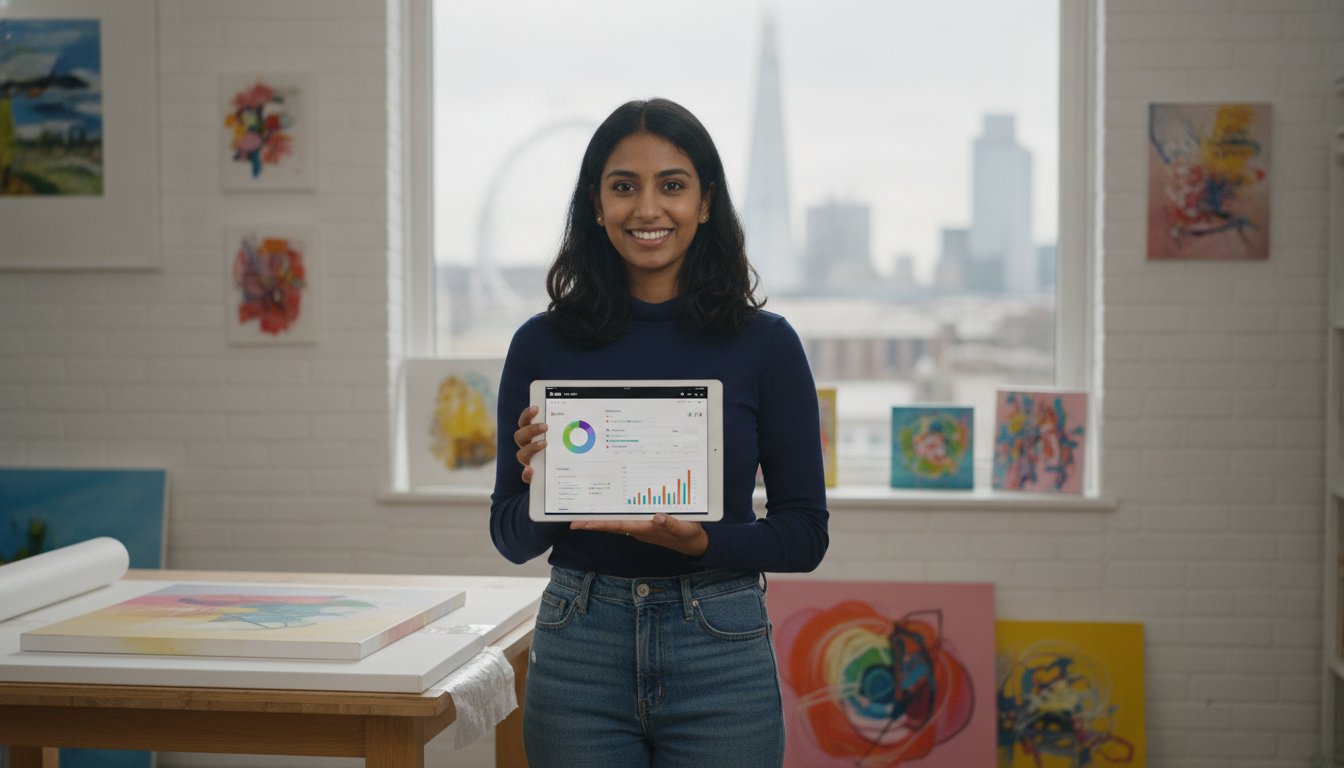
Did you know the UK holds an 18% share of the global art market? It's the second-largest in the world. Despite this massive opportunity, many talented creators feel locked out by high gallery commissions and the stress of shipping fragile work. You want to share your craft. However, losing 40% of your sale to a platform or sorting out VAT registration is exhausting. It's frustrating to watch your profit disappear before you've even posted the parcel.
This guide changes that. You'll discover the most effective strategies and platforms to sell art online uk and turn your creative passion into a profitable business. We provide a clear roadmap to reach a steady stream of domestic customers using low-cost entry tools. We'll preview the best marketplaces for 2026, explain the £90,000 VAT threshold, and show you how to manage your inventory with ease. It's time to stop worrying about logistics and start growing your independent brand.
Key Takeaways
- Learn how to leverage the Direct-to-Consumer model to bypass traditional gallery gatekeepers and reach British buyers directly.
- Compare commission rates across major platforms to find the most cost-effective way to sell art online uk in 2026.
- Master the art of digital presentation with professional photography techniques and SEO-driven product descriptions that convert browsers into buyers.
- Simplify your business operations by understanding the £90,000 VAT threshold and implementing secure, cost-effective shipping strategies for fragile works.
- Discover how listing your creations on multi-category marketplaces like Anglia Market can put your work in front of customers shopping for home decor and furniture.
The UK Online Art Market: Why 2026 is the Best Time to Start
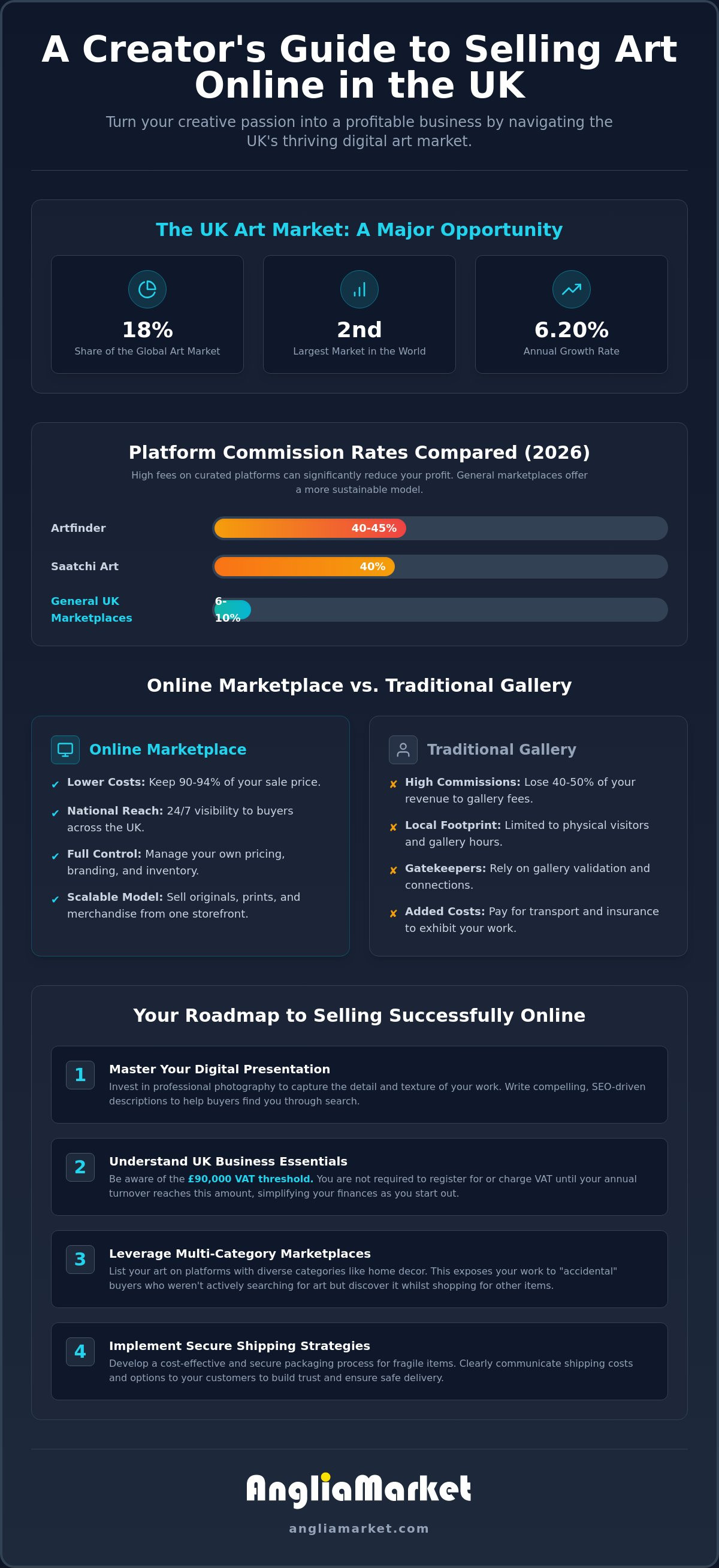
British consumer behaviour has undergone a significant shift. Shoppers now prioritise authenticity and supporting local creators over mass-produced items found in high-street chains. This change has paved the way for the Direct-to-Consumer (DTC) model. Artists now manage their own distribution, pricing, and customer relationships without needing a traditional gallery to validate their worth. In 2026, the UK online art market continues its strong trajectory toward a projected 2035 value of USD 1,415.34 million, as high-speed digital infrastructure and a 6.20% annual growth rate make e-commerce the dominant force for independent creators. Understanding how to sell art online uk is the first step to capturing this growing demand.
To better understand the practical side of starting your creative business, watch this helpful video:
The Rise of the Independent British Artist
Social media and regional marketplaces have democratised the art market, removing the need for elite connections. Buying British is a strong motivator for modern consumers. They want to know the person behind the canvas. This trend has transformed the "starving artist" into an artist-entrepreneur. You aren't just a creator; you're a small business owner. By using a platform designed to sell online, you can reach collectors in London, Edinburgh, and Cardiff from a single studio in the countryside.
Digital vs. Physical: Comparing the Costs
Physical galleries often demand 40% to 50% commission on every sale. They also require you to pay for transport and insurance. Digital storefronts remove these massive overheads. You gain 24/7 visibility to a national audience. You aren't limited by physical wall space. You can sell original oil paintings alongside affordable giclée prints and branded merchandise. It's a scalable model that works. When you choose to sell art online uk, you keep more of your hard-earned profit whilst maintaining complete control over your brand identity. The digital model allows for faster inventory updates and immediate feedback from your buyers.
Choosing the Right Platform to Sell Art Online in the UK
Choosing the right digital home for your work is a critical business decision. Do not just follow the crowd to global giants. Many artists assume they must use international, art-only platforms to find collectors. This is often a mistake. Whilst niche sites offer prestige, they usually come with high competition and even higher fees. If you want to sell art online uk, you need a platform that balances national visibility with fair commission rates. Local platforms understand the British market better and offer more relevant tools for your growth.
Commission structures vary wildly across the industry. As of July 2026, Saatchi Art takes 40% of your sale price. Artfinder charges between 40% and 45% commission depending on your monthly subscription plan. These rates are a heavy burden for independent creators. General UK marketplaces provide a more sustainable alternative. Transaction fees on these platforms typically range from 6% to 10%. This allows you to keep more profit for materials and studio time. Every pound saved on fees is a pound you can reinvest in your craft.
Curated Galleries vs. Open Marketplaces
Prestige platforms like Saatchi Art or ArtGallery.co.uk are incredibly crowded. Your work can easily get lost amongst hundreds of thousands of similar listings. Open marketplaces offer a different advantage: discoverability. When you list your work on a site with diverse categories, you reach "accidental" buyers. A customer browsing the home and garden section for decor might spot your landscape painting. They were not actively looking for art, but your work caught their eye. This cross-category traffic is a powerful tool for reaching new audiences who do not frequent traditional galleries.
Evaluating Vendor Tools and Support
A complicated backend is a waste of your creative energy. Look for a straightforward dashboard that makes inventory management simple. You should be able to update stock levels and track sales in just a few clicks. Local support is equally important. Having access to UK-based vendor support ensures that help is available during your standard working hours. You won't have to wait for a US-based office to wake up to resolve a payment query.
UK-based platforms also help you navigate domestic regulations. They understand the £90,000 VAT threshold and help you avoid common legal pitfalls to avoid regarding consumer contract regulations. Before committing, research the platform's reputation for supporting small businesses. You want a partner that facilitates your success. If you are ready to reach a dedicated British audience, you can apply to become a vendor and start listing your work today.
Organising Your Digital Storefront for Maximum Sales
Once you have chosen your platform, the next step is to present your work in a way that converts. Online buyers cannot touch the canvas or see the paint's texture in person. Your digital storefront must bridge that gap. A professional setup is essential to sell art online uk successfully. You need to combine visual appeal with technical precision to stand out in a competitive market. This involves more than just uploading a single photo; it requires a strategic approach to photography, storytelling, and search engine optimisation.
Photography Tips for the Non-Professional
You don't need a high-end studio to take professional photos. Use natural light by placing your work near a large window. Avoid direct sunlight as it creates harsh glares and distorts colours. Neutral backgrounds ensure the focus remains entirely on the artwork. Always include "close-up" shots. These images allow buyers to see brushstrokes, material quality, and the fine details of your craft. For basic editing, free tools like Canva or mobile apps can help you adjust brightness and contrast without the need for expensive software.
SEO for Artists: Getting Found by UK Buyers
Search engines do not "see" images; they read text. This is why descriptive language is critical. Use specific keywords like "original oil painting UK" or "handmade prints Manchester" naturally within your titles and descriptions. This helps local buyers find you through Google. When you sell art online uk, your metadata is just as important as your canvas. Use alt-text on every image to describe the scene for search bots. For broader business advice on managing your digital presence, you can explore how to sell art online through professional business guides.
Staging is where many independent sellers find their edge. A flat photo of a canvas can feel cold. Instead, place your art in a "lifestyle" setting. Show it hanging above a contemporary sofa or resting on a wooden mantelpiece. This helps buyers visualise the piece in their own room. It also allows your work to be discovered by customers browsing complementary categories such as home decor or furniture. This cross-category appeal is a major advantage for independent creators.
Trust is the final piece of the sales puzzle. British buyers value transparency and personal connection. They want to know the person behind the brand. You should create a compelling vendor profile that shares your artistic process and background. Mention your studio location and what inspires your work. A face and a story build the credibility needed to turn a casual browser into a loyal customer.
Navigating UK Shipping, Pricing, and VAT
Managing the logistics of your business is just as important as the time spent at the easel. To sell art online uk successfully, you must master the transition from creator to distributor. High-quality work deserves a professional delivery experience. This requires a firm grasp of your overheads, from the cost of acid-free tissue paper to the latest fuel surcharges from national couriers. If you don't account for these variables, your creative passion will quickly become an expensive hobby.
Calculating a break-even price is the first step toward profitability. You must sum your material costs, studio time, and packaging expenses. For a single piece, the formula is simple: (Materials + Labour + Packaging) divided by (1 minus your platform fee percentage). For example, if your costs are £100 and your platform takes a 10% fee, your break-even price is £111.11. This figure does not include profit. Always add a margin that allows for business growth and reinvestment in new supplies. Currently, Royal Mail small parcels start from £4.39 for 2nd Class; however, you must factor in the 16% UK fuel surcharge introduced in May 2026.
Reliable Shipping Options in the UK
Royal Mail remains the standard for small, lightweight prints. For larger or more valuable canvases, Parcelforce or specialist art couriers offer better insurance coverage. Parcelforce fuel surcharges have also risen to 13%, so check rates weekly. Offering "free shipping" is a proven way to increase conversions. To do this without losing money, bake the average shipping cost into your item's list price. Remember that the UK Consumer Rights Act gives online buyers a 14-day window to change their minds. Clear return policies protect your reputation and keep your customers coming back.
Taxes and Legalities for Artist SMEs
You must register as a sole trader with HMRC if your annual gross trading income exceeds £1,000. For many artists, the most significant figure is the VAT registration threshold. As of April 2026, this stands at £90,000. If your taxable turnover stays below this rolling 12-month limit, you don't need to charge VAT on your sales. Keep meticulous records of your expenses. Brushes, canvases, and even a portion of your home studio costs are often tax-deductible. Protecting your intellectual property is also vital. Ensure your terms of service clearly state that you retain copyright even after the physical work is sold.
Logistics shouldn't be a barrier to your success. If you are ready to simplify your business and reach a broad domestic audience, you can sell online with a platform that supports independent British vendors. Managing your sales and shipping from one central hub allows you to focus on what you do best: creating art.
Scale Your Business: Selling on Anglia Market
Scaling your creative business requires a partner that acts as a facilitator, not just a service provider. To sell art online uk effectively, you need a system that handles the technical heavy lifting whilst you focus on production. Anglia Market is designed for this exact purpose. It provides a straightforward storefront that puts your work in front of a massive domestic audience without the gatekeeping found in traditional high-commission galleries. The onboarding process is simple, allowing you to move from registration to your first listing in a matter of minutes.
Strategic positioning is a major advantage on this platform. Unlike art-only sites where you compete solely with other painters, this marketplace allows you to list your work alongside complementary categories like furniture. A customer buying a new sideboard or dining table is the perfect lead for a piece of original wall art. This cross-category discovery places your brand in front of high-intent shoppers who are already in the mindset of improving their living spaces. It turns a single purchase into a curated home experience.
Visibility shouldn't be left to chance. You can leverage integrated promotions to boost your profile during peak seasons like the lead-up to Christmas or regional art festivals. These tools allow you to highlight specific pieces or offer time-sensitive deals to drive immediate sales. By using these features, you ensure your work stays at the forefront of the marketplace's recent inventory sections.
A Marketplace Built for UK SMEs
The ethos of supporting independent enterprises resonates deeply with British buyers. They prefer knowing their money supports a local creator rather than a global corporation. Anglia Market facilitates this connection through a platform that understands UK market dynamics, from shipping expectations to tax thresholds. Many vendors have already found success by making the switch; you can read our testimonials to see how other independent businesses have scaled their operations using our tools.
Marketing Your Art Beyond the Platform
A successful business doesn't exist in a vacuum. You should integrate your storefront with your social media channels to create a unified presence. Connecting your shop to Facebook and Instagram creates a seamless journey for your followers. Once you've secured a buyer, use the Anglia Market loyalty program to encourage repeat collectors. Building a base of returning customers is the most cost-effective way to ensure long-term stability. Your brand identity should be cohesive across every touchpoint, from your profile bio to the packaging your customer receives.
The path to a profitable art business is clear. You have the tools, the strategy, and the market demand. The final step is to take action. You can register as a vendor today and begin building your digital gallery on a platform that truly supports your growth as an independent British artist.
Build Your Independent Art Business Today
The UK online art market is thriving, and the barriers to entry have never been lower for independent creators. By moving away from high-commission galleries and embracing a direct-to-consumer model, you keep more of your profit whilst building a personal connection with your collectors. Success comes down to a professional digital presence. High-quality photography, clear SEO descriptions, and a firm grasp of your UK shipping costs are the foundations of a sustainable business.
You don't need to navigate this journey alone. Choosing a supportive UK-based marketplace for SMEs allows you to focus on your craft whilst reaching thousands of UK customers looking for unique home decor. With an easy-to-use vendor dashboard and local support, managing your inventory and sales becomes a simple part of your daily routine. This practical approach ensures you spend less time on logistics and more time in the studio.
If you're ready to sell art online uk and grow your brand, now is the time to take the first step. Start selling your art on Anglia Market today and turn your creative passion into a profitable reality. Your future audience is waiting to discover your work.
Frequently Asked Questions
Where is the best place to sell art online in the UK?
The best place to sell art online uk depends on your business goals and profit margins. For independent artists and SMEs, a general marketplace like Anglia Market offers the best balance of low commission rates and high visibility. These platforms allow your work to be discovered by a broad domestic audience without the high entry barriers of elite galleries.
Do I need to pay VAT when selling my art online?
You only need to register for and pay VAT if your taxable turnover exceeds £90,000 in a rolling 12-month period. This threshold was confirmed in April 2026. Most independent artists operate below this limit as sole traders. You don't need to charge VAT on your sales unless you hit this specific revenue milestone.
How do I price my artwork for the UK market?
Price your work by calculating the total cost of materials, your labour time, and packaging supplies. You must then add the platform's transaction fee to your base cost to find your break-even point. Finally, add a profit margin that reflects your skill level and current market demand. This ensures you cover all overheads whilst remaining competitive.
What is the cheapest way to ship art within the UK?
Royal Mail 2nd Class remains the most cost-effective option for small parcels and prints, with prices starting at £4.39 as of July 2026. You must factor in the current 16% domestic fuel surcharge when calculating your final shipping rates. For larger canvases, compare Parcelforce rates to ensure you have adequate insurance for fragile items.
Can I sell prints as well as original paintings online?
Yes, selling prints is an excellent way to diversify your income and reach a wider audience. High-quality giclée prints allow you to offer affordable options to customers who may not be ready to invest in an original. This strategy helps you maintain a steady flow of sales whilst you work on larger, more time-consuming pieces.
How do I protect my art from copyright infringement online?
You automatically own the copyright to your work in the UK as soon as it is created. To prevent unauthorised use, only upload low-resolution images to your storefront and consider using subtle watermarks. Clearly state in your terms of service that you retain all intellectual property rights even after the physical artwork is sold.
Is it better to sell on a dedicated art gallery or a general marketplace?
General marketplaces are often better for growing your brand because they provide access to "accidental" buyers. A customer looking for a new sofa or garden furniture might see your work and decide to purchase it. This cross-category traffic is a major advantage for creators who want to sell art online uk to a diverse customer base.
How much commission do most UK art websites charge?
Commission rates vary significantly between different types of platforms. Dedicated art websites like Saatchi Art charge 40% of the sale price as of 2026. General marketplaces are much more affordable for small businesses. These platforms typically charge between 6% and 10% in transaction fees, allowing you to keep a much larger share of your profit.
Here to help — ask anything
If you have any questions regarding this disclaimer or any of our policies, please contact Anglia Market through the contact page on our website, by email using the address provided on the site, or by phone at 0333 772 2593