The biggest hurdle to starting your shop isn't finding customers; it's surviving the technical jargon and hidden fees of global giants. You've likely felt the frustration of trying to figure out how to sell products online uk while staring at complex tax rules or worrying about overseas platform commissions. It's exhausting. You want to build a business, not spend your weekends deciphering HMRC handbooks or wondering why your hard-earned profits are vanishing into thin air.
We agree that e-commerce should be straightforward and fair for local sellers. This guide provides the clear, practical roadmap you need for 2026. You'll master the essentials of the UK market, including the £90,000 VAT registration threshold and mandatory Making Tax Digital requirements for those earning over £50,000. We'll preview how to choose a platform that empowers independent enterprises, manage logistics profitably, and scale your brand without the usual technical headaches. Let's get your shop live.
Key Takeaways
- Navigate the 2026 legal landscape by understanding the £90,000 VAT threshold and mandatory digital record-keeping for UK sole traders.
- Discover how to sell products online uk by comparing the instant traffic of marketplaces with the brand control of standalone e-commerce sites.
- Identify profitable niches and the commercial benefits of sourcing from British suppliers to reduce logistics costs and support the local economy.
- Streamline your fulfilment process using trusted UK couriers and professional packaging to ensure reliable delivery and a positive customer experience.
- Scale your independent business through strategic marketplace promotions and loyalty programmes designed to turn one-time buyers into repeat customers.
Setting the Foundations: Legalities and Planning for UK Sellers
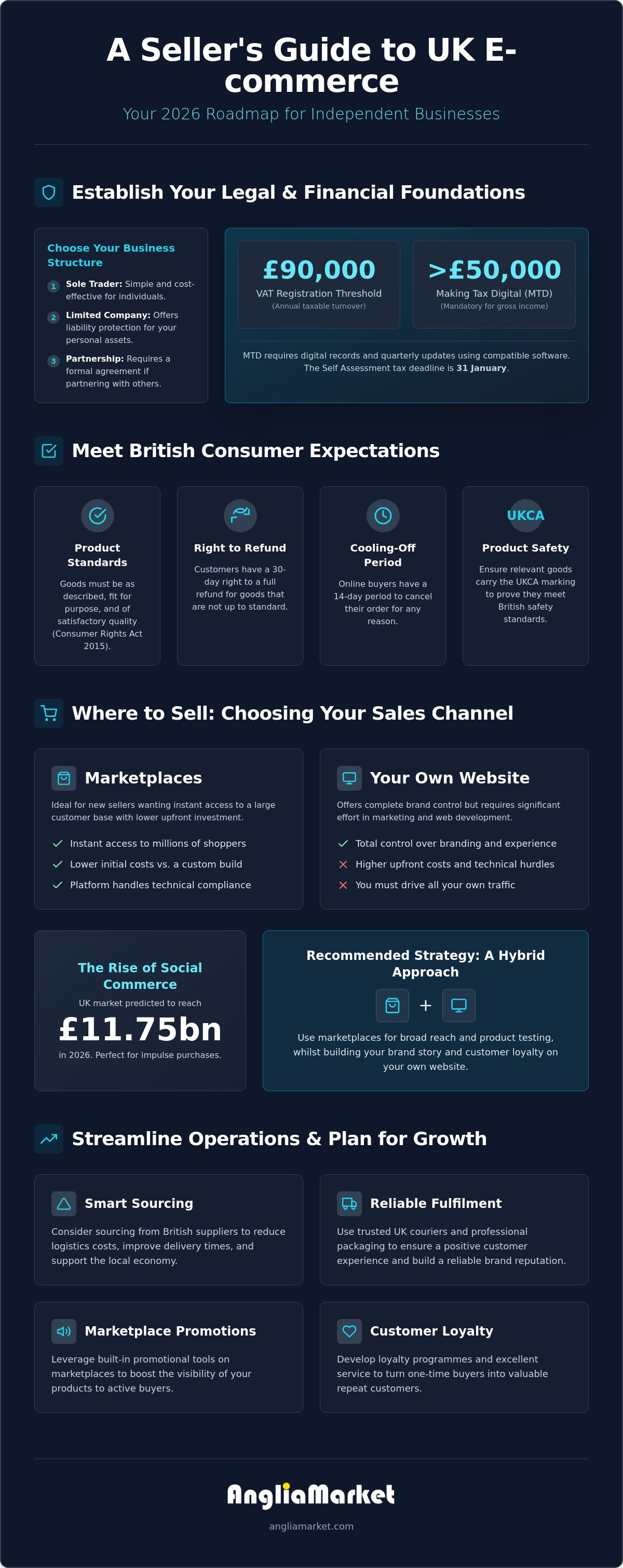
Starting a business in the British E-commerce sector requires more than just a great product. You need a solid legal base. Most sellers start as a sole trader. It's simple and cost-effective. However, a limited company offers more protection for your personal assets. If you're partnering with someone else, a formal partnership agreement is essential. This decision impacts how you pay tax and your level of personal liability. Getting this right is the first step in learning how to sell products online uk successfully.
To better understand how to get started in the current market, watch this helpful video:
Registering Your Business with HMRC
Registering is a priority. If you're a sole trader, you must tell HMRC you're self-employed to set up your Self Assessment. For those choosing a limited company, you'll register with Companies House first. As of April 6, 2026, Making Tax Digital (MTD) is mandatory for anyone with a gross income over £50,000. This means you must keep digital records and send quarterly updates using compatible software. Don't miss the January 31 deadline for tax payments; the penalties are sharp and immediate. Accurate record-keeping isn't just about compliance; it helps you track your profit margins effectively.
The VAT registration threshold for 2026 is £90,000. You must register if your taxable turnover exceeds this in any 12-month period. Some businesses register voluntarily even if they're below this limit. This allows you to reclaim VAT on business expenses, which is a major boost for your bottom line. Additionally, ensure your goods carry the UKCA marking if required. This proves your products meet British safety standards. It's a non-negotiable step for anyone figuring out how to sell products online uk whilst staying on the right side of the law.
Understanding UK Consumer Rights
British shoppers expect protection. The Consumer Rights Act 2015 dictates that goods must be as described, fit for purpose, and of satisfactory quality. If they aren't, the customer has a right to a full refund within 30 days. Under Distance Selling Regulations, online buyers also have a 14-day "cooling-off" period. They can cancel for any reason. A clear, transparent returns policy isn't just a legal requirement; it's a trust-builder. It shows you're a reliable vendor. If you're ready to launch, you can sell online with a platform that supports independent British businesses and understands these local requirements.
Choosing Your Sales Channel: Marketplaces vs Independent Shops
Deciding where to list your items is a critical fork in the road. You can build your own website or join an existing marketplace. Building a standalone site offers total control over your branding, but it's often expensive and time-consuming. You'll need to pay for hosting, web development, and ongoing SEO to get noticed. For many small businesses, the hurdle of driving traffic to a new domain is simply too high. This is why many beginners researching how to sell products online uk start with established platforms that already have a loyal audience.
Social commerce is also transforming the landscape. In 2026, the UK social commerce market is predicted to reach £11.75 billion. Selling directly through TikTok or Instagram is fantastic for driving impulse purchases, but it shouldn't be your only channel. The most successful UK brands use a hybrid approach. They use their own site for deep brand storytelling and marketplaces for broad reach. This strategy ensures you aren't reliant on a single source of income whilst allowing you to test new products with minimal risk.
Why UK SMEs Prefer Marketplaces
Marketplaces offer instant access to millions of active shoppers. You don't need to worry about the technical side of Online and distance selling regulations because the platform usually provides the framework for compliance. Platforms like Anglia Market specifically champion independent British vendors. They provide a professional storefront without the high upfront costs of custom web builds. This allows you to focus on your products rather than troubleshooting server errors or managing complex security certificates. It's a supportive environment that's built to help local businesses thrive amongst larger competitors.
Comparing UK Marketplace Fees
Cost structures vary wildly across the industry. Some global giants charge monthly subscriptions on top of listing fees and high commissions. There are also "hidden" costs, such as mandatory advertising or strict fulfilment requirements that can eat into your margins. In contrast, a transparent, commission-based model is often best for growing SMEs. It aligns the platform’s success with your own. You only pay when you make a sale, which keeps your cash flow healthy and predictable. When you're looking at how to sell products online uk, always calculate your net profit after all platform deductions. If you want a platform that prioritises your growth, you can register as a vendor and start reaching new customers today.
Sourcing and Listing: Creating a High-Converting Inventory
Choosing what to sell is as important as where you sell it. In 2026, high-demand categories such as home and garden and pet supplies continue to lead the market. These niches remain resilient because they cater to essential domestic needs. When you're researching how to sell products online uk, consider the logistics of your inventory. Sourcing locally from British suppliers can reduce your lead times and carbon footprint. For instance, businesses in the specialist beverage or lifestyle sectors can benefit from partnering with local suppliers like Worker Bee MCR Tea & Coffee to source high-quality, branded products. It also helps you avoid the new EU customs duty of approximately £2.50 on low-value parcels if you eventually decide to export. Importing might offer lower unit costs, but the complexity of 2026 customs regulations often makes domestic sourcing more profitable for independent SMEs.
Your product listing is your digital shop window. It must be professional and direct. Start with a clear title that includes the most important feature and your primary keyword. Avoid clutter. Use high-quality photography that reflects a clean, British aesthetic. Bright, natural lighting works best for the UK market. Visual storytelling isn't just about the product itself; it's about showing how that product fits into the customer's life. Clear, honest images build trust and reduce the likelihood of returns.
Optimising Listings for UK Search Habits
Local SEO depends on language. Use British English spellings like "jewellery" and "colour" to match what shoppers actually type into search bars. Don't just list features. Write benefit-driven descriptions. Tell the customer how the product solves a specific problem in their home. A solid keyword strategy is vital for marketplace search engines. It ensures your products appear at the top of the results when someone searches for how to sell products online uk vendors or specific items. Keep your language simple and accessible.
Inventory Management for Small Businesses
Stockouts are a quick way to damage your reputation. Most platforms track your "out of stock" frequency. High rates will lower your seller rating and visibility. Organise your storage space logically. Keep your best-sellers in the most accessible spots to speed up the packing process. If you sell across multiple platforms, use synchronisation tools to update stock levels in real-time. This prevents overselling and keeps your customers happy. Efficiency in your warehouse translates directly to better reviews and higher sales velocity.
Logistics and Fulfilment: Meeting British Consumer Expectations
Logistics is the backbone of any successful e-commerce venture. In the UK, speed and reliability are non-negotiable. British shoppers have high standards. They expect clear delivery windows and real-time updates. If you are learning how to sell products online uk, your choice of courier is vital. Royal Mail remains a staple for most small businesses, especially with the "Tracked 48" service. It has become the new industry standard for affordable, reliable shipping. Other options like DPD and Evri offer competitive rates for heavier items or specific delivery slots. Specialist SME services can also provide tailored solutions that larger couriers might miss.
Packaging is about more than just protection. It is an extension of your brand. The "unboxing" experience is a powerful marketing tool. A well-presented package with a simple thank-you note can turn a first-time buyer into a loyal advocate. However, don't sacrifice safety for style. Ensure your items are secure. If you plan to export to the EU, remember that new regulations apply. From July 1, 2026, a customs duty of approximately £2.50 applies to many low-value business-to-consumer parcels entering the EU from the UK. Staying informed about these costs prevents nasty surprises for your customers and protects your profit margins.
Streamlining Your Shipping Process
Efficiency saves money. Printing your shipping labels at home is a game-changer. It eliminates long queues at the Post Office and allows for quicker courier drop-offs. Always compare costs for different parcel sizes. The difference between a "Small Parcel" and a "Medium Parcel" can be significant over a month of trading. Send tracking information to your customers immediately. It reduces "where is my order" enquiries and builds immediate trust. Automation tools can handle this for you, letting you focus on growing your inventory and refining your product range.
Excellence in British Customer Service
Proactive communication is your best defence against negative reviews. If a delay occurs, tell the customer before they have to ask. Managing returns efficiently is equally important. A smooth, hassle-free return process can actually increase customer loyalty. Encourage your buyers to leave feedback. Follow-up emails are a great way to build social proof and improve your seller rating. If you need help managing your shop or understanding platform rules, our support centre provides comprehensive resources for independent vendors.
Scaling Your UK Business: Marketing and Marketplace Growth
Scaling your enterprise is the final piece of the puzzle. Once you have established your shop and managed your first few orders, it's time to increase your volume. Successful growth in the UK market depends on data. You must analyse your sales to see which categories, such as furniture or electronics, are performing best. This allows you to invest your budget where it will generate the highest return. Understanding how to sell products online uk at scale means moving from a reactive approach to a strategic one. With the UK e-commerce market projected to grow at a CAGR of 9.72% through 2031, there is plenty of room for ambitious sellers to expand.
Repeat customers are the lifeblood of any growing brand. It's far more cost-effective to keep an existing buyer than to acquire a new one. Implementing rewards and loyalty programmes encourages shoppers to return to your storefront. Pair this with a robust email marketing strategy. Sending targeted updates about new stock or exclusive offers keeps your brand at the forefront of their minds. By focusing on retention, you build a sustainable business that survives well beyond the initial launch phase. This approach turns a simple transaction into a lasting commercial relationship.
Driving Traffic to Your Marketplace Store
Social media is a powerful tool for British SMEs. Use platforms like Instagram and TikTok to show the "behind the scenes" of your operations. This humanises your brand and builds a connection with your audience. Participating in seasonal sales and promotions is another effective way to boost initial sales velocity and clear older inventory. Collaborating with local influencers who share your values can also help you reach a targeted UK audience without the high costs of traditional advertising. These small, consistent efforts drive a steady stream of traffic to your listings and teach you how to sell products online uk effectively.
The Anglia Market Advantage for Scaling
Choosing a supportive marketplace environment is crucial for long-term success. Unlike global giants that often prioritise their own labels, platforms like Anglia Market are designed to help independent vendors thrive. You can access specialist vendor support to optimise your shop profile and ensure your listings are as effective as possible. Many small UK brands have successfully scaled from home offices to full-time enterprises by leveraging these tools. This community-focused approach ensures you grow amongst peers who value quality and local trade, providing a stable foundation for your business to flourish.
Launch Your British Shop Today
You now have the roadmap to success. You understand how to register with HMRC, navigate the £90,000 VAT threshold, and choose a platform that won't eat your profits. Mastering how to sell products online uk isn't about competing with global giants on their terms; it's about building a reliable, local brand that British shoppers trust. Focus on high-quality listings, efficient "Tracked 48" delivery, and proactive customer communication to stand out from the crowd.
Ready to take the first step? Don't let technical jargon or complex fees hold you back. Start your UK selling journey today with Anglia Market. We provide a supportive UK-based marketplace with a dedicated storefront for independent vendors. It's the most efficient way to reach thousands of British shoppers instantly. We're here to help you grow your business and support the local economy. The 2026 e-commerce market is full of opportunity. Your independent business has a place in it. Let's get started.
Frequently Asked Questions
Do I need a business bank account to sell online in the UK?
If you operate as a limited company, you must have a separate business bank account by law. Sole traders aren't legally required to have one, but it's much easier to organise your tax records and track expenses if you do. Keeping your personal and business spending separate helps you stay compliant with Making Tax Digital rules whilst simplifying your annual Self Assessment.
What is the most profitable product category to sell online in 2026?
High-demand categories like home and garden, pet supplies, and electronics are consistently profitable in 2026. Many sellers find success by identifying niche items within these broad groups that solve specific household problems. If you're learning how to sell products online uk, focusing on products with high repeat-purchase potential is a smart strategy for long-term growth amongst local competitors.
How much does it cost to start an online shop in the UK?
Initial costs vary depending on your chosen sales channel and inventory size. Marketplaces often have low entry barriers with simple commission models, whilst standalone sites require significant investment in web development, hosting, and SEO. You'll also need to budget for your first batch of stock, packaging materials, and basic business insurance to protect your new enterprise from the start.
Do I have to pay tax if I only sell a few items online?
You can earn up to £1,000 in a tax year through "trading" before you need to notify HMRC. Once your total gross income exceeds this trading allowance, you must register for Self Assessment and report your earnings. HMRC now tracks income from digital platforms directly, so keeping accurate digital records of every transaction is essential to avoid unexpected penalties.
What is the best courier for small e-commerce businesses in the UK?
Royal Mail Tracked 48 is currently the preferred choice for many British SMEs due to its balance of reliability and cost-effectiveness. For larger or heavier parcels, couriers like DPD or Evri offer competitive rates and specific delivery windows for shoppers. Choosing a provider that offers full tracking is vital for maintaining high customer satisfaction ratings and reducing delivery enquiries.
How do I handle returns for products sold online?
You must comply with the Consumer Rights Act 2015, which gives customers a 14-day right to cancel most online orders for any reason. Provide clear, written instructions on your storefront about how to return items and who covers the postage costs. Efficiently managing these requests helps turn a potentially negative experience into a reason for a customer to return in the future.
Can I sell products online without holding any inventory?
Selling without inventory is possible through models like dropshipping, where a third-party supplier ships directly to your buyer. Whilst this reduces your upfront storage costs, you are still legally responsible for ensuring the goods meet British safety standards and arrive on time. It's a popular way to test how to sell products online uk without committing to large stock purchases immediately.
How do I register for VAT as an online seller?
You register for VAT through the GOV.UK website using your Government Gateway account details. Registration is mandatory if your taxable turnover exceeds £90,000 over any 12-month period, though some businesses register voluntarily to reclaim tax on their expenses. Once registered, you'll need to use compatible software to submit your digital VAT returns to HMRC every quarter.

Here to help — ask anything
If you have any questions regarding this disclaimer or any of our policies, please contact Anglia Market via the contact page on our website, by email using the address provided on the site, or by phone on 0333 772 2593.