
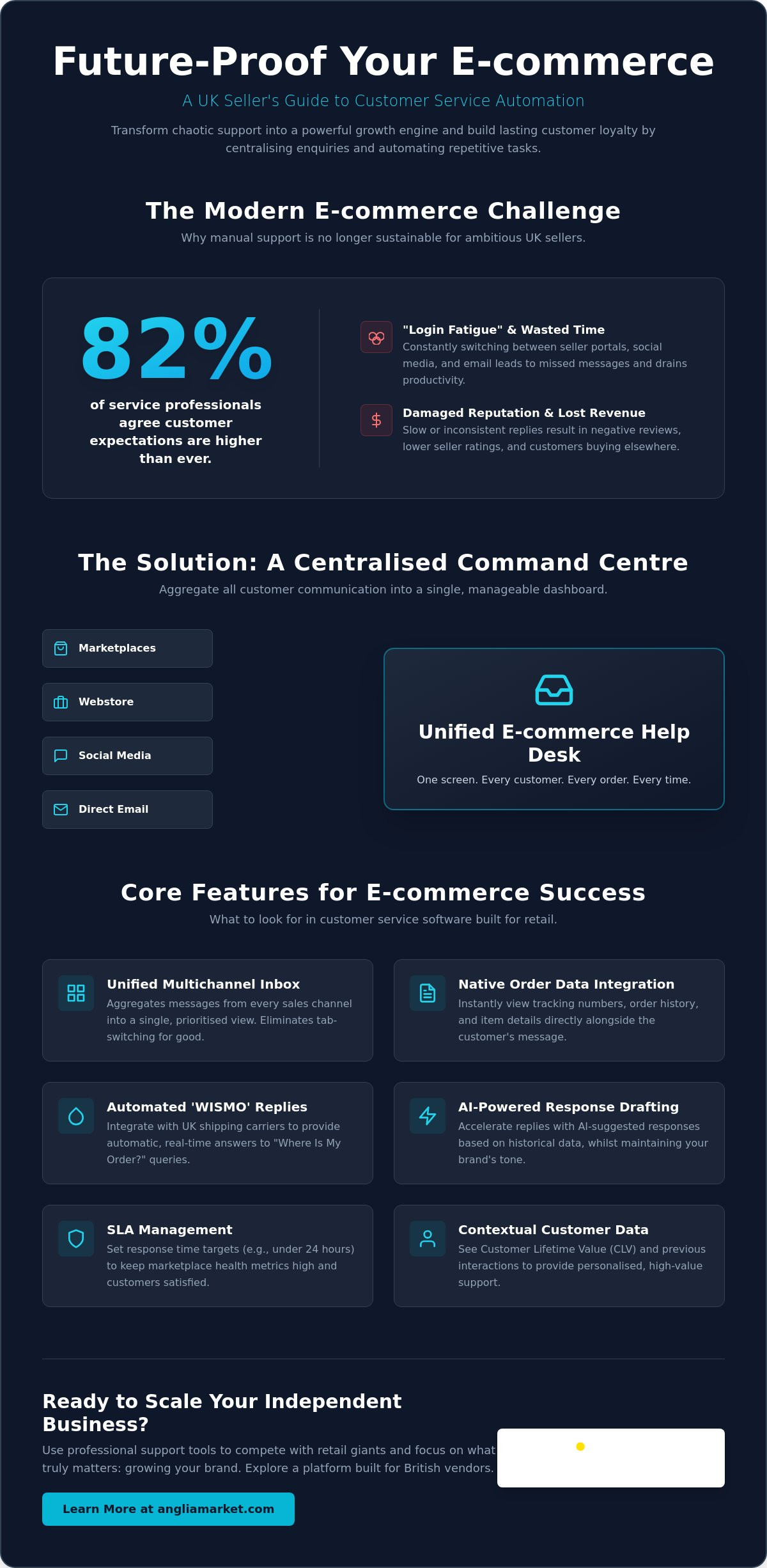
Did you know that 82% of service professionals now agree that customer expectations are higher than ever before? It is a reality every UK independent seller feels daily. Between managing marketplace messages, social media queries, and direct shop emails, it is far too easy to lose track of a simple delivery question until it becomes a damaging negative review. You likely feel the constant pressure of repeatedly answering the same questions about returns whilst trying to keep your seller ratings high.
Finding the right customer service software for online sellers can change your entire operational flow. This guide shows you how to centralise your support, slash response times, and scale your UK online business using the latest e-commerce help desk technology. You will discover how to move from reactive fire-fighting to a proactive strategy that builds genuine customer loyalty. We will preview the best-performing tools for 2026, including unified inboxes and automated tracking data, so you can focus on growing your brand instead of just clearing your inbox.
Key Takeaways
- Understand how a centralised dashboard eliminates "login fatigue" by aggregating enquiries from every sales channel into one manageable view.
- Identify the essential features of customer service software for online sellers, such as unified inboxes and native order data integration.
- Learn why seeing real-time tracking and order history alongside customer messages is vital for slashing response times and improving seller ratings.
- Compare the strengths of specialist platforms like eDesk and Zendesk to choose the right fit for your independent UK business.
- Follow a simple roadmap to transition from manual support to automated systems that free up your time for marketing and growth.
Why Customer Service Software is Vital for UK Online Sellers in 2026
Modern Customer Relationship Management (CRM) for retail has evolved into the operational backbone of every successful shop. In 2026; customer service software for online sellers is no longer just a luxury; it is a necessity for survival. This technology acts as a centralised command centre; pulling enquiries from various marketplaces; webstores; and social media channels into a single; manageable dashboard. By aggregating these streams; you stop chasing notifications across multiple apps and start managing your business from a position of control.
The "login fatigue" problem is a genuine threat to productivity for independent vendors. Manually logging in and out of different seller portals to check for messages is a massive time sink. This fragmented approach leads to missed details and inconsistent communication. UK shoppers today have zero patience for delays; often expecting a data-informed response within minutes. If you cannot provide instant updates on parcel locations or product specifications; buyers will quickly move to a competitor. Your response time is a key metric that directly influences your search visibility and overall health on third-party platforms.
The Cost of Inefficiency whilst Scaling
Manual support carries a heavy hidden cost that becomes more apparent as you scale. Missed messages translate directly into lost revenue and a damaged reputation. Without a unified system; duplicate agent work is inevitable. You might have two people spending thirty minutes drafting the same reply to one buyer because they lack visibility into each other's tasks. This inefficiency also leads to increased return rates; as customers who don't receive quick answers about a product's fit or colour are more likely to cancel or return their purchase. Transitioning to a proactive service model allows you to resolve these issues before they escalate.
Supporting Independent British Commerce
Professional support tools allow small businesses to compete with international retail giants on a level playing field. You get the operational speed of a global corporation whilst maintaining the unique personal touch that defines local trade. It is about using automation to handle repetitive tasks; such as tracking updates; so you can focus on building genuine connections. This balance is precisely how we support vendors on our Online Marketplace for Sellers. By providing a platform for local vendors to reach British shoppers; we ensure that independent enterprises have the tools they need to thrive in a fast-paced digital economy.
Core Features to Look for in an E-commerce Help Desk
Selecting the right customer service software for online sellers requires looking beyond basic email management. You need a tool built specifically for the high-velocity world of retail. A unified multichannel inbox is non-negotiable. It aggregates messages from all your integrated sales channels and direct webstores into a single view. This eliminates the need to switch tabs constantly; ensuring no customer query slips through the cracks. When you can see every interaction in one place; you stop reacting to notifications and start managing your workflow with professional precision.
Native order data integration is the most critical feature for operational efficiency. Unlike general support tools; an e-commerce help desk displays tracking numbers and order history directly alongside the customer's message. You don't have to hunt for details in a separate backend system. AI-powered response drafting further accelerates this process. These tools suggest replies based on your historical interactions; helping you maintain a consistent British English tone whilst cutting down on typing time. To maintain high standards; SLA management features allow you to set timers. These ensure every customer receives a reply within 24 hours; keeping your marketplace health metrics in the green and your reputation intact.
The Power of Contextual Data
Success in 2026 relies on understanding your buyer immediately. Agents need to see 'Customer Lifetime Value' (CLV) and previous interactions as soon as they open a ticket. Integrating your software with UK shipping carriers allows for real-time tracking updates. This is the most effective way to automate 'Where is my order?' (WISMO) queries. When the system knows the parcel's location; it can provide an instant update without human intervention. If you are looking to grow your reach; becoming one of the vendors on a platform that values this level of service can help you scale your business faster.
Collaboration Tools for Growing Teams
As your business expands; your team needs to work together without friction. Internal notes and 'mentions' allow staff to resolve complex issues without messy internal email chains. Collision detection is equally vital. It prevents two agents from replying to the same customer simultaneously; which looks unprofessional and wastes valuable time. You can also organise enquiries by product category. This makes it easier to assign specialist staff to departments like Home and Garden or Electronics. This structured approach ensures every buyer gets expert advice tailored to their specific purchase.
Comparing the Best Customer Support Platforms for Marketplace Sellers
Selecting the right customer service software for online sellers depends heavily on your specific channel mix. If your business operates across multiple third-party marketplaces; eDesk is a leading contender. It is a specialist tool with deep UK integrations designed for the high-velocity retail environment. As of June 2026; the eDesk Essential plan starts at $39 per agent monthly. This tier includes an AI Agent that handles automated resolutions for $0.99 each. This makes it a powerful option for vendors who need to sync order data instantly across various British sales channels without the friction of managing separate logins.
Zendesk remains a preferred choice for brands requiring a highly customisable customer experience. It functions as a robust foundation for complex support ecosystems. The Zendesk Suite Team plan is currently $55 per agent monthly; though adding the Zendesk Copilot AI features will cost an additional $50 per agent. For smaller teams; Freshdesk offers a more accessible entry point. Their Growth plan sits at $15 per agent monthly; providing essential ticketing without the overhead of larger platforms. If you are an enterprise-level seller with massive scaling plans; Salesforce Service Cloud provides an unmatched depth of data; though it requires significant technical resources to implement correctly.
Matching the Tool to Your Sales Volume
Enterprise software can sometimes hinder a boutique independent seller. You don't want to pay for complex workflows that your current volume doesn't justify. Ease of setup is usually more valuable than depth of customisation when you are an owner-operator. Pricing models also vary amongst these providers. Some charge per user; whilst others; like Gorgias; use a per-ticket model. For example; the Gorgias Starter plan is $10 per month for 50 tickets. This allows British SMEs to align their software costs directly with their actual enquiry volume; ensuring you only pay for what you use.
Integration Check: Marketplace and Independent Platforms
Your software must speak fluently to every platform where you sell online. Native connectors are always superior to "bolt-on" third-party apps. They offer better stability and faster data syncing; which is vital for maintaining the workflow speed mentioned in previous sections. When a customer asks about a return; you need that information to appear instantly in your dashboard. It's also wise to future-proof your stack. Ensure your chosen platform is already preparing for new social commerce channels like TikTok Shop. Managing social enquiries alongside traditional marketplace messages will be a major competitive advantage throughout 2026.
How to Transition from Manual Support to Automated Software
Moving from a cluttered personal inbox to a dedicated help desk requires a systematic approach. It is not just about installing an app; it is about refining your entire daily workflow. Implementing customer service software for online sellers is the most effective way to reclaim your time and professionalise your brand identity. You need to prepare your business before you flip the switch on automation to ensure your data remains accurate and your voice stays consistent.
Step 1: The Channel Audit
Start by mapping every single touchpoint your business uses to communicate with buyers. This includes social media DMs; marketplace messages; and direct emails. You should prioritise these channels based on buyer urgency and platform-specific penalties. For instance; Amazon and eBay have strict response windows that can impact your seller rating if missed. A support audit is the foundation of operational efficiency because it identifies exactly where your time is being wasted across disparate platforms.
Step 2: Crafting Your Brand Voice Templates
Before importing your records; clean your data. Ensure customer names and order IDs are formatted correctly to avoid errors during the transition. Once your records are ready; set up your 'Saved Replies'. These templates should be 'starting points' rather than rigid; final answers. They allow you to add personal details to each response whilst maintaining a consistent speed. Ensure your language matches the practical and straightforward tone your customers appreciate. Do not forget to configure automated out-of-office replies for weekends and UK Bank Holidays. This manages buyer expectations whilst you are away from your desk.
Step 3: Measuring Success through Analytics
Training yourself or your team involves shifting the focus from "closing tickets" to "resolving context". Always look at the order history before typing a reply. Use the built-in analytics of your customer service software for online sellers to track your progress accurately. Focus on key metrics like First Response Time (FRT) and Customer Satisfaction Score (CSAT). This data helps you identify 'trouble products' that generate an unusually high volume of enquiries. If one specific item leads to constant questions about its dimensions; you can update the listing to prevent future queries. Review these monthly performance reports to ensure your support strategy evolves alongside your sales growth.
Ready to scale your business with a platform that values efficient support? Learn how to sell online and join a community of thriving UK independent vendors.
Scaling Your Independent Business with Anglia Market and Professional Support
Efficient support isn't just a cost-saving measure; it's a primary driver for growth. When you implement customer service software for online sellers, you're not just closing tickets. You're reclaiming the hours needed for inventory management and strategic marketing. Scaling an independent UK business is difficult when you're buried in repetitive enquiries. Automation handles the routine tasks, whilst the unified dashboard ensures you never miss a chance to impress a buyer. By centralising your communication, you move from a state of constant catch-up to a position of operational control.
Leveraging positive reviews is the most direct way to drive more sales on any marketplace. British shoppers look for reliability. If they see your shop consistently provides fast, helpful answers, they're more likely to hit the buy button. This builds long-term loyalty amongst your customer base, turning a one-off purchase into a repeat relationship. High seller ratings also improve your visibility, ensuring your products appear at the top of search results when customers are ready to purchase.
From Support to Sales: The Revenue Driver
A professional help desk allows you to turn a return enquiry into an exchange or a future sale. Instead of a simple refund, your agents can use order data context to suggest a better-suited product. These interactions are also the perfect time to promote your loyalty programme. Rewarding a customer for their patience during a delivery delay can turn a frustrated buyer into a brand advocate. This professional approach makes your business far more attractive to marketplace partners who value high-quality service standards.
Why Anglia Market is the Right Partner for Growth
Our commitment to supporting independent UK vendors goes beyond providing a platform. We want to see small businesses succeed by using practical tools that simplify their daily operations. Combining great customer service software for online sellers with a marketplace designed for local success creates a powerful foundation for your brand. Join the community of sellers who prioritise quality and customer satisfaction to see how professional support can transform your bottom line.
Final Checklist: Is your business ready?
Before you push for your next level of growth, ensure your support infrastructure is solid. Use this quick checklist to verify your readiness:
- Unified Inbox: Are all your sales channels connected to one dashboard?
- Order Integration: Can you see tracking data without leaving your help desk?
- Brand Voice: Are your templates updated with a helpful, straightforward tone?
- Analytics: Are you tracking response times to ensure you stay under the 24-hour mark?
If you can tick these boxes, you're ready to scale. Focus on your products and your customers, and let technology handle the rest.
Take Control of Your Support Strategy Today
The right customer service software for online sellers is no longer optional for those looking to compete in the 2026 UK landscape. By moving away from fragmented inboxes and adopting a unified dashboard; you reclaim the time needed for inventory and marketing. Remember that native order data integration and proactive SLA management are the features that will truly protect your seller ratings. Transitioning to these automated tools allows you to maintain a consistent brand voice whilst handling higher enquiry volumes with ease.
At Anglia Market, we are dedicated to supporting independent vendors with a practical platform focused on commercial results. We are trusted by small and medium-sized businesses across the UK who prioritise quality and customer satisfaction. If you're ready to move to the next level of growth; start selling on Anglia Market today and grow your independent business. Your path to a more efficient, scalable business starts with the right support infrastructure. We look forward to seeing your brand thrive.
Frequently Asked Questions
Is customer service software worth it for a one-person business?
Yes; it is often more vital for a one-person business than for larger teams. When you manage every aspect of your shop alone; you cannot afford to waste hours logging into different marketplaces individually. A unified dashboard prevents "login fatigue" and ensures you don't miss a query that could lead to a negative review. It acts as a virtual assistant that keeps your communications organised whilst you focus on sourcing and packing.
Can I use AI to answer all my customer messages automatically?
You shouldn't automate every message; but you can certainly automate routine queries like "where is my order?". The most successful sellers in 2026 use a "human-led, tech-enabled" approach. AI agents can handle a high percentage of simple enquiries; leaving you to manage complex or sensitive issues personally. This ensures your customers get instant answers without losing the personal touch that defines independent British brands.
How long does it typically take to set up an e-commerce help desk?
A basic setup usually takes between two to four hours. This includes connecting your primary marketplaces and email accounts. However; perfecting your "Saved Replies" and customising your workflow often takes a few days of active use. Most customer service software for online sellers is designed for quick deployment; so you can start seeing the productivity benefits almost immediately after the initial connection.
Will using support software affect my Amazon or eBay seller ratings?
Using professional software will typically improve your seller ratings by significantly reducing your response times. Amazon and eBay track how quickly you reply to buyers; and missing these windows can lower your search visibility. By setting up SLA timers and unified inboxes; you ensure every message is answered well within the required timeframe; which keeps your marketplace health metrics in excellent standing.
What is the difference between a general help desk and an e-commerce help desk?
The main difference is the native integration with marketplace order data. A general help desk treats every enquiry like a standard email. An e-commerce help desk displays the buyer's order history; tracking numbers; and SKU details directly next to the message. This specific context allows you to resolve issues in seconds rather than minutes; making it the superior choice for high-volume retail environments.
How do I ensure my automated replies don't sound robotic to UK customers?
You can avoid a robotic tone by using placeholders for the customer's name and specific order details. Ensure your templates use British English spelling and natural phrasing that reflects your shop's personality. Instead of a generic "Your query has been received"; try "Hi [Name]; thanks for getting in touch about your order". This subtle shift makes the automation feel like a helpful extension of your brand.
Can I integrate my UK shipping accounts with this software?
Yes; most leading platforms allow you to link your UK shipping accounts directly. You can integrate carriers such as Royal Mail; DPD; and Evri to pull real-time tracking data into your support tickets. This functionality is essential for answering delivery questions quickly. It allows your customer service software for online sellers to provide accurate parcel locations without you having to visit external carrier websites.
Is there free customer service software available for online sellers?
There are free options available; but they often lack the "native" marketplace connectors that sellers require. Basic ticketing systems might be free for one user; but they usually charge extra for Amazon or eBay integrations. For a growing business; it's often more cost-effective to pay for a starter plan that includes these vital links; as the time saved manually copying data far outweighs the monthly subscription fee.

Here to help — ask anything
If you have any questions regarding this disclaimer or any of our policies, please contact Anglia Market through the contact page on our website, by email using the address provided on the site, or by phone on 0333 772 2593