
What if your first hire actually costs 20% more than the salary you've agreed on? It's a common realisation for growing businesses. Many sole traders reach a point where they can't scale alone, yet the jump feels like a legal minefield. Learning how to hire your first employee uk involves more than just finding talent; it's about mastering HMRC compliance and the latest 2026 regulations. You probably feel some anxiety about the true cost of staff versus their basic pay, or perhaps you're confused by the rules around pension auto-enrolment.
We understand that the financial commitment can feel overwhelming when you're used to being a one-person team. This guide provides a clear, compliant roadmap to help you transition from a sole trader to a successful employer without the fear of penalties. We'll break down the 2026 National Living Wage of £12.71, explain the £10,500 Employment Allowance, and outline every essential step to find a reliable person who will help your business thrive.
Key Takeaways
- Calculate the true cost of staff by factoring in the 2026 National Living Wage, employer National Insurance, and pension contributions.
- Master the essential legal steps for how to hire your first employee uk, from HMRC registration to mandatory Right to Work checks.
- Source local talent effectively by writing job descriptions that reflect your unique business personality and operational centre.
- Ensure compliance from day one by issuing a written statement of employment and a clear handbook to guide staff behaviour.
- Free up your time for growth by delegating daily tasks and expanding your reach as a successful independent vendor.
Preparing for Your First Hire: Assessing Affordability and Impact
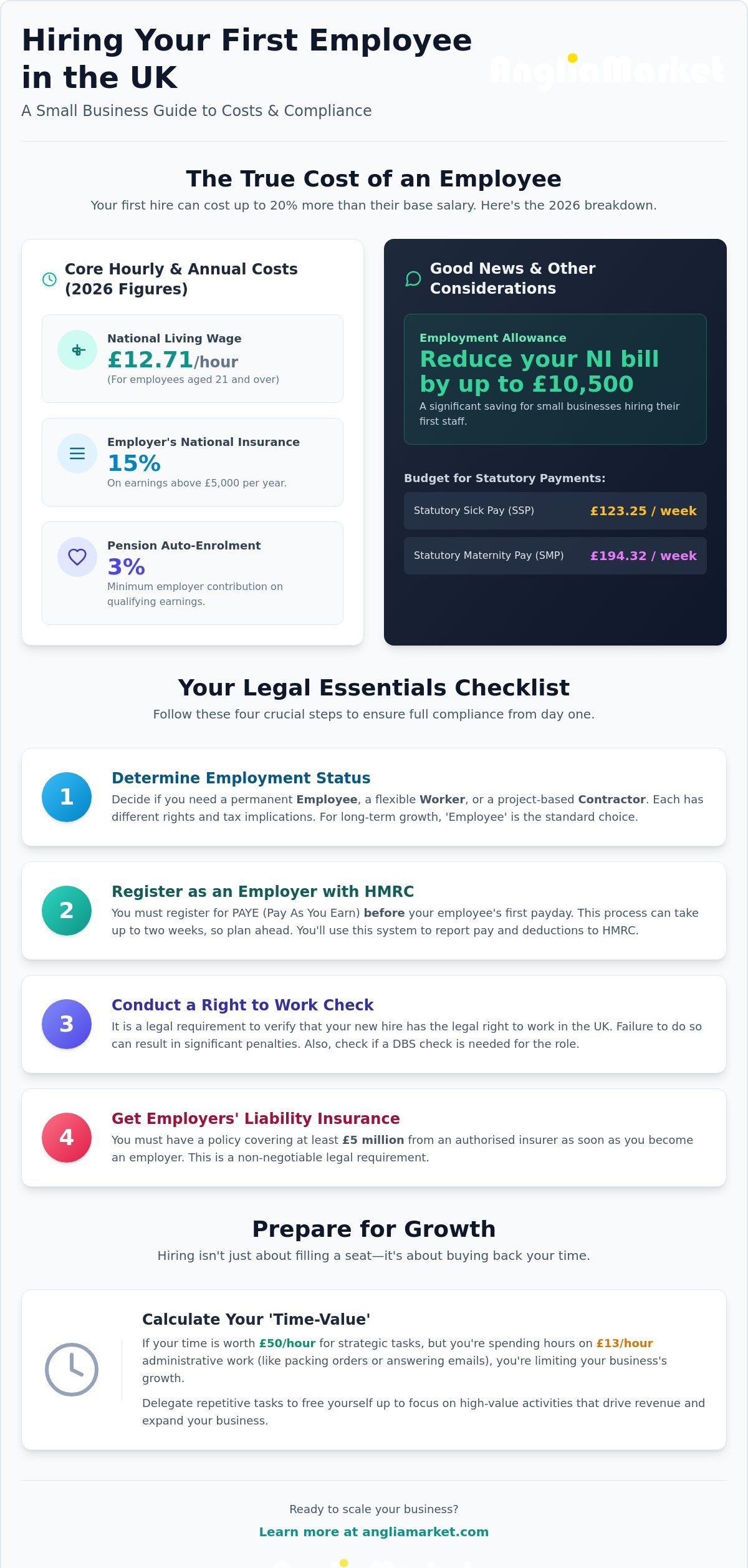
Scaling your business requires a shift in mindset. You're no longer just a specialist; you're a manager. The first step in learning how to hire your first employee uk is identifying exactly where your time goes. Are you spending hours on packing orders, managing inventory, or answering basic customer queries? These are prime tasks to offload. By delegating these operational duties, you free yourself to focus on high-level strategy and growth. Evaluate the 'Time-Value' of your new hire by looking at your hourly profit. If your time is worth £50 per hour but you're doing £13 per hour tasks, you're losing money. Hiring someone allows you to focus on activities that drive revenue, such as expanding your reach as an Anglia Market vendor.
Calculating the Total Investment Beyond Salary
The headline salary is just the starting point for your budget. For 2026, the National Living Wage for those aged 21 and over is £12.71 per hour. On top of this, you must budget for Employer National Insurance contributions. These sit at 15% on earnings above the Secondary Threshold of £5,000 per year. Don't forget the 3% minimum pension contribution for qualifying earnings between £6,240 and £50,270. You should also factor in the cost of statutory payments. As of April 2026, Statutory Sick Pay is £123.25 per week, whilst Statutory Maternity Pay sits at £194.32 per week. Fortunately, the Employment Allowance of up to £10,500 can significantly reduce your National Insurance bill, making the transition more affordable for small enterprises.
Determining the Employment Status
You must decide if you need an employee, a worker, or a self-employed contractor. A contractor is often easier for short-term projects, but an employee provides long-term stability and loyalty. This choice is governed by UK labour law, which defines the rights and responsibilities for each category. Employees have the most protection and require you to set up PAYE reporting for HMRC. Workers sit in the middle, offering some flexibility but still requiring holiday pay and the minimum wage. Understanding these distinctions ensures you meet your legal obligations from day one and avoids the risk of HMRC penalties for misclassification. For most permanent roles that help grow a business, 'Employee' status is the standard choice.
List your daily tasks before you start the recruitment process. Anything repetitive or low-skill should be the first thing your new team member takes over. This clarity helps you write a better job description and ensures you're hiring for the right impact rather than just filling a seat.
The Legal Essentials: HMRC, Right to Work, and Insurance
Once you've confirmed your budget, you must tackle the administrative framework. Learning how to hire your first employee uk involves shifting from a simple personal tax return to a formal payroll system. You'll need to register as an employer with HMRC before your first payday. This process can take up to two weeks, so don't leave it until the last minute. You can find a comprehensive checklist in the official government guide to ensure you haven't missed any technical steps during this transition.
Registering for PAYE and HMRC Compliance
Registering for Pay As You Earn (PAYE) is mandatory for almost all employees. Even if you pay them less than the lower earnings limit, you still need to keep records. Once registered, you'll use Real Time Information (RTI) to send payroll data to HMRC every time you pay your staff. Modern payroll software makes this simple. It automates tax and National Insurance deductions, ensuring your business stays compliant without manual calculations. If you're looking to scale your operations and need more time for these admin tasks, consider how you can sell online more efficiently to fund this professional growth.
Mandatory Checks and Insurance Coverage
Before any work begins, you must conduct a Right to Work check. As of May 2026, these requirements have been clarified for all workers, including those being sponsored. Failing to verify a candidate's legal right to work in the UK can result in severe civil penalties. You should also check if your specific sector requires a Disclosure and Barring Service (DBS) check. Whilst not every role needs one, it's standard for positions involving children or vulnerable adults. Always verify the level of check required, whether basic or enhanced, before you start the recruitment process.
Insurance is the next non-negotiable step. You are legally required to have Employers' Liability Insurance as soon as you become an employer. The policy must cover at least £5 million and come from an authorised insurer. Failure to have this insurance in place can lead to fines of up to £2,500 for every day you're uninsured. Alongside insurance, you must set up a workplace pension scheme. Under auto-enrolment rules, you'll need to enrol eligible staff and pay a minimum 3% employer contribution. These steps might seem like a lot of paperwork, but they provide the security your business needs to grow safely.
Finding the Right Fit: Recruitment and Selection for Small Businesses
Finding the right person is about more than just a CV. When you're learning how to hire your first employee uk, you're actually building your 'employer brand' from scratch. Unlike large corporations, your business has a unique personality and a specific centre of operations that can attract people looking for a more personal connection to their work. Use this to your advantage. Your first hire will set the tone for your company culture, so you must look for a balance of technical skill and shared values. Advertise your role where your ideal candidate spends time. Local community boards, social media, and specialised UK job sites often yield better results for small enterprises than generic, high-volume platforms.
Crafting a Compelling Job Description
Don't just list tasks; explain why the role matters. A great job description clearly defines responsibilities, required skills, and working hours. In 2026, candidates value flexibility and transparency above almost everything else. Whilst the legal minimum is £12.71 per hour for those over 21, attracting the best talent often requires a more competitive rate. Highlight the benefits of joining an independent, growing UK business. Mention the opportunity for direct impact, faster skill development, and the chance to be part of a supportive team environment. This transparency helps filter out those who aren't a good fit before they even apply.
The Interview and Selection Process
Consistency is vital for a fair and legal selection process. Develop a standard set of questions to ask every candidate. This allows you to compare them objectively and ensures you avoid any discriminatory questioning that could lead to legal trouble. Beyond the conversation, use practical 'work samples' to verify skills amongst your top choices. If the role involves logistics, ask them to organise a mock inventory list. This provides a clear view of their actual behaviour and competence in a work setting. Once you've found a favourite, always check at least two professional references to validate their work history and reliability.
Shortlisting should focus on behaviour as much as technical ability. In a tiny team, a positive attitude and a willingness to learn are often more valuable than a perfect list of qualifications. Look for someone who is excited by the challenge of helping a small business scale. Their enthusiasm will be a key driver in your future success.
Onboarding: Contracts, Handbooks, and Workspace Setup
The recruitment phase is over, but the operational work is just beginning. Successfully managing how to hire your first employee uk requires a smooth transition from candidate to team member. This starts with legal documentation. You must provide a written statement of employment particulars on or before their first day. This isn't just a formality; it's a legal requirement that protects both parties. Beyond the contract, you should establish a clear structure for their first few months. Setting performance goals for the first week, month, and 90-day period ensures your new hire understands their impact and stays motivated whilst they learn your business processes.
The Written Statement of Employment
By law, you must provide a 'Principal Statement' that covers the basics of the role. This document includes essential clauses such as pay, working hours, holiday entitlement, and notice periods. Whilst a full contract can be more detailed, the Principal Statement is the bare minimum required from day one. You can provide this in a digital or physical format, but the employee must be able to keep a copy for their records. Clear documentation at this stage prevents future disputes and establishes a professional tone for the working relationship. You might also want to include a simple employee handbook. This outlines company policies and expected behaviour, helping the new hire integrate into your business culture quickly.
Setting Up the Workspace and Supplies
A productive start depends on having the right tools in place. Whether your new hire is working in a physical shop, a warehouse, or a remote home office, their workspace must be ready before they arrive. This means sourcing ergonomic furniture and essential office supplies to ensure they can work comfortably and efficiently. Health and safety compliance is another critical factor. You must assess their workstation to minimise risks, especially if they are using new hardware or machinery. Investing in reliable electronics and high-quality hardware facilitates faster training and reduces technical frustrations during those first few critical weeks.
Organise a dedicated induction day to walk them through your systems. Show them how you manage stock, process orders, and handle customer service. If you want to ensure they have everything they need for a professional start, you can browse essential business equipment to kit out their new workstation today. Clear expectations combined with a well-equipped environment will help your first employee become a valuable asset to your growing business.
Scaling Your Business with Your New Team Member
Hiring is a commercial investment in your freedom. Once you have mastered the legal and financial steps of how to hire your first employee uk, the real work of scaling begins. You must move away from the daily grind of fulfilment. Delegate tasks like inventory management and customer service immediately. This shift allows you to focus on the big picture. Your new team member is the engine that drives your expansion. By offloading the routine, you gain the mental space to identify new opportunities and market gaps. It's about working on the business, not just in it. You've transitioned from a sole trader to a leader.
Maximising Marketplace Growth
A dedicated employee can transform your online performance. Faster response times lead to better seller ratings. These ratings are crucial for any Anglia Market vendor looking to build trust. Your staff can manage daily listings and keep promotions fresh. Use them to maintain your presence on Anglia Market whilst you research new trends. This structure lets you expand into new niches without dropping the ball on existing orders. You can scale your product range across diverse categories like home and garden or pet supplies with confidence. Having support means you can navigate the 2026 job market with a stable, productive team.
Building a Long-term Partnership
Retention is always cheaper than recruitment. Investing in staff development ensures long-term business loyalty and reduces the risk of talent shortages. Implement regular 1-to-1 meetings to discuss progress. These sessions shouldn't be formal interrogations. Use them to identify operational bottlenecks and listen to suggestions. A culture of feedback improves small business operations. It makes your employee feel valued and invested in your success. As your team grows, review the loyalty program benefits for your business. Growing together creates a resilient enterprise. You want a partner, not just a pair of hands. This collaborative approach is what separates a struggling sole trader from a thriving employer.
Focus on skills-based training. In 2026, digital management and AI literacy are vital skills for any retail team. Encourage your employee to master your marketplace tools. Their growth is your growth. When your team feels empowered, they deliver better results for your customers and your bottom line. Use this new-found capacity to explore regional independent commerce opportunities that you previously didn't have time to consider.
Start Your Growth Journey Today
Transitioning from a sole trader to an employer is a significant commercial milestone. You now have the roadmap to navigate the 2026 National Living Wage of £12.71 and the essential HMRC registrations. Mastering how to hire your first employee uk isn't just about legal compliance; it's about building a foundation for sustainable scaling. You've learned how to offload daily tasks like inventory management to focus on high-level strategy and market expansion.
We're a trusted platform for UK SMEs and a proud supporter of independent regional commerce. From sourcing essential hardware to reaching a wider audience, we offer a comprehensive marketplace for all your business supplies and growth needs. Scale your business and sell online with Anglia Market today.
Hiring your first team member is a bold investment in your professional future. Stay focused on your goals, trust your new systems, and watch your business thrive in the year ahead.
Frequently Asked Questions
Do I need to register with HMRC if I only hire a part-time employee?
Yes, you must register as an employer if your staff member earns more than £123 per week or has another job. Even if they earn less, you are still required to keep payroll records for HMRC. This is a vital step in learning how to hire your first employee uk correctly to ensure you don't face penalties for missing the registration deadline.
What is the minimum pension contribution I must pay as an employer in 2026?
You must pay a minimum of 3% into their workplace pension if they are an eligible jobholder. For the 2026/27 tax year, this contribution applies to qualifying earnings between £6,240 and £50,270. You are responsible for setting up the scheme and ensuring both employer and employee contributions are paid on time.
Can I hire a family member as my first employee in the UK?
You can hire family members, but you must treat them exactly like any other member of staff. This means issuing a formal contract, paying at least the National Living Wage, and reporting their earnings through PAYE. HMRC may scrutinise these arrangements to ensure the work is genuine and the pay rate is commercial.
How much does Employers' Liability Insurance typically cost for a small business?
Insurance costs vary significantly based on your business sector and the level of risk involved in the work. Whilst low-risk office or retail roles are generally more affordable, you must ensure your policy provides at least the legally required £5 million of cover. Always compare quotes from authorised insurers to find a competitive rate for your specific needs.
What happens if I don't conduct a Right to Work check?
You face significant civil penalties if you employ someone without the legal right to work in the UK. Fines can reach up to £60,000 per worker for serious or repeated breaches. Conducting these checks is a non-negotiable part of how to hire your first employee uk and protects your business from both financial loss and potential criminal prosecution.
Is a written contract legally required for the first hire?
A written statement of employment particulars is a legal requirement from the very first day of work. This document must outline the key terms of the role, including pay, hours, and holiday entitlement. Providing this statement protects you from potential employment tribunal claims and ensures your new hire understands their responsibilities from the start.
How do I set up a PAYE system for payroll?
Register online via the GOV.UK portal before your first payday to receive your employer PAYE reference. Once registered, you should use HMRC-recognised payroll software to calculate tax and National Insurance deductions. This software automates your Real Time Information (RTI) reporting, sending the required data to HMRC every time you pay your staff.
What are the rules for holiday pay for my first employee?
Almost all employees are entitled to a minimum of 5.6 weeks of paid holiday per year. For a full-time staff member, this usually equates to 28 days, which can include bank holidays. You must calculate this entitlement pro-rata for part-time workers based on the actual hours they work to ensure they receive their fair legal share.

Here to help — ask anything
If you have any questions regarding this disclaimer or any of our policies, please contact Anglia Market through the contact page on our website, by email using the address provided on the site, or by phone at 0333 772 2593