
Did you know HMRC completed 320,000 compliance checks in 2023/24? That is a 15% increase from the previous year. For many UK marketplace sellers and small business owners, the thought of a surprise audit is enough to cause sleepless nights. It is a common fear, especially with the 2026 rollout of Making Tax Digital for Income Tax approaching for those earning over £50,000.
We understand that the pressure of managing VAT thresholds and complex PAYE rules is intense. You want to focus on growing your brand, not worrying about whether your digital records are perfect. Learning how to prepare for a tax inspection uk is the best way to regain control and protect your hard-earned profits. We promise to help you master the compliance check process with a straightforward, commercial approach designed for independent enterprises.
This guide provides a clear timeline of what to expect from HMRC during a check. You will learn how to organise your records for maximum transparency and discover practical steps to minimise potential fines. Let's turn that stress into a solid, professional plan for your business.
Key Takeaways
- Identify the scope of your compliance check by distinguishing between a targeted aspect enquiry and a comprehensive full investigation.
- Discover exactly how to prepare for a tax inspection uk by reviewing requested records and alerting your professional advisor the moment HMRC makes contact.
- Stay ahead of HMRC's "Connect" software by ensuring your declared income aligns perfectly with your digital footprint and lifestyle.
- Simplify your financial reporting with organised monthly statements and transaction histories available through your marketplace platform.
- Reduce the risk of heavy fines by maintaining narrative consistency and transparency across all your business records.
Understanding HMRC Tax Inspections in 2026
Receiving a letter from HM Revenue and Customs (HMRC) often triggers immediate anxiety; however, a tax compliance check is simply a routine or targeted review of your financial affairs. It's a standard procedure to ensure you're paying the right amount of tax at the right time. These inspections can cover various areas, including your VAT returns, Income Tax, Corporation Tax, or PAYE records. For many vendors on digital platforms, these checks focus on the consistency between marketplace sales and bank deposits.
If you're wondering how to prepare for a tax inspection uk, the first step is staying calm. Receiving a notice doesn't automatically imply wrongdoing, fraud, or even an error. HMRC frequently conducts random checks alongside targeted ones to maintain a fair playing field for all businesses. The 2026 landscape is defined by transparency. Since April 2026, taxpayers with income over £50,000 must follow Making Tax Digital (MTD) rules, requiring quarterly updates rather than just one annual return. This shift means HMRC has more frequent data points to analyse, making it even more vital to know how to prepare for a tax inspection uk by keeping your software updated and your receipts categorised in real time.
The Legal Basis for Compliance Checks
HMRC operates under clear statutory powers that allow them to request information or visit your business premises. They usually give you at least seven days' notice for a visit. If you have a "reasonable excuse" such as a serious illness or a recent bereavement, you can request a delay. HMRC can also issue an information notice to see documents that are "reasonably required" to check your tax position. You don't have to provide documents that are more than six years old unless HMRC suspects a deliberate tax loss. It's helpful to distinguish between a "check" and an "enquiry". A check usually looks at your current records and systems to ensure ongoing compliance, whilst an enquiry is a formal investigation into a tax return you've already filed.
Your Rights as a UK Taxpayer
You have specific protections during any interaction with the tax office. You have the right to be treated fairly, to receive clear explanations, and to have a professional advisor or accountant present during meetings. You can even ask for a check to be carried out at your accountant's office rather than your home or business premises if that feels more professional. If you disagree with a decision, you can appeal or use alternative dispute resolution (ADR) to find a way forward without going to a tribunal. The Taxpayer’s Charter is a document that sets out the standards of behaviour and values you should expect from HMRC, ensuring they provide help and support to those who try to get their tax right in 2026.
Types of Compliance Checks: From Aspect Enquiries to Full Investigations
HMRC utilises different levels of scrutiny depending on what their data suggests. An Aspect Enquiry is the most common. In this scenario, the inspector focuses on one specific part of your tax return, such as a large capital expense claim or a specific tax year. In contrast, a Full Enquiry is a comprehensive review of all your business records. This usually happens if HMRC suspects significant errors across multiple tax heads. Understanding these differences is a core part of how to prepare for a tax inspection uk, as the scope dictates how much documentation you need to gather.
Not every check is triggered by a mistake. HMRC conducts Random Checks to monitor general compliance and gather industry data. These can be Desk-based, where you send records by post or email, or Field-based, involving a visit to your premises. For home-based businesses, a field-based check might feel intrusive; however, you can often request the meeting takes place at your accountant's office instead. Reviewing the official guidance on HMRC compliance checks will help you understand the specific protocols for each type.
VAT-Specific Inspections for Marketplace Sellers
VAT is a high-priority area for HMRC, especially amongst online vendors. Inspectors look closely at "Output VAT" (tax on your sales) and "Input VAT" (tax on your purchases). They will cross-reference your VAT returns against your marketplace sales reports to ensure every transaction is accounted for. If you sell online through a structured platform, these reports are usually easy to generate. This simplifies the process of proving your figures are accurate and consistent.
PAYE and Employment Record Checks
If you employ staff to help with packing or customer service, HMRC may check your PAYE records. This includes verifying National Insurance contributions and ensuring you have met pension auto-enrolment obligations. Retail businesses often use casual or seasonal labour during busy periods like Christmas. You must keep clear records of these payments, even if the employment was brief. Knowing how to prepare for a tax inspection uk involves ensuring your payroll data matches your bank statements perfectly to avoid unnecessary penalties.
Common Triggers: Why is HMRC Auditing Your Small Business?
HMRC doesn't select businesses for review by chance. Most inspections are now driven by "Connect," a sophisticated data-matching system that cross-references information from thousands of sources. If your declared figures don't align with the data HMRC already holds, an enquiry is likely. Understanding these triggers is essential when learning how to prepare for a tax inspection uk, as it allows you to spot potential red flags before the tax office does. One major trigger is a lifestyle that appears to exceed your declared business income. If you're reporting minimal profits whilst making high-value personal purchases, such as a new home through Hunt Residential Estate Agents, the system will flag the inconsistency for a human inspector to review.
Industry benchmarking is another powerful tool in the tax office's arsenal. HMRC knows the typical profit margins for various sectors, from boutique florists to electronics retailers. If your margins differ significantly from UK averages for your specific trade, they may want to know why. Similarly, habitual lateness is a massive red flag. Filing your returns or paying your tax bills late suggests poor record-keeping or financial distress. This behaviour invites closer scrutiny, as HMRC assumes that if you're unorganised with deadlines, you might also be unorganised with your figures.
The Impact of Third-Party Data Reporting
The days of undeclared secondary income are over. Banks, payment processors, and online marketplaces now share data directly with the tax office to ensure total transparency. HMRC Connect processes billions of data points annually to identify gaps in reporting. This means every income stream, no matter how small, must be declared on your tax return. Whether it's a side hustle or a occasional marketplace sale, the data is likely already in HMRC's hands. Ensuring your internal records match these third-party reports is a critical step in how to prepare for a tax inspection uk and avoid unnecessary penalties.
How Far Back Can HMRC Go?
The length of an inspection depends on the nature of the errors found. For innocent mistakes, HMRC generally has a 4-year limit to investigate. However, if they find "careless" errors, they can look back through 6 years of records. In cases where deliberate tax evasion is suspected, this window extends to a staggering 20 years. This makes long-term record retention vital. Investing in reliable office supplies for physical filing or secure digital storage ensures you can produce evidence from previous years if challenged. Keeping your records organised for the long haul is the best way to prove your compliance history is clean.
The principle of meticulous record-keeping extends beyond tax; for business owners diversifying into property, specialists like Elite Agents & Partners provide the professional management and documentation needed to ensure residential or commercial assets remain compliant and secure.
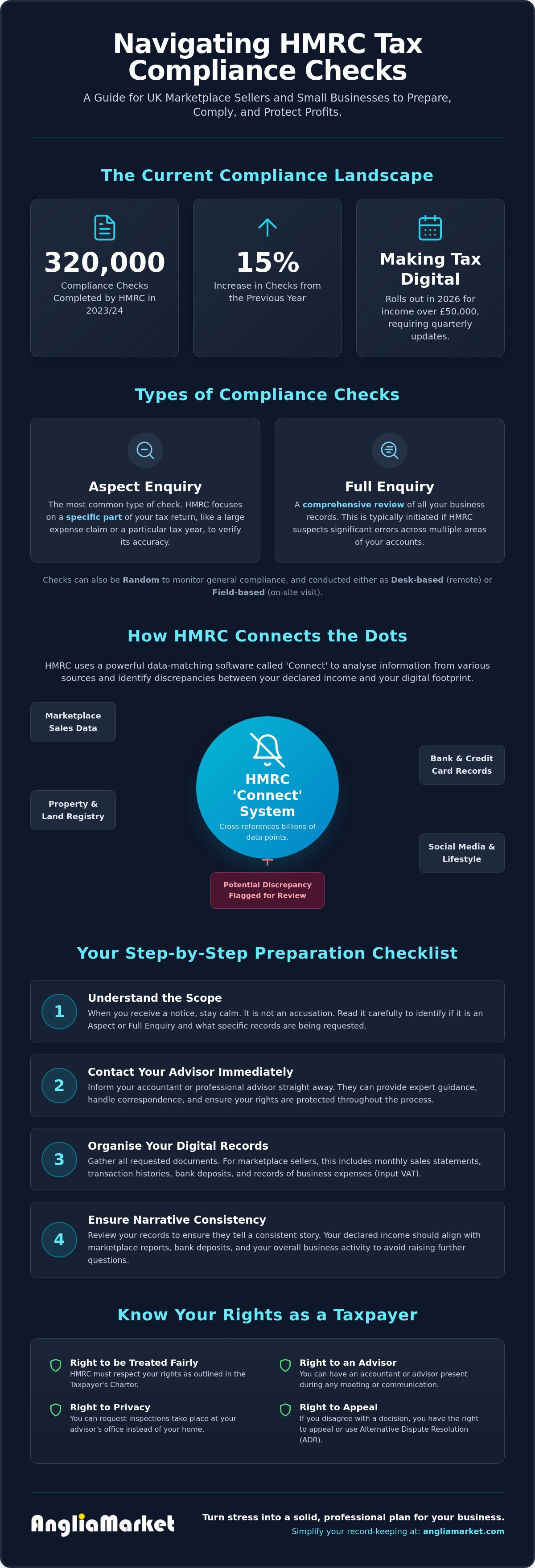
How to Prepare for a Tax Inspection: A Step-by-Step Checklist
If HMRC contacts you, your first call should be to your accountant or tax advisor. They understand the nuances of tax law and can act as a professional intermediary. Once you've secured advice, start a "pre-audit" review. This involves looking specifically at the years or figures HMRC mentioned in their notice. Learning how to prepare for a tax inspection uk means being proactive rather than reactive. You need to verify that every figure on your return has a corresponding piece of evidence.
Collect all digital invoices, bank statements, and shipping logs. If the inspector plans a visit, organise a clean, quiet workspace. This shows you take the process seriously and have nothing to hide. Honesty is your best policy throughout. Professional behaviour and transparency often lead to smoother resolutions and lower penalties if errors are eventually found. It is better to admit a mistake early than to let an inspector discover it themselves during a deep dive.
Organising Your Digital Marketplace Records
A common pitfall for online sellers is failing to account for VAT on platform fees and commissions. Log into your vendor account to export detailed sales data and commission invoices. You must reconcile "Net" sales, which is the money you actually receive, with "Gross" sales, the total price the customer paid. HMRC expects you to report the gross figure and then claim the platform fees as a business expense. Integrated accounting software is the most efficient way to manage these marketplace transactions and ensure your records are audit-ready.
The Physical Inspection: Logistics and Etiquette
Prepare a "Master File" containing every document requested by the inspector. This prevents fumbling through folders whilst the officer waits, which can suggest a lack of control over your finances. During the meeting, answer questions concisely. Stick to the facts. Do not volunteer unnecessary or speculative information that might open new, unrelated lines of enquiry. Providing basic hospitality like tea or coffee helps maintain a professional atmosphere. It sets a cooperative tone for the session and helps the day run more predictably.
Dealing with Missing Records
Missing a receipt or an old invoice? Do not panic. You can often provide "alternative evidence" such as bank transaction entries or statements from your suppliers. If you find a gap in your files, be proactive. Admitting to a lost invoice is far better than trying to hide it. This transparency builds trust with the officer. If you want to simplify your future compliance, sell online with us to keep your transaction history centralised and easy to export for any future reviews.
Managing Your Marketplace Business Records with Anglia Market
Selling through a centralised platform simplifies financial tracking for SMEs. It provides a clear, digital trail of every sale, refund, and fee. For vendors, having a single source of truth for every transaction is invaluable. Instead of chasing paper receipts or disparate emails, you have accessible transaction histories and monthly statements at your fingertips. This level of organisation is exactly how to prepare for a tax inspection uk without the usual last-minute panic. A professional storefront also demonstrates business legitimacy to HMRC. It proves you operate as a structured commercial entity rather than a casual hobbyist.
Our platform tools are built to help you stay audit-ready throughout the year. By using centralised reporting, you avoid the common errors associated with manual data entry. You can quickly export the exact records an inspector needs, from VAT-inclusive sales totals to commission breakdowns. This efficiency reduces the time you spend on administration. It allows you to focus on what matters most: serving your customers and increasing your turnover.
Support for Small and Medium-Sized Enterprises
Anglia Market empowers independent UK sellers to focus on product development and growth whilst we handle the platform logistics. We encourage new entrepreneurs to sell online with a platform that values transparency and provides the tools needed for robust record-keeping. Don't just take our word for it. Read the testimonials of other UK businesses who have scaled successfully using our infrastructure. They have found that having clear, downloadable financial data makes tax season much more manageable. Our system ensures your data is secure, organised, and ready for scrutiny at any time.
Next Steps After an Inspection
Once the check is complete, you will receive a "Closure Notice". This document outlines the findings. It specifies if any additional tax, interest, or penalties are owed. If HMRC flagged specific errors, use this as an opportunity to update your internal processes. Perhaps you need to reconcile your bank statements more frequently. You might need to improve how you categorise expenses. A successful inspection serves as a badge of business health. It shows that your systems are reliable. It proves you are a trustworthy taxpayer. This is the ultimate goal of learning how to prepare for a tax inspection uk properly. Use the experience to build a more resilient, professional business for the future.
Secure Your Business Future Today
Mastering how to prepare for a tax inspection uk is about more than just avoiding fines; it's about building a resilient, transparent enterprise. By understanding HMRC's data-matching triggers and maintaining meticulous digital records, you can face any compliance check with confidence. Remember to reconcile your marketplace sales reports regularly and seek professional advice the moment a notice arrives. Organised bookkeeping isn't just a requirement. It's a strategic advantage for any serious independent seller.
We're here to help you stay ahead of the curve. With UK-based support for independent sellers and transparent transaction reporting, our platform makes bookkeeping straightforward. You'll join a community of verified UK small businesses dedicated to growth and reliability. Join Anglia Market as a vendor and simplify your online business management today. Take control of your financial narrative and focus on scaling your brand whilst we provide the tools to keep your records audit-ready. You have worked hard to build your business; now ensure it is protected with the right systems and support.
Frequently Asked Questions
How much notice does HMRC give for a tax inspection?
HMRC usually provides at least seven days' notice for an inspection visit. They will write or phone you first to specify which records they wish to examine. This notice period gives you time to organise your files and speak with your tax advisor. It is important to use this window to review the specific tax years HMRC has mentioned in their initial letter.
Can I refuse an HMRC tax inspection visit to my home or business?
You cannot refuse the check itself, but you can request that a physical visit takes place at your accountant's office. If you have a valid reason, such as working from a private home, HMRC will often agree to a neutral location. However, they do have statutory powers to visit business premises with the correct notice to ensure records are being kept properly.
What happens if HMRC finds an error in my tax return during an enquiry?
HMRC will issue a closure notice detailing the additional tax owed plus any interest. You will also face a penalty based on your behaviour, which can range from 0% to 100% of the tax due. If you disagree with the findings, you have 30 days to appeal the decision or request an independent review of the case.
How long does a typical UK tax inspection take to complete?
Most compliance checks are resolved within three to six months. However, the duration depends entirely on the complexity of your records and the type of enquiry. A simple aspect enquiry into a single figure is much faster than a full investigation, which can sometimes last over a year. The speed of the process often depends on how quickly you provide requested documents.
Do I need a solicitor or an accountant for a compliance check?
You should ideally have an accountant present, but a solicitor is rarely necessary. Accountants are experts at navigating the technical requirements of a compliance check and can communicate directly with the inspector. You only need a solicitor if the investigation involves criminal charges or suspected fraud, which is rare for routine small business checks.
What are the penalties for a "careless" tax mistake in 2026?
HMRC penalties for inaccuracies range from 0% to 100% of the tax owed. For a "careless" mistake, the penalty is typically between 0% and 30%. The final figure depends on whether you made an "unprompted disclosure" before HMRC contacted you or a "prompted disclosure" after the enquiry began. HMRC also charges interest on any late payments at a rate of 7.75% as of May 2026.
Can HMRC check my personal bank account during a business inspection?
HMRC has the power to review personal bank statements if they believe business income is being diverted. They often use this power if your declared business profits don't align with your personal spending or lifestyle. Learning how to prepare for a tax inspection uk involves ensuring your personal and business transactions are clearly separated to prove all commercial income has been correctly declared.
What is a "reasonable excuse" for not providing information to HMRC?
A "reasonable excuse" is an exceptional circumstance that prevented you from meeting your tax obligations. This includes a serious illness, a recent bereavement, or a major system failure that was outside your control. HMRC won't accept being too busy or finding the tax rules too difficult as a valid excuse. Knowing these definitions is a key part of how to prepare for a tax inspection uk effectively.

Here to help — ask anything
If you have any questions regarding this disclaimer or any of our policies, please contact Anglia Market via the contact page on our website, by email using the address provided on the site, or by phone on 0333 772 2593