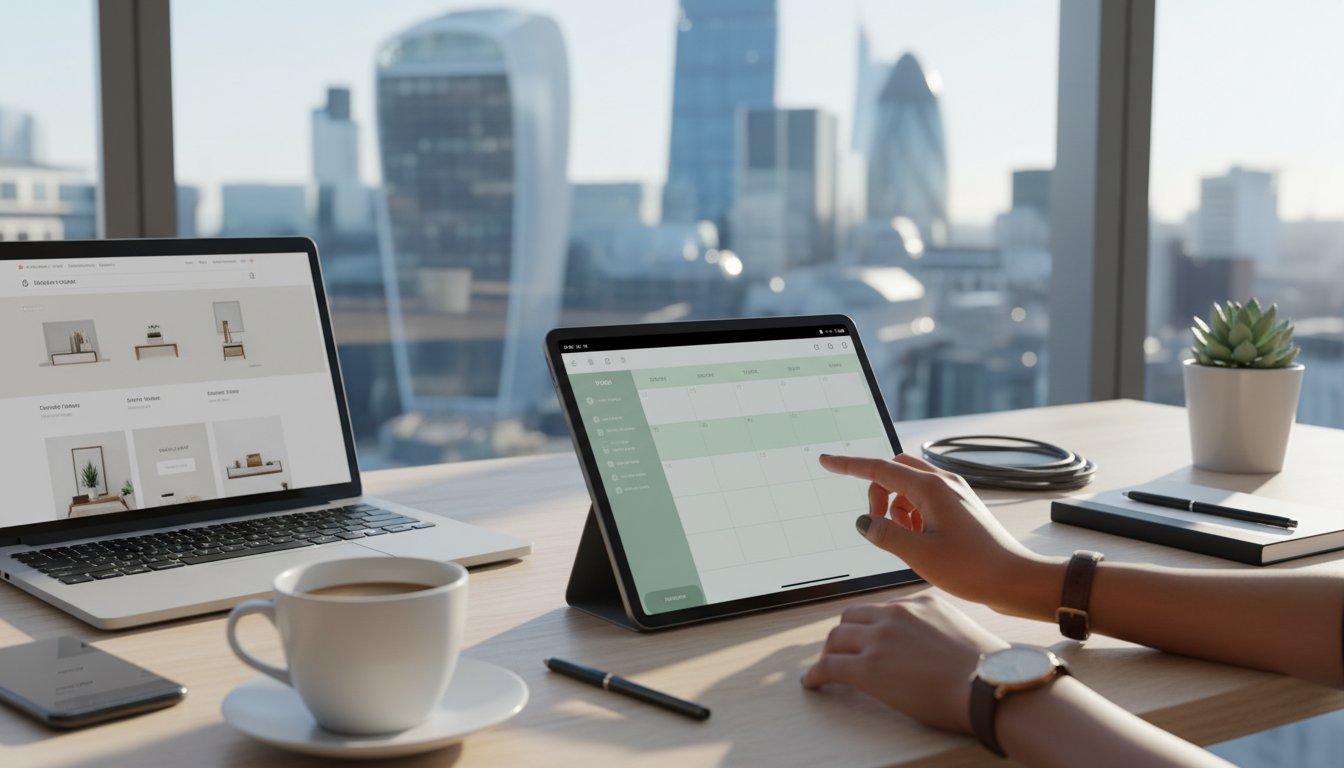
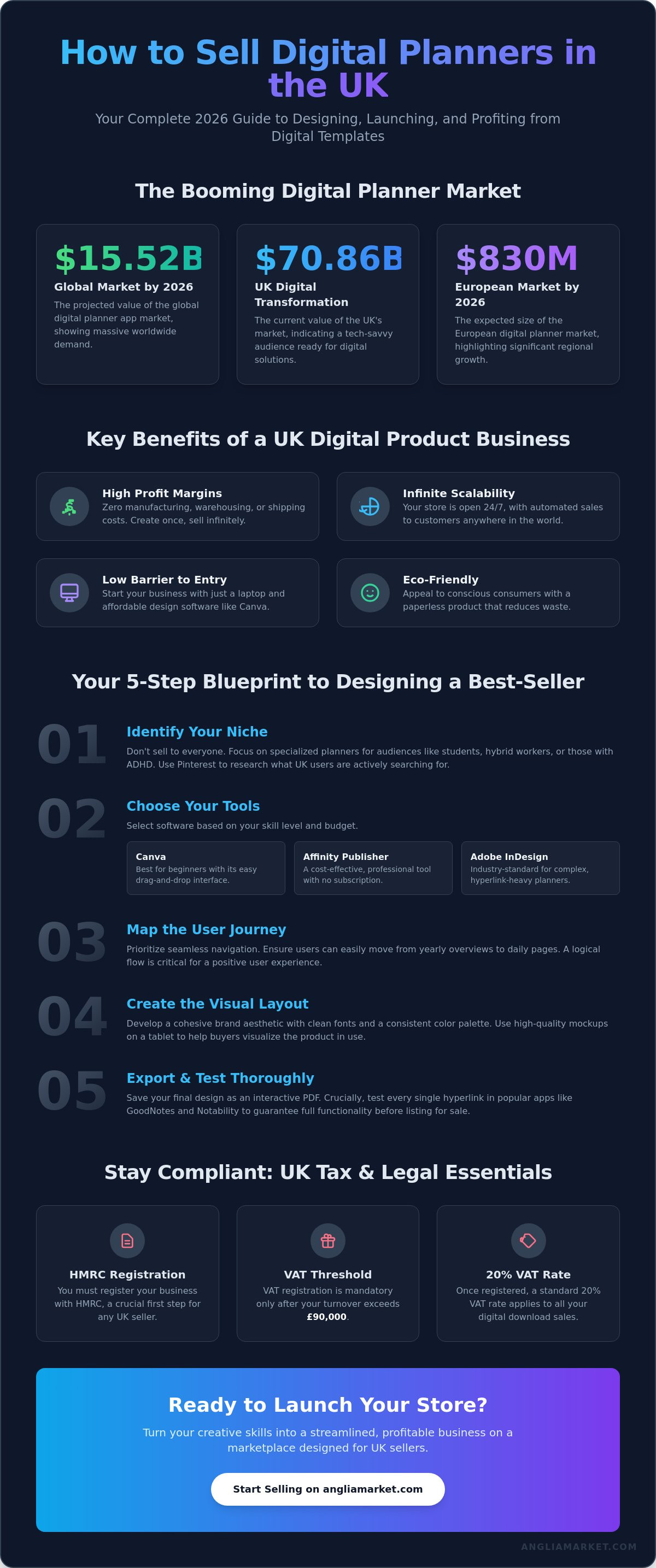
Did you know the global digital planner app market is projected to hit $15.52 billion in 2026? With the UK's digital transformation market currently valued at $70.86 billion, there's never been a better time to learn how to sell digital planners and templates uk to a local audience looking for better ways to stay organized. You've likely felt the sting of confusion when looking at HMRC's 20% VAT rules for digital downloads or felt buried by the sheer number of sellers on global platforms. It's frustrating to have a great product but feel stuck on the technical and legal hurdles.
This guide simplifies the entire process. You'll learn exactly how to design high-quality templates, protect your intellectual property, and stay compliant with the £90,000 VAT registration threshold. We'll walk you through everything from Canva design tips to choosing the right UK marketplace for your first sale. It's time to turn your creative skills into a streamlined, profitable business.
Key Takeaways
- Select the best design software for your skill level to create interactive PDF planners that UK professionals and students actually want to buy.
- Understand your legal obligations as a seller, including HMRC business registration and the current 2026 tax rules for digital downloads.
- Learn how to sell digital planners and templates uk by comparing the visibility and fee structures of global giants versus local marketplaces.
- Master the art of high-quality product mockups and targeted keyword research to ensure your listings stand out in a competitive market.
What Are Digital Planners and Why Sell Them in the UK?
The UK market is moving away from bulky paper diaries. Modern professionals and students are choosing tablets over ring binders at an increasing rate. If you want to know What are digital planners?, think of them as high-tech, interactive PDF files. These documents feature functional tabs and hyperlinks that work seamlessly on apps like GoodNotes, Notability, or Xodo. By 2026, the European digital planner market is expected to reach $830.142 million. This massive growth is fueled by a workforce that values portability and instant access to their schedules.
Learning how to sell digital planners and templates uk is a smart move for any creative entrepreneur. Unlike physical products found in high street shops, digital goods have zero manufacturing costs. You don't have to worry about warehousing or Royal Mail shipping delays. You create the file once and sell it thousands of times. This creates a business model with incredibly high profit margins because your overheads remain low while your reach expands.
The Different Types of Digital Templates You Can Sell
The market is no longer just about basic calendars. In 2026, niche products are the top performers. Busy UK professionals look for daily productivity planners that integrate with their hybrid work setups. Students search for specialized academic templates to track lectures and exam dates. You can also find success selling budget trackers, meal planners, and habit journals. Small business owners are another huge demographic. They need social media content calendars and branding templates to stay organized. If you're ready to start your journey, you can sell online through platforms that support independent UK vendors.
Benefits of Starting a Digital Product Business in the UK
One of the biggest draws is the low barrier to entry. You don't need a massive warehouse or thousands of pounds in start-up capital. A laptop and a design tool like Canva are often enough to get started. Scalability is another major win. Your shop stays open 24/7, serving customers in London, Manchester, or even globally without any extra effort on your part. Once the design is finished, the sales process is almost entirely automated.
Environmental impact is also a key selling point for the UK's eco-conscious consumer base. In 2026, buyers are increasingly aware of their carbon footprint. Digital planners offer a paperless alternative that saves trees and reduces physical waste. This alignment with "green" values makes digital products highly attractive to the modern British shopper. When you master how to sell digital planners and templates uk, you're building a sustainable business that meets modern environmental demands.
5 Steps to Designing Professional Digital Templates
Creating a product that stands out in the UK market requires more than just a pretty layout. You need a functional tool that solves a specific problem. Understanding how to sell digital planners and templates uk starts with a structured design phase. Follow these five steps to build a high-quality product that customers will actually use.
Step 1: Identify your niche. Don't try to sell to everyone. In 2026, specialized planners for ADHD management, fitness tracking, or small business organization are performing best. Use Pinterest to find what UK users are searching for. Step 2: Choose your tools. Your software choice depends on your technical skill. Canva is excellent for beginners, while professional designers often prefer Affinity Publisher or Adobe InDesign for more complex layouts. Step 3: Map the user journey. Think about how a customer moves through the planner. Is it easy to get from the yearly overview to a specific daily page? Navigation is the most overlooked part of digital design.
Step 4: Create the visual layout. Stick to a consistent brand aesthetic. Use clean fonts and a cohesive color palette. High-quality mockups are essential here; they show the planner on a tablet, helping buyers visualize the end product. Step 5: Export and test. Save your file as an interactive PDF. Open it in apps like GoodNotes and Notability to ensure every link works. If you're ready to reach a wider audience, you can start selling with us to connect with UK-based buyers.
Choosing the Right Design Software for Your Skill Level
Canva is the top choice for many new sellers because of its simple drag-and-drop interface. It's perfect for quick turnarounds. If you're a UK designer looking for a professional but cost-effective alternative, Affinity Publisher is a strong contender. It offers advanced typography and layout controls without a heavy monthly subscription. For industry-standard planners with thousands of hyperlinks, Adobe InDesign remains the most powerful tool for creating complex, multi-page documents.
Mastering Hyperlinks and Navigation for Tablet Users
User experience (UX) is what separates a basic PDF from a professional planner. You must create "tabs" on the side of the page that act as clickable buttons. These allow users to jump between months or sections instantly. Ensure your PDF is optimized to be "lag-free." Large file sizes can slow down older iPads or tablets, leading to a poor user experience. Always test your planner on multiple devices and apps to guarantee cross-platform compatibility before you list it for sale.
Navigating UK Tax and Legal Rules for Digital Products
Moving from the design phase to a live shop requires a solid understanding of British business laws. You don't need a law degree to get started, but you do need to be organized. Learning how to sell digital planners and templates uk involves more than just uploading a file; it's about building a compliant foundation. Most new sellers begin as Sole Traders. It's the most straightforward path and involves the least amount of paperwork during the initial setup.
You must register with HMRC once your total gross income from self-employment exceeds the £1,000 trading allowance in a single tax year. If you're earning more than this, you'll need to file a Self Assessment tax return. Some sellers choose to form a Limited Company instead. This provides more legal protection for your personal assets but comes with higher administrative costs and stricter filing requirements. Choose the structure that fits your current scale and future goals.
HMRC Registration and Income Tax Basics
Start keeping digital records of every transaction immediately. You can deduct legitimate business expenses from your total income to reduce your tax bill. This includes software subscriptions like Canva or Adobe, your website hosting fees, and even a portion of your home utility bills if you work from a home office. Use a dedicated business bank account to keep your personal and professional finances separate. This makes your annual Self Assessment much faster and less stressful.
VAT on Digital Services: What UK Sellers Need to Know
VAT is a critical area for digital sellers. In the UK, the standard VAT rate for digital products is 20%. As of May 2026, UK-based businesses must register for VAT only if their taxable turnover exceeds £90,000 over a rolling 12-month period. However, if you're a non-UK business selling to British consumers, there is no threshold; you must register and collect VAT from your very first sale.
- Automated Downloads: If your customer receives the planner via an automated link without your manual intervention, it's classified as a "digital service."
- Marketplace Handling: Many large platforms automatically collect and pay the VAT to HMRC on your behalf.
- EU Sales: Selling to EU customers post-Brexit requires compliance with each country's specific VAT rules. You may need to use a service like the VAT One Stop Shop (OSS) to simplify this process.
Don't forget to protect your intellectual property. Your original designs are automatically protected by copyright in the UK. Always include a clear "Terms of Use" page within your digital planner. State clearly that the file is for personal use only and that reselling or redistributing the PDF is strictly prohibited. This provides a legal basis to act if you find copycats selling your work. Mastering how to sell digital planners and templates uk means being as professional with your legal setup as you are with your designs.
Where to Sell Your Planners: Comparing Global vs UK Marketplaces
Global platforms are often the first stop for new creators, but they're increasingly crowded and expensive. As of May 2026, sellers on major international marketplaces face a 6.5% transaction fee plus a 4% + £0.20 payment processing fee on every sale. When you include mandatory 12-15% advertising fees for businesses making over £8,000, your actual profit can shrink faster than expected. If you're figuring out how to sell digital planners and templates uk, you must decide if you want to be a small fish in a massive pond or a leader in a focused market.
Pricing for the UK market requires a local touch. Don't let a platform auto-convert your prices from US Dollars. UK consumers prefer pricing in British Pounds, usually ending in .99 or .49. A planner priced at £14.99 feels more professional to a Birmingham-based professional than a random conversion like £11.34. While setting up your own Shopify store gives you full control, the Basic plan starts at £19 per month when billed annually. This is a significant upfront cost for a new business that hasn't made its first sale yet. Using a marketplace model allows you to test your products without high monthly subscriptions.
Why Support Local: The Anglia Market Advantage
Choosing a UK-focused platform offers distinct benefits for visibility. You face significantly lower competition compared to global sites where millions of listings fight for attention. This increased visibility makes it easier for new sellers to get their first few reviews and build momentum. By joining Anglia Market Vendors, you're tapping into a community that prioritizes UK small and medium enterprises (SMEs). This local focus resonates with shoppers who actively search for independent British creators. If you want to scale quickly, apply to sell online today and reach our growing audience of UK buyers.
Marketing Your Planners to a UK Audience
Success depends on visibility across visual platforms. Pinterest is a powerhouse for digital products because users go there specifically to find organizational tools. Create "Plan with Me" videos for Instagram Reels or TikTok to show your templates in action. This "behind the scenes" content builds trust with non-technical buyers who might be nervous about using a digital file for the first time. You should also build an email list by offering a small "freebie" template, such as a single-page habit tracker. This allows you to market new product launches directly to interested customers without relying on social media algorithms. Collaborating with UK productivity influencers can also provide a massive boost, as their followers already value time-management tools.
Launching Your Store and Scaling Your Digital Business
You've designed your product and sorted the legalities. Now you need a storefront that converts visitors into customers. Knowing how to sell digital planners and templates uk effectively means mastering the art of the product listing. Your listing is your digital shop window. If it looks cluttered or confusing, shoppers will leave within seconds. Focus on clarity and value above all else.
Start with high-quality mockups. Digital products are intangible, so you must make them feel "real" to the buyer. Use lifestyle images that show your planner being used on a tablet in a clean, professional setting. Statistics from 2025 show that listings with at least five diverse mockups see a 40% higher conversion rate than those with just one. Include a video flip-through to show exactly how the hyperlinks and tabs function. This reduces buyer hesitation and cuts down on customer service queries.
Customer service is a major part of scaling. Around 15% of digital product buyers are first-timers who may struggle to import a PDF into GoodNotes or Notability. Providing a simple, one-page "Getting Started" guide with every purchase will save you hours of support time. When you do receive a question, respond quickly and helpfully. Positive reviews are the lifeblood of a digital shop. Since 92% of UK shoppers read testimonials before buying, encouraging your first customers to leave a review is essential for long-term growth.
Optimising Your Shop for Conversions
SEO isn't just for your blog; it's for your product titles too. Use descriptive, keyword-rich titles that reflect what UK buyers are actually typing into search bars. Instead of "2026 Planner," try "2026 Digital Daily Planner for UK Small Business Owners." You can also use Anglia Market Promotions to gain initial traction. Running a "Limited Time Sale" or offering a discount to early adopters helps build the sales history needed to rank higher in marketplace searches.
From Digital to Physical: Expanding Your Range
Once your digital designs are selling well, consider diversifying. You can easily adapt your digital layouts into a physical office supplies line. Many UK sellers use print-on-demand services to launch hardback journals and desk pads without holding any stock. This allows you to reach customers who still prefer the feel of pen and paper while maintaining your digital revenue stream. Scaling is about maximizing the work you've already done. If you're ready to reach a dedicated UK audience, start selling your digital products with Anglia Market today and turn your creative designs into a thriving commercial success.
Start Your UK Digital Business Today
The shift to digital organization is a permanent change in the UK. With the European market for digital planners hitting $830.142 million in 2025, the opportunity for growth is massive. You've learned how to navigate HMRC's £90,000 VAT threshold and how to design high-quality, interactive PDFs. Success comes down to choosing the right niche and providing a seamless user experience for your customers. Mastering how to sell digital planners and templates uk requires a balance of creative design and solid business compliance.
Join a platform that values your growth as an independent vendor. Our fast-growing UK marketplace offers dedicated support for small and medium businesses and an easy-to-use vendor dashboard. This allows you to focus on your designs while we help you reach a local audience. Join the Anglia Market vendor community and start selling today. It's time to turn your templates into a profitable reality and build the flexible business you've always wanted.
Frequently Asked Questions
Do I need a business license to sell digital planners in the UK?
You don't need a specific "digital planner license" to start your shop. However, you must register as a sole trader with HMRC once your annual gross income from self-employment exceeds the £1,000 trading allowance. This registration ensures you're compliant with UK tax laws. If you choose to scale and form a limited company, you'll need to register through Companies House instead.
How much can I realistically earn selling digital templates?
Earnings vary significantly based on your niche and marketing consistency. With the global digital planner market projected to be worth $15.52 billion in 2026, the potential for growth is massive. Many independent UK sellers earn between £500 and £3,000 per month. Top-tier creators who focus on specialized niches often exceed these figures by building a loyal community on platforms like Pinterest.
Do I have to pay VAT on my digital planner sales?
Yes, the standard VAT rate for digital products sold to UK consumers is 20%. UK-based businesses must register for VAT once their taxable turnover exceeds £90,000 over a rolling 12-month period. If you're a non-UK business selling to British customers, you must register and collect VAT from your first sale. Understanding these tax obligations is a core part of learning how to sell digital planners and templates uk.
What is the best software for beginners to create digital planners?
Canva is the most accessible tool for beginners. Its drag-and-drop interface allows you to create professional layouts without any previous design experience. You can easily add hyperlinks and export your work as an interactive PDF. For those who want more advanced control over typography and complex page structures, Affinity Publisher is a popular and cost-effective professional alternative for UK-based creators.
Can I sell digital planners if I am not a graphic designer?
You can absolutely succeed without a formal design background. Success in this market depends more on your ability to solve an organizational problem than on complex artistic skills. Most customers look for clean, functional layouts that help them stay productive. By using user-friendly tools like Canva and focusing on a specific niche, you can create high-quality products that compete with professional designers.
How do I protect my digital products from being shared for free?
Your original designs are automatically protected by UK copyright law from the moment of creation. To discourage unauthorized sharing, always include a "Terms of Use" page in your download that explicitly prohibits reselling or redistribution. You can also "flatten" your PDF files to prevent others from editing your elements. Using a secure marketplace ensures that only paying customers receive the download link to your files.
Is the digital planner market saturated in 2026?
The market isn't saturated, but it has become more specialized. While generic planners face high competition, niche-specific tools for ADHD management, fitness tracking, or small business organization are thriving. The European digital planner market is estimated at $830.142 million in 2025, showing there's still significant room for new sellers. The key to standing out is creating a product that serves a very specific audience.
How do I deliver the digital file to my customer after purchase?
Delivery is almost always automated through your chosen marketplace. Once the customer's payment is confirmed, the platform provides an instant download link via email or their account dashboard. This automated system is one of the biggest advantages when you master how to sell digital planners and templates uk. It allows you to manage hundreds of sales without any manual intervention or shipping logistics.

Here to help — ask anything
If you have any questions regarding this disclaimer or any of our policies, please contact Anglia Market through the contact page on our website, by email using the address provided on the site, or by phone at 0333 772 2593