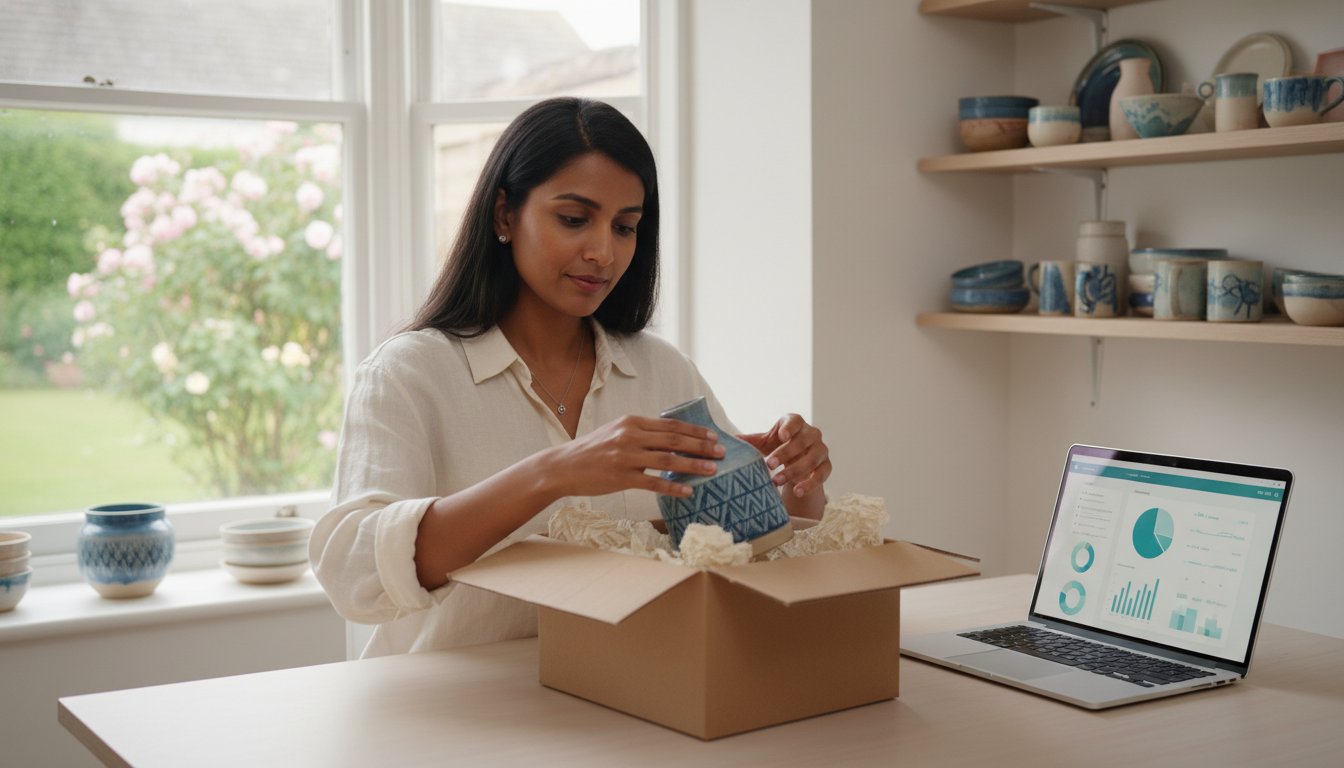
You can earn up to £1,000 from your handmade hobby this year without ever filing a tax return. For the 2026/2027 tax year, this trading allowance is your green light to start a business without the immediate headache of complex HMRC reporting. Learning how to sell handmade products on a uk marketplace isn't just about being creative. It requires a smart, local-first strategy that balances your unique storytelling with strict UK safety regulations. We know it's frustrating to face high shipping costs or feel lost among mass-produced goods. You want a professional online presence and a steady stream of UK customers who value quality over low prices.
In this guide, you'll learn exactly how to transform your craft into a compliant, profitable business. We'll simplify the latest tax thresholds, explain mandatory UKCA and CLP labeling, and compare the best platforms for your specific niche. From managing the £90,000 VAT threshold to choosing the right fee structure for your growth, we've got you covered. You're about to discover how to build a trustworthy brand that stands out in the 2026 creative economy and connects with shoppers who love to support local UK sellers.
Key Takeaways
- Understand the rise of "Conscious British Shopping" and why UK customers are prioritising local, independent makers in 2026.
- Learn how to sell handmade products on a uk marketplace while maintaining full HMRC compliance and navigating the latest side hustle tax regulations.
- Compare fee structures and commissions to find a platform that supports your profit margins without hidden costs.
- Master professional listing techniques, from "Hero Image" photography to SEO, to ensure your items stand out from mass-produced alternatives.
- Discover the benefits of launching on Anglia Market to reach a diverse customer base across multiple popular categories.
The Landscape of the UK Handmade Market in 2026
Understanding how to sell handmade products on a uk marketplace begins with defining what handmade means to the modern shopper. In 2026, UK consumers expect more than just "home-made" items. They seek professional quality, digital transparency, and authentic skill. Buyers want items that tell a story, often rooted in the history of the UK craft movement, but updated for modern aesthetics. Modern handmade goods must balance traditional techniques with commercial durability. It's no longer just a hobby; it's a competitive retail sector where quality is the primary currency.
The rise of "Conscious British Shopping" has transformed the industry. Shoppers are actively moving away from mass-produced, disposable goods. Instead, they prefer supporting independent UK vendors who offer unique, small-batch products. Personalised home decor and sustainable jewellery are currently the top-performing categories. Consumers want to know who made their product and where the materials came from. This shift allows makers to move from casual side-hustlers to professional business owners by leveraging the high demand for British craftsmanship.
Why Local UK Marketplaces are Winning
Local platforms offer distinct advantages that international giants can't match. Shipping is faster and more affordable within the UK. Buyers also appreciate the reduced carbon footprint of domestic deliveries. There's a significant "Trust Factor" involved; shoppers know they're protected by UK consumer laws and can access local customer service. Recent consumer data shows that 70% of UK shoppers now prioritise independent British makers to ensure their money supports the local economy and guarantees product safety standards.
Identifying Your Niche and Target Audience
Success requires a focused approach. High-demand categories like Home and Garden or bespoke Furniture continue to dominate the market. You don't need to appeal to everyone. Instead, use local trends like "Cottagecore" or "Industrial Chic" to inform your designs. This guide explores how to sell handmade products on a uk marketplace by aligning your craft with these high-growth sectors. Define your Unique Selling Point (USP) early. Whether it's using reclaimed Welsh slate or offering 24-hour personalisation, your USP is what makes a customer choose you over a mass-market alternative.
Legal Essentials: HMRC, Insurance, and Safety Standards
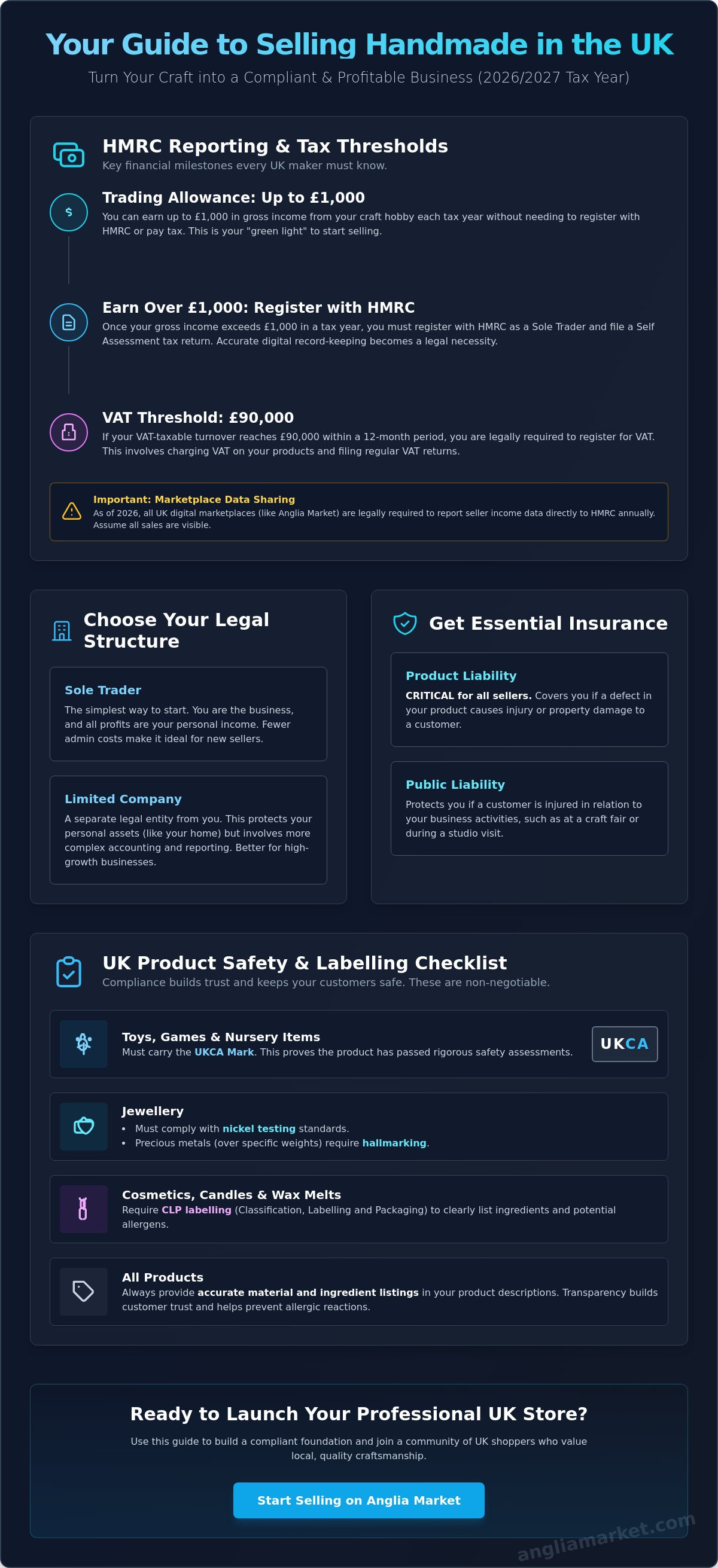
Setting up a professional shop requires more than just a craft kit. To understand how to sell handmade products on a uk marketplace, you must first tackle the legal framework that governs small businesses. Most makers start as a Sole Trader. It's the simplest way to trade and involves fewer administrative costs than a Limited Company. However, if your turnover grows significantly, transitioning to a Limited Company may offer better tax efficiency and protects your personal assets. Beyond your legal structure, insurance is a non-negotiable requirement. Public Liability insurance protects you if a customer is injured at a craft fair or your studio. Product Liability is even more critical for online sellers; it covers you if a defect in your item causes harm or property damage to a buyer.
HMRC Reporting and Tax Obligations
The 2026 tax year brings strict digital reporting rules that every maker must follow. If you earn over £1,000 in gross income from your crafts during the tax year, you must report this to HMRC. This £1,000 Trading Allowance is a helpful buffer for casual sellers, but once you cross it, registration as a Sole Trader is mandatory. It's a common mistake to think HMRC won't notice your sales. In 2026, all UK digital marketplaces are legally required to share seller income data directly with HMRC on an annual basis. Keeping accurate digital records is now a legal necessity. If you're ready to scale your business professionally, you can register as a vendor and start building your brand today.
Product Safety and Labelling in the UK
Compliance ensures your brand stays reputable and your customers stay safe. All items must meet UK product safety regulations to protect consumers from potential hazards. For example, if you sell Toys and Games or nursery items, your products must carry the UKCA mark. This mark proves the item has passed rigorous safety assessments and risk analysis. Jewellery makers must ensure their products pass nickel testing and meet hallmarking requirements for precious metals over specific weights. Accurate material listings are also vital for allergy prevention. Always list every component or ingredient clearly in your product description. This transparency builds trust with shoppers and keeps your business on the right side of the law.
Choosing the Best UK Marketplace for Your Craft
Choosing where to host your storefront is a pivotal commercial decision. While many makers gravitate toward global artisan sites by default, these platforms are often saturated with millions of competing listings. To master how to sell handmade products on a uk marketplace, you must evaluate where your specific inventory will gain the most traction. Before committing to a platform, ensure you Set up a business in the UK to align your legal structure with your growth goals. A smart platform choice balances niche visibility with a broad customer reach.
Niche vs. General Marketplaces
General marketplaces offer a unique discovery advantage. A customer searching for everyday Kitchen and Dining items might find your handcrafted pottery through search suggestions. This cross-pollination exposes your brand to buyers who aren't specifically browsing for gifts but recognise quality when they see it. Platforms that focus on supporting small and medium businesses exclusively provide a curated space where your work isn't overshadowed by cheap, factory-made imports. This environment is ideal for learning how to sell handmade products on a uk marketplace while building a sustainable brand.
Fee Transparency and Profit Margins
Calculating your True Profit involves looking at the total cost of doing business. Some UK-specific sites like Folksy operate on a commission model of 6% plus VAT on the selling price. Anglia Market offers three distinct tiers to support different stages of business growth. The Starter Plan has no monthly fee and a 10% transaction fee for revenue up to £2,500. The Standard Plan costs £19.00 per month with an 8% transaction fee and unlimited product listings. High-volume vendors often choose the Premium Plan at £199.00 per year with a 6% transaction fee. Comparing these models is essential for maintaining healthy margins. A flat commission or a clear subscription fee makes your monthly accounting much more predictable. Look for platforms that offer robust inventory management and direct customer communication tools to ensure your professional online presence remains efficient as you scale.
Mastering the Art of the Listing: Photography and SEO
A clear photo alone won't close the deal in a competitive market. To truly master how to sell handmade products on a uk marketplace, you must adopt a "Hero Image" strategy. This primary photo should capture the tactile nature of your craft. Use close-up shots to show the grain of the wood, the weave of the fabric, or the shimmer of the glaze. In 2026, shoppers expect to feel the product through the screen. Your descriptions must balance artisan storytelling with cold, hard technical specs. Tell the reader about the inspiration behind the piece, then immediately list the exact weight, dimensions, and materials used. This reduces buyer hesitation and prevents unnecessary returns.
SEO is your most powerful tool for visibility. Use local, UK-specific keywords to capture high-intent traffic. Terms like "bespoke," "hand-poured," or "made in Yorkshire" signal authenticity to domestic buyers. These phrases help you stand out against generic, mass-produced imports. If you're just starting, use promotions and sales to trigger the marketplace algorithm. A small introductory discount can generate the initial reviews needed to climb the search rankings. High-ranking listings often lead to a steady stream of organic traffic without extra ad spend.
Visual Storytelling for Makers
Lifestyle photography is essential for the handmade sector. While a white background is good for technical clarity, lifestyle shots show your product in its natural habitat. It helps buyers imagine your ceramics on their dining table or your cushions on their sofa. Recent 2026 marketplace data indicates that listings featuring short "making of" video snippets see a 40% higher engagement rate. These clips prove the item is genuinely handmade and build a deeper connection with the customer. Keep your branding consistent across all photos to build a professional, recognisable storefront.
UK Shipping and Sustainable Packaging
Logistics can make or break your profit margins. Royal Mail remains the standard for small, lightweight parcels, but couriers like Evri and DPD offer better tracking for larger items. According to 2025 retail trend reports, 82% of UK buyers now consider plastic-free packaging a non-negotiable requirement. Use recycled cardboard, honeycomb paper wrap, and paper tape to meet these eco-conscious expectations. Factor these packaging costs into your pricing early. Many successful sellers find that offering "Free UK Delivery" increases conversion rates by 25%, even if the shipping cost is bundled into the item price. It's a simple psychological win that shoppers love.
Ready to put your products in front of thousands of UK shoppers? Open your shop on Anglia Market today and start building your creative business.
Launching Your Store on Anglia Market
Choosing a platform that values independent craftsmanship is the final piece of the puzzle. Anglia Market provides a streamlined environment designed for UK-based small and medium businesses. This platform isn't just for one specific niche. Instead, it offers a diverse retail ecosystem where your handmade goods are presented alongside high-demand categories. A customer browsing for Electronics or Pet Supplies can easily discover your artisan products through integrated search and category cross-pollination. This exposure is vital for consistent growth in 2026. Understanding how to sell handmade products on a uk marketplace means leveraging these broad audiences to find customers you might otherwise miss.
Repeat business is the backbone of any successful brand. The Anglia Market Loyalty Program encourages shoppers to return by rewarding their purchases. This built-in incentive helps you build a loyal customer base without the need to manage your own complex reward system. You can start selling online in three simple steps. First, register your account. Second, set up your vendor profile. Third, list your products. It's an efficient way to test the market and scale your operations as your revenue increases. The Starter Plan allows you to list up to 25 products for free, making it a low-risk entry point for new makers.
Support for Small British Businesses
You don't have to manage your shop alone. Dedicated vendor support is available through the Freshdesk portal to help with technical queries or account management. The platform is built to prioritise quality and independent craftsmanship over mass-produced imports. Getting started is fast; adding your profile to the marketplace takes only a few minutes and provides an immediate professional presence for your brand. This support ensures you can focus on your craft while we handle the technical infrastructure.
Scaling Your Handmade Brand
Growth requires active participation in the marketplace community. You can join site-wide sales to clear seasonal stock or boost visibility during peak shopping periods. These events drive massive traffic and help you reach customers who are specifically looking for high-quality deals. Integration with social media platforms like Facebook, Instagram, and Pinterest allows you to sync your marketing efforts and drive external traffic directly to your shop. By combining artisan storytelling with the commercial tools provided here, you'll learn how to sell handmade products on a uk marketplace with professional results. Apply to become an Anglia Market vendor today and join a fast-growing community of successful British makers.
Scale Your Creative Business Today
Success in 2026 requires more than just artistic talent. It demands a firm grasp of UK safety standards and the latest HMRC digital reporting rules for income over £1,000. By combining high-quality "Hero" photography with local SEO strategies, you can effectively reach shoppers who prioritise independent British makers. You now have the roadmap for how to sell handmade products on a uk marketplace with confidence and professional clarity.
Anglia Market currently supports over 1,000 independent UK vendors by providing secure UK-based payment processing and a platform that significantly reduces the technical barrier for SMEs. Whether you're clearing seasonal stock or launching a brand-new collection, our infrastructure is built to facilitate your growth. It's time to turn your passion into a sustainable commercial venture. Join the UK’s Fastest-Growing Marketplace for Independent Makers and start reaching new customers today. Your craft deserves a reliable home that values quality as much as you do.
Frequently Asked Questions
Do I need a business bank account to sell handmade crafts in the UK?
You don't legally require a business bank account if you operate as a sole trader. However, keeping your personal and business transactions separate makes your annual tax accounting much simpler. If you decide to register as a Limited Company, a business account becomes a legal requirement. Most UK high street banks offer free business banking for the first 12 to 18 months for new startups.
How much does it cost to start selling on a UK marketplace?
Startup costs vary depending on the platform's fee structure and your product type. Some UK sites charge a small per-listing fee of approximately £0.15 to £0.20, while others offer free starter plans with no monthly costs. Beyond platform fees, you should budget for raw materials and sustainable packaging. Many successful makers launch their initial collection with a total investment of less than £200 to test the market.
What is the "Trading Allowance" and how does it affect my taxes?
The Trading Allowance is a £1,000 tax-free buffer for casual income. It allows you to earn up to £1,000 in gross revenue each tax year without paying tax or registering with HMRC. This is a helpful starting point for those learning how to sell handmade products on a uk marketplace as a side hustle. Once your total sales exceed this threshold, you must register as a sole trader and file a Self Assessment tax return.
Do I need insurance to sell handmade items from my home?
Yes, you should obtain Public Liability and Product Liability insurance even when working from your kitchen table. Your standard home insurance policy usually won't cover business activities or claims related to products you've manufactured. Product Liability is especially vital; it protects you if a customer claims your item caused injury or property damage. Specialized craft insurance policies often cost less than £100 per year for basic coverage.
How do I handle returns and refunds as an independent maker?
UK Consumer Contracts Regulations require you to offer a 14-day "cooling-off" period for most online sales. Customers can return items for any reason within this window, though you can exempt personalised or perishable goods. You must clearly state your returns policy in your shop's terms and conditions. Providing a professional and efficient refund process helps build long-term trust and encourages positive customer reviews for your brand.
What are the most popular handmade items to sell in the UK right now?
Sustainable jewellery and personalised home accessories currently lead the market. Shoppers are also searching for eco-friendly pet supplies and bespoke textiles that follow 2026 "Cottagecore" trends. Items that use recycled materials or offer custom engraving see the highest conversion rates this year. Focus on niche products that solve a specific gift-giving problem to stand out from mass-produced alternatives found on larger sites.
Do I have to register for VAT if I sell handmade products?
You only need to register for VAT if your annual turnover hits the current £90,000 threshold. Most small handmade businesses stay well below this limit in their initial years. If you expect your sales to grow rapidly, keep a close eye on your rolling 12-month turnover to ensure compliance. You can also choose to register voluntarily if you want to reclaim VAT on your business expenses and raw materials.
How can I protect my original designs from being copied?
Your original designs are automatically protected in the UK by unregistered design rights and copyright law. For stronger protection, you can register your designs with the Intellectual Property Office (IPO) for a small fee. This provides you with clear legal recourse if another seller copies your work. It's also wise to trademark your brand name to prevent other vendors from trading under a similar or confusingly similar identity.
Here to help — ask anything
If you have any questions regarding this disclaimer or any of our policies, please contact Anglia Market through the contact page on our website, by email using the address provided on the site, or by phone at 0333 772 2593