
Did you know the UK's second-hand fashion market is now valued at over £7 billion? With a huge percentage of younger consumers choosing pre-owned items, there's never been a better time to launch your own shop. If you're ready to turn your eye for style into a business, this how to sell vintage clothing online uk guide is your essential starting point. Success in this market requires more than just a good eye. It takes a solid plan to handle the practical side of e-commerce.
You likely already realize that sourcing high-quality stock consistently is a major challenge. It's equally frustrating to watch platform commissions eat into your margins or to feel confused by UK tax rules. We'll help you master the art of sourcing, pricing, and shipping to build a profitable UK-based online business. You'll learn exactly which platforms offer the best value for your niche, from fee-free options to high-traffic local marketplaces. This article provides a clear step-by-step launch plan, covers essential consumer laws, and reveals the pricing strategies used by top-performing independent sellers.
Key Takeaways
- Identify profitable inventory by applying the 20-year rule and distinguishing between vintage, retro, and antique categories.
- Discover how to source high-quality stock beyond charity shops through UK kilo sales, wholesalers, and early-morning car boot finds.
- Follow this how to sell vintage clothing online uk guide to master product photography and lighting techniques that drive sales.
- Understand your legal obligations under the UK Consumer Rights Act 2015 to manage returns and distance selling effectively.
- Compare domestic shipping carriers and marketplace options to find the best balance of local visibility and low logistics costs.
What is Vintage? Understanding the UK Fashion Resale Market
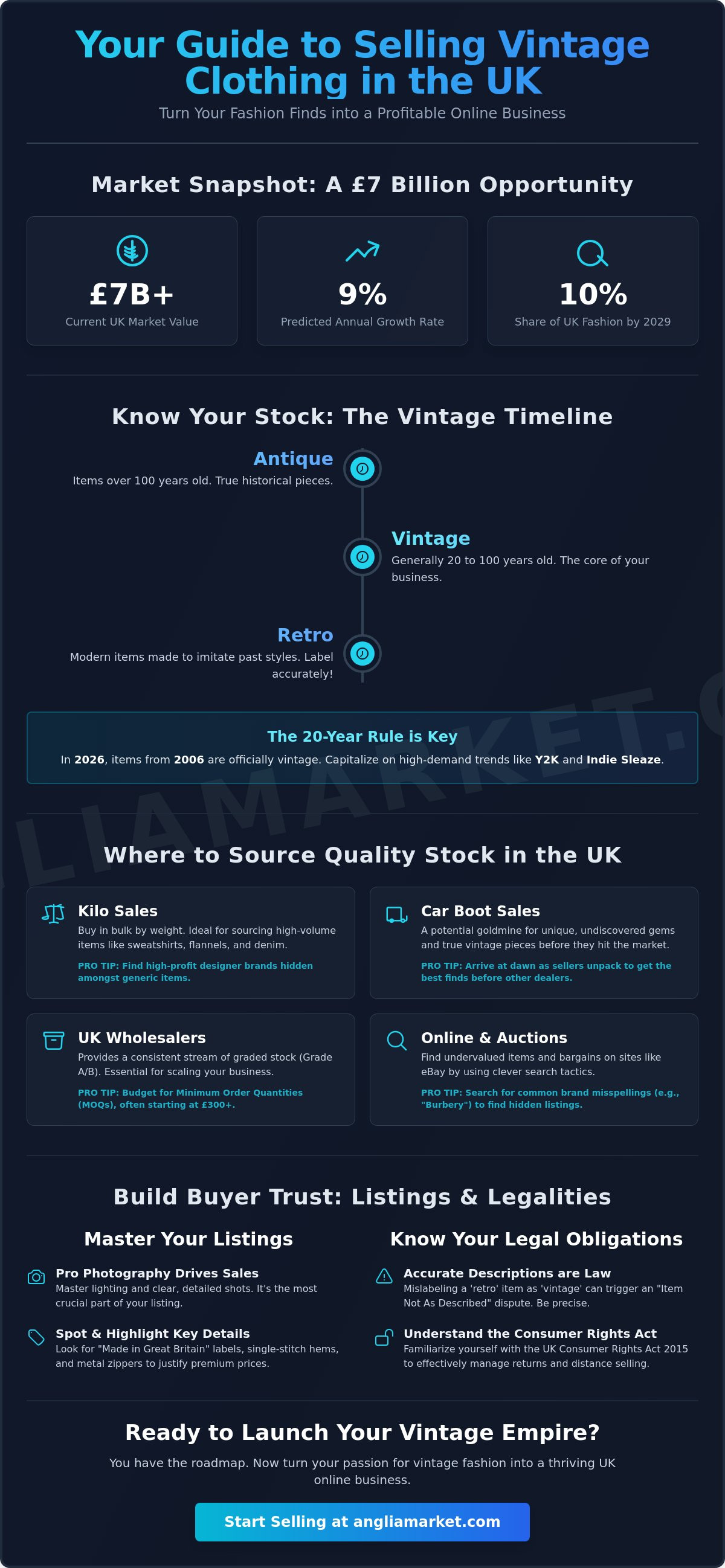
In 2026, the definition of "vintage" has taken a sharp turn. The industry standard 20-year rule means that items from 2006 are now officially vintage. This shift is crucial for anyone using a how to sell vintage clothing online uk guide to build a successful business. Gen Z shoppers are currently hunting for mid-2000s "indie sleaze" and Y2K aesthetic pieces. If you're clearing out a wardrobe from two decades ago, you aren't just selling old clothes; you're selling high-demand vintage inventory.
To maintain buyer trust, you must categorize your inventory with precision. What is Vintage Clothing? Generally, it refers to items between 20 and 100 years old. Anything over a century old is "antique." Meanwhile, "retro" refers to modern garments designed to mimic styles from the past. Mislabeling a modern reproduction as vintage is the fastest way to trigger an "Item Not As Described" dispute. UK buyers are savvy; they expect accuracy. Use clear definitions in your titles to ensure your listings appear in the right search results and stay protected under UK consumer laws.
Identifying "True Vintage" requires a keen eye for manufacturing details. Look for "Made in Great Britain" labels, which are increasingly rare in modern fast fashion. Inspect the stitching; single-stitch hems on t-shirts usually indicate a pre-1990s origin. Check the hardware too. Metal zippers, side-seam openings, and union labels are all hallmarks of authentic older pieces. These small details justify higher price points and help you stand out on a competitive online marketplace.
The 2026 Vintage Timeline
Your inventory strategy should cover several key eras to maximize reach. While 1940s utility wear and 1970s bohemian styles have dedicated collectors, mid-century fashion remains a highly profitable niche in the UK. Items from the 1950s and 60s often command premium prices due to their superior construction. When listing, use era-specific keywords like "Mod," "Rockabilly," or "Y2K Grunge" to attract high-intent British buyers who know exactly what they want.
Why Sell Vintage Online in the UK Now?
The UK resale sector is currently booming, with a predicted annual growth rate of 9%. Experts suggest second-hand items will account for 10% of total UK fashion spending by 2029. This growth is driven by a massive shift toward the circular economy. British consumers are actively choosing sustainable alternatives to fast fashion. By launching your shop now, you're entering a market where buyers value ethical shopping as much as the style itself. Positioning your brand as a facilitator of sustainable fashion is a powerful way to build long-term customer loyalty.
Sourcing Inventory: Where to Find Quality Vintage in the UK
While many beginners start in local charity shops, rising prices and increased competition make it hard to maintain margins. To scale your business, you need to look where the pros look. Kilo sales have become a staple for UK sellers. These events allow you to buy bulk quantities at a fixed price per kilogram. This method is ideal for sourcing high-volume items like sweatshirts, flannels, or denim. You pay for the weight, not the brand, which often leads to high-profit discoveries.
Car boot sales remain a goldmine for those willing to wake up at dawn. Arriving as sellers unpack is the only way to find hidden gems before other professional dealers sweep the field. For online sourcing, use tools to find misspelled listings on auction sites. Searching for "Lievs" instead of "Levis" or "Burbery" instead of "Burberry" can lead to incredible bargains because fewer bidders see the item. These neglected listings are perfect for flipping once you've photographed them correctly.
House clearances and estate sales offer a direct way to source true antique pieces. These often yield high-quality garments that haven't been through the retail mill. Always approach these sales with a professional manner; you are often dealing with families clearing out a lifetime of belongings. If you've secured your first batch of inventory and are ready to reach a wider audience, you can start selling on a professional marketplace to turn that stock into cash.
Building Relationships with UK Wholesalers
Professional sourcing often means working with dedicated UK wholesalers. Most offer "Grade A" stock, which is ready for resale with minimal cleaning, or "Grade B," which may have small marks or require minor repairs. Grade B is cheaper but demands more labor. Be mindful of Minimum Order Quantities (MOQs). Many wholesalers require a spend of £300 or more, so budget accordingly for your initial launch. Finding a reliable supplier ensures you have a consistent stream of inventory.
Developing a Curation Strategy
A niche store consistently outperforms a generalist one. Focusing on a specific era, like 90s sportswear or 70s psych-rock styles, helps you build a loyal following. Use British street style and social media trends to predict which silhouettes will dominate next season. Always implement a strict quality control checklist. Inspect zips, seams, and fabric integrity before purchasing. A single broken zipper can turn a "Grade A" find into a loss. This how to sell vintage clothing online uk guide emphasizes that your reputation depends on the physical condition of every garment you ship.
Mastering Product Listings: Photography and Descriptions
High-quality visuals are your digital shop window. While some guides suggest using a plain white background for every item, vintage buyers often respond better to lifestyle shots that tell a story. This approach bridges the gap between a simple product and a curated fashion piece. You must decide between a flat lay, mannequin, or live model. Flat lays are efficient for basics like t-shirts; however, using a model helps buyers visualize the "vibe" and fit of more complex garments. This how to sell vintage clothing online uk guide recommends a mix: use a model for your hero shot and flat lays for technical details.
Lighting is your biggest challenge in the UK. Avoid using standard yellow indoor bulbs, as they distort fabric colours and hide textures. Instead, set up your studio near a large north-facing window. Indirect natural light provides the most accurate colour representation. If the British weather isn't cooperating, invest in a simple softbox kit. Accurate colour is essential to prevent "Item Not As Described" returns, which can damage your seller rating on any professional marketplace.
Transparency is a powerful sales tool. In the vintage world, a small pinhole or a faded hem isn't necessarily a dealbreaker. It's part of the item's history. However, failing to disclose these flaws will lead to disputes. Document every stain, pull, or missing button clearly. Buyers appreciate honesty and are more likely to trust a seller who highlights imperfections alongside the garment's beauty.
The Perfect Vintage Photo Suite
Every listing needs at least four essential shots: a full front view, a full back view, a clear photo of the brand label, and a close-up of the fabric or specific flaws. Label photos are vital for verifying the era and brand authenticity discussed in previous sections. Add a five-second video snippet to show how the fabric moves and drapes. Use simple apps like Snapseed to brighten your images, but don't over-saturate them. Your goal is a clean, professional look that represents the item exactly as it appears in person.
Writing Descriptions that Sell
Optimise your descriptions by including the brand, era, material, and condition in the first two sentences. Use storytelling to help the buyer imagine wearing the piece; describe it as "perfect for a summer festival" or "classic 80s power dressing." Sizing is the most critical part of the text. Vintage sizes are significantly smaller than modern UK standards. A 1970s size 14 might fit like a modern size 10. Always provide a clear sizing chart with pit-to-pit, waist, and length measurements in inches to ensure a perfect fit every time.
Shipping, Returns, and UK Consumer Regulations
Securing a sale is only half the battle. Efficient fulfillment and legal compliance are what turn a hobby into a sustainable business. Under the UK Consumer Contracts Regulations, online buyers have a 14-day "cooling-off" period. This means they can cancel their order for any reason within 14 days of receipt. You must also refund the original outbound shipping cost at your standard rate. Managing these expectations early prevents negative feedback and protects your seller reputation on any how to sell vintage clothing online uk guide path you follow.
Choosing the right carrier depends on your item's value and weight. Royal Mail is often the most reliable choice for "Large Letter" items like thin t-shirts or silk scarves. For bulkier items like heavy denim or coats, Evri provides competitive pricing and convenient drop-off points. If you are selling high-end designer vintage, DPD offers superior tracking and insurance options. Always compare rates for small parcels to ensure you aren't overcharging customers or losing money on postage.
The vintage community expects eco-friendly practices. Avoid single-use plastic mailers. Instead, use recycled cardboard boxes or compostable mailing bags. This small detail aligns with the sustainable values of second-hand shoppers. If you are ready to scale your logistics and reach more British buyers, you can apply to become a vendor and start listing your curated collection today.
Logistics and Fulfillment
Weight and size limits are strict in the UK. A few extra grams can move your package from a "Small Parcel" to a "Medium Parcel," significantly increasing your costs. Invest in a digital scale to avoid surcharges at the Post Office. International shipping can expand your market, but be prepared for customs paperwork and potential delays. Most successful sellers batch their shipments, heading to the drop-off point twice a week to save on fuel and time.
Legal Compliance for UK Sellers
HMRC allows a £1,000 tax-free Trading Allowance per year. Once your gross income from selling vintage clothing exceeds this threshold, you must register as a Sole Trader for Self Assessment. Keeping digital receipts of your sourcing costs and shipping fees is essential for accurate reporting. You must also handle customer data according to UK GDPR rules; never use buyer addresses for anything other than fulfillment without explicit consent. Finally, consider basic business insurance to protect your inventory from transit damage or theft.
Selecting the Right Marketplace for Your UK Vintage Business
Choosing your platform is the final step in this how to sell vintage clothing online uk guide. While massive global shopping sites offer huge reach, they often come with high commissions and intense competition from international drop-shippers. This can make it difficult for small UK-based sellers to stand out among millions of listings. Local marketplaces provide a better balance. They focus on regional commerce, which reduces shipping friction and builds a stronger connection between you and your customers. British buyers often prefer supporting local independent businesses, especially when looking for unique fashion that doesn't require complex overseas logistics.
Focusing on a UK-centric platform allows you to tap into a high-intent audience without fighting against mass-produced goods. You gain visibility among shoppers who specifically value the curation and quality of vintage pieces found within the UK. This environment is perfect for scaling from a weekend hobbyist to a professional vendor. Transitioning to a dedicated marketplace helps you move away from the "garage sale" feel of social media groups toward a professional e-commerce presence. You'll find that a targeted audience is much more likely to appreciate the construction details and era-specific value you've worked hard to document.
Why Anglia Market is the Ideal Choice for UK SMEs
Anglia Market is built to empower small and medium-sized enterprises. Unlike larger sites where your listings might get buried under thousands of generic items, this platform prioritises local independent businesses. This focus on regional commerce means you're reaching a UK-based customer base that is actively looking for one-of-a-kind items. You won't have to compete with international sellers who often flood larger marketplaces with modern reproductions. It's a cleaner, more professional space for authentic vintage fashion where your curation is the star of the show. Ready to start? You can learn how to sell online with Anglia Market to get your storefront live today.
Maximising Your Marketplace Success
Once your shop is live, you need the right instruments to grow your brand. Utilising vendor tools allows you to manage your inventory, track your sales, and communicate with buyers efficiently. To boost your visibility during peak shopping periods, consider driving traffic through promotions and sales. This creates a sense of excitement and urgency for buyers who are on the fence. Finally, never underestimate the power of social proof. Building trust through customer testimonials helps new visitors feel confident in their purchase. Positive feedback from fellow UK shoppers is your most valuable marketing tool.
Build Your UK Vintage Empire Today
Success in the second-hand market isn't just about finding the right pieces; it's about building a reliable, professional brand. You've learned how to identify authentic eras, source stock from UK wholesalers, and navigate the essentials of consumer law. Following this how to sell vintage clothing online uk guide gives you the foundation to turn a passion for fashion into a professional enterprise while staying compliant with HMRC and distance selling regulations. Precise photography and accurate measurements will further reduce your return rates and build long-term buyer trust.
Now it's time to put these strategies into action. Choosing a platform that prioritises local independent commerce is the fastest way to gain visibility without getting lost in a global sea of mass-produced goods. We offer a community-focused marketplace with a transparent fee structure and dedicated support for UK independent sellers. This ensures you keep more of your profits while reaching a high-intent audience looking for sustainable style. You don't need a massive warehouse to start; you just need a curated collection and the right platform.
Ready to launch your storefront? Join Anglia Market as a Vendor and Start Selling Today. The UK fashion resale market is growing every year, and there's never been a better time to start your journey.
Frequently Asked Questions
Do I need to pay tax on selling vintage clothes online in the UK?
You only need to register for Self Assessment with HMRC if your gross income from selling exceeds the £1,000 annual Trading Allowance. If you earn less than this amount in a single tax year, your profits are generally tax-free. However, once you pass this threshold, you must track every sale and expense to report your earnings accurately. Keeping digital records of your postage costs and sourcing receipts will make the January filing process much smoother.
What is the best way to clean vintage clothes before selling?
Hand washing with a gentle, pH-neutral detergent is the safest method for most older garments. Avoid using a standard washing machine for delicate items from the 1970s or earlier, as the agitation can tear weakened fibres. Steaming is an excellent alternative to kill bacteria and remove odours without risking water damage or colour bleeding. For heavy wool coats or structured silk pieces, professional dry cleaning is often worth the investment to maintain the item's value.
How do I price vintage items to ensure a profit after fees?
Start by adding your sourcing cost to your estimated shipping and packaging expenses. You must then factor in platform-specific transaction fees and payment processing charges. A common strategy is to research sold listings for similar items to find the current market ceiling. This how to sell vintage clothing online uk guide recommends leaving a 20% buffer for unexpected costs or promotional discounts to ensure your business remains sustainable over the long term.
Can I sell vintage clothes if I don't have the original brand labels?
You can definitely sell unlabelled items by focusing your description on the garment's construction, fabric, and silhouette. Many high-quality vintage pieces were handmade or had their labels removed for comfort over the decades. Use details like side-seam metal zippers or single-stitch hems to help buyers identify the era. Transparency is key; clearly state that the label is missing to prevent any disputes regarding the item's authenticity or heritage.
What are the most popular vintage eras to sell in 2026?
Early 2000s Y2K trends and 2006 indie sleaze aesthetics are currently the highest-demand categories among UK Gen Z buyers. 90s oversized sportswear and 70s bohemian crochet pieces also remain consistent top-sellers. While newer vintage moves quickly, mid-century items from the 1950s often command the highest price points from dedicated collectors. Keeping an eye on British street style trends will help you decide which specific silhouettes to prioritise when sourcing new stock.
How do I handle returns if the vintage item doesn't fit the buyer?
Under the UK Consumer Contracts Regulations, you must provide a 14-day window for buyers to cancel and return their order. You're required to refund the original outbound shipping cost, but the buyer typically pays for the return postage unless the item is faulty. To minimise these instances, always include precise pit-to-pit and waist measurements in your listings. Modern UK sizing varies wildly from vintage standards, so numbers on the tag are often misleading for today's shoppers.
Is it better to sell on a dedicated vintage site or a general marketplace?
General marketplaces offer a massive audience, but they often come with higher competition and noise from mass-produced goods. Dedicated UK marketplaces are often better for independent sellers because they attract high-intent buyers looking specifically for unique, sustainable fashion. Selling on a platform that supports regional commerce reduces shipping friction and builds a more loyal local customer base. This focused approach often leads to higher conversion rates than listing on giant, overcrowded global sites.
How much does it cost to start a vintage clothing business in the UK?
You can launch a small shop with an initial budget of £50 to £150 by sourcing individual items from car boot sales or local markets. This allows you to test the market without significant financial risk. As you scale, you might need a larger budget to meet the minimum order quantities required by professional vintage wholesalers. Remember to budget for basic supplies like a digital scale, eco-friendly mailing bags, and a handheld steamer to ensure your items arrive in top condition. This how to sell vintage clothing online uk guide suggests starting small and reinvesting your profits into better stock.

Here to help — ask anything
If you have any questions regarding this disclaimer or any of our policies, please contact Anglia Market through the contact page on our website, by email using the address provided on the site, or by phone at 0333 772 2593