
Did you know that 89% of shoppers surveyed by Wyzowl in 2024 said watching a video convinced them to buy a product? For many UK independent sellers, the idea of video marketing for product-based businesses feels like an expensive hurdle. You likely feel that without a £2,000 camera or a professional studio, your content won't look premium enough to compete. It's frustrating to see competitors gain traction on social media while you're still stuck wondering which ring light to buy or how to edit a simple clip.
You don't need a Hollywood budget to see the 80% boost in conversions that industry experts often associate with video content. This guide gives you a practical framework to create high-converting videos using only your smartphone and natural light. We'll show you exactly which video styles work best for physical goods and which platforms to focus on in 2026 to ensure your small business builds trust and drives sales.
Key Takeaways
- Understand why moving imagery is vital for bridging the gap between digital browsing and physical ownership for UK consumers in 2026.
- Master the essential framework of video marketing for product-based businesses to create demos and unboxing content that builds immediate trust.
- Build a professional in-house studio on a budget using your current smartphone and affordable £ lighting setups for high-quality results.
- Learn the "hook, meat, and CTA" structure to ensure every short-form video captures attention and drives viewers toward a purchase.
- Discover how to effectively distribute your content across social media and your Anglia Market vendor profile to maximise your reach and sales.
Why Video Marketing is Vital for Physical Product Brands
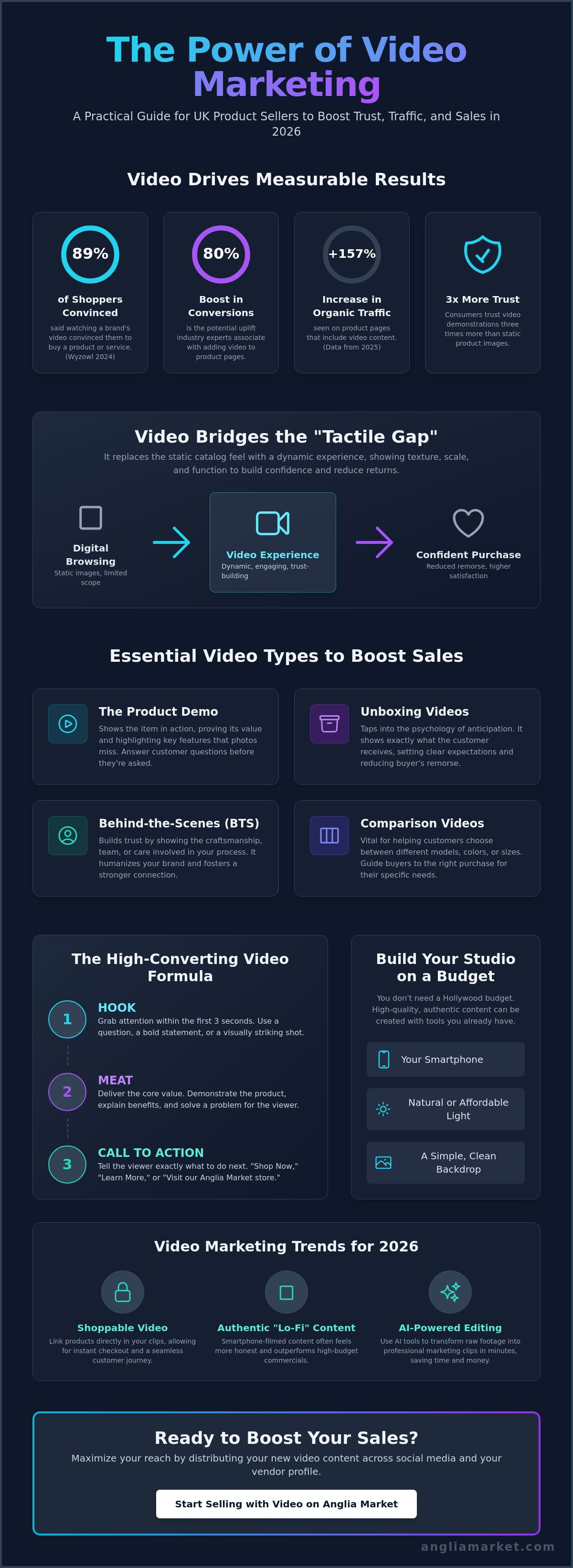
Video marketing for product-based businesses uses moving imagery to bridge the gap between digital browsing and physical ownership. It replaces the static catalog feel with a dynamic, interactive experience. By 2026, over 80% of all internet traffic consists of video content. This shift means shoppers expect to see how a product moves, sounds, and functions before they spend any money. It's no longer just an optional extra; it's a core requirement for commercial success.
Understanding What is Content Marketing? is essential here, as video has become the most persuasive tool in any digital strategy. Consumers in 2026 trust video demonstrations 3x more than static images. This trust stems from seeing a real person handle the item, which proves the product isn't just a clever digital render. It provides a level of transparency that photos simply cannot match.
To better understand why this medium is so effective, watch this helpful video:
Video solves the tactile gap by highlighting texture, scale, and functionality. High-definition close-ups show the grain of wood or the specific weave of a fabric. Algorithms on major search engines and marketplaces now prioritise listings that include video content. Data from 2025 shows that product pages with video see a 157% increase in organic traffic. If you want your products to appear at the top of search results, video is the most efficient way to get there.
The Psychology of the Digital Showroom
Video reduces buyer's remorse by providing a realistic expectation of the product. It moves beyond clinical shots to lifestyle storytelling, which helps build an emotional connection. Seeing a product used in a real UK home helps the shopper visualise it in their own space. Tactile video is a tool for building consumer confidence by focusing on sensory details like texture and weight through visual cues. This clarity leads to fewer returns and higher customer satisfaction scores.
Video Marketing Trends for SMEs in 2026
Shoppable video is now a standard feature for social commerce. Small businesses can link products directly within a 15-second clip, allowing for an instant checkout. Authentic, "lo-fi" content filmed on a smartphone often outperforms high-budget commercials because it feels more honest. AI tools have also changed the game for independent vendors. Busy business owners now use AI-driven software to edit raw footage into professional marketing clips in under five minutes, making high-quality production affordable for everyone.
Essential Types of Product Videos to Boost Sales
Video content is no longer a luxury for UK retailers; it's a tool to close sales. A report from Wyzowl in 2024 found that 89% of consumers want to see more videos from brands. When planning video marketing for product-based businesses, start with the most functional formats. High-quality visuals remove the guesswork for shoppers who can't physically touch your stock.
- The Product Demo: This shows the item in action. It proves the value proposition by highlighting features that photos might miss. If you're selling a waterproof jacket, show the water beads rolling off the fabric in real-time.
- Unboxing Videos: These tap into the psychology of anticipation. They show exactly what arrives in the post, from the outer packaging to the inner protective layers. This transparency reduces "buyer's remorse" and sets clear expectations.
- Behind-the-Scenes (BTS): Build trust by showing the team or the craftsmanship involved. Highlighting UK-based production or the care taken in a warehouse helps humanise your brand.
- Comparison Videos: These are vital for helping customers choose between different models, colours, or sizes. It's a practical way to guide a buyer toward the right purchase for their specific needs.
A successful video marketing strategy focuses on answering customer questions before they're asked. This approach reduces the burden on your support team and speeds up the transaction process.
Educational and 'How-To' Content
Instructional videos add massive value after the sale. For example, creating assembly guides for complex items like furniture ensures the customer has a positive experience from day one. You can also produce maintenance and care videos to help increase the lifespan of the product. This proactive support builds long-term loyalty. If you notice the same questions appearing in your inbox, record a 30-second video response to post on your product pages.
Social Proof and Testimonial Videos
Effective video marketing for product-based businesses relies on being helpful rather than just flashy. Nothing is more convincing than seeing a real person use a product in a non-studio environment. Encourage your customers to send in their own user-generated content (UGC) by offering entry into a monthly prize draw. Seeing a kitchen gadget used in a real home carries more weight than a polished advert. For maximum impact, link these video reviews directly to your testimonials page to provide immediate proof of quality.
Building Your In-House Product Video Studio on a Budget
In 2026, high-quality video content is accessible to every small business owner with a smartphone. Modern mobile devices now feature 1-inch sensors and advanced AI processing that captures 4K footage at 60fps. This technology makes expensive DSLRs unnecessary for most social media platforms. You don't need a massive budget to start video marketing for product-based businesses; you need a smart, repeatable setup. Lighting defines the professional finish of your content. Use the three-point rule to create depth. This involves a key light as your main source, a fill light to soften shadows, and a back light to separate the product from the background. Affordable LED panels costing under £50 provide adjustable colour temperatures and brightness. If you're on a strict budget, position your filming station 45 degrees from a north-facing window for soft, natural light that doesn't create harsh glares. Audio quality is non-negotiable for viewer retention. While audiences might tolerate slightly grainy video, they'll click away from distorted sound instantly. A £30 clip-on lavalier microphone offers better clarity than a £1000 lens used with internal camera mics. Understanding the benefits of video marketing starts with clear communication. If your customers can't hear your product's features, they won't buy.The Essential SME Video Kit List
A steady shot is vital for showcasing electronics and intricate details. Invest in a £25 smartphone tripod with a fluid head for smooth panning motions. For backdrops, 1.35m rolls of seamless paper cost roughly £35 and provide a clean, high-end look. Use mobile apps like CapCut or Adobe Premiere Rush. These tools offer desktop-level editing features with a touch interface, allowing you to cut and export videos in minutes.Setting Up Your Space for Success
A Step-by-Step Guide to Filming High-Converting Product Content
High-quality video marketing for product-based businesses doesn't require a Hollywood budget or a massive production crew. In 2026, success relies on authenticity, clarity, and speed. Every 15-second clip needs a rigid "hook, meat, and CTA" structure to be effective. You have roughly 1.7 seconds to stop a user from scrolling on mobile before they move to the next post. If you don't grab them immediately, the rest of your content won't matter.
Before hitting record, prepare your product for its close-up. A single fingerprint or a stray piece of dust looks massive on a 4K smartphone screen. Polish glassware, steam fabrics, and wipe down surfaces. Use "B-roll" footage, which consists of supplementary shots showing the product from different angles or in use, to keep the viewer's eyes moving. Static shots are boring; movement creates energy and keeps people watching for longer.
Scripting for Sales, Not Just Views
Focus on benefits rather than just features. A feature is "this pan is non-stick." A benefit is "this pan saves you 10 minutes of cleaning every night." By 2026, the average attention span for social ads has dropped significantly, making the "3-second hook" rule more important than ever. Your script should solve a problem in the first few frames.
- 0-3s (The Hook): [Visual: Slicing a soft tomato perfectly thin] Audio: "Stop struggling with dull knives that squash your food."
- 3-20s (The Meat): [Visual: Close-up of the ergonomic handle, then dicing onions quickly] Audio: "Our carbon-steel blade stays sharp for 12 months. It's perfectly balanced for comfort, so your hand won't ache during Sunday roast prep."
- 20-30s (The CTA): [Visual: Knife placed in a stylish block] Audio: "Upgrade your kitchen today. Shop the full range at Anglia Market."
You can find similar high-quality tools in our kitchen and dining section to use as inspiration for your own demonstrations.
Editing Techniques for a Professional Finish
Colour correction is a vital step that many small businesses skip. If your product arrives and the shade doesn't match the video, return rates will spike. Ensure your lighting is neutral and your editing software reflects the true colour of the item. Since 75% of mobile users watch video with the sound off, according to recent mobile consumption reports, use bold on-screen text to highlight key USPs.
Finish your edit with royalty-free music that aligns with your brand voice. A fast-paced, upbeat track works for fitness gear, while a calm, acoustic melody suits home decor. Always tell the viewer exactly where to go next. Direct them to your latest promotions to encourage an immediate purchase and boost your conversion rates.
Distributing Your Video Content: From Social Media to Marketplaces
Creating high-quality content is only half the battle. To see a real return on investment, you need a distribution strategy that puts your products in front of ready-to-buy customers. In 2026, video marketing for product-based businesses relies on a mix of social discovery and marketplace optimization. Platforms like TikTok and Instagram Reels remain essential for reaching new audiences through viral trends. However, Pinterest V-Pins have become a secret weapon for UK sellers. These video pins stay searchable for months, unlike the short lifespan of a standard social post, making them ideal for long-term traffic.
Your email list is another high-conversion channel that benefits from motion. Data from industry reports shows that including the word "Video" in a subject line can boost open rates by 19%. Rather than embedding a heavy video file that might trigger spam filters, use a high-quality GIF of your product in action. Link this directly to your landing page to move customers from their inbox to your checkout. Success in this area is measured by more than just views. You should track click-through rates and direct sales to understand which platforms actually grow your bottom line.
Maximising Your Reach on Anglia Market
Your Anglia Market vendor profile serves as your digital storefront. Adding video to your product listings can increase conversion rates by up to 80% because it removes the guesswork for the shopper. Use these videos within your promotions to create a sense of excitement during seasonal sales. Clear, demonstrative content also helps you recruit more customers into your loyalty programme. When shoppers see the quality of your items through video, they are more likely to sign up for long-term rewards and repeat purchases.
Repurposing One Video for Multiple Channels
Small business owners don't have time to film new content every day. Efficiency is the key to consistent video marketing for product-based businesses. You can turn a single three-minute YouTube tutorial into five or six short-form clips for social media. This approach ensures you have a library of content without constant filming sessions. Consider these tips for better repurposing:
- Extract high-res stills: Use frames from your 4K video as professional product photography for your static ad campaigns.
- Create a content calendar: Schedule your repurposed clips two weeks in advance to maintain visibility without burning out.
- Adjust for platform specs: Ensure your vertical clips for TikTok don't have vital information cut off by the app's interface.
By treating every video as a multi-use asset, you save on production costs while keeping your brand present across all major UK digital touchpoints. This systematic approach ensures your products remain visible to the right people at the right time.
Ready to Scale Your Sales in 2026?
Success in the digital marketplace requires a fast-paced approach to content. By 2026, Cisco's Annual Internet Report suggests video will account for over 80% of all consumer internet traffic. Mastering video marketing for product-based businesses isn't just a trend; it's a vital tool for survival. You've seen how building an affordable in-house studio and filming punchy product demos can increase conversion rates. Authenticity is your biggest asset when building trust with a modern audience.
Once your content is ready, you need a platform that supports your growth. Anglia Market supports UK-based small and medium businesses by providing secure shopping for thousands of daily customers. Vendors receive comprehensive support and profile customisation to help their brand shine. It's time to put your strategy into action and reach more buyers across the UK.
Start selling your products on Anglia Market and grow your business today!
We're excited to see your business reach its full potential and thrive in the year ahead.
Frequently Asked Questions
Do I need a professional camera to start video marketing for my business?
No, you don't need a professional camera to get started today. Modern smartphones like the iPhone 15 or Samsung S24 capture high-quality 4K footage that's perfect for social media. 85% of UK consumers prefer "authentic" content over highly polished studio productions. Focus on natural lighting and a steady hand rather than spending thousands on expensive gear.
How long should a product marketing video be in 2026?
Aim for 15 to 60 seconds for social media and 2 to 3 minutes for your main website pages. Data from 2025 shows that 60% of viewers drop off after the first 30 seconds of a promotional clip. You must capture attention within the first 3 seconds to keep your audience engaged. Short, punchy videos work best for driving quick sales and maintaining interest.
What is the best way to record high-quality audio on a budget?
Buy a simple clip-on lavalier microphone for your smartphone, which usually costs between £20 and £40. Audio quality is actually more important than video resolution for keeping viewers. 35% of shoppers will stop watching if the sound is muffled or quiet. Record in a room with rugs or curtains to stop echoes and keep the microphone close to your mouth.
Can I use video marketing if I sell very simple or 'boring' products?
Yes, you can effectively implement video marketing for product-based businesses even if your items are functional or 'boring'. Focus on "how-to" demonstrations or assembly guides that solve a specific problem for the customer. For example, a basic garden tool sells better when you show it in action. Educational content like this can increase buyer confidence by 70%.
How do I measure if my video marketing is actually increasing sales?
Track your results using UTM links and unique discount codes for each video campaign. Check your Google Analytics 4 data to compare the conversion rate of users who watched a video against those who didn't. In 2024, UK retailers using video saw a 1.5x higher conversion rate on average. These specific metrics tell you exactly which videos are generating profit for your store.
Where should I host my videos—YouTube, Vimeo, or directly on my site?
Use YouTube for brand discovery and an embedded player like Vimeo for your actual product pages. Hosting video files directly on your website can slow down your page load speed by 2 seconds or more. This delay hurts your SEO and frustrates shoppers. YouTube is the second largest search engine, so it helps new customers find your brand for free while keeping your site fast.
Is it worth hiring a professional for my product videos?
Hire a professional for your main brand "hero" videos but keep your daily social content in-house. A professional shoot in the UK typically costs between £500 and £2,500 depending on the complexity. Use these high-end videos for your homepage and paid advertisements. For daily updates on TikTok or Instagram, your own smartphone content feels more relatable and trustworthy to UK customers.
How often should I post new video content for my small business?
Aim to post 3 to 5 short videos per week on your social media channels. Consistency helps you stay visible in the algorithm and keeps your brand top-of-mind for potential buyers. On your website, update your product videos whenever you launch a new range or change a best-seller. 72% of shoppers prefer watching a video to learn about a product, so keeping your content fresh is vital.

Here to help — ask anything
If you have any questions regarding this disclaimer or any of our policies, please contact Anglia Market through the contact page on our website, by email using the address provided on the site, or by phone at 0333 772 2593