
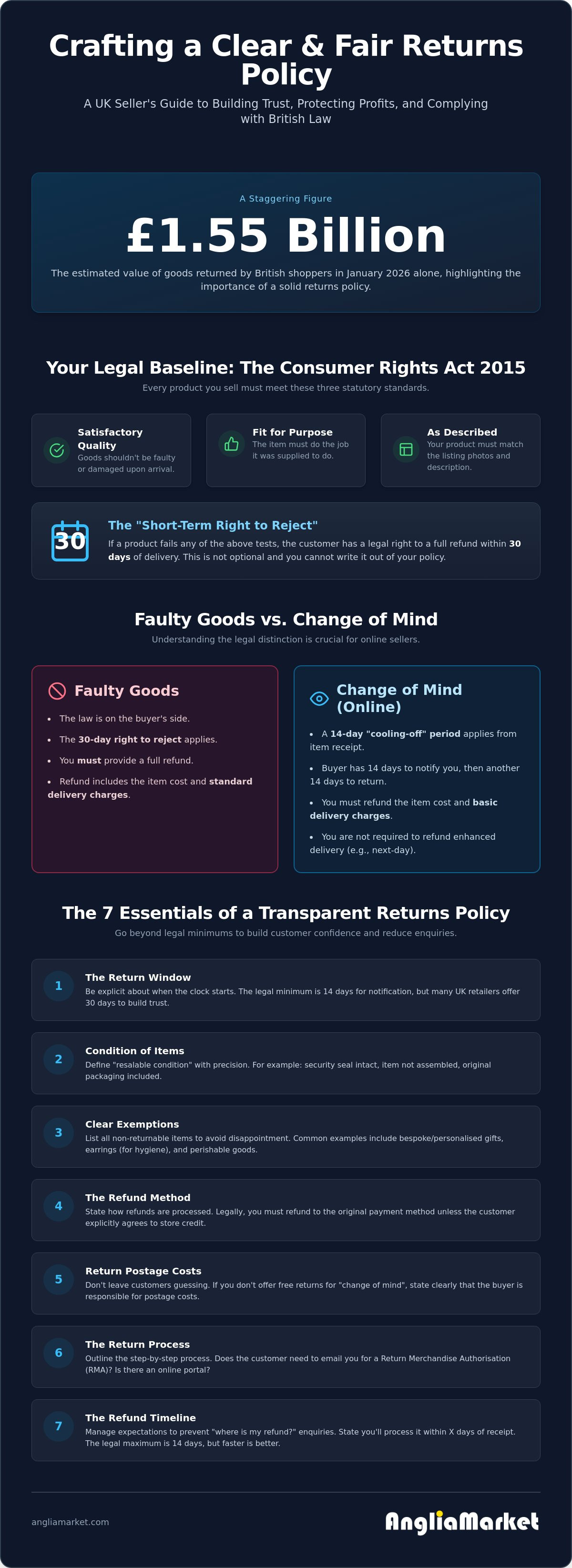
Did you know that British shoppers returned an estimated £1.55 billion worth of goods in January 2026 alone? It's a staggering figure that often keeps independent sellers awake at night. Learning how to write a clear and fair returns policy is no longer just a legal chore; it's a vital way to protect your profit margins. Dealing with "serial returners" whilst trying to navigate the Consumer Rights Act 2015 can feel like a losing battle, but your policy should be a tool for growth, not a source of anxiety.
We understand the fear of negative feedback and the confusion surrounding the latest 2026 digital regulations. This guide provides a straightforward roadmap to drafting a policy that builds lasting trust with British consumers. We will explore the Digital Markets, Competition and Consumers Act and show you how to reduce customer service enquiries. You will learn how to create a professional storefront that increases conversion rates through transparent and legally compliant communication.
Key Takeaways
- Master your legal obligations under the Consumer Rights Act 2015, including the mandatory 30-day right to reject faulty goods.
- Discover how to write a clear and fair returns policy that defines specific return windows and item conditions to protect your bottom line.
- Balance brand loyalty with business profitability by evaluating the cost of goodwill returns versus potential increases in conversion rates.
- Reduce customer service enquiries by using plain English and clear visual headers to make your policy easy for shoppers to navigate.
- Position your business for success on Anglia Market by aligning your returns process with marketplace standards to build buyer confidence.
The Legal Baseline: Returns and the Consumer Rights Act 2015
Before you can decide on your brand's unique perks, you must master the statutory minimums. The Consumer Rights Act 2015 dictates that every product you sell must be of satisfactory quality, fit for purpose, and as described. If a product fails these tests, the customer has a "short-term right to reject" it within 30 days of delivery. This isn't optional. It's a legal requirement that applies to every business, from high-street giants to independent vendors. Understanding these rules is the first step in learning how to write a clear and fair returns policy that prevents legal disputes.
You can't contract out of these rights. If an item is faulty, you must provide a full refund. This includes the cost of the item and the standard delivery charges the customer paid to receive it. Whilst a physical shop isn't legally required to offer a refund for a "change of mind," online sellers face stricter rules. The distance selling regulations provide a safety net for consumers who haven't seen the product in person. This legal floor ensures transactional safety across the marketplace.
Faulty vs Change of Mind
A clear distinction exists between a product being broken and a customer simply not liking it. For faulty goods, the law is on the buyer's side. "As described" is a high bar for online sellers. Your product photos must accurately reflect the item's colour, size, and features. If the product arrives and differs significantly from the listing, it's legally "not as described." However, you can legally refuse "change of mind" returns for bespoke or personalised items. Hygiene-sensitive goods, such as sealed electronics or earrings, are also exempt once the customer breaks the seal.
The Distance Selling Advantage
Online shoppers enjoy a 14-day "cooling-off period" that high-street buyers don't get. For most online orders, customers have 14 days from the day they receive the goods to notify you of a return for any reason. Once they notify you, they have another 14 days to actually post the item back. This 14+14 window is a cornerstone of UK e-commerce. You must refund the basic delivery cost, but you aren't forced to refund "enhanced" options like express delivery. This distinction is a key part of how to write a clear and fair returns policy that protects your margins whilst remaining compliant.
The Seven Essentials of a Transparent Returns Policy
Moving beyond the legal baseline requires a shift in mindset. You're no longer just complying with the law; you're building a framework for customer confidence. Transparency is the most effective tool for reducing "where is my refund" enquiries that drain your team's time. When considering how to write a clear and fair returns policy, you must remove all ambiguity. If a customer has to guess whether they qualify for a refund, they'll likely abandon their cart and shop elsewhere.
Your policy should clearly define these four pillars before the shopper reaches the checkout:
- The Return Window: Whilst the legal minimum is 14 days for notification, many successful UK retailers extend this to 30 days to build trust. Be explicit about when this clock starts ticking.
- Condition of Items: Define "resalable condition" with precision. For electronics, this might mean the security seal is intact. For furniture, it might mean the item hasn't been assembled.
- Exemptions: List non-returnable items clearly. This typically includes earrings for hygiene reasons, bespoke personalised gifts, and perishable goods.
- The Refund Method: State whether you refund to the original payment method or offer store credit. According to the official government guidance on returns, you must use the original payment method unless the customer agrees otherwise.
Logistics and Responsibility
Don't leave the customer wondering who pays for the return postage. If you don't offer free returns, state this clearly to avoid disputes later. You should also outline your Return Merchandise Authorisation (RMA) process. Do they need to email you first? Is there a portal to use? Provide a clear physical address for returns or instructions for using local drop-off points. This level of detail is a hallmark of how to write a clear and fair returns policy that scales with your business growth.
The Refund Timeline
Manage expectations to prevent frustration. State that you'll process the return within a specific number of days after it arrives at your warehouse. Whilst the maximum legal window for processing an online refund is 14 days from receiving the goods or proof of postage, aim for sooner to delight your buyers. Remind customers that their bank may take an additional 3 to 5 working days to show the funds in their account. Clear communication here prevents negative feedback and builds long-term loyalty amongst your marketplace community.
Balancing Goodwill Returns with Business Profitability
A "goodwill" policy goes beyond what the law requires. Whilst you must provide a 14-day window for online orders, many brands offer 30 or even 60 days to reduce purchase anxiety. This strategy builds long-term loyalty but carries a financial weight. Finding the sweet spot is the secret to how to write a clear and fair returns policy that doesn't erode your margins. You're trying to win the customer's trust without becoming a free rental service for "serial returners."
The cost of returns is rising. By 2026, 35% of the UK's top 100 fashion retailers began charging for returns to offset logistics expenses. You must decide if "free returns" is a sustainable marketing cost for your business. Data from 2025 showed that the average UK eCommerce return rate hit 17.5%, proving that processing these items is a significant operational hurdle. You can find detailed breakdowns of consumer rights on refunds and exchanges to see where your "goodwill" offers sit compared to legal minimums.
Sustainability is also a growing concern for British shoppers. High return rates lead to increased carbon emissions and packaging waste. You can protect your brand's environmental perception by reducing returns at the source. Invest in high-resolution images and detailed product descriptions. When customers know exactly what they're buying, the "not as expected" return rate drops naturally. This is a core part of how to write a clear and fair returns policy that benefits both the planet and your profit and loss statement.
The "Serial Returner" Challenge
Abuse of generous policies is a reality. Some customers treat the checkout like a fitting room, ordering multiple sizes with the intent of returning most. Use your sales data to spot these patterns. In the UK, it's generally legal to stop serving a specific customer if they're abusing your services, provided you don't discriminate. Identifying these outliers allows you to protect your inventory for genuine buyers who value your service.
Promotional Returns Policies
Seasonal adjustments can drive massive sales. Extending your return window during the Christmas period encourages early shopping and reduces "Returnuary" pressure. This is especially vital for high-ticket items like furniture, where the decision-making process is longer. A fair, transparent policy serves as a powerful trust signal. It supports your loyalty program goals by showing customers you stand behind every product you sell.
Best Practices for Writing and Organising Your Policy
Clarity is your best conversion tool. When a shopper lands on your page, they're looking for reasons to trust you. If your policy is buried in legal jargon, they'll likely move on to a competitor. Using plain English is the most effective way to demonstrate transparency. Avoid archaic terms like "heretofore" or "notwithstanding". These words don't protect you; they just create barriers. Learning how to write a clear and fair returns policy involves stripping away the complexity so that any shopper can understand their rights in seconds.
Visual hierarchy is just as vital. Most users don't read every word; they scan for the information they need. Use bold headers and bullet points to break up the text. A wall of grey prose is intimidating and often ignored. By organising your content logically, you make it easy for a buyer to find the return window or the refund method. This helpful facilitator persona balances a professional commercial tone with genuine support, which is essential for building local trust in the UK market.
Language and Vocabulary
Maintain local trust by using British English spellings throughout your site. Words like "organise" and "colour" signal that you're a domestic business. Choose positive phrasing to soften firm boundaries. Instead of saying "We are not liable for return costs," try "We ask that you cover the return postage for unwanted items." This subtle shift in tone makes your brand feel more approachable. Simple language directly reduces customer service tickets because buyers don't need to ask for clarification on your terms.
Strategic Placement for Conversion
A footer link is the industry standard, but it shouldn't be your only one. The law requires your policy to be "prominent". For high-consideration items like electronics or home goods, include return highlights directly on the product page. This transparency reduces cart abandonment. Adding a short summary of your returns process to the checkout flow provides a final nudge of confidence for the buyer. It's a hallmark of how to write a clear and fair returns policy that actually drives sales.
Scaling Your Returns Process with Anglia Market
Selling on a marketplace like Anglia Market offers unique advantages for independent businesses. You aren't just writing a policy for a standalone site; you're joining an ecosystem built on trust. Understanding how to write a clear and fair returns policy is essential here because your terms must align with the platform's broader expectations. Consistency ensures that vendors focus on growth whilst the platform manages foundational transactional security. As the Digital Markets, Competition and Consumers Act (DMCCA) continues its rollout through 2026, having a platform that understands these shifts is invaluable. It helps you stay compliant with new rules for digital services and subscription transparency without needing a legal team on retainer.
Marketplace Synergy
Your returns policy is a silent salesman. On a marketplace, your vendor rating is directly influenced by how you handle disputes and refunds. Negative testimonials can damage your visibility if a customer feels ignored or misled. Use the Anglia Market support centre to resolve issues before they escalate. Rapid communication is the key differentiator amongst top-rated sellers. Aim to respond to return enquiries within 48 hours. This standard was maintained by 85% of top-rated UK sellers throughout 2025. It demonstrates reliability and professional behaviour to your buyer base, turning a potential dispute into a positive experience.
Growing Your Storefront
Independent brands often worry about competing with retail giants. A "no-quibble" approach for low-cost items can be a powerful tool for encouraging repeat business. It shows you value the long-term relationship more than a single transaction. When you choose to sell online through a dedicated marketplace, your seller profile is your digital handshake. Update it regularly to reflect your professional returns stance. Transparency allows you to stand out amongst competitors who might hide behind vague or confusing terms. A clear policy reduces the friction that often stops a shopper from clicking the "buy" button.
Managing customer expectations effectively is the final piece of the puzzle. Start by ensuring your dispatch targets are met. To maintain a high rating, aim for the 48-hour dispatch target common amongst top performers. This reduces the likelihood of "late delivery" returns which can hurt your margins. By following this guide on how to write a clear and fair returns policy, you've already done the hard work. Now, it's about execution and using the platform's tools to build a sustainable, profitable British business. Focus on these core steps to ensure your storefront thrives:
- Review your current policy against the latest 2026 digital regulations.
- Monitor your seller dashboard daily for any outstanding return requests.
- Highlight your "Fair Returns" promise in your product descriptions to boost confidence.
Build a Professional Storefront with Confidence
A robust returns policy is more than just a legal shield; it's a competitive advantage for any British vendor. By mastering how to write a clear and fair returns policy, you protect your margins whilst providing the transparency that modern shoppers demand. Focus on the core essentials: meet the legal minimums of the Consumer Rights Act, use plain English to ensure clarity, and place your terms where they can actively reduce cart abandonment.
Success on a trusted online marketplace platform requires a balance of firm commercial boundaries and helpful support. We specialise in supporting small and medium-sized UK businesses, offering comprehensive support for third-party vendors to help them scale with confidence. This facilitator role ensures you can focus on inventory and sales whilst we provide the infrastructure for transactional safety.
Ready to take the next step? Start selling on Anglia Market today and grow your UK business. With a transparent policy in place, you're well-equipped to build a professional storefront that shoppers truly trust. Your journey toward a more profitable and reliable e-commerce brand starts now.
Frequently Asked Questions
Do I have to offer a refund if the customer simply changes their mind?
Yes, for online orders, you must offer a refund for a change of mind due to the 14-day cooling-off period. This legal requirement applies to most distance selling transactions in the UK. However, if you sell through a physical shop, you aren't legally forced to refund unwanted items unless they are faulty. Many high-street retailers choose to offer this anyway as a gesture of goodwill to encourage repeat business.
Who is legally responsible for paying for return shipping in the UK?
The customer is responsible for return postage costs for unwanted items, but only if you've clearly stated this in your policy. If your terms don't mention who pays, the legal responsibility falls on you as the retailer. For faulty or "not as described" goods, you must always cover the return costs. Providing a clear breakdown of these responsibilities is a vital step in maintaining transactional safety for your buyers.
Can I refuse a return if the original packaging has been opened?
You cannot usually refuse a return simply because the packaging is open. Online shoppers have a legal right to inspect goods as they would in a physical shop. You can only refuse the return if the item is a sealed product that isn't suitable for return once opened, such as software, DVDs, or hygiene-sensitive goods like earrings. For other items, you can only deduct a fee if the value has been diminished by excessive handling.
How long do I have to process a refund once I receive the item back?
You must process the refund within 14 days of receiving the goods back or receiving proof that the customer has posted them. This two-week window is the maximum legal limit for online sales. Whilst you have this time, processing returns quickly helps maintain a positive vendor rating. Learning how to write a clear and fair returns policy involves being transparent about these timelines to manage buyer expectations and reduce support tickets.
Are there any items that are legally exempt from being returned?
Yes, several categories are exempt from the standard 14-day cooling-off period. These include personalised or bespoke items, perishable goods like food or flowers, and sealed items that were opened by the customer. Magazines and newspapers are also exempt. You should list these clearly in your policy to avoid disputes. This ensures customers know exactly which products are final sale before they commit to a purchase on your storefront.
What is the difference between a "statutory" right and a "goodwill" policy?
A statutory right is the legal minimum you must provide by law, such as the 30-day right to reject faulty goods. A goodwill policy is an extra benefit you offer to build trust, like extending the return window to 60 days. Deciding how much extra value to provide is a core part of how to write a clear and fair returns policy. It helps you stand out amongst competitors whilst remaining fully compliant with UK legislation.
Do I have to refund the original delivery charge if an item is faulty?
Yes, you must refund the full cost of the item plus the original standard delivery charge if the product is faulty. You aren't required to refund any "enhanced" delivery costs, such as next-day or timed slots, if the customer chose those over your basic option. For "change of mind" returns, the same rule applies. You must refund the standard delivery fee the customer paid to receive the goods initially.
What happens if a customer returns an item that is damaged or used?
If a customer handles an item more than is necessary to establish its nature, you can legally reduce the refund amount. This "diminished value" deduction covers the loss in resale value caused by the customer. For example, if a piece of furniture is assembled and then dismantled, it can no longer be sold as new. You should be specific about what constitutes "reasonable handling" in your policy to protect your margins from used returns.

Here to help — ask anything
If you have any questions regarding this disclaimer or any of our policies, please contact Anglia Market through the contact page on our website, by email using the address provided on the site, or by phone at 0333 772 2593