Imagine spending £180 on a birthday surprise only to watch the battery die before your child even reaches the end of the garden path. For many UK parents, the search for Kids’ Ride‑On Cars: Safety & Best Buys feels more like a technical exam than a fun shopping trip. You want a toy that lasts longer than a single month and stays upright on every turn. It's confusing when you can't tell if a 6V motor is enough for a toddler or if you really need to invest in a 24V model for older kids.
We know you want a high-quality toy that grows with your child without breaking the bank. You shouldn't have to guess about safety standards while trying to find a great deal. This guide shows you how to choose a safe, durable ride-on car that fits your budget while supporting independent UK sellers. We'll explain the essential UKCA and EN71 safety marks, break down battery life expectations, and show you how to find the best value from trustworthy local vendors on our marketplace.
Key Takeaways
- Identify the perfect power match for your child by comparing 6V, 12V, and 24V specs for different UK garden terrains.
- Ensure total peace of mind with our checklist on Kids’ Ride‑On Cars: Safety & Best Buys, covering UKCA marks and parental remote features.
- Shop smarter by supporting independent UK vendors to find premium-quality licensed SUVs and construction vehicles at better prices.
- Protect your purchase with essential maintenance advice designed to keep electric motors running through the cold, damp British winter.
- Upgrade to 2026 technology with insights into the latest brushless motors and lithium-ion batteries for longer playtime.
What Are Kids’ Ride-On Cars and Why Are They 2026's Top Gift?
Kids' ride-on cars are miniature, drivable vehicles tailored for children between the ages of 1 and 8. These toys have evolved significantly since the early History of Power Wheels, which pioneered the battery-powered play market. Today, these vehicles range from simple push-along cars for toddlers to high-tech electric replicas. When searching for Kids’ Ride‑On Cars: Safety & Best Buys, it's vital to understand how the technology has shifted to provide more value for UK families.
The 2026 market marks a major turning point in toy engineering. Manufacturers have largely moved away from noisy, brushed motors in favour of efficient brushless versions. These new motors, paired with long-lasting lithium-ion batteries, mean less time charging and more time playing. These upgrades ensure that the cars can handle various terrains, including grass and gravel, without losing power. It's this jump in reliability that has made them the most requested gift of the year.
To better understand this concept, watch this helpful video:
Manual vs. Electric: Which is right for your child?
Choosing the correct drive system depends on your child's age and physical development. Our guide to Kids’ Ride‑On Cars: Safety & Best Buys highlights the three main categories available this year:
- Foot-to-floor models: These are the best choice for toddlers aged 1 to 3. They don't have complex pedals or motors, so they focus entirely on developing leg strength and basic steering.
- Pedal karts: These are ideal for active play. Older children enjoy the physical challenge of pedalling, which promotes cardiovascular health and coordination.
- Electric (Battery-Powered): This is the hottest category for 2026. Most models now feature 24V systems, providing a realistic driving experience with working lights, horns, and even integrated MP3 players.
Understanding the 2026 UK Market Trends
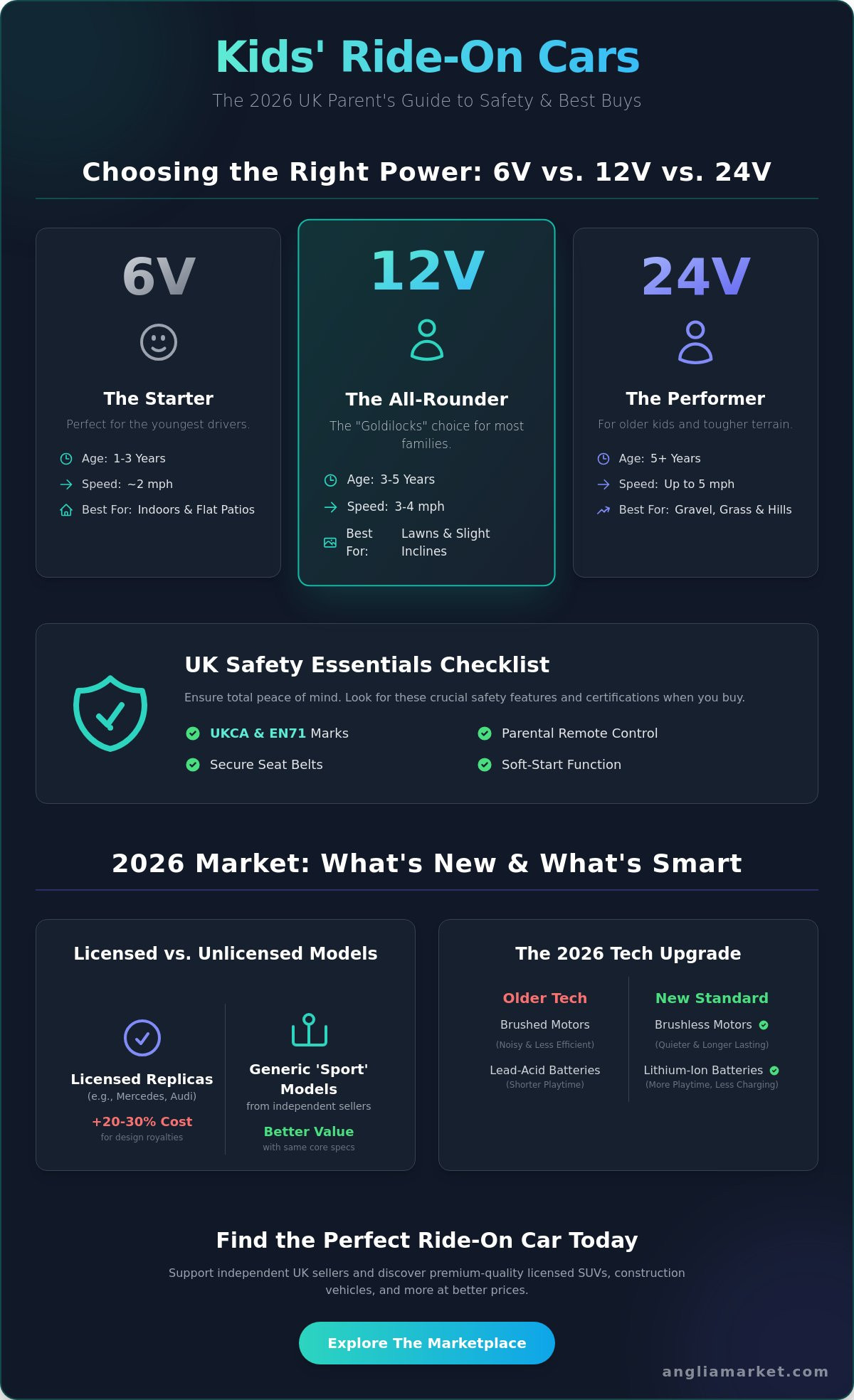
The 2026 market is split between licensed and unlicensed designs. Licensed models, such as those officially branded by Mercedes or Audi, often cost 20% to 30% more because of the design royalties. Generic 'Sport' models frequently offer the same battery specs and safety features at a much more affordable price point. Parents are also prioritising sustainability. We've seen a 15% rise in the use of recycled plastics and eco-friendly components within the toys and games category.
Beyond the fun factor, these cars offer genuine developmental benefits. Navigating a small vehicle through a garden teaches children spatial awareness and how to judge distances. It encourages imaginative play, as kids pretend to go to the shops or work. It's a practical way to build confidence before they move on to more advanced toys like bicycles.
Supporting UK-based SMEs on Anglia Market ensures you receive unique product designs and dedicated customer service that large multinational retailers often fail to provide.
Technical Specs: 6V, 12V, and 24V Power Explained
Choosing the right voltage is the most important step when looking for Kids’ Ride‑On Cars: Safety & Best Buys. The battery power dictates the vehicle's speed, torque, and ability to handle different surfaces. In the UK market, you'll typically find three main power levels designed for specific age groups and environments. Selecting the wrong one often leads to a car that's either too slow for the terrain or too fast for a toddler to control.
- 6V Batteries: These are perfect for toddlers aged 1 to 3. They reach speeds of about 2mph, making them safe for indoor use or flat garden paths. They don't have the power for grass or hills.
- 12V Batteries: This is the "Goldilocks" zone for most UK families. These cars handle short grass and slight inclines well, reaching speeds between 3mph and 4mph.
- 24V Batteries: Designed for older children aged 5 and up, these high-performance models tackle gravel, thick grass, and steeper hills at speeds up to 5mph.
Understanding these specs ensures your child gets the most out of their vehicle. Beyond just speed, these toys provide significant benefits of active play by helping toddlers develop motor skills and spatial awareness early on. A car that matches the child's environment will keep them engaged for longer.
Battery Life and Charging Realities
Standard 12V models usually offer 45 to 60 minutes of continuous drive time. This varies based on the child's weight and the surface they're driving on. A common mistake is ignoring the initial 12 hour charge rule; failing to do this can permanently reduce the battery's capacity. By 2026, many premium models have shifted from traditional lead-acid to lithium-ion batteries. Lithium offers a longer lifespan and faster recharge times, which is a major convenience for busy parents.
Motor Configurations: Single vs. Dual Motors
The number of motors is just as vital as the battery voltage. A single motor setup is efficient for flat pavements but often gets stuck on uneven ground. For typical UK lawns, dual motors are essential. They provide power to both rear wheels, ensuring the car doesn't lose traction on wet grass. Higher motor wattage also increases the weight capacity. For example, a dual 45W motor setup can carry up to 35kg comfortably without straining the engine. You can explore a variety of motor setups in our toys and games section to find the right fit for your garden.
UK Safety Regulations and Essential Features Checklist
Every toy sold in Britain must meet rigorous standards to protect young drivers. When browsing for Kids’ Ride‑On Cars: Safety & Best Buys, look for the EN71 and UKCA marks. The EN71 certification confirms the toy is mechanically and chemically safe. Since January 2021, the UKCA (UK Conformity Assessed) mark is the mandatory replacement for the CE mark in Great Britain. All electronic toys must legally display this mark to prove they comply with the UK Toy Safety Regulations 2011, which governs everything from battery security to fire resistance.
Safety doesn't stop at stickers. High-quality models include specific hardware to prevent accidents. Soft start technology is a prime example. Instead of a sudden jolt that can cause a minor "whiplash" effect, the car accelerates gradually. Pair this with functional safety belts and locking doors to keep your child secure during garden adventures. You'll find many compliant options in our toys and games category that prioritize these mechanical safeguards.
How the Parental Remote Control Works
The parental remote control is the most important safety tool for children under five. Modern remotes use a 2.4G Bluetooth frequency. This specific technology ensures there's no signal interference from other radio-controlled toys nearby. The most critical feature is the "Stop" or override button. This allows a parent to take total control instantly if the child steers toward a hazard. Always operate the vehicle within a 20 to 30 metre range to ensure the connection remains stable and responsive.
Weight Limits and Age Suitability
Exceeding the maximum weight limit is a common cause of motor burnout. Most single-seater 12V cars have a limit of 25kg to 30kg. If the load is too heavy, the battery drains faster and the wiring can overheat. Always check the manufacturer's specifications before buying. Many Kids’ Ride‑On Cars: Safety & Best Buys now feature adjustable seats. This is a practical choice for growing toddlers, as it extends the life of the toy by several years. It's a legal requirement for the UKCA mark to be visible on electronic toys to guarantee the internal components handle the designated weight and power safely.
- Check for UKCA and EN71 marks: These are non-negotiable for UK buyers.
- Test the Remote: Ensure the override function works before the first drive.
- Verify the Weight: Don't guess your child's weight; use a scale to prevent motor damage.
- Inspect the Doors: Ensure latches are firm and won't pop open during turns.
Best Buys 2026: Finding Value on the UK Marketplace
Finding the right balance for kids’ ride‑on cars: safety & best buys means looking beyond the local high street. National toy chains often carry significant overheads that push prices up. Shopping through a marketplace like Anglia Market offers a practical alternative. You get direct access to independent UK vendors who specialize in electric vehicles. These sellers often provide more diverse stock, including rugged construction vehicles with working digger arms and trailers that aren't available in standard shops.
Smart shopping involves more than just looking at the price tag. Check the 'Seller Ratings' on the platform to ensure a smooth delivery experience. High ratings usually reflect reliable shipping and responsive customer service. For big events, use the sale section to plan ahead. Buying a birthday or Christmas gift during off-peak months can save you 15% to 25% on the total cost.
Budget-Friendly Options Under £150
If you're looking for an entry-level gift, the sub-£150 category is very popular. At this price point, you'll mostly find 6V motors and foot-to-floor models. These are perfect for toddlers and indoor use. You'll typically sacrifice luxury extras like leather seats, working LED light bars, or high-speed 24V batteries. However, they remain a safe and fun introduction to driving. Keep an eye on current promotions for unexpected discounts on 12V models that occasionally drop into this budget range.
Premium and Licensed Models
For parents seeking a realistic experience, licensed models from brands like Audi, BMW, and Land Rover are the top choice for 2026. These vehicles often feature EVA (rubber) tyres instead of plastic. This upgrade provides a much quieter and smoother ride on garden paths. Premium models also include features like:
- Integrated MP3 players and working FM radios.
- Soft-start technology to prevent jerky movements.
- Parental remote overrides for extra peace of mind.
If you have siblings, a two-seater model is often the best buy. It's more cost-effective than purchasing two separate cars and encourages shared play. These larger 24V units handle the extra weight easily and offer longer run times between charges. When selecting a premium model, ensure the vendor provides a clear warranty on the battery and motors.
Maintenance Tips for the UK Climate
UK weather presents unique challenges for electric toys. To protect your Kids’ Ride‑On Cars: Safety & Best Buys investment, you must focus on moisture control. Damp sheds are the most common cause of motor failure in British gardens. Storing a vehicle in an unheated, leaky outbuilding leads to rusted terminals and degraded plastics. Always stick to the "Charge Once a Month" rule during the off-season. Lead-acid batteries naturally discharge over time. If the charge level hits zero during a cold January, the battery often won't take a charge again. For technical help or to source replacement motors and switches, use the Anglia Market support hub.
Cleaning your child's car requires a delicate touch. Never use a garden hose or a pressure washer on the bodywork. Water ingress into the dashboard or charging port can cause immediate circuit failure. Instead, use a soft, damp microfibre cloth for the outer shell and a dry cloth for the electronic display. You can use a dedicated plastic polish to maintain the shine, but keep all liquids away from the underside where the wiring looms are located.
Protecting Electronics from Damp
Invest in a high-quality breathable cover rather than a cheap plastic tarp. Plastic sheets trap condensation against the metal components, which accelerates corrosion on the circuit boards. Check all visible wiring for signs of fraying or green oxidation every autumn before the wet weather sets in. Store the battery in a dry, room-temperature environment like a utility room during the winter months to prevent cell damage from frost.
Maximising Your Purchase Value
Buying a ride-on vehicle is a significant commitment. Shopping via the loyalty program ensures you get the best value on future birthday gifts or toy upgrades. Real-world feedback is vital for the parenting community, so please leave testimonials to help other families choose the most durable models. Before you finalise your order, use this checklist to ensure you have the right fit for your home:
- Weight Capacity: Confirm the car supports your child's current weight plus 20% for growth.
- Battery Voltage: Ensure 12V or 24V power levels match your garden terrain.
- Safety Harness: Verify the model includes a secure 3-point or 5-point belt system.
- Remote Control: Check that the 2.4G parental remote is included for younger drivers.
- Tyre Material: Look for EVA rubber tyres for better grip on damp UK pavements.
Following these simple steps keeps your Kids’ Ride‑On Cars: Safety & Best Buys choice in top condition for years. Proper maintenance doesn't just save money; it ensures the vehicle is always safe and ready for the next adventure.
Gear Up for Outdoor Adventures
Selecting the perfect electric vehicle for your child involves more than just picking a favorite color. You need to match the power to the driver; 6V models suit toddlers on flat paths, while 24V options handle tougher garden terrain. Always prioritize EN71 certified products to ensure every toy meets strict UK safety regulations. By checking these technical specs and safety features, you'll secure a gift that lasts through the 2026 season and beyond. Proper storage and battery care are essential for protecting your investment against the unpredictable UK climate.
Finding the right Kids’ Ride‑On Cars: Safety & Best Buys is easier when you shop with a platform that cares about quality and local growth. We focus on supporting independent UK SMEs, providing you with secure shopping and dedicated UK-based support for every purchase. You can browse a wide range of EN71 certified safe toys that have been tested for durability and performance.
Shop the Latest Kids' Ride-On Cars on Anglia Market
It's time to clear the driveway and get ready for some serious fun. Your little driver's next big adventure is just a few clicks away.
Frequently Asked Questions
What is the best age for a 12V ride-on car?
A 12V ride-on car is best suited for children aged 3 to 6 years. These models offer a top speed of 3 to 5 mph, which provides enough excitement for preschoolers without being difficult to control. Most 12V vehicles have a maximum weight capacity of 30kg. It's the ideal middle ground between the slower 6V toddler versions and the high-powered 24V models designed for older kids.
Are electric ride-on cars safe for use on grass?
Electric ride-on cars are safe for grass if they feature 12V or 24V motors and chunky, treaded tires. Standard 6V models often lack the torque to move across garden lawns and may stall. For the best performance, look for models with EVA rubber wheels. These provide 25% better traction on uneven surfaces compared to basic plastic wheels, ensuring your child doesn't get stuck in the garden.
How long does the battery last on a kids' electric car?
You can expect a battery to last between 45 and 90 minutes on a single charge. This duration depends on the child's weight, the terrain, and the speed setting used. A full recharge typically takes 8 to 12 hours. To maintain battery health, always charge it for at least 10 hours before the first use and don't leave it flat for more than 14 days during winter months.
Do I need to assemble the ride-on car myself?
Most ride-on cars require partial home assembly, usually taking about 30 to 45 minutes to complete. You'll typically need to attach the steering wheel, seat, wheels, and mirrors using basic tools like a screwdriver. Manufacturers provide a step-by-step manual in the box. It's a straightforward process that ensures the vehicle is securely put together before your child starts their first drive in the garden or park.
Can two children fit in one ride-on car?
Two children can only fit if you purchase a specific two-seater model with a wider chassis and reinforced axles. These larger versions often feature a 24V battery to handle the extra weight. Standard one-seater cars have a narrow seat width of about 35cm, which isn't safe for two. Always check the product specifications for a 2-seater label to ensure there are two separate seatbelts for safety.
Is it worth paying more for a licensed (e.g. Ford or Mercedes) model?
Licensed models are worth the extra cost if you value authentic branding, higher-quality paint finishes, and realistic interior details. These cars are officially approved by brands like Ford or Mercedes, meaning they meet strict design standards. When looking for Kids’ Ride-On Cars: Safety & Best Buys, licensed versions often hold their resale value 20% better than unbranded alternatives. They also feature more durable plastics and premium components.
What should I do if the remote control stops working?
If the remote control stops working, first replace the batteries with fresh AAA or AA cells. Most issues are caused by a lost connection, so you should follow the manual's instructions to re-pair the 2.4G frequency. This usually involves holding a specific button on the remote while turning the car on. If the signal remains broken, check the internal antenna for loose wires or contact the supplier for a replacement part.
Are there any weight limits I should be aware of?
Weight limits are crucial for safety and motor longevity, with most 12V models supporting up to 30kg. Exceeding this limit can cause the motor to overheat or the plastic chassis to crack. Larger 24V models can often support up to 50kg. When researching Kids’ Ride-On Cars: Safety & Best Buys, always verify the maximum load to ensure the car lasts as your child grows over the next 3 years.

Here to help — ask anything
If you have any questions regarding this disclaimer or any of our policies, please contact Anglia Market through the contact page on our website, by email using the address provided on the site, or by phone at 0333 772 2593