
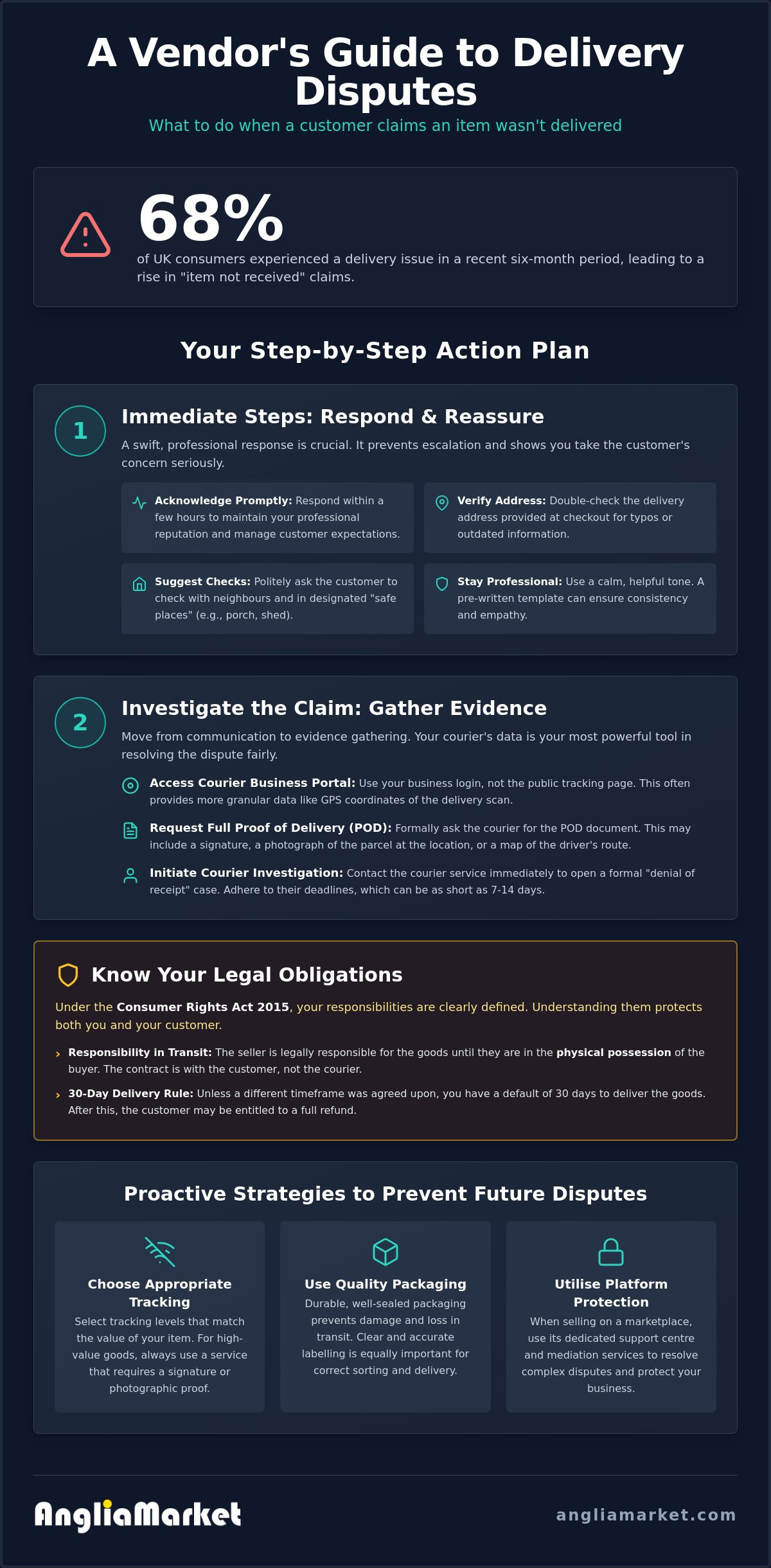
In 2025, 68% of UK consumers reported experiencing a delivery issue in just a six-month window. That is a staggering number of missing parcels and frustrated shoppers. When you receive that dreaded message, it's natural to feel defensive or worry about "porch pirates" and dishonest claims. You need a clear plan for what to do if a customer claims an item wasn't delivered so you can protect your business whilst keeping your customers happy.
We know how frustrating it is to manage courier investigations and transit confusion. It often feels like a massive drain on your time and resources. This guide provides a practical roadmap to help you navigate these disputes with confidence. You'll learn exactly when you're legally required to refund under the Consumer Rights Act 2015 and how to gather the evidence needed to challenge a claim. We will also cover essential methods to reduce future delivery issues, ensuring your independent business remains profitable and reliable.
Key Takeaways
- Respond promptly to maintain your professional reputation and double-check the delivery address provided at checkout.
- Learn exactly what to do if a customer claims an item wasn't delivered by accessing courier tracking data and requesting photographic Proof of Delivery.
- Grasp your legal obligations under the Consumer Rights Act 2015, including the default 30-day delivery rule and your liability during transit.
- Implement proactive strategies like choosing appropriate tracking levels and using high-quality packaging to prevent future delivery disputes.
- Use dedicated platform tools and mediation services to protect your business when customer disputes become difficult to resolve.
Immediate Steps to Take When a Delivery Dispute Arises
When a notification lands in your inbox regarding a missing order, speed is your greatest asset. Acknowledging the message within a few hours demonstrates that you take the matter seriously. This is the first stage of what to do if a customer claims an item wasn't delivered. Maintaining a professional, helpful tone is essential to prevent the situation from escalating into a formal complaint or a negative review. Under the Consumer Rights Act 2015, you are legally responsible for the goods until they are in the physical possession of the buyer, so a structured response is required.
To better understand how to manage these initial interactions and protect your seller rating, watch this helpful video:
Before assuming the parcel is lost, ask the customer to check with neighbours or in common "safe places" like porches, sheds, or behind garden gates. Drivers often leave items in these areas to avoid a missed delivery. Simultaneously, verify the delivery address provided at the time of purchase. It's common for buyers to have outdated addresses saved in their profiles or to make a simple typing error during checkout. Staying calm and helpful at this stage keeps the dialogue open and constructive.
Validating the Customer Claim Information
Perform a quick internal audit before contacting your courier. Cross-reference the order number with your shipping manifest and check the exact "delivered" timestamp on your dashboard. If the buyer messaged you immediately after a delivery scan, the driver might still be in the vicinity. High-value products require extra scrutiny; ensure the recorded weight at dispatch matches the courier's records. This due diligence is a vital part of what to do if a customer claims an item wasn't delivered.
Professional Communication Templates
Consistency helps maintain your professional reputation. Use a template for your first response to ensure you remain empathetic whilst gathering facts. A standard reply should acknowledge the issue, confirm the tracking status, and explain the investigation steps you are taking. Clearly managing the customer's expectations regarding courier investigation times reduces their anxiety. For formal logging and to ensure a clear communication trail, encourage customers to use the Anglia Market support centre.
Investigating the Claim: Evidence and Courier Liaison
Once you have completed the initial checks, you must move into the evidence-gathering phase. This is the most critical part of knowing what to do if a customer claims an item wasn't delivered. Start by accessing your courier's business portal rather than the public tracking page. Business dashboards often provide more granular data, including the exact GPS coordinates of the final delivery scan. If there is a discrepancy between the intended address and the scan location, you have immediate proof of a misdelivery. This House of Commons Library briefing highlights that the retailer remains responsible for the goods until they are in the physical possession of the consumer, making this evidence vital for your defence.
Contact the courier service immediately to initiate a formal investigation. Don't wait for the customer to lose patience. Most couriers have a specific window for "denial of receipt" claims, often as short as 7 to 14 days. When you open a case, provide the order details and the customer's statement. Request a full Proof of Delivery (POD) document. This document should include any available signatures, photographs of the parcel at the property, or a map showing the driver's route. If you want to sell online successfully, maintaining a clear paper trail for every shipment is non-negotiable.
Utilising Tracking and GPS Proof
Modern delivery photos are incredibly helpful but require careful interpretation. Check the "safe place" photo against the property's appearance on Google Street View if possible. A parcel left on a busy pavement or a different coloured doorstep is a clear sign the driver failed their duty. Whilst GPS pings provide a high level of confidence by showing the driver's location at the time of the scan, they do not always account for human error at the final step. Proof of Delivery is the formal documentation, such as a digital signature or a delivery photograph, that serves as the legal standard required to contest a non-delivery claim.
Dealing with Royal Mail and UK Couriers
Different carriers have different rules for missing items. Royal Mail typically requires 10 working days to pass after the due date before they classify an item as officially lost. In contrast, private couriers like DPD or Evri might allow you to start a claim much sooner if the tracking hasn't moved for 48 hours. You will need the original dispatch receipt and an invoice showing the item's value to claim compensation. Understand the difference between a "lost" parcel, which has vanished within the network, and a "misdelivered" one, where the courier claims it arrived but at the wrong location. Each requires a different approach when filing for reimbursement.
Your Legal Obligations Under the UK Consumer Rights Act 2015
UK consumer law is clear. As a seller, you're responsible for the goods until they are in the physical possession of the customer. It doesn't matter if the courier made the mistake. Your contract is with the buyer; the courier's contract is with you. This distinction is vital. If a parcel vanishes, you cannot simply tell the customer to "take it up with the delivery company." Understanding what to do if a customer claims an item wasn't delivered requires a firm grasp of the Consumer Rights Act 2015. You're the one on the hook for a resolution.
The "Default Delivery" rule is another cornerstone of UK retail. Unless you have agreed on a specific timeframe with the buyer, you must deliver the goods within 30 days. If you fail to meet this deadline, the customer often has the right to cancel the order and receive a full refund. Differentiating between your "contract of sale" and your "contract of carriage" is essential for your accounts. Whilst you owe the customer a refund or replacement under the sale contract, you may simultaneously have a claim against the courier under the carriage contract to recoup your losses.
The Seller Responsibility for Transit
Legally, the courier acts as your subcontractor. Their failure to deliver is your failure to perform the contract. However, the point at which "risk" transfers from you to the buyer can change. If the customer nominates a specific "safe place" or a particular neighbour to take delivery, your responsibility ends the moment the courier leaves the item in that exact spot. If the item is stolen from a safe place the customer didn't authorise, you remain liable. Risk only officially transfers when the goods reach the agreed destination in the agreed manner.
When to Issue a Refund or Redelivery
If you cannot prove delivery, a refund is usually mandatory. Under the Consumer Rights Act 2015, the buyer is entitled to a full refund including the original delivery costs. You must process this refund within 14 days of agreeing that the item is lost. For lower-value items, it's often more cost-effective to offer an immediate replacement. This "goodwill" approach protects your seller ratings and builds trust. It's often cheaper than the administrative cost of a prolonged investigation. Always document your decision-making process to stay compliant with UK regulations.
Proactive Strategies to Prevent Future Delivery Disputes
Prevention is always more cost-effective than investigation. Whilst you now know what to do if a customer claims an item wasn't delivered, implementing a few proactive changes can stop these disputes from happening in the first place. Start by matching your delivery method to the item's value. Using a basic service for a high-ticket electronic item is a risk you don't need to take. Always purchase shipping insurance for goods over a certain value. This ensures that if the courier fails, your business isn't out of pocket.
Packaging also plays a huge role in successful delivery. Labels must be printed clearly with high-quality ink to avoid smudging during transit. A smudged postcode is the fastest way to a misdelivered parcel. Ensure your boxes are robust enough to withstand the sorting office. If a parcel looks damaged, a driver might leave it in a less secure spot to avoid a direct confrontation with the buyer. Optimise your dispatch process so that tracking details are sent to the customer immediately. This transparency reduces "Where is my order?" queries and builds trust from the start.
Choosing Reliable Courier Services
Not all couriers are equal. For furniture or heavy items, specialised two-man delivery teams often provide better service than standard parcel networks. For smaller items, Royal Mail "Signed For" is a reliable standard that provides the signature proof you need to win a dispute. If you're looking to cut costs without sacrificing quality, check the sale section for discounted, high-quality packaging supplies. Using the right materials is a simple way to protect your bottom line.
Documentation and Record Keeping
A digital trail is your best defence. Keep a scanned copy of every dispatch note and tracking receipt. For items sent without full tracking, always obtain a "Certificate of Posting" from the Post Office. This serves as your legal proof that the item entered the network. Some industry professionals report that having organised, easily accessible digital records can significantly speed up the time it takes to resolve a courier claim. To grow your business with a platform that supports your success, you can sell online with our dedicated vendor tools. Clear documentation doesn't just help with claims; it provides peace of mind for you and your customers.
How Anglia Market Supports Vendors Through Delivery Issues
Anglia Market understands that logistics can be the most stressful part of running an independent business. When a parcel goes missing, you aren't left to handle the legal and administrative burden alone. Our platform provides dedicated tools to help you sell online with confidence. These features include integrated tracking updates and automated communication channels. Knowing what to do if a customer claims an item wasn't delivered is far simpler when you have a centralised dashboard to manage every dispute efficiently.
Beyond technical tools, you join a supportive community of professional vendors. This network is an excellent resource for sharing advice on UK couriers and regional delivery challenges. By reviewing testimonials from other successful sellers, you can identify which delivery standards lead to the highest customer satisfaction ratings. Learning from the collective experience of the marketplace helps you avoid common pitfalls and refine your own shipping strategy for better results.
Vendor Protection and Mediation
Anglia Market takes a proactive stance on vendor protection. We monitor for suspicious buyer behaviour and patterns that might suggest "porch piracy" or fraudulent claims. If a dispute becomes unreasonable or a customer remains unsatisfied despite your best efforts, our mediation services are available to help. We assist in verifying the evidence you have gathered, such as GPS pings and Proof of Delivery photos. This process ensures your seller rating remains protected whilst a formal investigation is underway. You should involve platform support as soon as a buyer's demands contradict the clear evidence provided by your courier.
Growing Your Business with Reliable Logistics
Reliable delivery is a powerful marketing tool. It turns first-time buyers into repeat customers and builds long-term brand loyalty. We encourage our sellers to join the loyalty program to further strengthen these customer relationships. Trust is the primary currency of any online marketplace. By maintaining clear delivery policies on your professional vendor profile, you manage expectations from the very first click. This transparency reduces the likelihood of what to do if a customer claims an item wasn't delivered becoming a frequent issue in your inbox. Focus on providing a seamless transactional experience to stand out amongst the competition.
Building a Secure and Reliable E-commerce Business
Managing delivery disputes doesn't have to be a source of constant stress. By acting quickly, gathering photographic evidence, and understanding your legal responsibilities under the Consumer Rights Act 2015, you can resolve issues fairly. Your choice of courier and your record-keeping habits are your best defence against transit losses. Knowing what to do if a customer claims an item wasn't delivered protects your bottom line whilst maintaining high standards for your buyers. It's about being prepared for the occasional hurdle in the logistics chain.
Anglia Market is here to help you navigate these challenges. Our platform is designed for transactional safety, offering a secure marketplace specifically for small and medium businesses. You benefit from dedicated UK-based vendor support and a platform built to facilitate reliable commerce. Focus on growing your inventory and reaching new customers while we provide the infrastructure you need to succeed. Ready to take your shop to the next level? Start selling securely with Anglia Market today and join a marketplace that prioritises your growth and security.
Frequently Asked Questions
What if the tracking says "delivered" but the customer claims they do not have it?
Start an investigation with the courier immediately to obtain GPS coordinates and delivery photos. Check if the driver left the parcel with a neighbour or in a safe place not mentioned in the public tracking. Ask the buyer to confirm the property's appearance against the delivery photo provided by the driver. This data helps you determine if the courier made a mistake at the final step.
Am I liable if a parcel is stolen from the customer’s doorstep or "safe place"?
You are legally liable unless the customer specifically nominated that "safe place" during the checkout process. If the courier chose the spot without buyer authorisation, the risk hasn't transferred to the customer. Under the Consumer Rights Act 2015, you must ensure the goods reach the customer's physical possession. If it's stolen from an unauthorised spot, you must refund or replace the item.
How long does a customer have to report an item as not delivered in the UK?
Customers have up to 30 days to report a non-delivery under the Consumer Rights Act 2015 to claim a full refund. However, most courier claims must be initiated within 7 to 14 days of the expected delivery date. You should encourage buyers to report issues within 48 hours. This allows you to start the investigation whilst the driver's memory of the route is still fresh.
Can I refuse a refund if I have proof of postage but no tracking?
No, you cannot refuse a refund because proof of postage is not proof of delivery. Whilst a certificate of posting proves you sent the item, it doesn't prove the customer received it. UK law requires the seller to ensure the item reaches the buyer. Without tracking or a signature, you have no evidence to contest the claim and must provide a resolution.
Should I send a replacement or a refund for a missing item?
The choice depends on your stock levels and the customer's preference. A replacement is often better for maintaining brand loyalty and protecting your seller rating. However, if the item is out of stock, you must process a full refund within 14 days of confirming the loss. Always communicate clearly with the buyer to see which option they prefer before taking action.
Does a "Signature Required" service completely protect me from non-delivery claims?
It provides a very strong defence but isn't entirely foolproof. A signature from the correct address is usually enough to win a dispute. Problems arise if a neighbour signs for the parcel and then misplaces it. Always match the digital signature with the GPS coordinates provided by the courier. This ensures you have a complete evidence trail if the buyer contests the delivery.
What should I do if a courier loses my parcel during transit?
You must refund or replace the item for the customer first and then claim compensation from the courier separately. Your legal contract with the buyer is independent of your contract with the delivery company. Keep all original dispatch receipts and invoices to support your claim. This allows you to recoup the cost price of the item and the original postage fees.
How do I handle a customer who I suspect is lying about a non-delivery?
Handle the situation professionally by following a standard evidence-based process. Knowing what to do if a customer claims an item wasn't delivered involves requesting a signed "Denial of Receipt" form from the buyer. This formal document often discourages dishonest claims. It serves as official evidence for police reports or courier fraud investigations if the claim is later found to be fraudulent.

Here to help – ask anything
If you have any questions regarding this disclaimer or any of our policies, please contact Anglia Market through the contact page on our website, by email using the address provided on the site, or by phone on 0333 772 2593