
Research shows that 68% of UK shoppers experienced a delivery issue in 2025. Many of these cases involved items arriving broken or faulty. It's a common problem, but knowing exactly what to do if a product is damaged in transit is the key to protecting your money. You shouldn't have to pay for a courier's mistake or a seller's poor packaging. Whether it's a cracked television screen or a scratched dining table, the law is on your side.
We know how stressful it is to unbox a new purchase only to find it's been battered during the journey. You might worry about being blamed for the damage or feel stuck in a loop of confusing return policies and unresponsive couriers. This guide provides the peace of mind you deserve. You'll discover your clear legal rights under the Consumer Rights Act 2015 and learn how to secure a full refund or a free replacement. We've mapped out the exact steps to document the damage and handle the claims process with total confidence.
Key Takeaways
- Act quickly during the 'Golden Hour' to document issues and learn the correct way to handle a delivery driver when a parcel looks battered.
- Understand the Consumer Rights Act 2015 and your 30-day right to reject items that arrive in less than 'satisfactory quality'.
- Follow our evidence checklist to learn exactly what to do if a product is damaged in transit, including the '360-degree' photography rule.
- Discover how to communicate effectively with marketplace sellers and use the Anglia Market Support Centre to resolve disputes quickly.
- Secure future deliveries by choosing sellers with verified testimonials and leveraging loyalty programmes for added transactional safety.
Immediate Steps to Take When Your Parcel Arrives Damaged
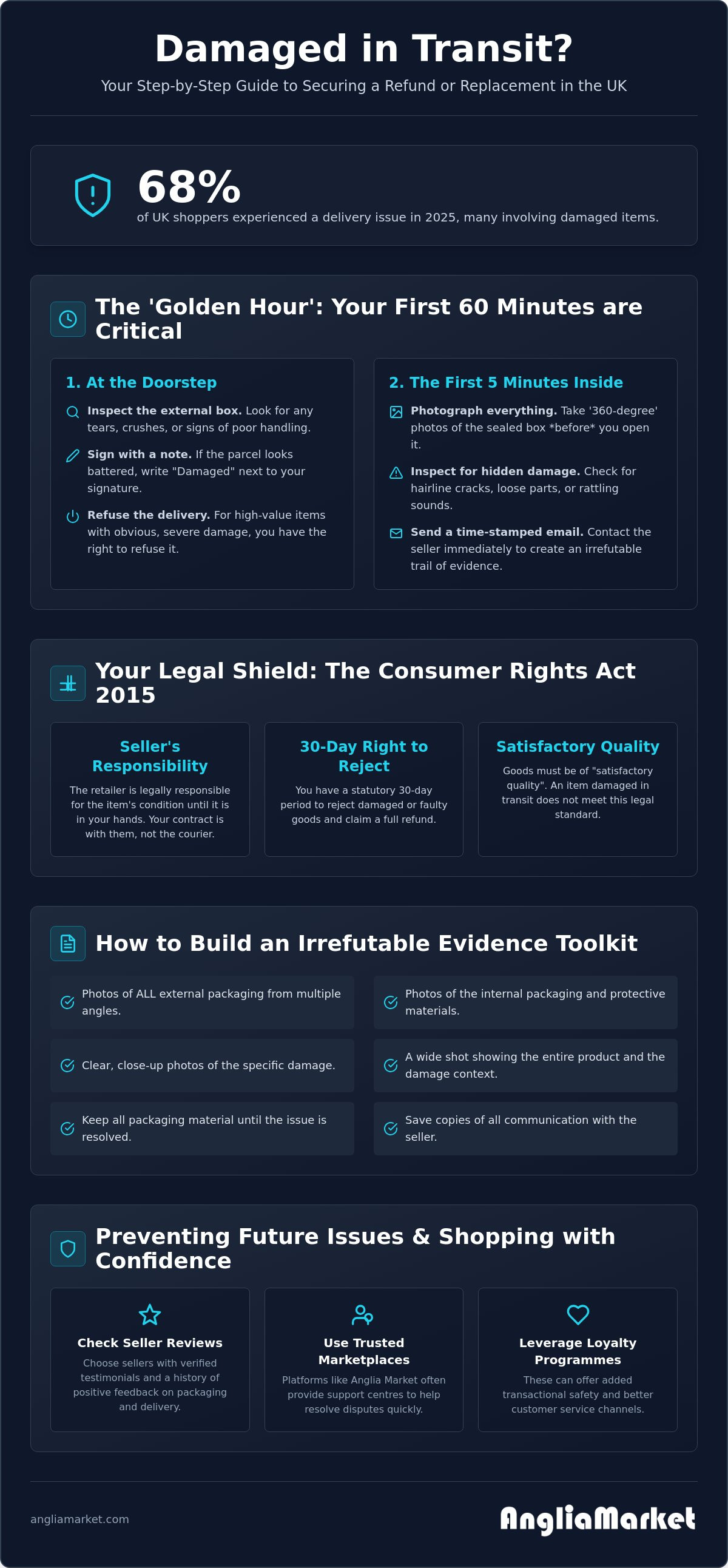
The moment your delivery arrives is the most important part of your claim. Most shoppers don't realise that the "Golden Hour", the first 60 minutes after delivery, is when evidence is most credible. If you're wondering what to do if a product is damaged in transit, start by observing the courier's handling. If the box looks battered, your actions at the doorstep will determine if you get a refund or a headache. You must be proactive to ensure the seller takes your complaint seriously.
Legally, your protection is solid. Under the Consumer Rights Act 2015, the retailer is responsible for the item until it is in your physical possession. This means if it's smashed in the van, it's their problem to fix. However, you must prove the damage didn't happen after you took it inside. Never throw away the external packaging, even if it looks like rubbish. The way a box is taped or crushed can tell a story about the courier's behaviour that helps your case.
To better understand this concept, watch this helpful video:
Handling the Courier at the Doorstep
If the external box is visibly crushed or torn, speak up immediately. Tell the driver you're concerned about the contents. If they ask for a signature on a digital device or paper, always write "Damaged" next to your name. For high-value items, such as a designer armchair from Attica House, you have the right to refuse delivery entirely if the damage is obvious. This sends the item straight back to the seller and simplifies the return process. Be wary of "Safe Place" deliveries. If a courier leaves a parcel in the rain or a bin, they may have breached their duty of care, making a claim easier for you to navigate.
The First Five Minutes After Unboxing
Once inside, don't just rip the box open. Take photos of the sealed parcel first from multiple angles. Inspect fragile items amongst your order immediately. Even if the box looks pristine, "hidden damage" can occur if the item was dropped flat. Use this checklist during your inspection:
- Check for loose parts or rattles inside the item.
- Look for hairline cracks in screens or glass.
- Verify that all structural joints are tight.
Set a timer on your phone. Sending a time-stamped email to the seller within minutes of delivery creates an irrefutable trail. This proactive approach helps you figure out exactly what to do if a product is damaged in transit before the seller can claim the damage happened in your home.
Knowing Your Rights: The UK Consumer Rights Act 2015
Understanding your statutory rights is the first thing to grasp when deciding what to do if a product is damaged in transit. Under British law, the retailer has a "Duty of Care" until the parcel is physically in your hands. This means they're legally responsible for ensuring the item arrives in "satisfactory quality". If a courier drops your parcel or handles it roughly, the contract of sale remains between you and the retailer; the courier is simply the seller's agent. You aren't required to chase the delivery firm yourself.
The law is very clear about who carries the risk. If you're shopping with independent businesses, like the trusted sellers at Anglia Market, they're bound by these same rules. The risk only transfers to you once you, or a person you've identified, take possession of the goods. If the item is broken upon arrival, the seller hasn't fulfilled their side of the contract.
The Seller's Responsibility vs. The Courier's Fault
Your contract is with the shop, not the delivery firm. If a seller tries to redirect you to the courier's customer service, they're often attempting to dodge their legal obligations. You didn't pay the courier; the seller did. You should refer to the official government guidance on returns which confirms that the trader must resolve the issue. When you write your first email to the seller, cite the Consumer Rights Act 2015 clearly. This shows you know your rights and usually speeds up the refund or replacement process.
Time Limits You Must Observe
The law provides a 30-day statutory right to reject goods that are faulty or damaged for a full refund. This is an absolute protection. However, waiting until day 29 to report a smashed screen is risky. Most businesses have a commercial expectation that you'll report issues "promptly", which usually means within 48 hours. This is especially true for high-value electronics where internal damage might not be visible from the outside. Prompt reporting builds trust and makes it much harder for a seller to claim the damage happened after delivery.
A common mistake is organising your own courier for a collection. If you hire a private van to pick up an item, the seller's responsibility ends the moment they hand the box over to your driver. The risk transfers to you immediately. To keep your legal protections intact, it's always best to use the delivery options provided by the marketplace or retailer.
How to Build an Irrefutable Evidence Toolkit
Having a clear plan for what to do if a product is damaged in transit includes becoming a temporary crime scene investigator. Sellers and couriers often look for reasons to deny a claim; therefore, your evidence must be flawless. Start with the '360-Degree' rule. Before you even touch the tape, photograph the unopened parcel from every single angle. This proves the condition it was in when it arrived at your door. Ensure the shipping label is perfectly legible in at least one photo. If the tracking number or address is blurry, the seller might claim the photos are of a different box entirely.
For high-value items, a continuous unboxing video is the ultimate proof. Start the recording by showing the sealed box and don't stop until the damage is revealed. Once the item is out, take macro shots of the 'Point of Impact'. These close-up photos show the severity of the crack or dent that a wide shot might miss. This level of detail makes it much harder for a seller to dispute your claim.
Photography Best Practices for Claims
Avoid using a flash, as glare can obscure scratches on glass or polished surfaces. Use natural light where possible. Place a 50p coin next to the damage to provide an immediate sense of scale. This helps the support team understand if a dent is the size of a pea or a plum. Keep your original files on your phone or camera. The metadata, which includes the exact time, date, and location the photo was taken, is vital if a seller questions when the damage occurred. If you're unsure about the process, Citizens Advice provides a great guide on how to return faulty goods effectively.
Documenting the Packaging Material
Sellers are responsible for safe transit, but they often skimp on padding. Documenting 'Inadequate Packaging' is your best defence. If a heavy electronic item was rattling around in a thin cardboard box with no bubble wrap, take a photo of that internal layout. The internal protection was completely non-existent, leaving the item vulnerable to even minor vibrations during the journey. Proving that the seller failed to package the item correctly shifts the blame away from the courier and directly onto the sender's negligence. If you hit a wall with a seller, you can escalate the matter through the Anglia Market Support Centre for further assistance.
Communicating with Marketplace Sellers and Support
Once you've gathered your evidence, the next step in knowing what to do if a product is damaged in transit is starting a dialogue with the seller. Most vendors on our platform are small to medium-sized UK businesses. They value their reputation and their customer testimonials, so they're usually keen to put things right. The tone of your resolution matters. Being polite whilst remaining firm is the fastest way to get results. Avoid aggressive demands; instead, present your photos and facts clearly to show that the item didn't meet the expected standard upon arrival.
The marketplace acts as a helpful facilitator in these moments. We provide a layer of transactional safety that you don't get when buying through unverified social media adverts. By keeping all your messages within the platform, you create a secure, timestamped record of the dispute. This trail is essential if the situation requires a neutral third party to step in and review the facts.
Drafting the Perfect 'Damaged Item' Message
To avoid unnecessary back-and-forth delays, your first message should be as detailed as possible. Your goal is to give the seller everything they need to make a decision immediately. Include these four key elements:
- Your order number and the exact date the parcel arrived.
- A concise description of the damage and the state of the packaging.
- Attached high-resolution photos of the 'Point of Impact' and the shipping label.
- A clear statement of your preferred outcome, such as a full refund or a free replacement.
You can gently mention your awareness of the Consumer Rights Act 2015. This signals that you're an informed shopper. It often encourages sellers to skip the usual excuses and move straight to the resolution phase.
When to Escalate to Anglia Market
Most issues are resolved directly between the buyer and the vendor. However, if a seller is unresponsive for more than 48 hours or refuses to acknowledge clear evidence of transit damage, you should escalate the case. The Anglia Market Support Centre is there to ensure a fair outcome. Our team of facilitators understands the stresses of high-value purchases like home goods or tech. We'll step in to mediate and ensure the seller follows UK consumer law correctly. If you're ready to find your next reliable purchase, browse our latest promotions and shop with the confidence that we've got your back.
Preventing Future Issues and Shopping with Confidence
While knowing what to do if a product is damaged in transit provides a vital safety net, the best shopping experience is one where the item arrives perfectly. You can significantly reduce the risk of a delivery disaster by being selective about which vendors you support. High-quality sellers typically have a proven track record that is clearly visible in their testimonials. Look for specific praise regarding 'secure packing' or 'robust boxes'. These small markers indicate a vendor who treats the delivery process as a priority rather than an afterthought.
Identifying Reliable Sellers
Specialist sellers often develop superior packing habits compared to generalists. For example, vendors who focus on pet supplies or heavy home goods are accustomed to shipping items that require reinforced materials. This level of care is also seen in boutique fashion, where you can learn more about Kitten D'Amour and their signature 1950s-inspired designs that require careful handling. Before you complete a purchase, take a moment to scan the vendor's profile. Reading reviews that mention 'shipping' specifically can save you a major headache. If a seller consistently receives feedback about items arriving amongst loose padding, it is usually a sign to look for a different provider. Professional SMEs value your business and will often invest in better materials to avoid the cost of returns.
The Value of a Trusted Marketplace
Buying through a regulated platform offers protections that direct social media transactions simply lack. You aren't just buying a product; you're buying into a system of transactional safety. Our loyalty programmes reward consistent shoppers and provide an extra layer of trust between you and the platform. Professional dispute resolution ensures that you are never left to fight a courier alone. Specialist shipping insurance is also worth considering for high-value electronics. This ensures the full value of the goods is protected from the warehouse to your front door.
Supporting UK independent businesses also involves providing constructive feedback. If a parcel arrives safely but you noticed the tape was peeling or the padding was sparse, send a quick message to the seller. They appreciate the insight as it helps them refine their behaviour and reduce future damage claims. You can shop with total peace of mind on our platform. Browse our latest promotions today knowing we've got your back if anything goes wrong during delivery.
Take Control of Your Delivery Rights Today
Possessing the right evidence and knowing your legal standing puts the power back in your hands. By acting during the "Golden Hour" and documenting everything from the shipping label to the internal padding, you've created a case that's hard to dispute. You now have a clear roadmap for what to do if a product is damaged in transit, ensuring you never lose out on high-value items like furniture or electronics. Your rights under the Consumer Rights Act 2015 are absolute, and you don't have to face unresponsive couriers alone.
Shopping should be exciting, not a source of stress. Our marketplace features vetted independent sellers amongst a community that prioritises quality and care. If things don't go to plan, our dedicated UK-based support via Freshdesk is ready to step in. You're always protected by the UK Consumer Rights Act 2015 when you choose a platform that puts transactional safety first. Shop with confidence at Anglia Market, where UK SMEs and buyers connect safely. Enjoy your next purchase with the security and support you deserve.
Frequently Asked Questions
Do I have to pay for the return postage of a damaged item?
No, you are not responsible for return shipping costs. The Consumer Rights Act 2015 is clear that if an item is faulty or damaged, the retailer must cover the cost of the return. They should provide you with a pre-paid label or organise a courier collection at a time that suits you. You should never be out of pocket because a seller or courier failed to deliver your goods safely.
The courier left the parcel in the rain and it's ruined; who is responsible?
The retailer is legally responsible for the condition of the goods until they are in your physical possession. If a courier leaves a parcel in an exposed location without your permission and the contents are damaged, the delivery has failed. You must contact the seller to report the issue. It is their job to claim compensation from the delivery firm, whilst your right is to receive a refund or replacement from the shop.
Can I get a partial refund if the item is still usable but slightly marked?
Yes, you can negotiate a price reduction with the seller. If a product has a minor cosmetic scratch but you're happy to keep it, many SMEs prefer offering a partial refund to avoid the logistics of a return. This is often a practical result for both parties, especially for heavy items like furniture. Always ensure the agreed discount is confirmed in writing through the marketplace messaging system.
What happens if I notice the damage after the 30-day return window?
You still have legal protection, though your options change slightly. Between 30 days and six months after delivery, the law assumes the fault was present at the time of purchase. You must give the retailer one opportunity to repair or replace the item. If they can't do this, you are then entitled to a full or partial refund. Knowing what to do if a product is damaged in transit remains vital even if you don't unbox the item immediately.
The seller says they won't refund until the courier pays their claim; is this legal?
No, this is not a legal reason to delay your refund. Your contract is with the retailer, not the courier company. The seller's internal dispute with their delivery partner is entirely separate from your right to a refund. Under UK law, the retailer must settle your claim promptly regardless of whether their own insurance claim has been processed or paid out.
What if the item was a gift and I don't have the original receipt?
You don't need a physical paper receipt to make a claim, but you do need proof of purchase. A bank statement, an order confirmation email, or a transaction ID from a marketplace account is perfectly acceptable. If you received the item as a gift, the person who bought it can usually provide a digital copy of the order details to help you start the resolution process.
How long does a typical refund for a damaged item take to process?
Most refunds are processed within 14 days. Once the retailer has agreed to the refund or has received the returned item, UK law requires them to send your money back within two weeks. Many sellers on our platform aim to complete this much faster to maintain their positive feedback and high customer service standards.
Can I refuse a replacement and insist on a full refund instead?
Yes, you can insist on a refund if you report the damage within the first 30 days of receiving the item. This is known as your "short-term right to reject" goods that are not of satisfactory quality. After this 30-day period, the seller is usually entitled to attempt a repair or replacement before they are legally forced to give you your money back. Understanding these timelines is a critical part of knowing what to do if a product is damaged in transit effectively.

Here to help — ask anything
If you have any questions regarding this disclaimer or any of our policies, please contact Anglia Market through the contact page on our website, by email using the address provided on the site, or by phone at 0333 772 2593